Hongyuan Fort: A Coastal-Defense Fort at the Yong River Estuary
Site at a Glance
- Country
- China
- Primary era
- Modern
- Eras represented
- Modern
- Civilizations
- Qing
- Site type
- Military
- Remains
- Fort
On this page8 sections
History
Qing planning and construction
Hongyuan Fort is a coastal-defense fort at the northeastern foot of Lishan in China. Construction began in 1887 under the Qing dynasty, after the Sino-French War, a conflict between Qing China and France in the 1880s. Drawing on the Battle of Zhenhai during that war, Xue Fucheng, a Qing official and diplomat serving as circuit intendant, a regional official for Ningbo, Shaoxing, and Taizhou, assessed the estuary’s defenses. He reasoned that Youshan and Hudunshan made it difficult for warships to pass directly through the Yong River estuary, while Xiaojiajiang beside Lishan offered a route from the sea inland. Lishan, exposed on three sides at the estuary’s outer edge, suited a fort intended to block enemy ships and coordinate with artillery positions farther inland.
Local merchants and residents funded the fort, which took two years to complete and cost 75,000 silver taels, a traditional Chinese weight unit used for silver currency. It became Zhenhai County’s largest fort and the best-equipped fort at the Yong River estuary, serving as the estuary’s first line of defense.
New defenses in the 1930s
In 1932, a German military adviser employed by the Nationalist government, the Republic of China government led by the Kuomintang, judged the Lishan fort’s facilities outdated and proposed a new fortification. The new works were completed in 1936.
War and later use
During the Second Sino-Japanese War, the 1937–1945 conflict between China and Japan, Japanese forces bombed the fort and its garrison returned fire. On June 7, 1939, anti-aircraft fire from the fort downed the leading aircraft in a six-plane Japanese formation attempting a surprise attack. After Japanese forces occupied Zhenhai in 1941, the fort’s guns and barracks were destroyed. The site suffered severe damage during the war and from later development.
In September 1970, the old fort site became the location of Zhenhai County’s meteorological station. After Beilun District was established, it served as the district’s meteorological station.
Heritage protection
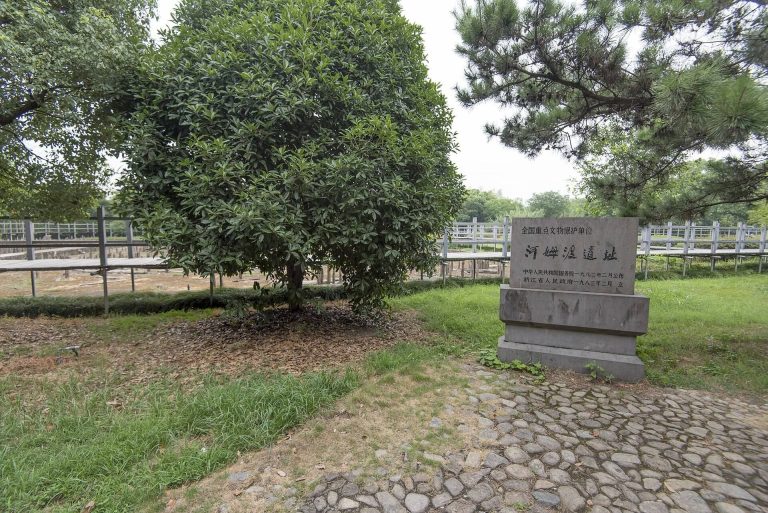
In December 1989, Hongyuan Fort was included with Weiyuan Fort and other coastal defenses in Zhejiang Province’s “Zhenhai Estuary Coastal Defense Sites” designation. In 1996, it became part of the fourth group of Major Historical and Cultural Sites Protected at the National Level. The protected area reaches the meteorological-station wall to the east, south, and west, and extends two metres north of the fort’s northern side. The whole mountain is a construction-control zone, where building activity is regulated to protect the heritage site.
Remains
Qing-period battery
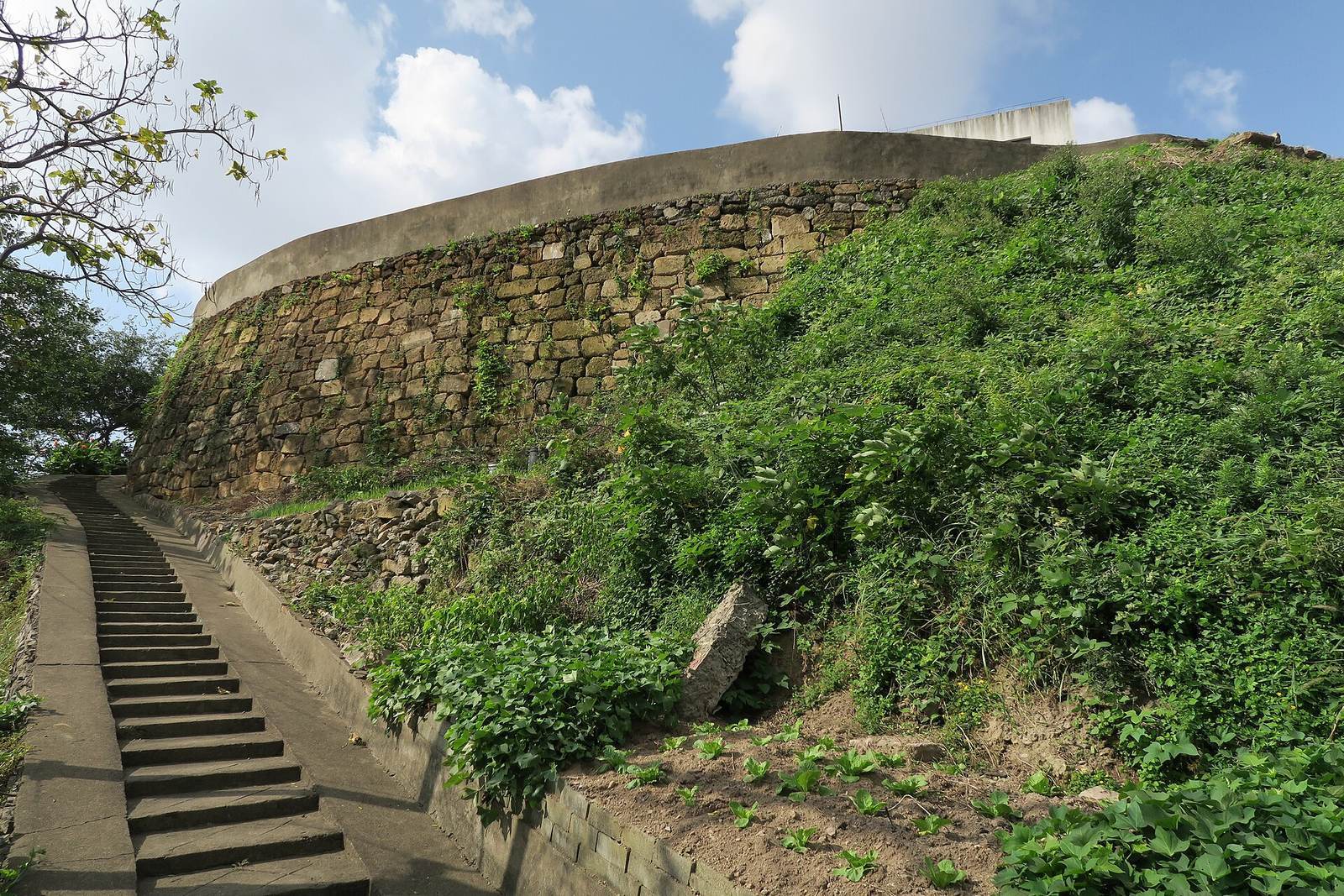
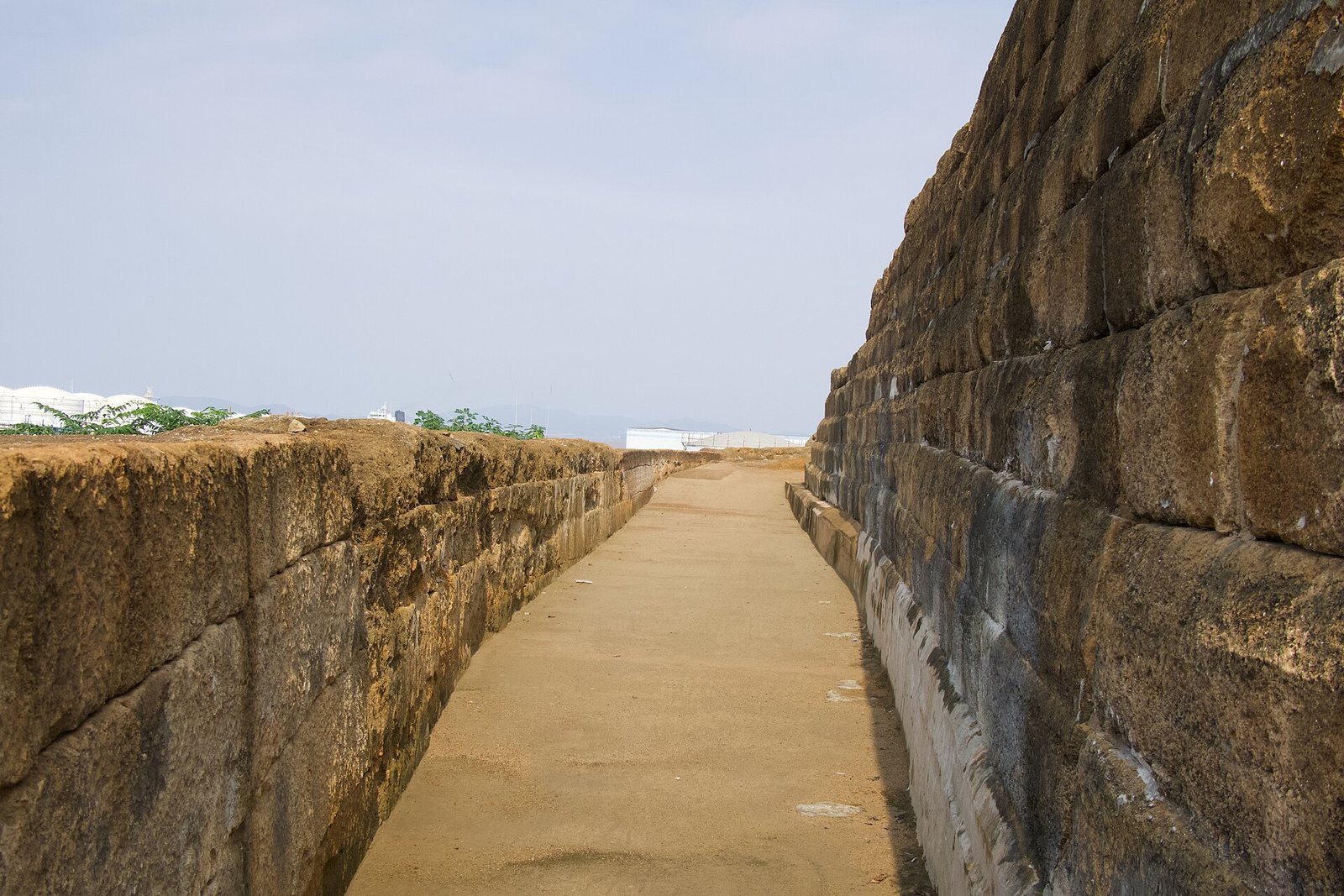
The Qing battery formed a semicircle along the hillside and rested on a foundation of large bluestone blocks. Its walls narrowed slightly toward the top and were built from lime, yellow earth, gravel, and glutinous-rice juice. Sections of these walls survive.
The original fort included barracks and an ammunition depot. Its three Krupp breech-loading guns, loaded through an opening at the rear of each barrel, comprised two 24-centimeter guns and one 21-centimeter gun. Xue Fucheng composed an inscription for the fort, mounted on a tortoise-shaped stone base.
1930s concrete fortification
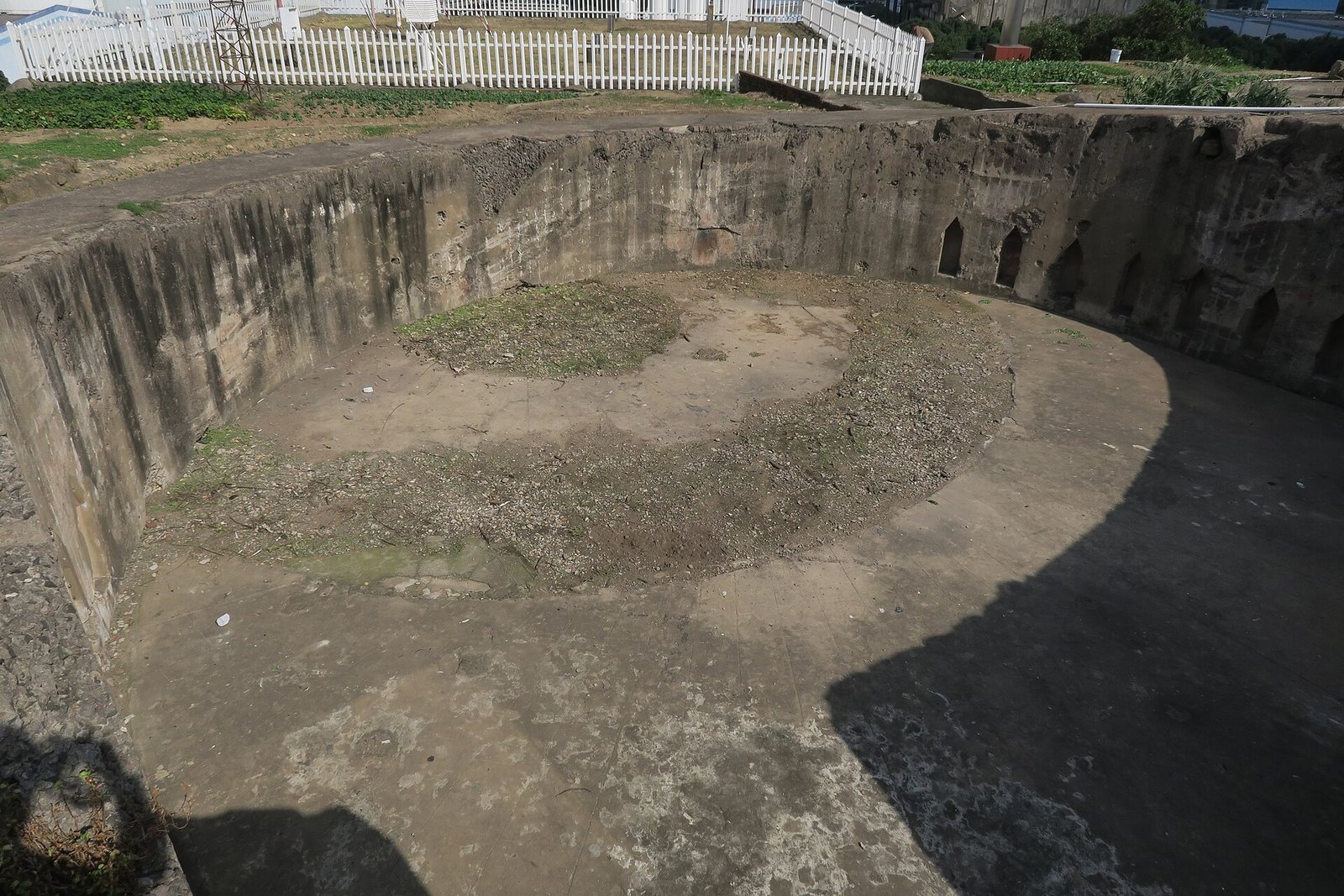
The concrete fortification incorporated the earlier earth-built fort as a protective shell. Two basin-shaped gun emplacements were built at its center, each 14 meters in diameter and 3 meters high, with rotating steel rails inside. One concrete fortification survives. The later armament retained two of the Qing fort’s 24-centimeter guns and added a 17-centimeter Krupp breech-loading gun, four anti-aircraft machine guns, and two anti-aircraft guns.