Cheongpung Mangwolsanseong Fortress: A Hilltop Military Enclosure
Site at a Glance
- Country
- South Korea
- Primary era
- Medieval
- Eras represented
- Medieval
- Civilizations
- Baekje, Silla
- Site type
- Military
- Remains
- Fort
On this page9 sections
History
Cheongpung Mangwolsanseong Fortress is a stone enclosure at Jecheon, South Korea. Its historical identity has been associated with Baekje, Goguryeo, and Silla, the major kingdoms of Korea’s Three Kingdoms period, but the fortress’s precise identification remains debated.
Names and identification
The site has been identified with Baekje’s Seongyeolseong, Goguryeo’s Sayeorisanseong, and Silla’s Sayeolsanseong. After its name changed repeatedly, Mangwolsanseong was used during Japanese colonial rule. One interpretation argues that Mangwolsan derives from Pyeongdeungsan and that Seongyeolseong is the more appropriate historical name.
Arguments for the Pyeongdeungsan identification point to references to iron production east of Cheongpung and a later tungsten mine in the area. They also cite the hill’s gently rising, relatively level terrain, a rock called Pyeongdeungseok on the Cheongpung River, and a landscape painting by Yi Bang-un associated with the Pyeongdeungsan name.
Three Kingdoms period
In September 644, Silla’s Queen Seondeok appointed General Kim Yu-sin supreme commander and ordered an attack on seven Baekje fortresses, including Seongyeolseong. The campaign ended in a major victory, after which Silla opened Gahyejin.
Silla established the Samcheondang military unit in Naeto-gun in 672. The following year, it enlarged Sayeolsanseong at Cheongpung.
Local tradition and modern recognition
Seongyeolseong has been identified as the county-seat fortress of Seongyeolhyeon, and tradition places the musician Ureuk’s birth there. Cheongpung was then part of Chungju, also known as Mieulseong. Ureuk, a musician associated with Gaya and traditionally credited with creating the gayageum, a Korean plucked zither, became linked to the regional Cheongpung musical style and Harimjo, a traditional Korean musical mode. In the late Joseon period, 33 people formed an association to continue this tradition.
A 1994 surface survey interpreted the fortress as a military camp belonging to a county-seat fortress. On June 24, 1994, it was designated Chungcheongbuk-do Monument No. 93.
Remains
Fortress enclosure
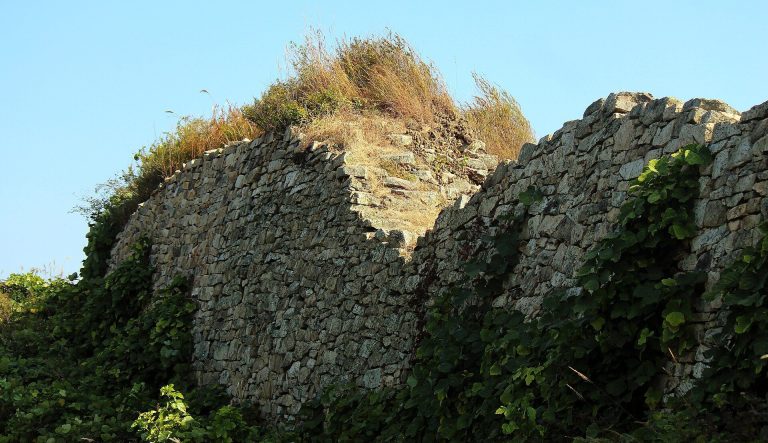
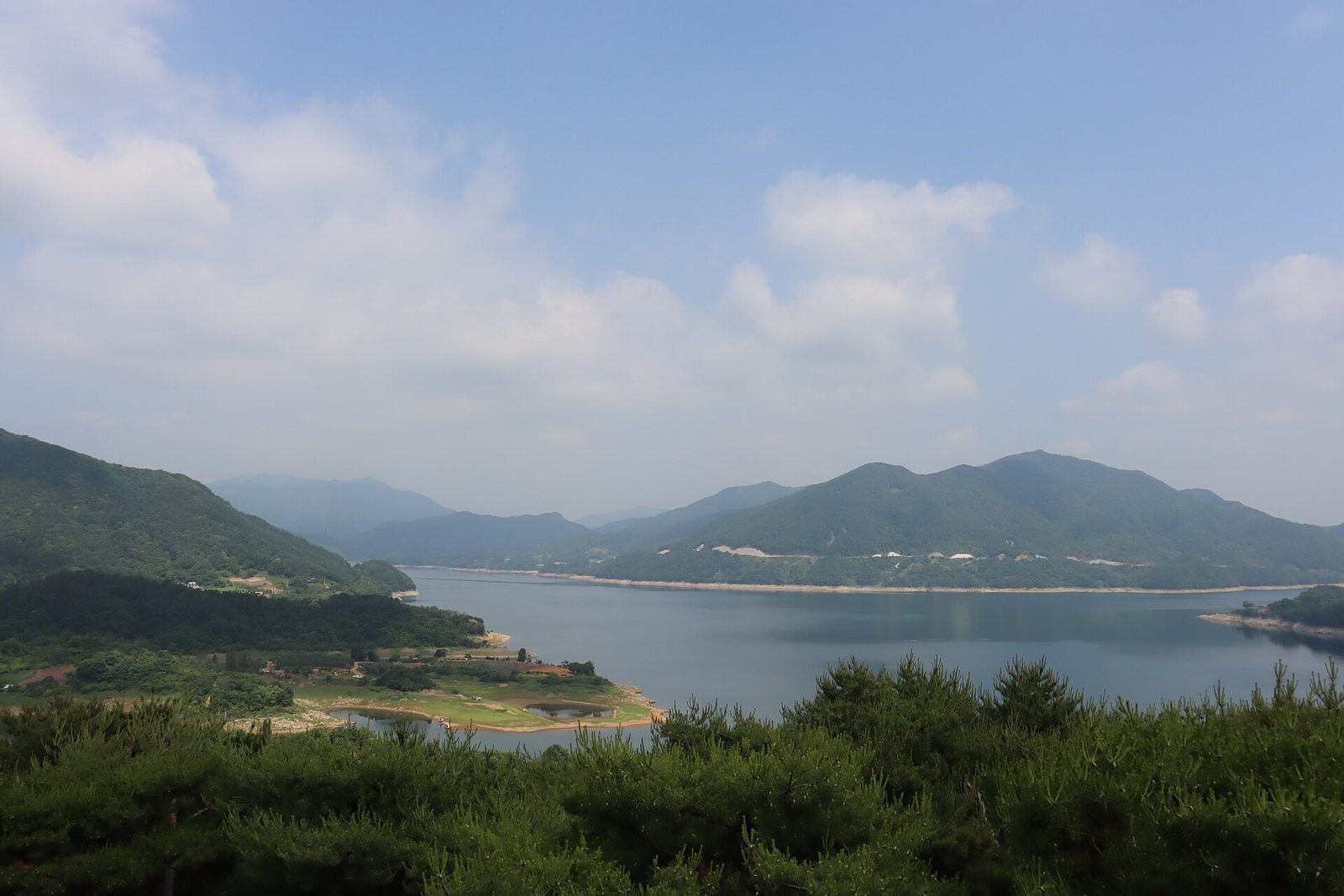
The fortress occupies the summit of a 237.2-metre hill east of old Cheongpung, within the Cheongpung Cultural Heritage Complex on the shore of Cheongpung Lake. The hill is also associated with the names Taesan, Seongsan, and Seonghwangsan. Built of stone, the enclosure has an irregular plan that is nearly circular but approaches a rectangle with its corners cut off. It measures up to 140 metres north to south and 150 metres east to west. Its perimeter is 477 metres when measured along the inner face of the wall, following the path around the interior. The designated area covers 21,619 square metres. During Japanese colonial rule, most of the stone walls had collapsed, although scattered sections remained. The enclosure’s circumference was then estimated at about 250 ken, a traditional Japanese unit of length.
Interior remains
Building traces and finds
Traces of four buildings have been identified inside the fortress. Finds include roof-tile and pottery fragments from the Three Kingdoms period, rounded stones intended as projectiles, a horse-shaped clay figurine, and an unfinished stone axe.
Altar and nearby sculpture
Traces of an altar lie at the fortress’s highest point. At the nearby Pyeongdeungsa temple site, a soapstone Buddha-and-bodhisattva pair bears a Baekje mountain motif on its reverse. The pair has been cited in support of identifying the fortress with Baekje.