Kyminlinna: A Russian Frontier Fortress in Finland
Site at a Glance
- Country
- Russia
- Primary era
- Modern
- Eras represented
- Modern
- Civilizations
- Grand Duchy of Finland, Russian
- Site type
- Military
- Remains
- Fort
On this page9 sections
History
Kyminlinna is a Russian-built frontier fortress in Kotka, Finland, designed to defend the landward approach to the paired Ruotsinsalmi sea fortress. Its construction began in 1791, when Russia was strengthening its defenses along the border with Sweden.
Russian frontier defenses
The site lay in territory Sweden ceded to Russia under the 1743 Treaty of Åbo, which established a boundary reaching the western branch of the Kymi River. The 1790 Treaty of Värälä left that border unchanged. In 1791, Empress Catherine II commissioned General Alexander Suvorov to plan frontier defenses in Russian Finland. After inspecting the area for three weeks, he included Kyminlinna among five forward positions and proposed a fortified harbor for a fleet of galleys, oared warships.
Suvorov, appointed to command troops in the Vyborg governorship, directed major fortification work in 1791 and 1792 and used Kyminlinna as his headquarters during construction. The first fortress, built from 1791 to 1795 with projecting defensive works, was supervised by Suvorov; Jan Pieter van Suchtelen later took charge of its construction. That fort was then demolished to make way for a replacement, six times larger. Van Suchtelen designed the new fortress and oversaw its construction from 1803 to 1808. Kyminlinna formed the northern, landward part of a defense intended to counter attacks along the historic King’s Road and protect Ruotsinsalmi from landward assault.
Loss of military importance
The fortress was still incomplete when the Finnish War, fought between Sweden and Russia in 1808 and 1809, began. After the war, the border shifted west from the Kymi River to the Torne River, removing Kyminlinna’s original frontier role. Troops remained for a time, and the Russian garrison continued even after the fortress was formally abolished in 1835, staying until 1917. In 1824, the Russian poet Yevgeny Baratynsky, then serving in the Neishlot Regiment, occupied the same two rooms Suvorov had previously used.
Kyminlinna saw no fighting during the Crimean War of 1853 to 1856. In 1855, however, an Anglo-French landing burned the settlement associated with the former fortifications, while the Ruotsinsalmi sea defenses were destroyed. In 1878, Emperor Alexander II granted town status to the settlement that had grown around the former Kyminlinna and Ruotsinsalmi fortifications, naming it Kotka.
Finnish military and civilian uses
During the Finnish Civil War of 1918, Kyminlinna served as a training center for the socialist Red Guards. On 9 April, a German unit attacked the Red Guards stationed there. About twenty men died, including German soldier Willy Heinz, who was buried in Kotka’s old cemetery. Finnish singer-songwriter Veikko Lavi later wrote a song about Heinz.
Between 1922 and 1939, the fortress housed a refugee camp for people arriving from Soviet territory, including Ingrian Finns; 700 refugees lived there over the period. Other uses included a prisoner-of-war assembly camp, a tuberculosis ward within an infectious-disease hospital, and a firing range for the volunteer Civil Guard. The Finnish Defence Forces occupied Kyminlinna from 1939 to 2005. Units based there included the Naval Forces’ Central Depot 2 and, later, the Kotka Coastal Area Training Battery. In 1978, a conscript on guard duty set fire to a garrison ammunition store, which exploded without injuring anyone. The Finnish Heritage Agency classifies Kyminlinna as a nationally significant built cultural environment. In 2025, the state property company Senate Properties transferred it to the City of Kotka in a symbolic one-euro sale.
Remains
Fortress plan and defenses
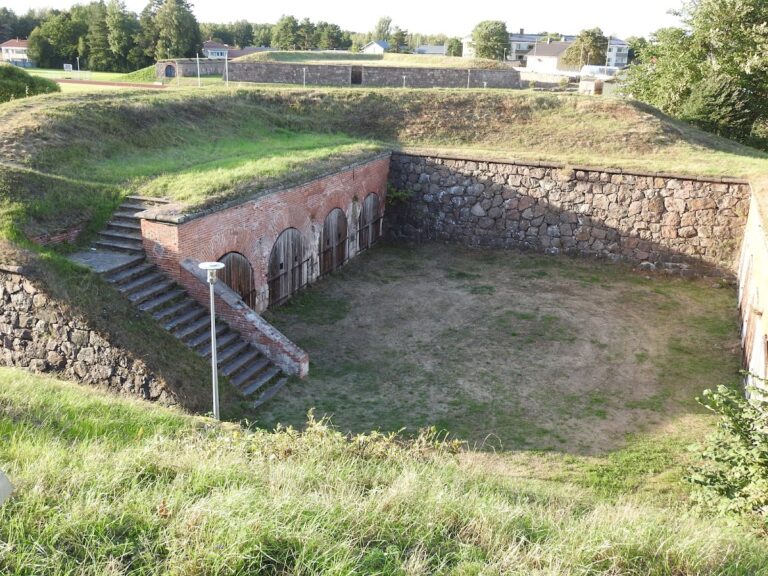
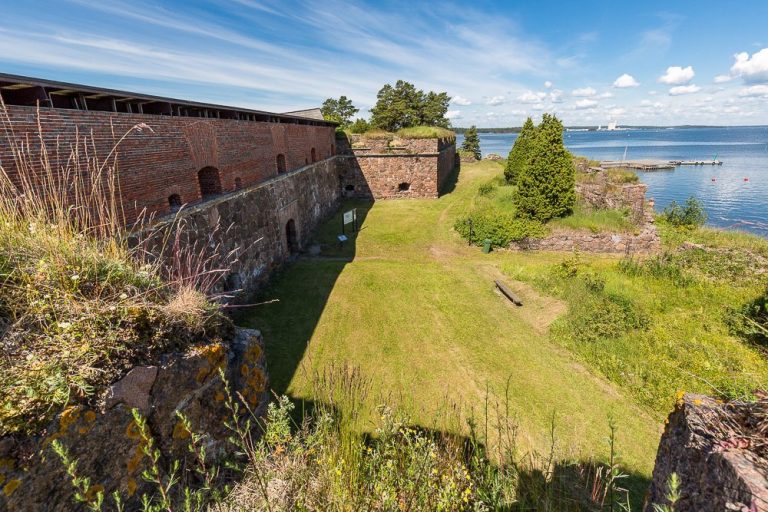
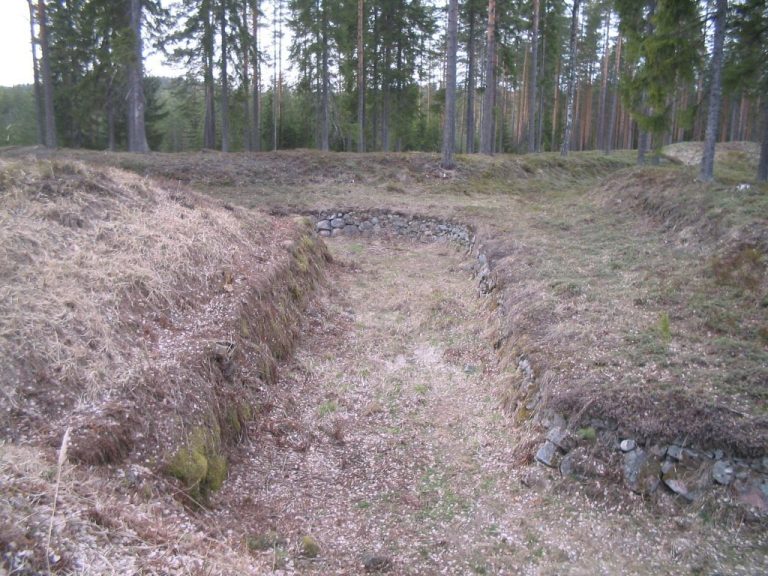
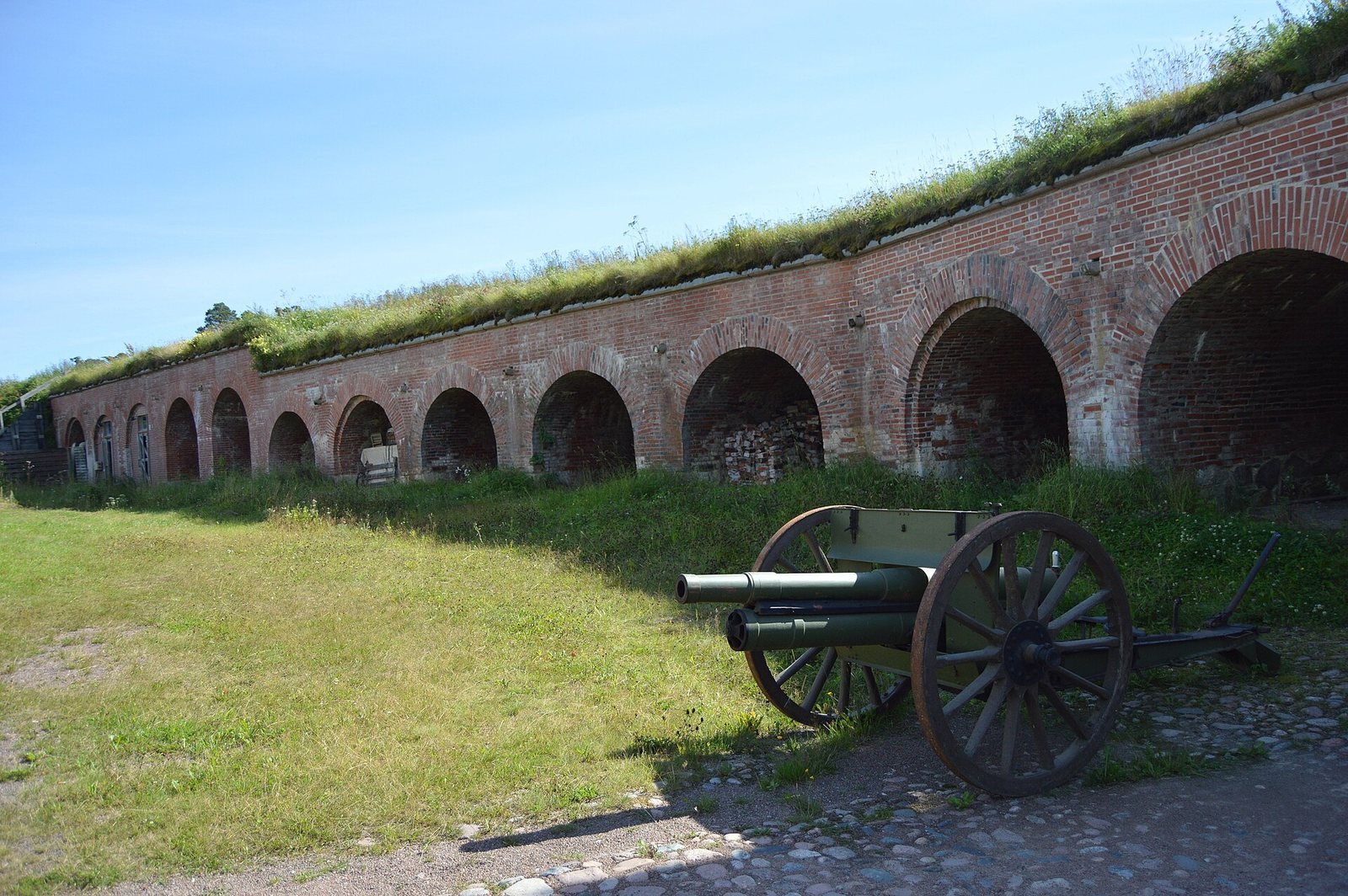
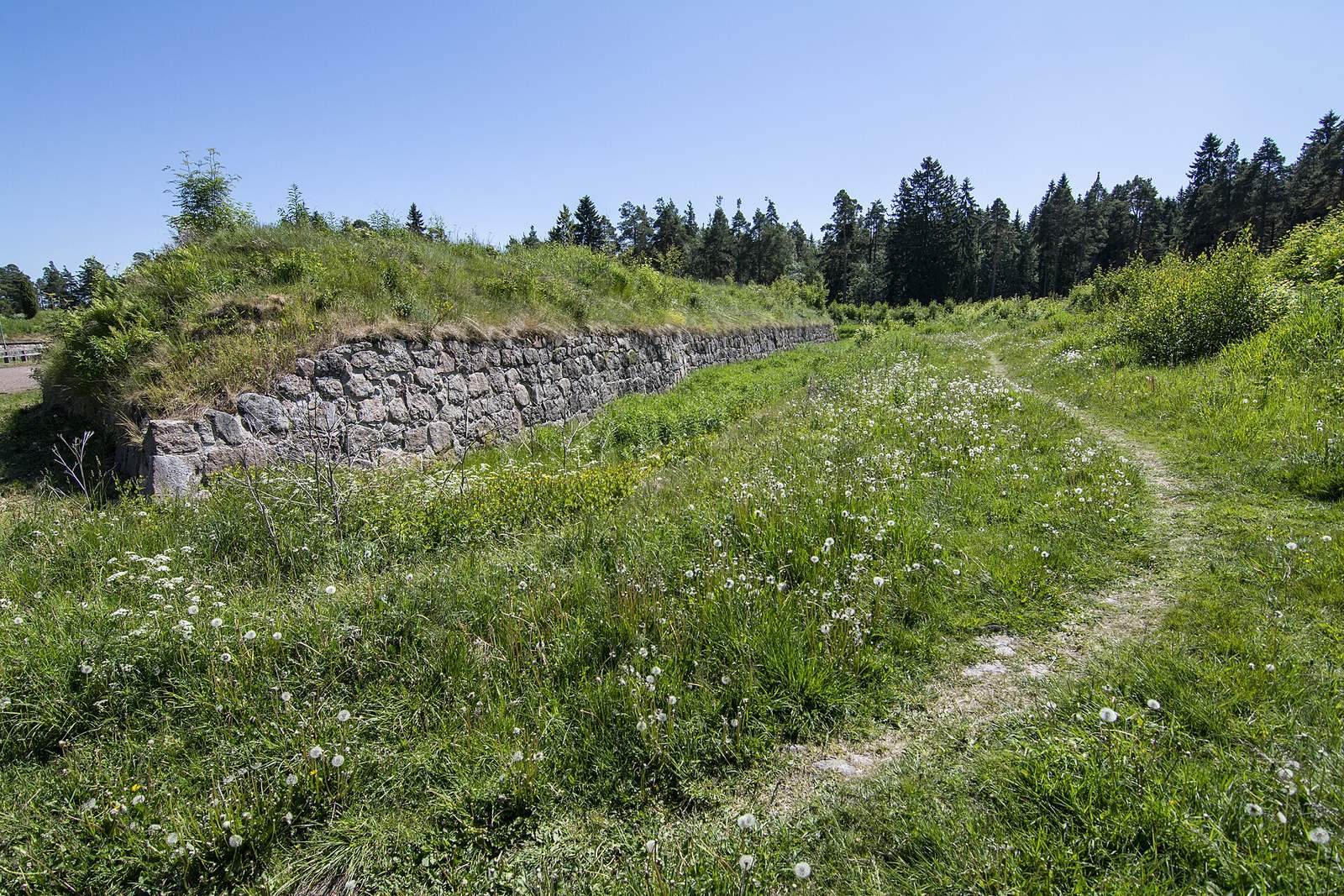
The fortress occupies northern Hovinsaari, near the mouth of the Kymi River and north of Kotka Island. Its pentagonal plan uses caponiers, protected positions designed to fire along defensive ditches or approaches. The fortress measures about 800 metres across and covers approximately 74 hectares. Earthworks and masonry form its defenses. Incomplete moats also serve as part of a drainage system, and a pond remains within the grounds.
Buildings and later alterations
Fortress buildings
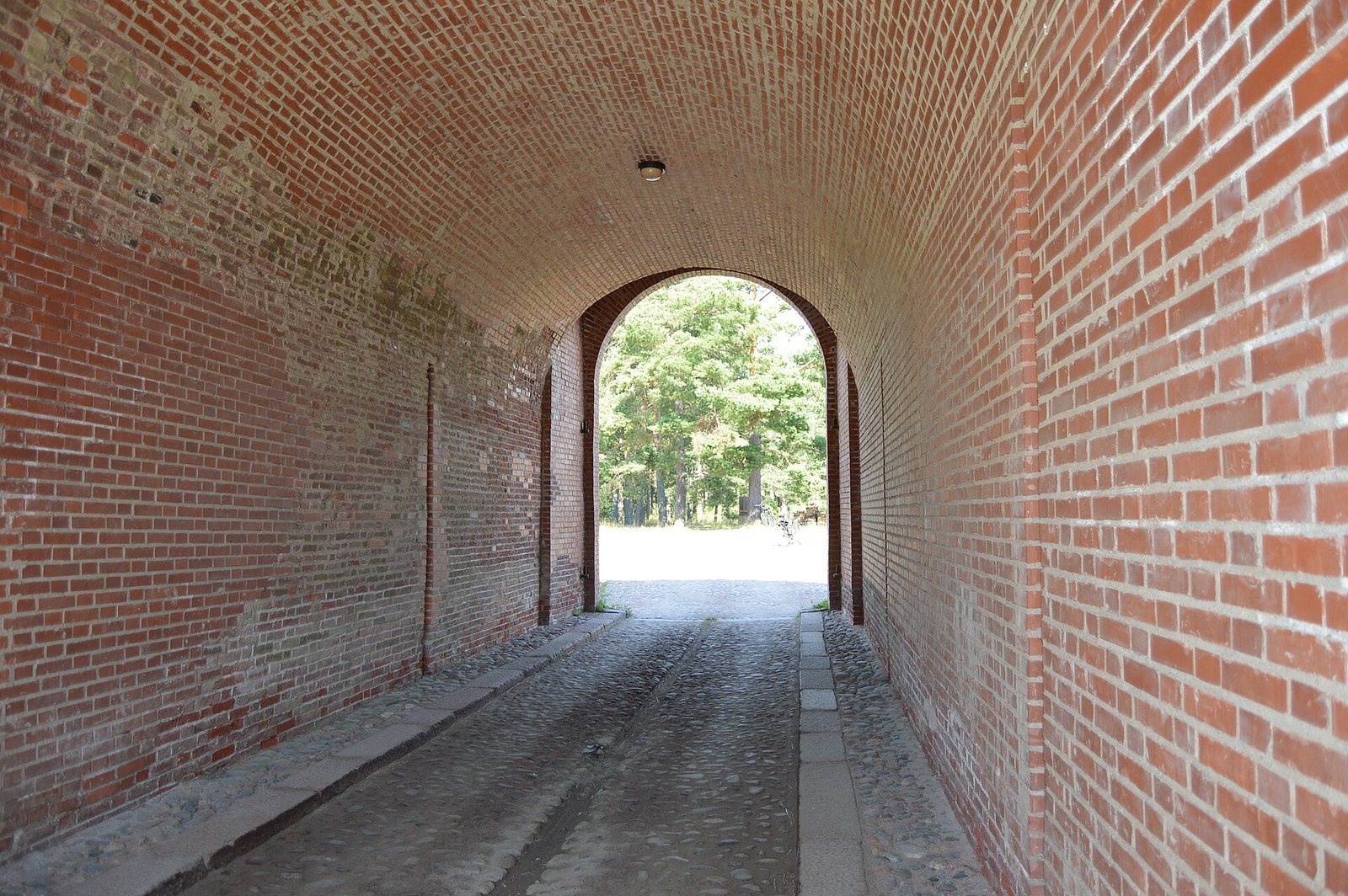
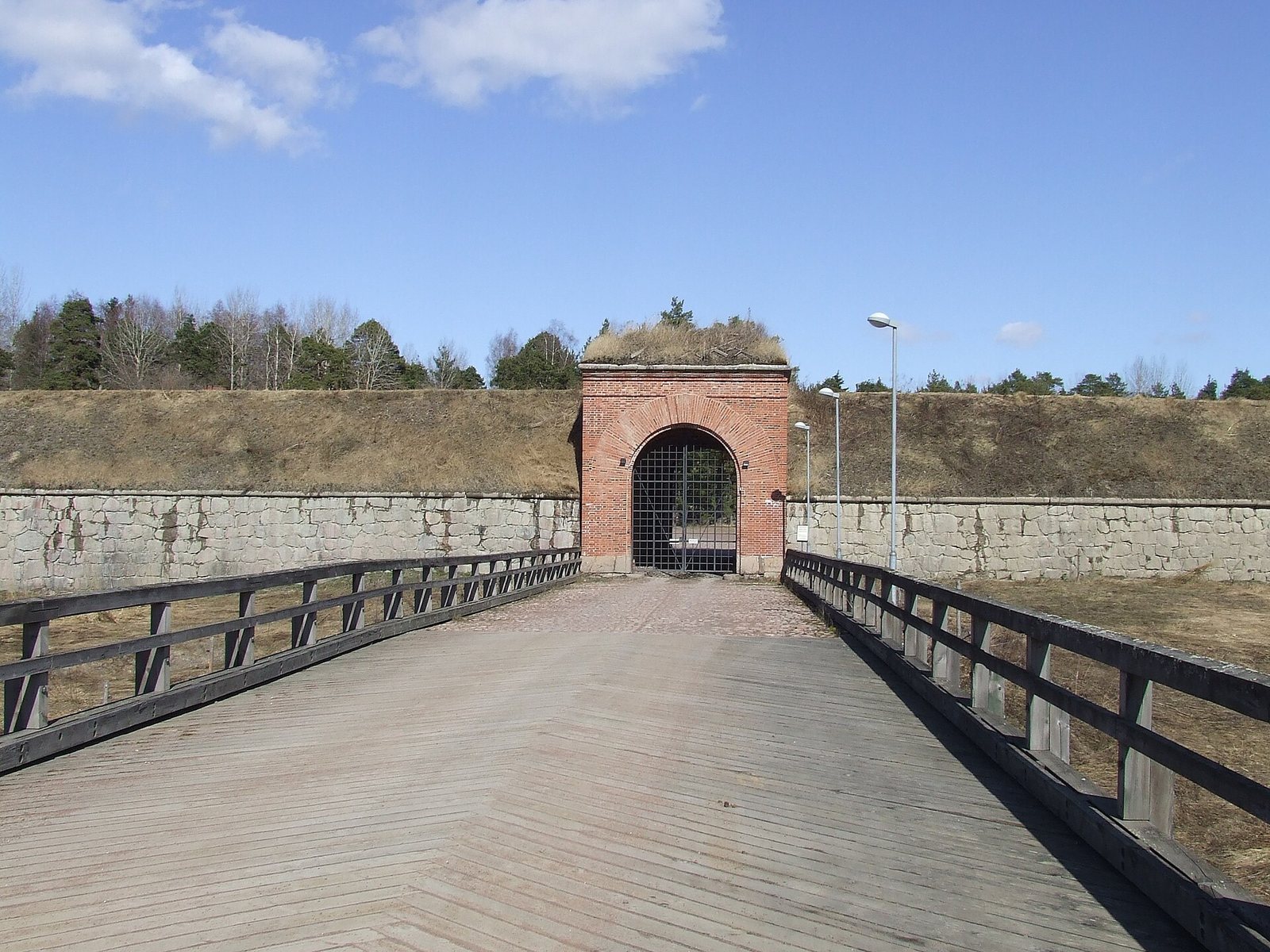
Twenty-three buildings stand within the fortress, most of them wooden temporary structures. Their condition varies, and many have remained empty since the Finnish Defence Forces left in 2005. A main gate forms part of the surviving complex.
Railway and roads
The Kotka railway, completed in 1890, cuts through the eastern defensive earthworks. Kymintie, built in the early twentieth century, also crosses the eastern defenses, while National Road 7 passes through the outer earthworks in the south.