Vallentuna Church: A Medieval Parish Church in Sweden
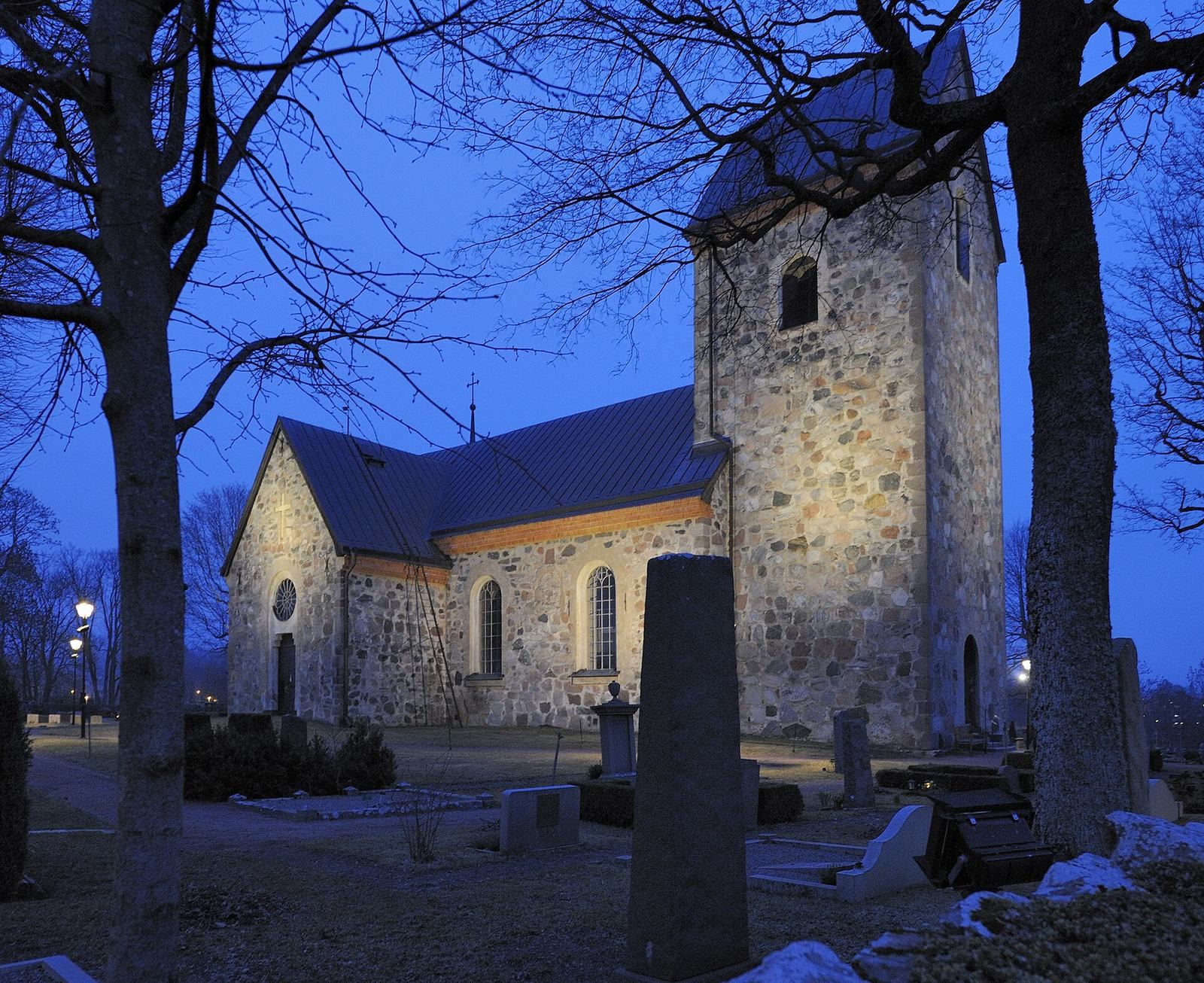
Site at a Glance
- Country
- Sweden
- Primary era
- Modern
- Eras represented
- Medieval, Early Modern, Modern
- Civilizations
- Swedish
- Site type
- Religious
- Remains
- Church
On this page17 sections
History
Vallentuna Church is a medieval parish church in Vallentuna, Sweden. Built and consecrated in the 1190s, it began as a Romanesque church, a style of medieval architecture. The date is associated with the Vallentuna Calendar, a medieval calendar that also preserves historical information, and the church first appears in records in that decade. It has served the parish since the Middle Ages and belongs to the Church of Sweden, the Diocese of Stockholm, and Vallentuna parish.
Medieval foundation and expansion
A sacristy, a room for storing worship items and preparing for services, was added on the north side of the choir in the 13th century. In the mid-15th century, the choir was lengthened eastward and a porch was built on the south side. Brick vaults were installed throughout the church, with paintings that were later covered with whitewash in 1763.
Early modern changes and the 1856 fire
A tall wooden spire was added to the tower in the 1580s. In 1680, a burial chapel was built for the Klingspor family. Johan Hadorph, a Swedish antiquarian and national heritage official, drew the church in 1684. The bells were kept in a separate belfry at the southeastern corner of the churchyard until 1832, when they were transferred to the tower.
Lightning started a fire in 1856 that destroyed the tower spire and most of the furnishings, and melted the bells. The bells were recast the following year. The rebuilding changed the church rather than recreating its earlier form. The medieval south porch was removed, the north sacristy became a transept, and another transept was added on the south. The choir and vaults were rebuilt, and the tower spire was not restored.
Restoration and later additions
Restoration work took place from 1935 to 1938. During rebuilding in 1937, U 214 was found in the church floor, where it had previously been reused. U 212 was found buried south of the church in 1905, after earlier serving as a threshold. Another Viking-Age runestone came to light during excavation work in April 2009.
A mortuary chapel was built west of the church in 1951, and a memorial grove was laid out to the southwest in 1987. A wooden baptismal font was added during a restoration in 1992–1993.
Remains
Church and churchyard
Church
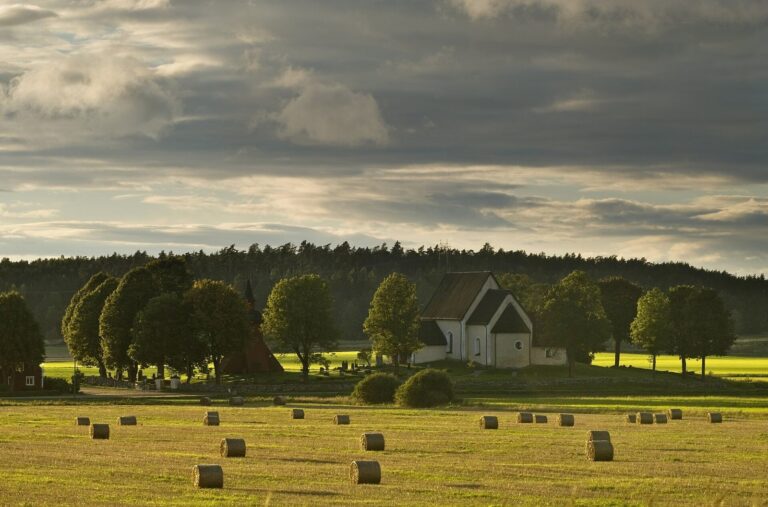
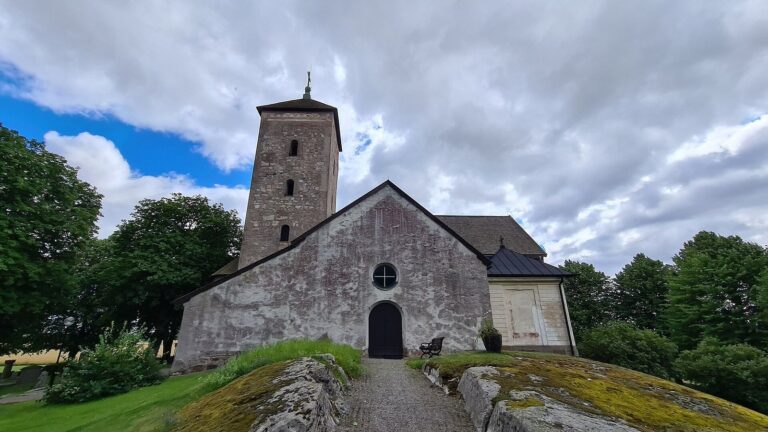
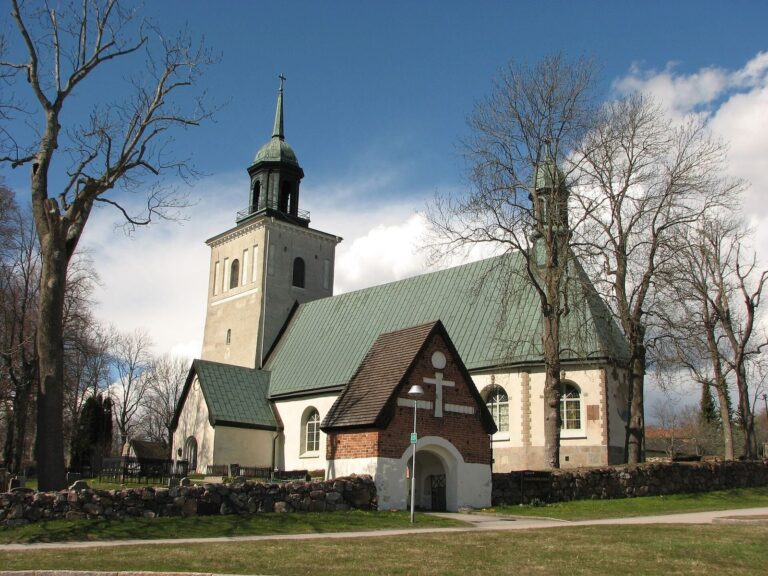
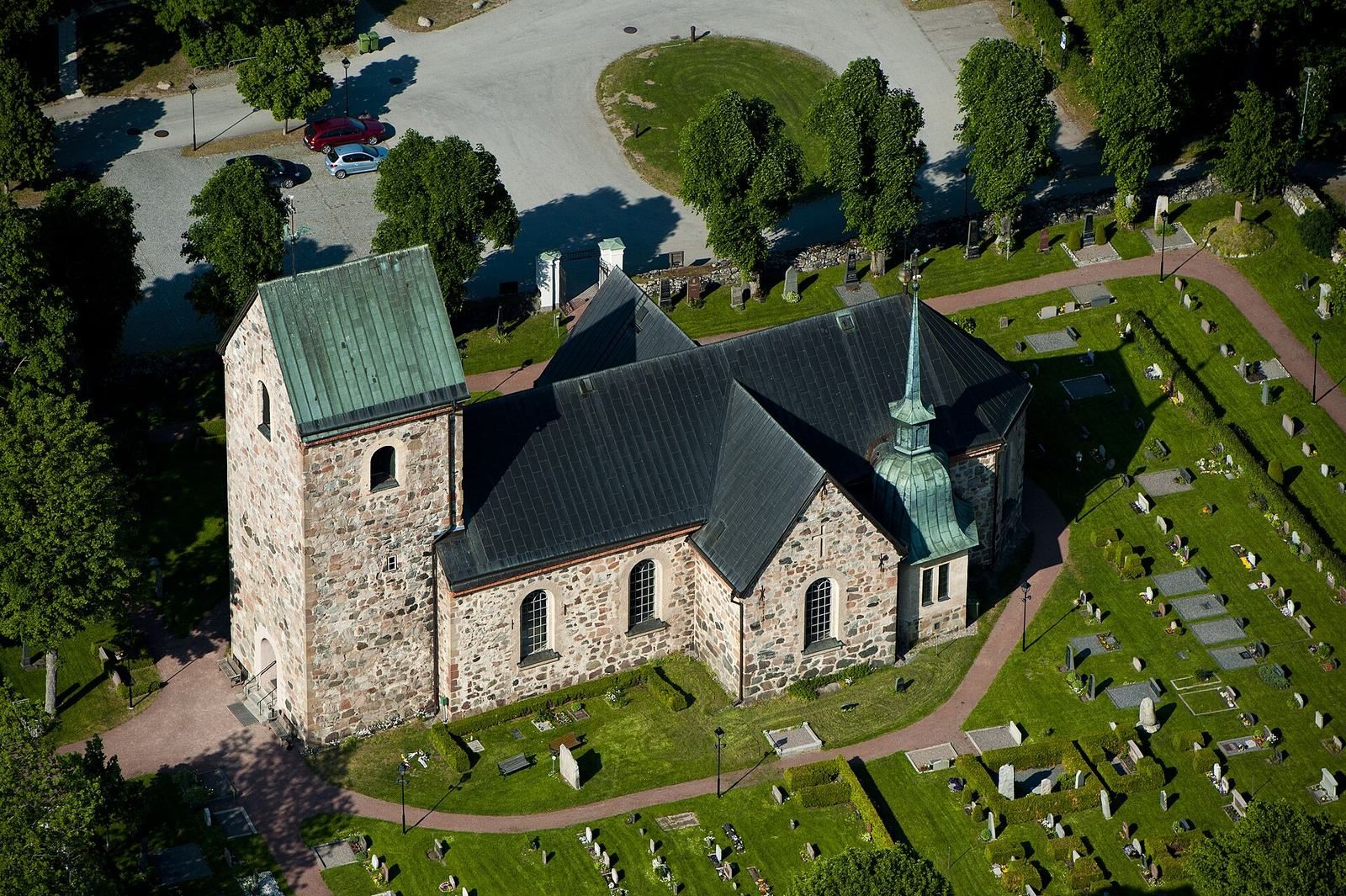
The church is built of gray stone. Its rectangular nave, the main space for the congregation, leads east to a three-sided choir, the area near the altar, which is as wide as the nave. Transepts, sections crossing the main space, project from both sides, and a tower stands at the west end. The nave, choir, transepts, and tower have gabled roofs. The exterior walls remain unplastered. The present windows and doors occupy their rebuilt positions.
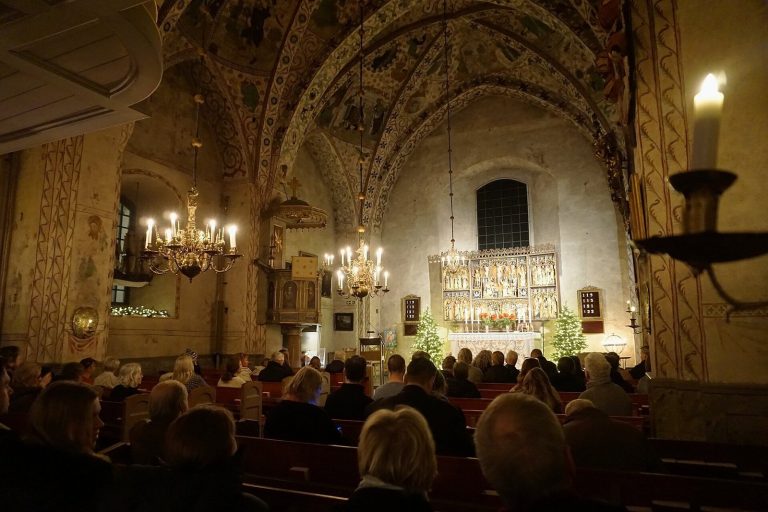
The church’s vaults are made in segmental and barrel forms. The north transept is the former sacristy, now an open part of the church; a boiler room lies beneath it. The south transept contains the baptistery. A six-sided burial chapel adjoins the south side of the choir. Its upper memorial room serves as the sacristy, while the vault below has room for about twenty coffins. The chapel has a pointed spire; its cupola and spire were rebuilt with copper covering. The tower now has a gabled roof.
Churchyard
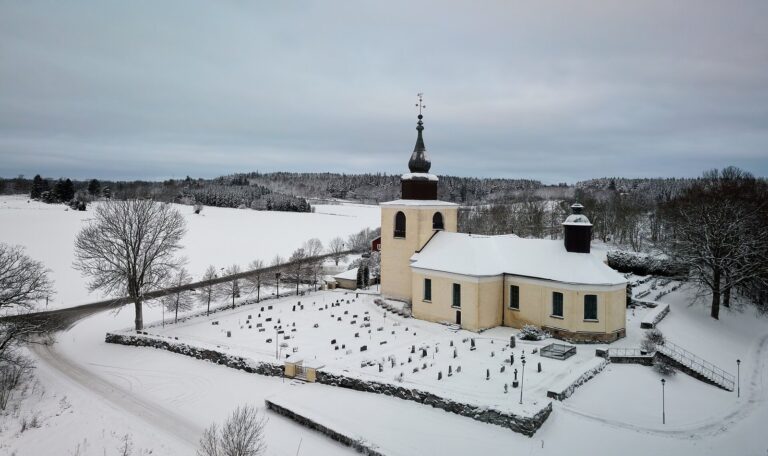
A wall about 300 metres long encloses the churchyard. A separate belfry stood at its southeastern corner from the 17th through the 19th century. The north shore of Lake Vallentuna lies south of the church.
Runic inscriptions
Seven runic inscriptions are associated with the church, within it, on its walls, and in the surrounding area. Two Viking-Age runestones are inside the church. One medieval inscription is on the tower and another is on the church wall.
U 212
U 212 stands south of the church and is carved on both sides. It is often associated with the runestones at Jarlabanke’s Bridge, a road embankment between Vallentuna’s southern municipal boundary and Täby Kyrkby. One side says that Jarlabanke raised the stone during his lifetime, made an assembly place, and alone owned the whole hundred, a historical administrative district. The other is understood to say that he owned all of Täby parish and asks God to help his soul.
U 214
U 214 is now in the tower room. Its inscription names Ragnhild and Ulfhild, who raised the stone in memory of their father and brother, and Ingeberg, who commemorated her husband. It says that the man drowned in Holms sea when his knarr, a Norse cargo vessel, sank, and that only three people survived. The inscription is Sweden’s oldest known text with end rhyme.
Other runestones
A half-stone, U 221, stands by the churchyard wall at some distance from the church. Another runestone is by the rectory, now a preschool. The stone found in 2009 is identified as U ATA322-4042-2009.
Interior furnishings
Altar, pulpit, and liturgical objects
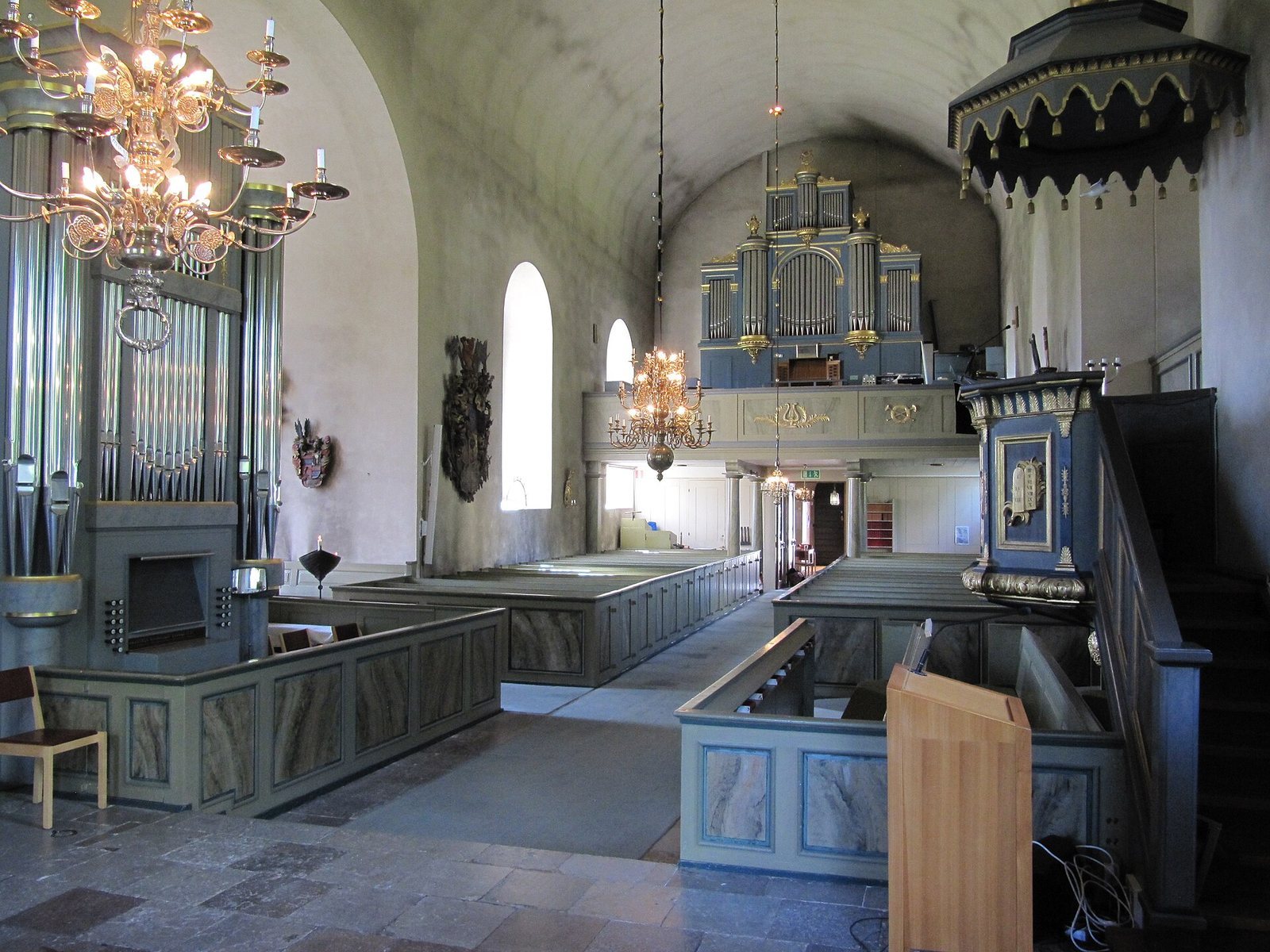
The altar cross comes from an altarpiece made between 1763 and 1765 by the sculptor Dahlström of Norrtälje. The pulpit dates from the late 1850s and has a polygonal body and a canopy. The church’s communion vessels and incense burners date from the Middle Ages. A cope embroidered by the late-medieval Swedish painter and church decorator Albertus Pictor is now held at the History Museum.
Fonts and chandeliers
A wooden baptismal font stands in the south transept. Fragments remain from a gray-blue limestone font dating to about 1300. A cast-stone font made in 1937 by sculptor Axel Wallenberg is kept in the vestibule on the tower’s ground floor. A brass chandelier dating to the late 16th century hangs in the choir, while a silver chandelier from the mid-18th century is above the baptismal font.
Organs
The church’s organ history includes a six-stop instrument, with six selectable pipe registers, built and installed by Jonas Ekengren in 1765–1766. Daniel Wallenström of Uppsala built a 14-stop organ with two manuals and pedal in 1859. Later instruments with two manuals and pedal had 16 stops: one was built by E. H. Erikson in 1928, and another by Åkerman & Lund in 1941. The present mechanically operated organ was built by Grönlunds Orgelbyggeri in 1959, using a case dating from 1859. A 15-stop choir organ built by Walter Thür Orgelbyggen, with a case designed by Ulf Oldaeus, was inaugurated on Easter Sunday in 2002.
Mortuary chapel
The mortuary chapel west of the church was built in 1951. It is made of concrete and hollow cement blocks, with plastered exterior walls and a slate-covered hipped gable roof. It is used for smaller gatherings.