Östra Ryds Church: A Parish Church in Åkersberga, Sweden
Site at a Glance
- Country
- Sweden
- Primary era
- Early Modern
- Eras represented
- Medieval, Early Modern, Modern
- Civilizations
- Swedish
- Site type
- Religious
- Remains
- Church
On this page13 sections
History
Östra Ryds Church is the parish church of Österåker–Östra Ryd parish in Åkersberga, Sweden, within the Diocese of Stockholm, an ecclesiastical district overseen by a bishop. The church is recorded as consecrated around 1300, and its development was closely connected with the owners of nearby Rydboholm Castle.
Medieval origins and the Sture family
The sacristy is thought to be the oldest part of the church, dating to about 1300 and belonging to an earlier church. Anund Sture, a Swedish nobleman who owned Rydboholm around 1430 and died in 1434, is considered the patron who commissioned the present church. An inscription in the choir vault supports this attribution.
In 1449, Johannes Iwan painted the church’s walls and vaults. An inscription among the paintings names him. Following Anund Sture’s death, Rydboholm passed to the Vasa family, a Swedish dynasty, and after 1515 it belonged to the Brahe family, a prominent Swedish noble house.
The Brahe rebuilding
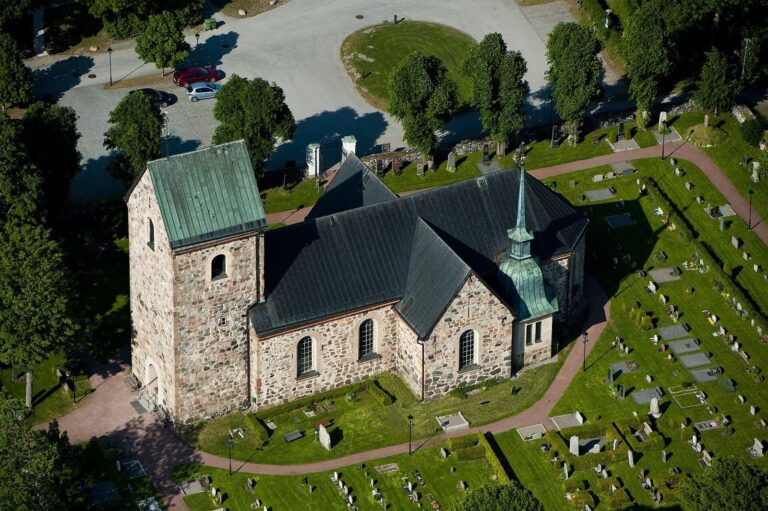
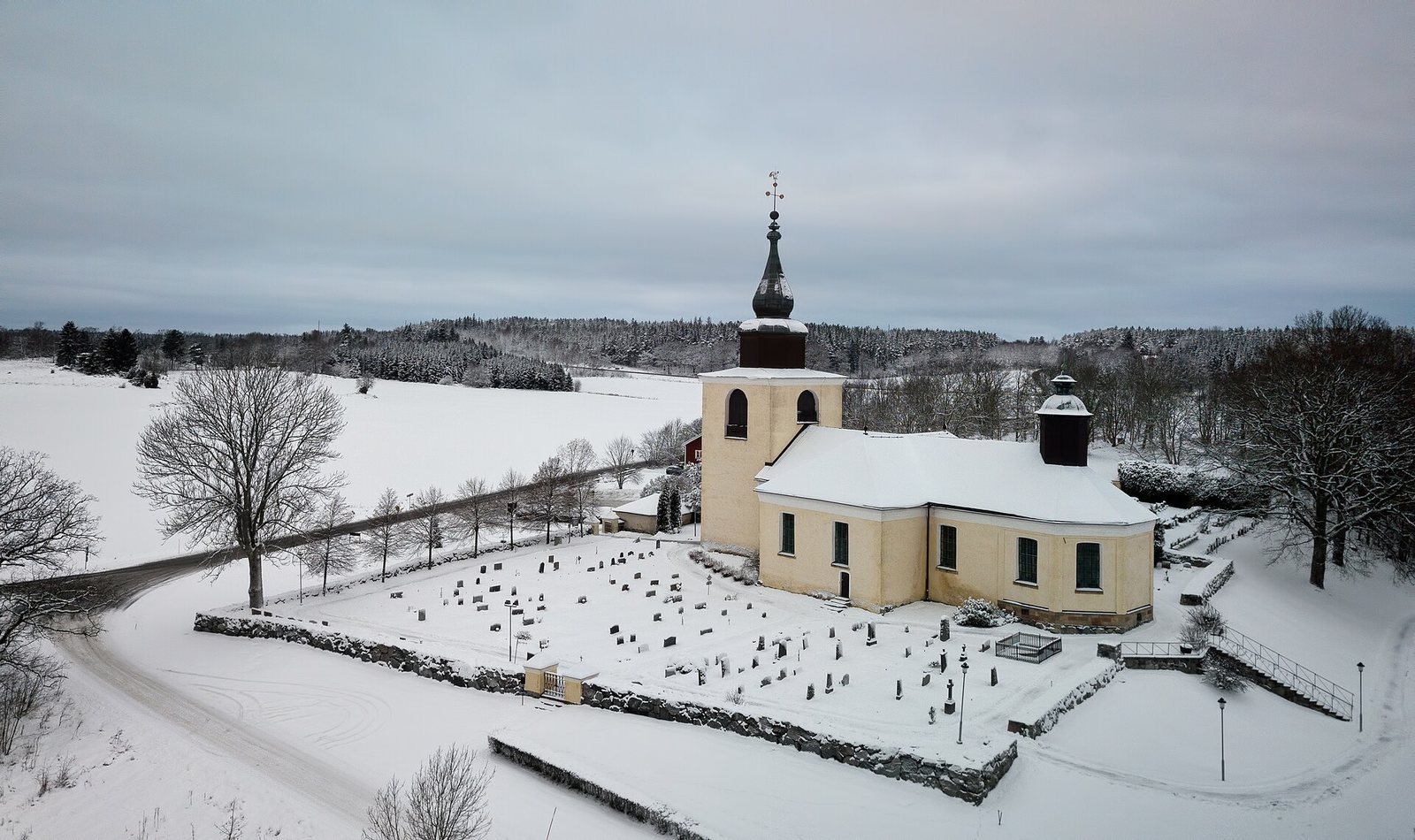
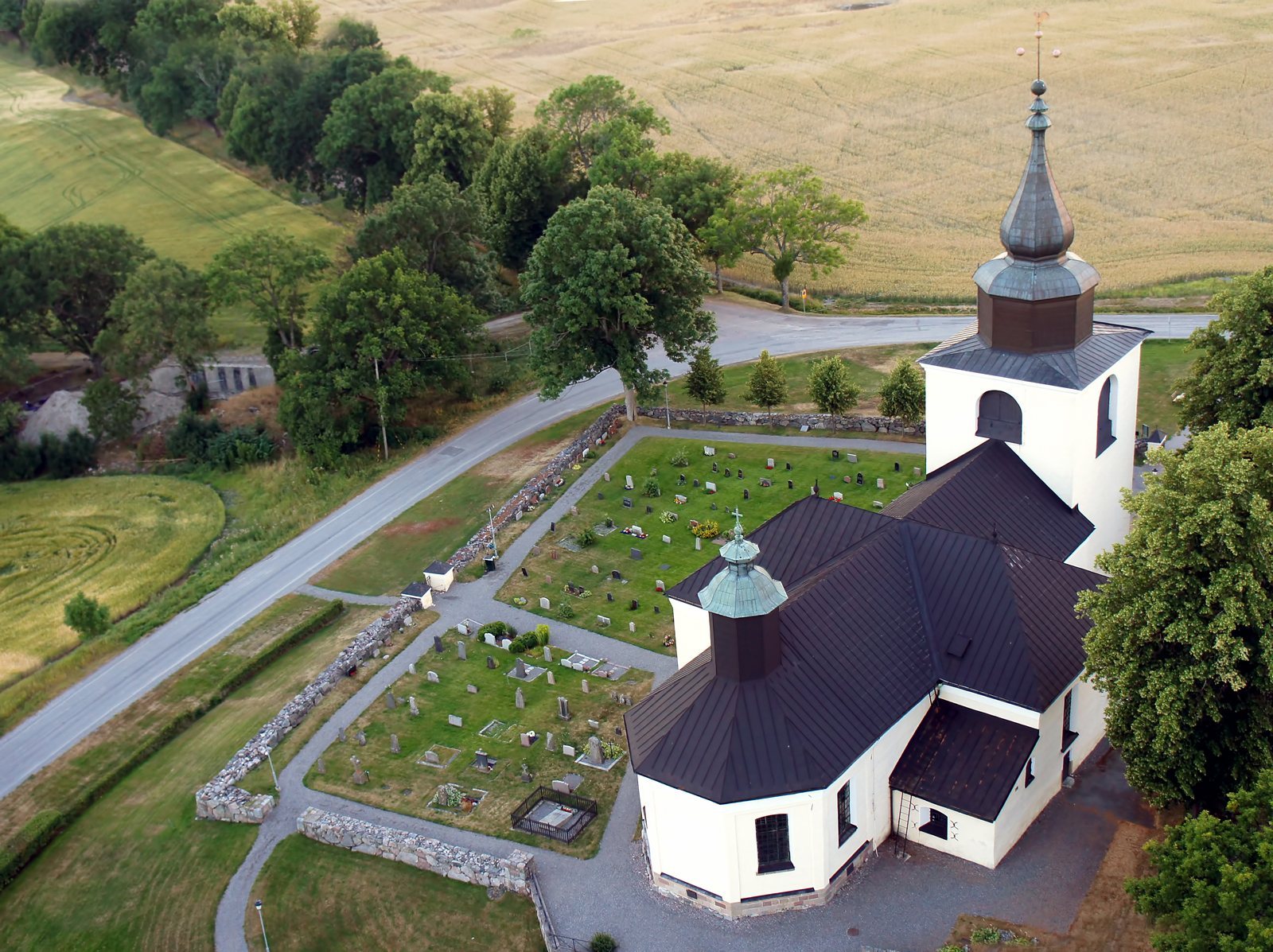
The church acquired its present general form between 1690 and 1693, when Nils Brahe owned Rydboholm. The work added the north and south cross arms, raised the west tower and gave it a spire, and built an eastern burial chapel for the Brahe family. The south porch was removed, and the tower’s ground floor became the west entrance.
Rediscovered paintings and later changes
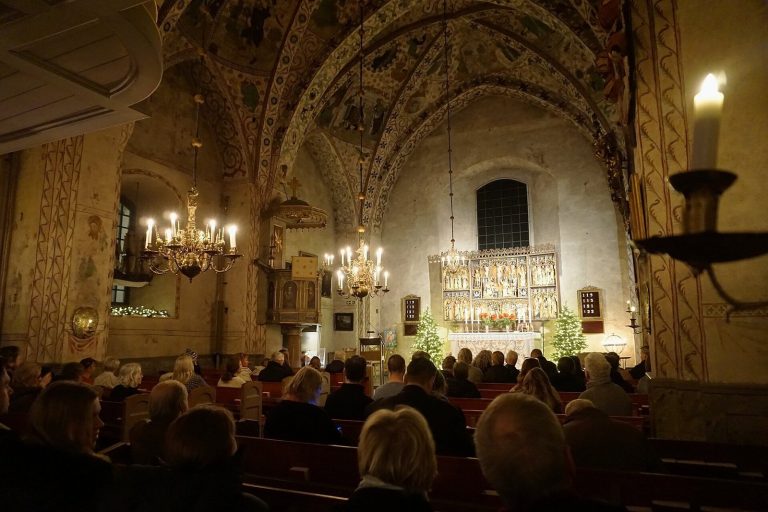
In the late eighteenth century, the wall paintings were covered with whitewash, except for those in the choir vault. Paintings on the choir’s upper walls and in the nave’s two western corners were uncovered in 1835. Further paintings in the nave and sacristy came to light in 1924, and more were uncovered during a major renovation in 1991.
The open pews now in the church were installed in 1991. They replaced pews put in during the late nineteenth century, which had replaced the earlier enclosed pews.
The organ
In 1773, the church’s two small organs were unusable. Jonas Ekengren, a Stockholm cabinetmaker and organ builder, made a single-keyboard pipe organ in 1781. In 1841, Pehr Zacharias Strand of Stockholm built another single-keyboard organ, with a separate pedal keyboard, behind Ekengren’s facade. The earlier keyboard and its stop controls were retained.
Theodor Frobenius & Co. of Lyngby conserved and enlarged the organ in 1949, adding a second keyboard division behind the older instrument. Its keyboard range was extended to g³ and its pedal range to f¹. The keys continued to work through a mechanical system, while air pressure operated the stops. The work followed a proposal by Waldemar Åhlén, Stockholm’s music director.
Marcussen & Søn of Aabenraa partly rebuilt the instrument in 1980, adding one stop to its second keyboard and returning the stop controls to a mechanical system. In 1999 and 2000, Bergenblad & Jonsson Orgelbyggeri rebuilt and enlarged it to 21 stops, the controls that select groups of organ pipes. The church also received a chest organ from Sune Fondell’s Ålem organ workshop in 2000.
Remains
Layout and exterior
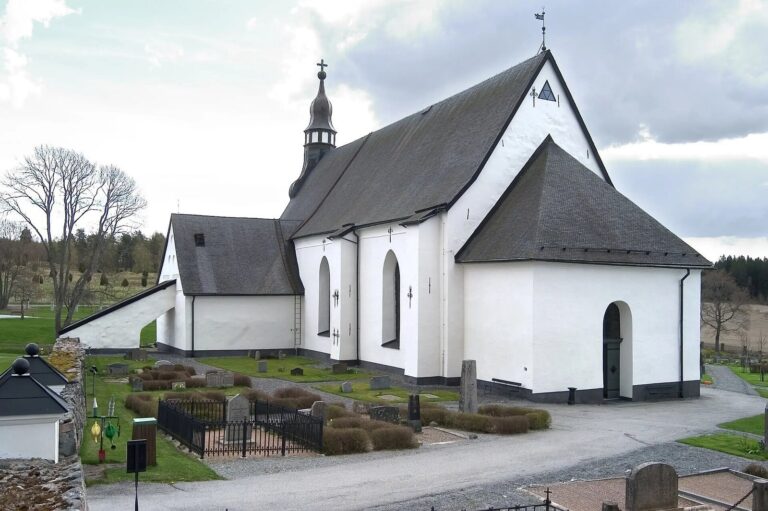
A long avenue connects the church with Rydboholm Castle. The church has a single-nave plan, with one main worship space and no side aisles. North and south transepts extend crosswise from it. The sacristy, later joined to the north transept, is on the north side; the tower stands at the west end, and the Brahe burial chapel occupies the east end, which terminates in several angled sides. The walls are brick faced with yellow plaster, and the roofs are covered in sheet metal.
Interior and furnishings
Earlier church fabric
The eastern end of the present nave served as the choir of an earlier, straight-ended hall church attributed to Anund Sture. A hall church has a broad, unified interior. Its choir had groin vaults, formed where vaulted sections cross, and the building had stepped gables. The sacristy has moulded rib vaults.
A modified limestone baptismal font, dated to the mid-thirteenth century, has a canopy-like structure over its basin. The church also has a sculpture of Catherine of Alexandria, a Christian saint and martyr, dated to the late thirteenth or early fourteenth century. Both objects may relate to the earlier church.
Paintings and family furnishings
Wall paintings survive in the choir vault, on the choir’s upper walls, in the nave’s western corners, and in the nave and sacristy. The church’s furnishings include gifts from members of the Vasa and Brahe families of Rydboholm. Around forty older oil paintings are displayed in the building.
Brahe burial chapel
The burial chapel at the east end has a polygonal termination and a roof turret. An elaborate wrought-iron screen separates it from the rest of the church interior.
Organ and gallery
A Neoclassical gallery runs along the west wall. The main organ has 21 stops and a separate console on the north side of its case. Strand’s original console is mounted on the south gable, and ten of his original eleven stops remain in the instrument.
West tower
The tower’s ground floor serves as the west entrance. Above it, a lantern-like stage rises to an onion-shaped spire.