Westbatterij Muiden: A Fort Protecting Muiden’s Harbor
Site at a Glance
- Rating
- 4.4
- Popularity
- Low
- Country
- Netherlands
- Primary era
- Modern
- External website
- Open
- Eras represented
- Medieval, Early Modern, Modern
- Civilizations
- Dutch, Holy Roman Empire
- Site type
- Military
- Remains
- Fort
On this page8 sections
History
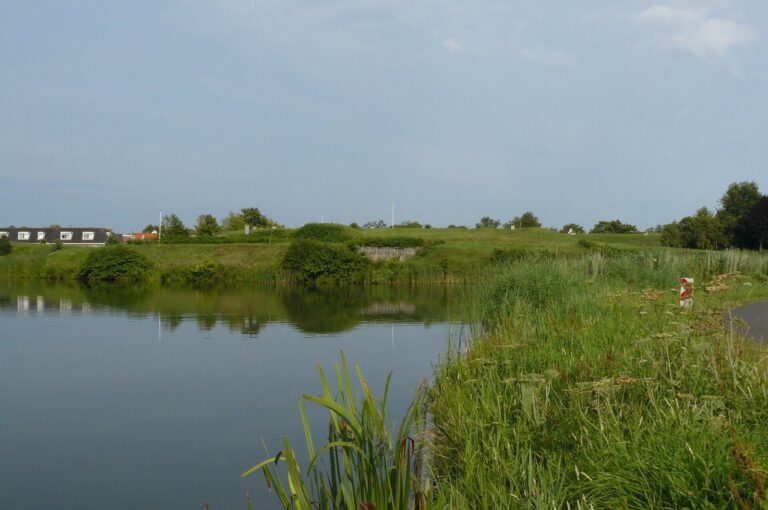
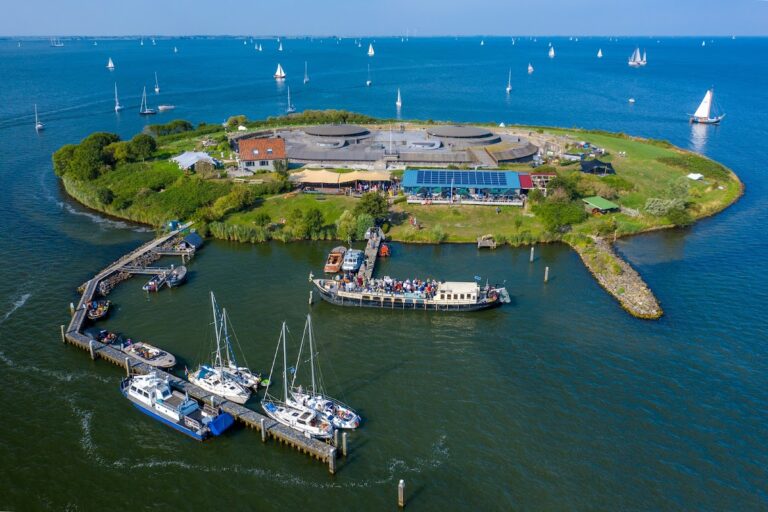
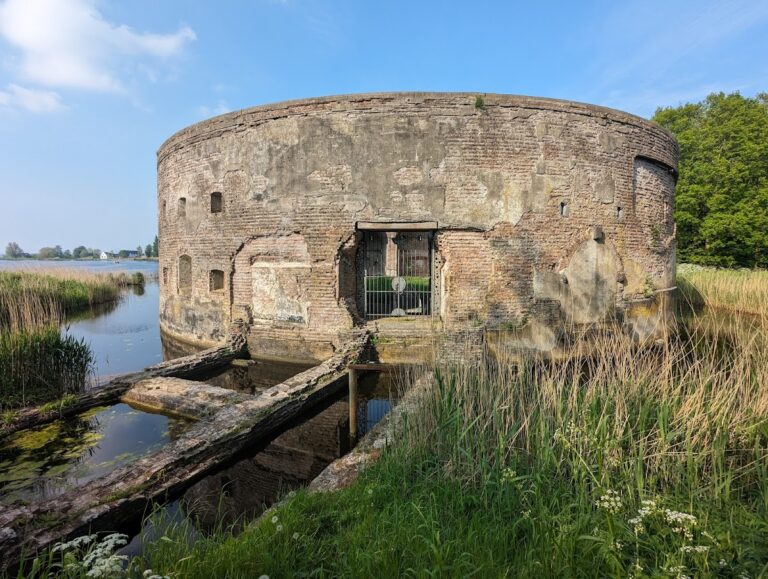
Westbatterij Muiden is a brick tower fort on the west bank of the Vecht at the river’s mouth in Muiden, the Netherlands. Built in 1850–52 as part of the New Dutch Waterline, a Dutch defense system based on deliberate flooding, it was intended to protect the harbor entrance and provide fire along the Zuiderzee dike.
Early defenses
A fortification stood at the Westbatterij site by 1427 and was enlarged over time. Muiden’s defenses also focused on the sea sluices, built in 1674. These could admit water from the Zuiderzee, a former inlet of the North Sea, to flood the land behind the town.
In 1799, three earthen batteries were built around the mouth of the Vecht. Two stood on the east bank near Muiderslot, a medieval castle, while the third occupied the site of the present Westbatterij on the west bank.
The tower fort and changing defenses
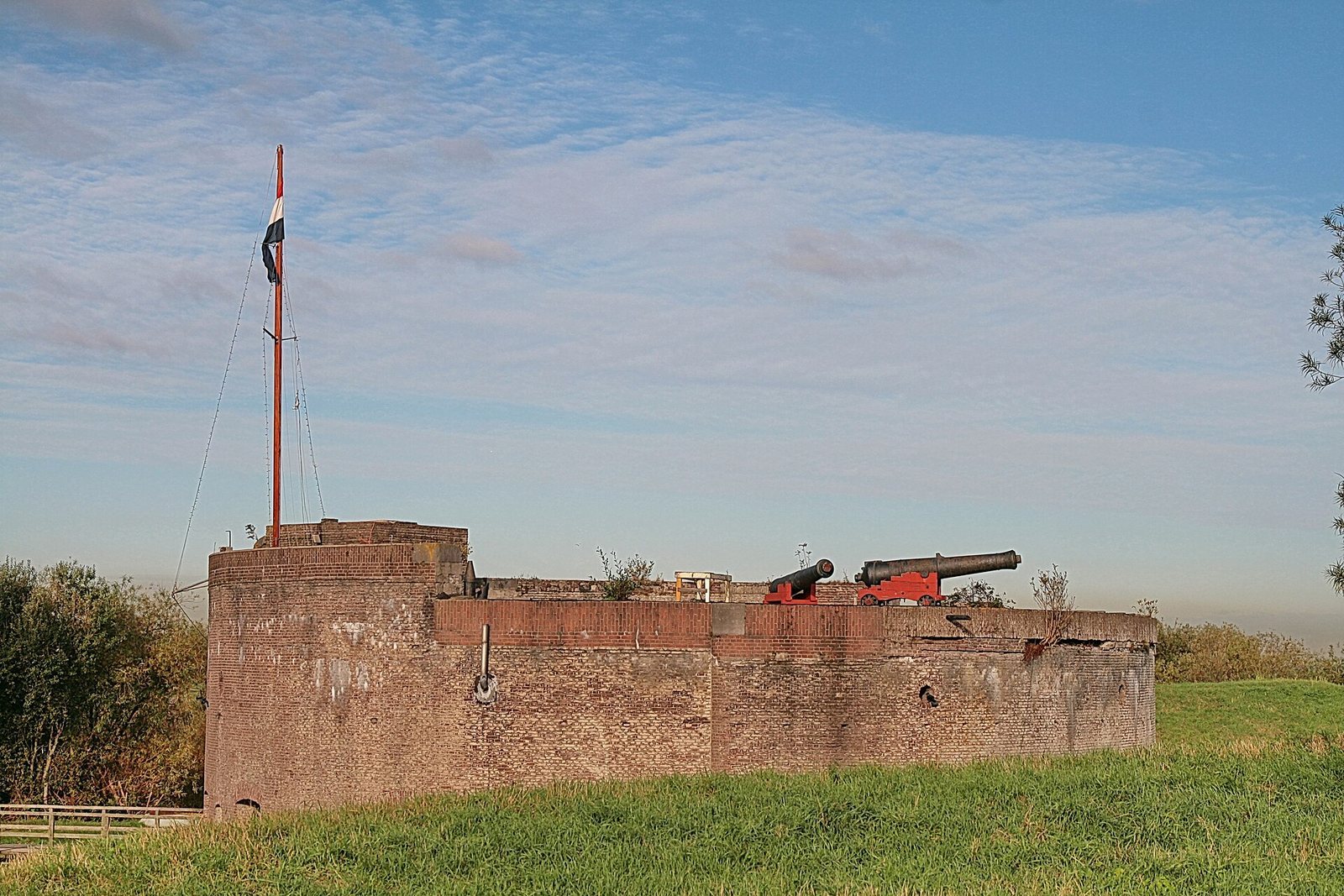
The tower fort’s guns were first placed on the ground floor, where the lower dike left them a clear field of fire. After breaches led to the dikes being raised, the guns were moved to the roof. A stair tower was added in 1868. During works from 1880 to 1885, earth was placed over part of the tower to protect its walls; no other alterations were made.
In 1885, the introduction of high-explosive shells and more accurate rifled guns, whose spiral barrel grooves improved projectile accuracy, made the fort vulnerable to artillery fire. Muiden’s fortified town was transferred in 1892 from the New Dutch Waterline to the Defence Line of Amsterdam, a separate defense system centered on Amsterdam. Fort Pampus, a Dutch coastal artillery fortification completed in 1895, could target Muiden’s harbor entrance and sea sluices. No further changes were made to the Westbatterij.
Military use and later history
During the mobilization for the First World War, the fort held a garrison of 84 men. It mainly provided storage and accommodation for troops in the fortified town, then quickly fell out of use after the war. The Westbatterij played no part in the Netherlands’ defense during the Second World War. Later in the conflict, the German Wehrmacht, the armed forces of Nazi Germany, installed anti-aircraft guns there.
After years of decay, a sea-scout group began using the fort in 1973. The Dutch army’s engineer corps removed earth banked against the tower in connection with this use. In 1999, the municipality of Muiden bought the fort from the state property service. It remains in use by sea scouts and is listed as a Dutch national monument.
Remains
Plan and outer defenses
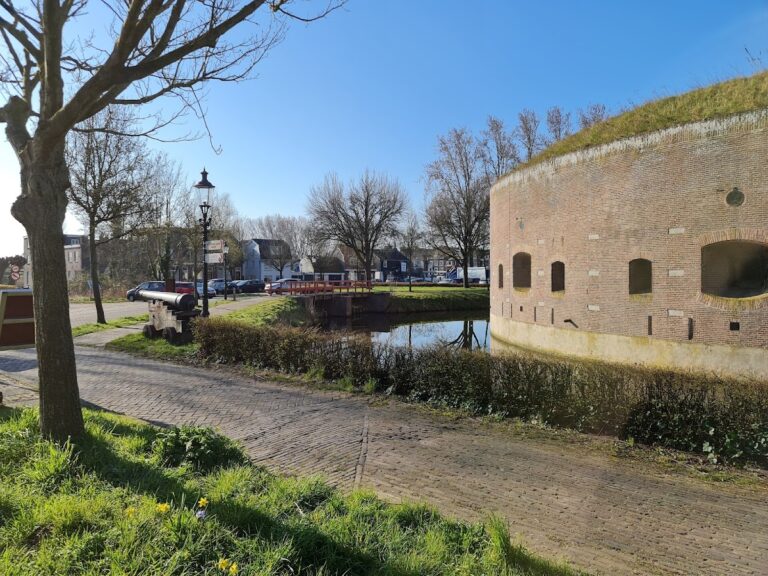
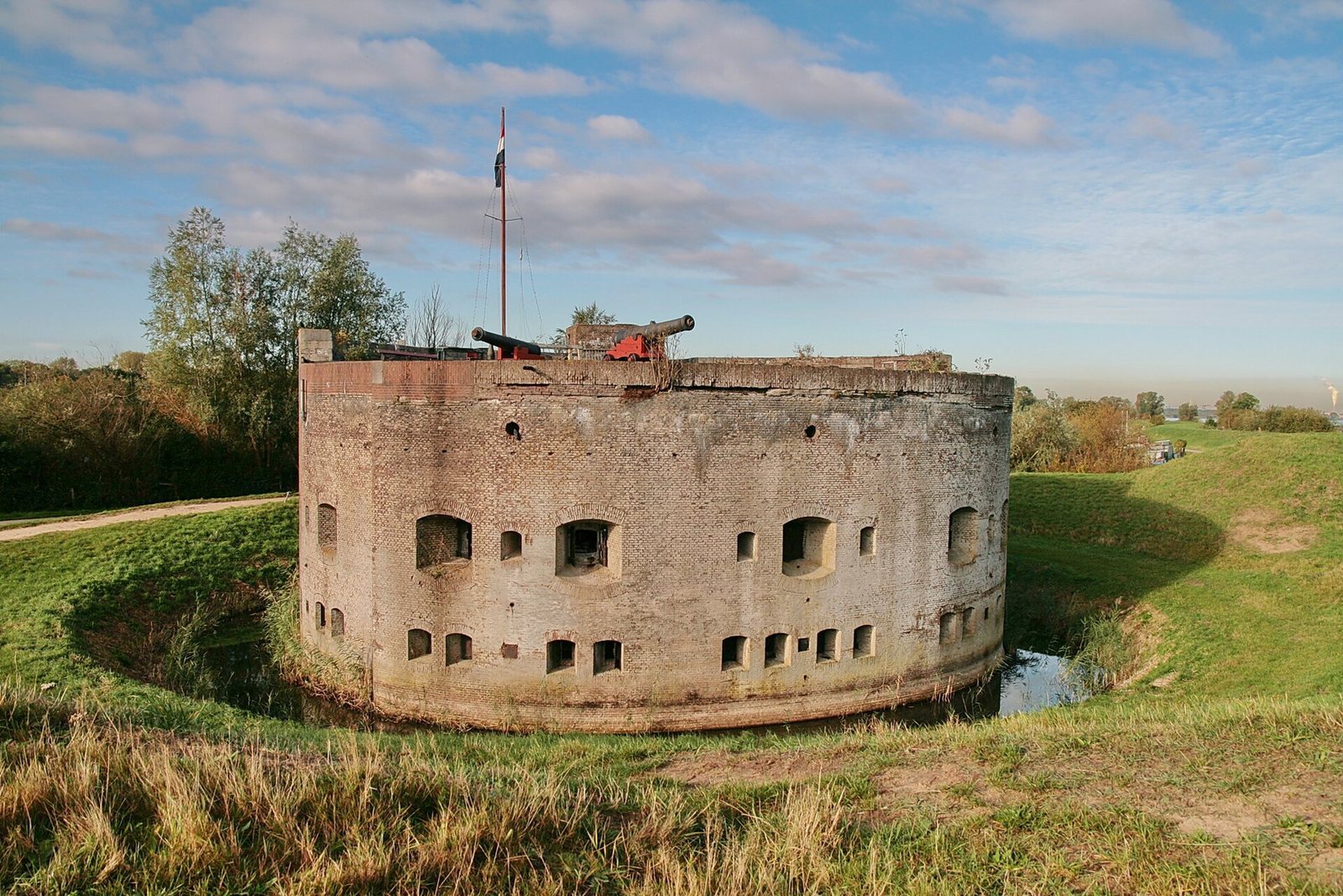
The two-storey fort has an oval plan and measures 19 by 22 metres. Its brick walls are thicker on the sea-facing sides. An approximately eight-metre-wide moat once surrounded it, with a wooden drawbridge on the landward side connecting to the ground floor. A layer of earth covers the roof.
Rooms and gun positions
The ground floor and cellar each contain nine vaulted rooms arranged around an oval central space called the ring room. The outer walls of the rooms have one or more embrasures, openings in a fort wall through which weapons can be fired. Each ground-floor gun chamber has three. The ground floor held the artillery positions, while the lower level contained sleeping quarters, a kitchen, a washroom, and other facilities. A cistern beneath the floor collected rainwater.
Stair tower
A half-oval projection on the southwest side contains a curved masonry staircase connecting the fort’s levels.