Trashigang Dzong: Bhutan’s Fortified Religious and Administrative Center
Site at a Glance
- Country
- Bhutan
- Primary era
- Early Modern
- Eras represented
- Early Modern, Modern
- Civilizations
- Bhutanese
- Site type
- Military
On this page9 sections
History
Trashigang Dzong is a fortified complex combining religious and administrative functions in Bhutan. Its main fortress was built in 1659 as Bhutan consolidated its eastern territories. It is one of the country’s largest dzongs and is regarded as the oldest and most valued among the dzongs of eastern Bhutan.
The name means Fortress of the Auspicious Hill. Its association with bringing the east’s eight regions under Drukpa authority connected the fortress to Bhutan’s expansion into territories previously governed by local rulers. Drukpa is a school of Tibetan Buddhism.
Eastern consolidation and foundation
A boundary dispute between Dewa, the ruler of Khaling, and Bhutan was referred to a Tibetan mediator. Differences in language and translation contributed to the mediator favoring Bhutan’s position, after which Dewa rebelled. A local lama sought guidance from Chhogyal Minjur Tempa, the Penlop, or governor, of Trongsa, and later met Ngawang Namgyal, also known as Zhabdrung Rinpoche, at Punakha. Ngawang Namgyal was a Buddhist leader who unified Bhutan and shaped its religious and secular government.
The lama became Ngawang Namgyal’s disciple, received religious teachings and ritual objects, and was instructed to spread Drukpa teachings in the east. As local territories gradually came under Bhutanese rule, Dewa also submitted. A small dzong was built in 1646, then demolished before a larger fortress was constructed in 1659. Ngawang Namgyal had prophesied its construction and directed Chhogyal Minjur Tempa to subdue local chiefs and build it. The chosen site was intended to serve religious and secular government and help defend against external attack.
Military tradition and expansion
Tradition holds that a Tibetan army withdrew after seeing the fortress, with soldiers remarking that it was a Sky Dzong rather than a building on the ground. During a second Tibetan campaign, a local lama was captured, imprisoned in Lhasa, and killed while attempting to escape.
Gyalsey Tenzin Rabgye expanded the dzong between 1680 and 1694. Dudjom Jigdral Yeshe Dorje later consecrated it and gave it the name Trashigang. In 1936, Dzongpon Dopola, an official in charge of a dzong, expanded the fortress; a fire that year also destroyed timber parts of the old structure.
Monastic and administrative roles
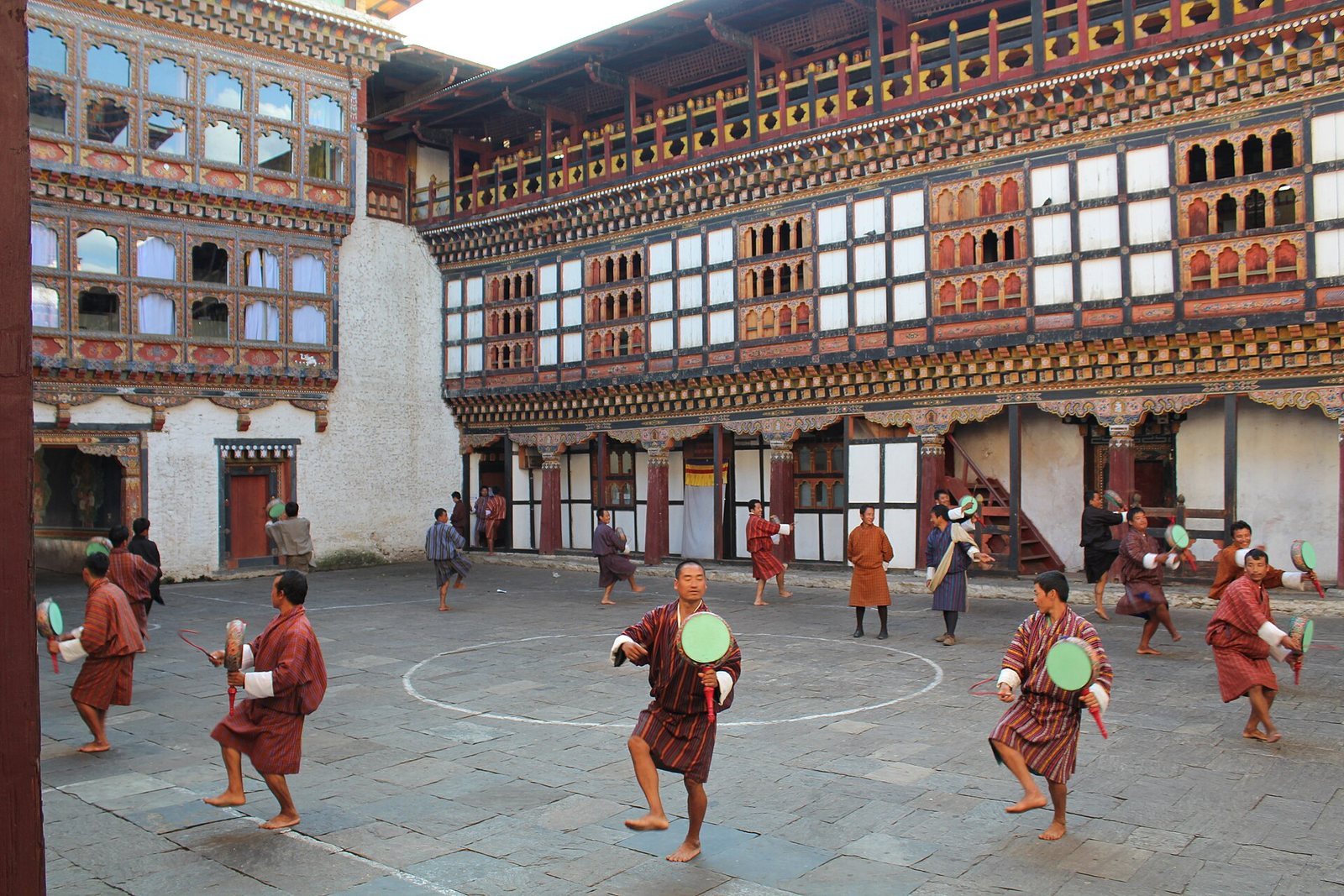
The dzong housed a monastic community and served as the main administrative center of Trashigang District, overseeing 15 gewogs, or local administrative units. It also hosted the annual Trashigang Tshechu, a religious festival in Bhutan.
After the 1962 Sino-Indian War between India and China, Bhutan allowed Indian soldiers returning home to travel through eastern Bhutan on the condition that they leave their rifles in the dzong’s armoury and continue unarmed. The rifles remain there.
Damage and restoration
After many years, the dzong was completely dismantled and restored with the approval of King Jigme Dorji Wangchuck, Bhutan’s third king. The 2009 Bhutan earthquake, with its epicenter about 16 kilometers from the dzong, caused wide cracks. Emergency repairs followed, and major renovation work carried on from 2014 through 2018.
Remains
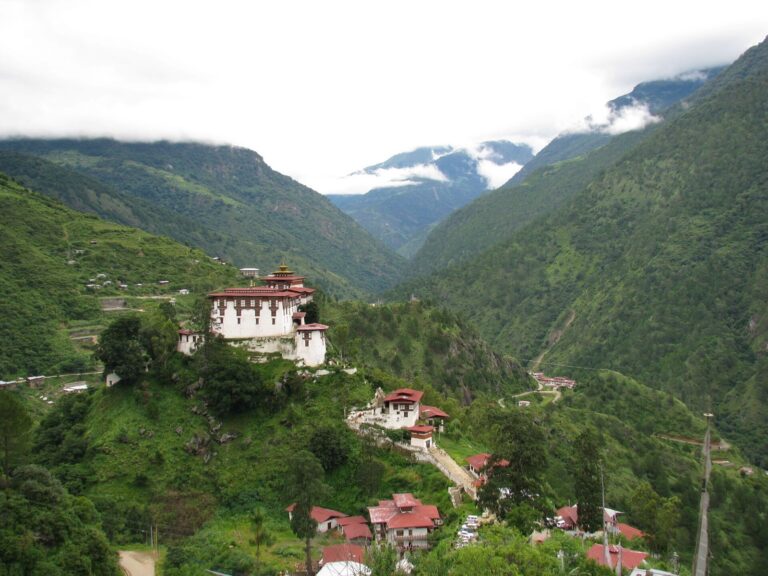
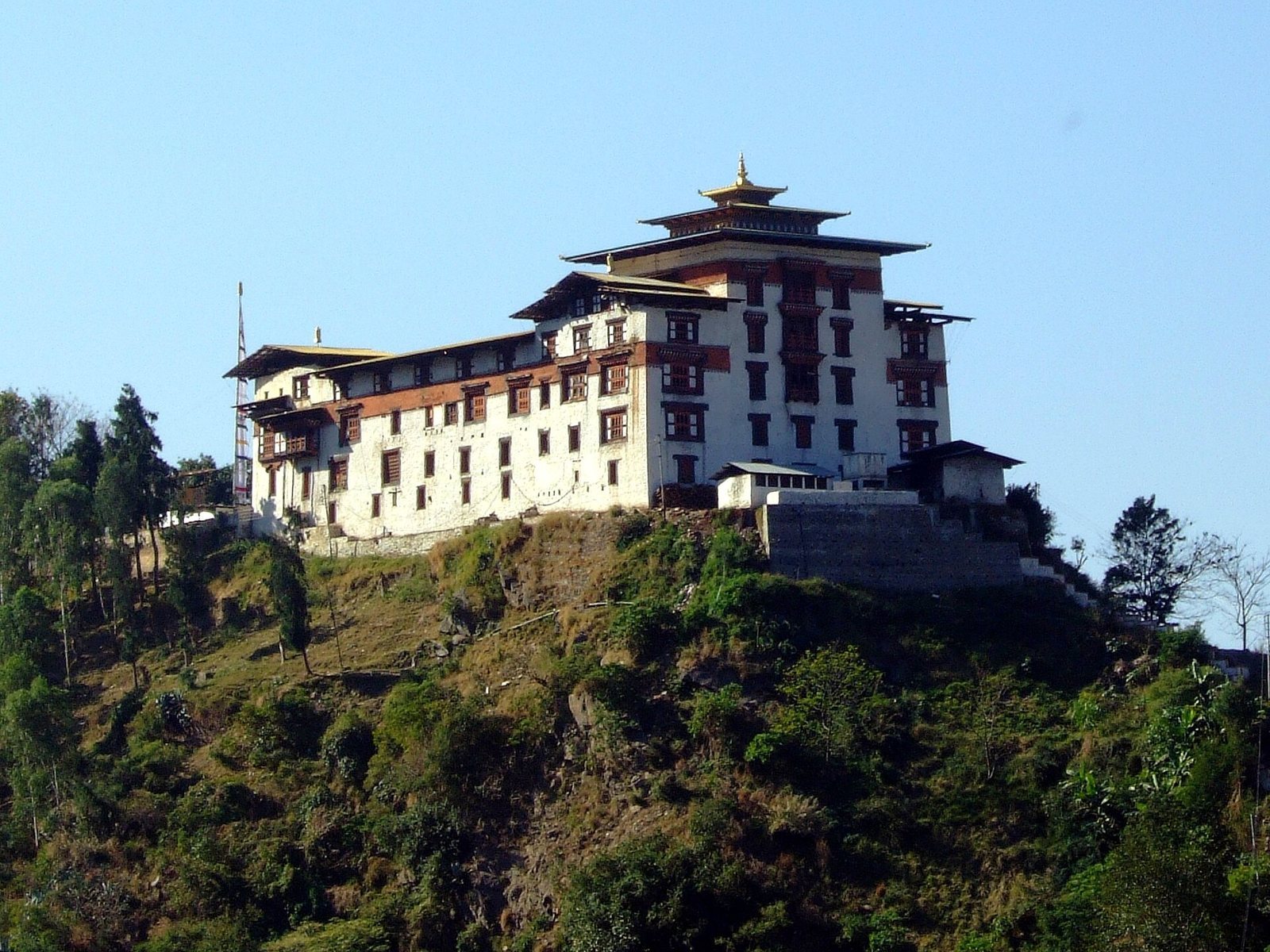
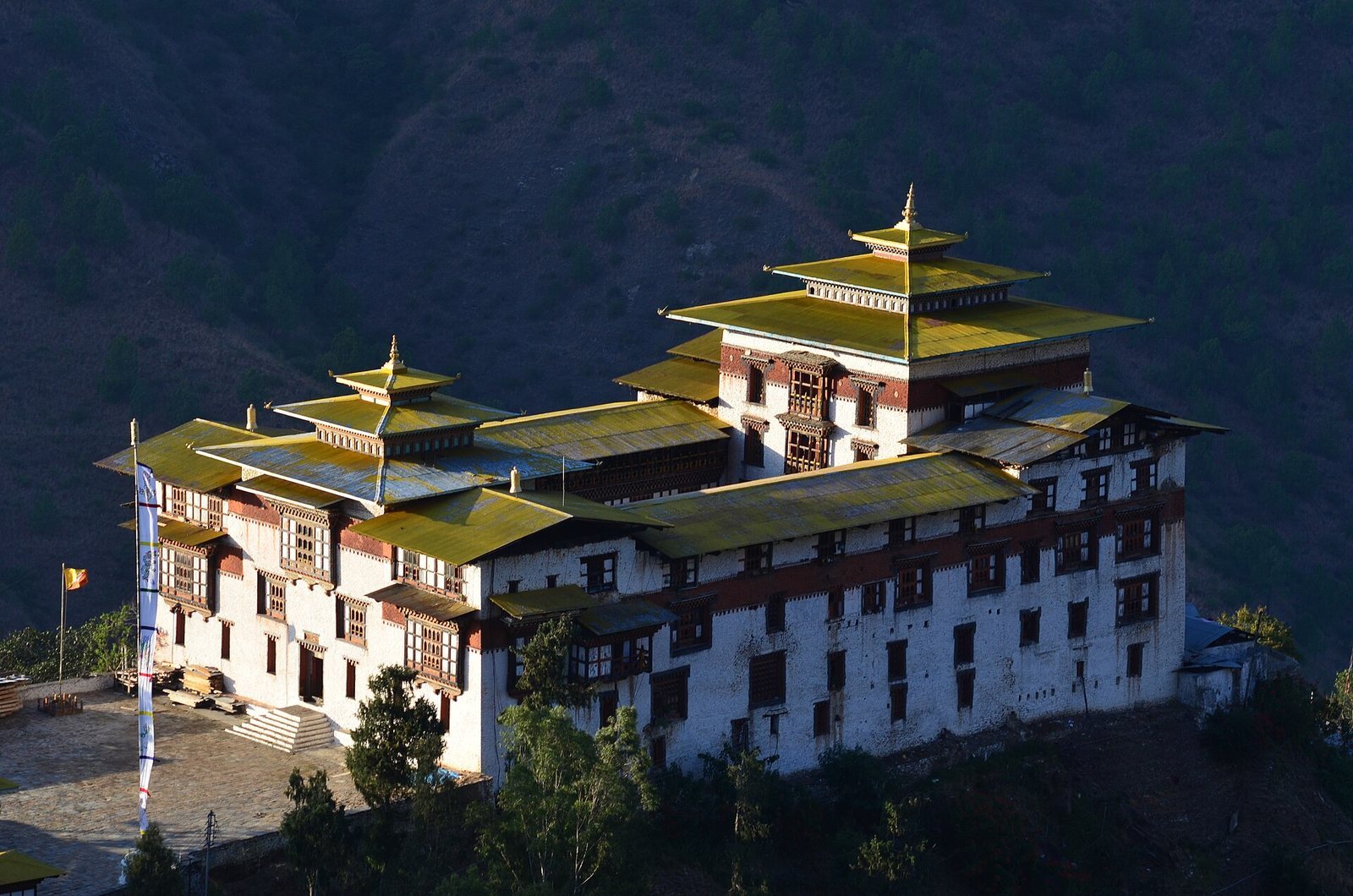
The square, five-storey fortress stands on a rocky ledge bordered by steep cliffs on three sides, overlooking the Drangme Chhu and Gamri Chhu rivers. Its layout centers on a main tower, with temples and administrative and residential buildings arranged around it.
Central tower and temples
The tower’s levels contain a lama’s temple, a temple for the tenth-day observance, a temple for accomplished practitioners, a protector chapel, and an assembly temple. Together, these spaces served the religious life of the complex.
Buildings around the tower
In front of the central tower are a shrine associated with the lama lineage, a Tara temple, the chief district administrator’s office, and other district offices. To the tower’s right are a senior lama’s residence and a Guru temple. Monks’ quarters and departmental offices occupy both sides of the complex.
Facilities outside the fortress
A hostel for 50 monks and a dining hall were built outside the dzong grounds for health and safety reasons. Renovation work used locally sourced materials, including timber mainly from Bumthang and stone from Chazam.