Laténium: The Cantonal Archaeological Museum of Neuchâtel
Site at a Glance
- Popularity
- Medium
- Country
- Switzerland
- Primary era
- Stone Age
- Eras represented
- Stone Age, Bronze Age, Iron Age, Classical, Medieval, Early Modern, Modern
- Civilizations
- Celtic, Roman
- Site type
- Museum
On this page19 sections
History
Laténium, the cantonal archaeological museum of Neuchâtel, stands at Espace Paul Vouga in Hauterive, Switzerland. Officially inaugurated on 7 September 2001, it was created to unite the canton’s archaeological collections in a purpose-built institution. Its name comes from nearby La Tène, the Swiss archaeological site whose finds gave their name to a phase of the European Iron Age associated with Celtic material culture. Archaeological sites from the Upper Paleolithic, Neolithic, and Bronze Age were excavated on the museum grounds before construction began.
Discoveries along Lake Neuchâtel
Archaeological discoveries in what is now the canton of Neuchâtel grew during the nineteenth century, particularly along the northern shore of Lake Neuchâtel. They drew regional notables and intellectuals to the subject, brought European attention to the research, and helped extend interest in preserving archaeological remains beyond elite circles.
From 1868 to 1882, the first Jura water correction, a drainage project intended to reduce flooding in the low-lying Seeland, lowered Lakes Neuchâtel, Biel, and Murten by 2.7 metres. The change exposed many lakeshore sites that had been underwater, making their archaeological remains easier to collect. In the late twentieth century, construction of the A5 motorway between Yverdon-les-Bains and Solothurn prompted extensive excavations along parts of the lake’s northern shore. These produced about 500,000 finds, which entered the cantonal collections as they were uncovered.
Creating a cantonal museum
In 1952, the city of Neuchâtel transferred its archaeological collections from the Museum of Art and History to the canton, with the aim of establishing an independent museum. The cantonal archaeological museum opened to the public in 1962 in the courtyard of Hôtel DuPeyrou. Its building could not adequately accommodate the collections, which were also dispersed across the region.
In 1979, cantonal legislators Rémy Scheurer and Pierre Duckert proposed a new archaeological museum, and the Grand Council, Neuchâtel’s legislature, adopted their motion. An architectural commission led by prehistorian Hans-Georg Bandi organized an international competition that received 47 proposals. In 1986, Laurent Chenu, Bruce Dunning, Pierre Jéquier, and Pieter Versteegh were selected to define the architectural programme. The Grand Council approved construction funding in October 1995, subject to a public referendum. On 9 June 1996, voters approved the project with 66% in favour. Construction began in 1998.
Research and public work
Museum director and founder Michel Egloff intended Laténium to bring archaeological research, teaching, and heritage conservation into closer contact, as well as to improve the care and presentation of the canton’s collections. The museum houses more than 525,000 pieces, with about 3,000 objects and other archaeological remains selected for its permanent exhibition. Its regional collections serve as international reference collections for archaeology and help explain almost 50,000 years of European prehistory. Laténium is Switzerland’s largest archaeological museum.
The building also accommodates the University of Neuchâtel’s chair of prehistory, an academic unit devoted to the subject, and the cantonal archaeology section of the Neuchâtel Office for Heritage and Archaeology. The institutions share facilities and resources, including storage, laboratories, teaching rooms, a library, and archives.
In 2003, Laténium received the Council of Europe Museum Prize for its contribution to understanding European cultural heritage. It was the first Swiss museum to receive the award. In 2018, the International Union for Prehistoric and Protohistoric Sciences recognized its work in communicating archaeology and promoting heritage protection with its Medal for Archaeological Mediation. Laténium also initiated the Iron Age Europe museum network in 2011. The partnership supports research, preservation, and public presentation of European Iron Age sites and collections, with participants including Bibracte, the Celto-Roman Museum of Manching, Ullastret, Ensérune, and institutions in Munich, Barcelona, Lausanne, and Frankfurt.
Remains
The museum grounds combine a building on Lake Neuchâtel’s shore with an archaeological park established in 1995. Inside, the permanent exhibition moves backward through time, from the Renaissance to the Mousterian, a Paleolithic period. Its sloping floor suggests a descent into the past, while the lack of visual partitions presents the periods as connected. Busts at the entrance illustrate physical characteristics of past inhabitants of the region; nearby cases display objects made from bone, silver, and rock crystal. Games, interactive information points, audiovisual material, computers, daily-life models, and quizzes provide additional ways to explore the exhibits.
Permanent exhibition
Medieval, Renaissance, and Roman displays
The displays on medieval and Renaissance life address political, religious, and economic power alongside domestic experience. Architectural fragments and decorative pieces come from regional castles and Neuchâtel’s collegiate church, served by a college of clergy. The exhibition also includes floor tiles and wallpaper from a medieval residence. Roman-period material includes storage jars from southern France, Italy, and Spain, as well as architectural remains, statues, and wall-painting fragments from the palace of Colombier, a large complex at the site of today’s Château de Colombier.
Shipwrecks and lake archaeology
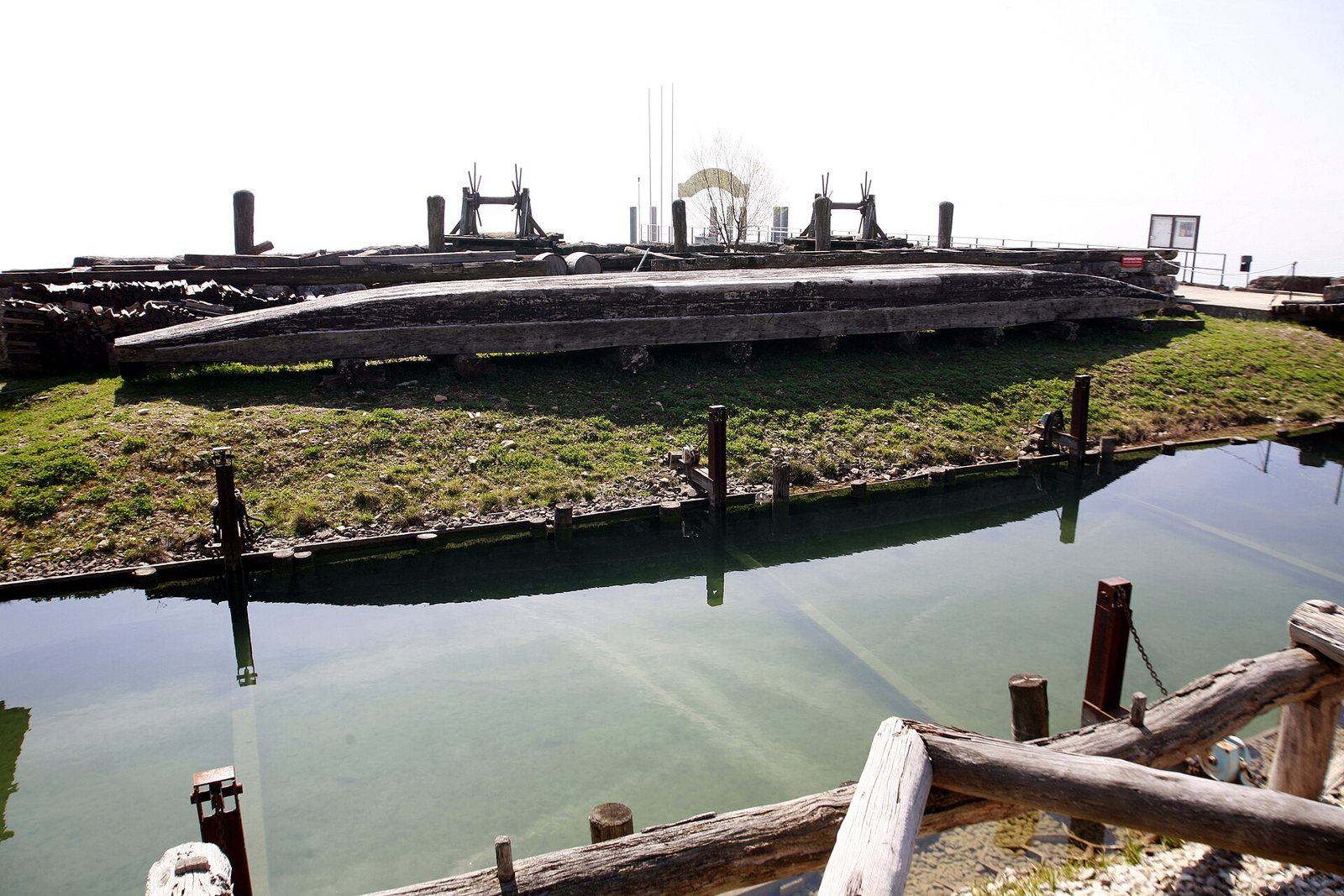
A cargo of iron bars from a shipwreck is displayed in the arrangement in which it was found at the bottom of Lake Neuchâtel, illustrating regional commerce in the sixteenth century. The underwater archaeology displays also include dugout canoes, carved from single tree trunks, from the Neolithic and Bronze Age, along with other Roman vessels. A permanent facsimile reproduces a 20-metre barge from Roman-era Gaul, discovered underwater at Bevaix. Finds from lake excavations show prehistoric lakeside settlements and boatbuilding across a span of 5,000 years.
Iron Age collections
Finds from La Tène and from Hallstatt, an earlier phase of the Iron Age, include objects from isolated discoveries and burial mounds. The exhibits feature finely decorated objects associated with warfare, ceramics, a bronze wine service, a fragment of a third-century BC carnyx, an ancient Celtic war trumpet, and a Celtic smith’s kit. A chariot wheel from the same century is also displayed. Bronze and Iron Age weapons include a bronze sword with an antenna-shaped hilt fitting and another with a human-shaped hilt.
Neolithic and Bronze Age lakeshore communities
Thousands of foundation piles found in lake sediment illustrate early settled communities along the northern shore of Lake Neuchâtel. The exhibition shows buildings arranged in rows in relation to prevailing winds and surrounded by palisades. Their inhabitants cultivated crops, kept livestock, and used resources available in the area. These structures are pile dwellings, buildings supported by upright piles and often built in or beside water.
Paleolithic and Mesolithic evidence
The galleries trace changes in hunting and toolmaking from the Paleolithic into the Mesolithic, the period between the Paleolithic and Neolithic. Magdalenian, a later Paleolithic period, is associated in the displays with hunting reindeer, bison, and horses; Mesolithic communities hunted red deer, roe deer, and wild boar. The tool sequence shows blades, scrapers, and burins giving way to microliths, small worked stone tools. Other exhibits address rock shelters, camps, Paleolithic caves, the Last Glacial Maximum in Switzerland, and the remains of a Magdalenian hunting camp.
The Neuchâtel Venus
The Neuchâtel Venus, also called the Venus of Monruz, was found in 1990 during rescue excavations for the A5 motorway near Monruz. This Magdalenian figurine, made of jet and dated to about 12,000–13,000 years ago, is 1.8 centimetres high. Its curved female form has prominent buttocks, and a drilled hole at the top suggests it may have been worn as a pendant or used as an amulet.
Bichon Cave
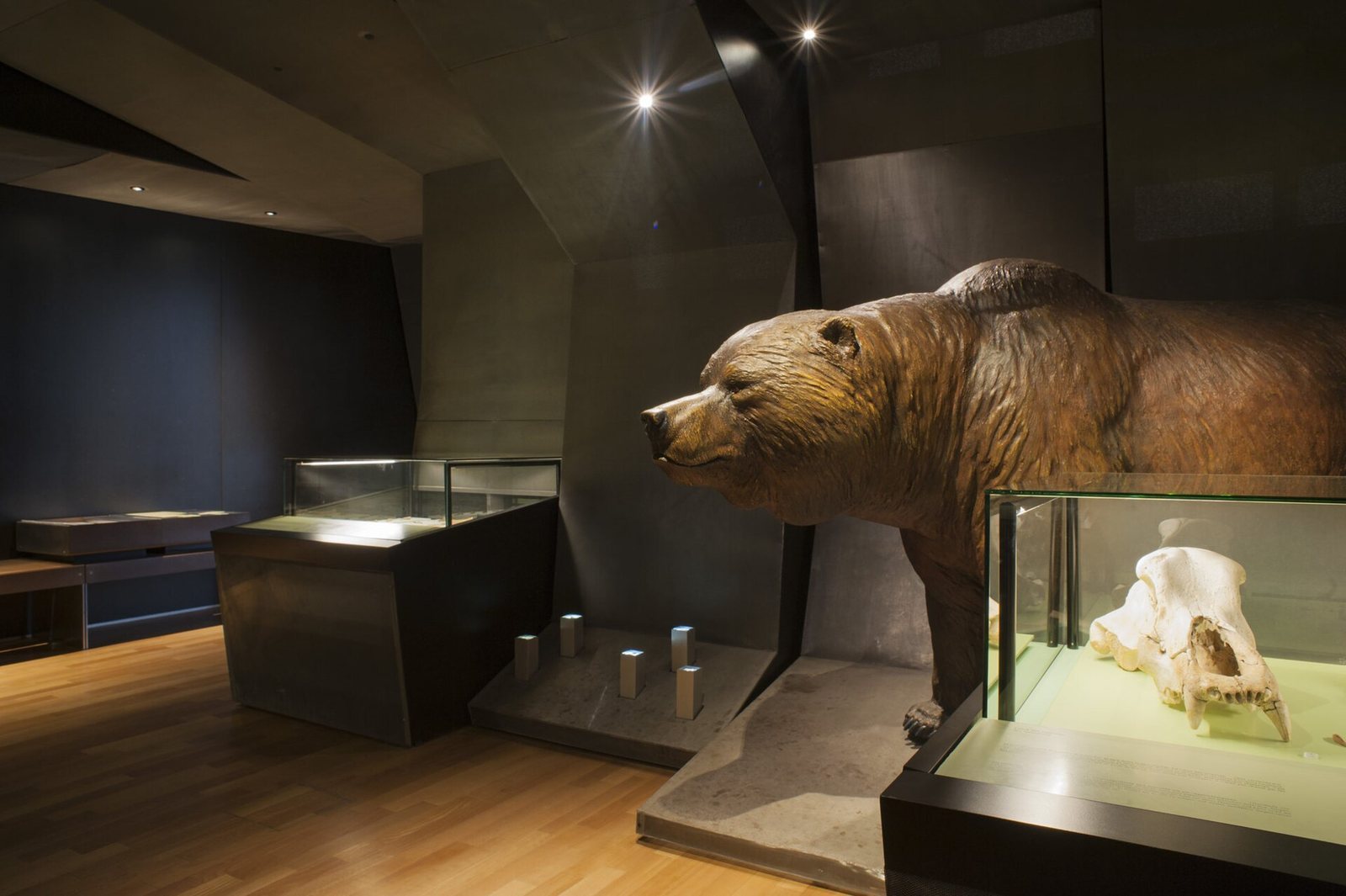
An exhibit recounts the deaths of a hunter and a bear at Bichon Cave. The hunter, about twenty years old, wounded the bear but did not kill it; the bear killed him before dying in the cave. The hunter’s skeleton is among the best-preserved Cro-Magnon skeletons in the world. Cro-Magnon is a traditional term for early modern humans of prehistoric Europe.
Cotencher Cave
The final gallery evokes Cotencher Cave beneath the Areuse gorges. Neanderthals and cave bears occupied it at different times. Its sediments yielded animal remains including woolly rhinoceros, cave lion, wolverine, and squirrel. Cotencher is a reference site for the Middle Paleolithic, a phase of the Old Stone Age.
Visitable storage
Planned from the architectural competition onward, the visitable storage area makes collections beyond those selected for the permanent exhibition accessible, primarily for specialists and more occasionally for other visitors. Its objects include basketry, stone tools, architectural elements, ceramics, and wooden items, displayed in quantity to show variation in form and finish. The holdings cover periods from the Paleolithic through contemporary times.
Archaeological park
The park brings together surviving features, reconstructions, and examples of former lakeshore environments. Together, they illustrate 15,000 years of regional lakeshore history and show how the study of past environments contributes to local archaeology.
Surviving features
Features in the park include a Roman canal, stones bearing cup-shaped marks, a Celtic well, a standing stone, and the Plant de Rives dolmen, a prehistoric stone tomb. Glacially transported boulders are also present. A cast reproduces the floor of a Paleolithic hunter-gatherer camp.
Reconstructed structures
Reconstructions include a Hallstatt burial mound, a Gallo-Roman boat, a Bronze Age pile dwelling, a Neolithic lakeside village, a La Tène house, and a Celtic bridge. They present examples of structures associated with different periods in the region’s past.
Past environments
A mixed oak woodland represents the late Mesolithic, while a tundra setting evokes conditions at the end of the last glacial period. A raised pond represents Lake Neuchâtel’s level before the first Jura water correction. The park also contains modern artworks.