Dora: An Ancient Coastal City and Port in Israel
Site at a Glance
- Popularity
- High
- Country
- Israel
- Primary era
- Classical
- Eras represented
- Iron Age, Classical, Medieval
- Civilizations
- Achaemenid, Assyrian, Byzantine, Canaanite, Mamluk, Phoenician, Ptolemaic, Roman
- Site type
- City
On this page21 sections
History
Dora, also known as Tel Dor, is the archaeological site of the ancient city of Dor on Israel’s southern Carmel coast. Settlement probably began around 2000 BCE, during the Middle Bronze Age, and the city later became a coastal center whose harbor connected it with Egypt and Phoenicia. The name appears in several forms: Dor in biblical texts, Dora in Greek and Roman usage, and later Arabic names associated with a tower on the mound.
Early settlement and the Iron Age
Dor is known from the Late Bronze Age, an archaeological period named for the use of bronze. A thirteenth-century BCE inscription of Ramesses II, a pharaoh of Egypt’s Nineteenth Dynasty, mentions the city. Finds from this period include evidence of metalworking, though the settlement’s architecture is less well understood.
During Iron Age I, the first phase of the archaeological period associated with iron use, Dor grew into a fortified city. A major fire brought this settlement to an end. The city was rebuilt over time, with evidence of substantial continuity in its population and gradual changes in material culture. An eleventh-century BCE Egyptian literary work, the Story of Wenamun, describes Dor as a city of the Tjekker, a group often included among the Sea Peoples in accounts of the Late Bronze Age and early Iron Age. It also refers to the harbor and the city’s links with Phoenicia and Egypt.
The identity of the Tjekker and the cause of the fire remain debated. Ephraim Stern connected the destruction with a Phoenician conquest of the Tjekker, while later excavators stressed the continuity of local material culture and questioned whether a distinct conquest occurred. The Tjekker have been proposed as Phoenicians or as a group originating in Cilicia, but their origins are uncertain.
Biblical accounts present Dor as a Canaanite royal city. Its ruler is described as joining Jabin of Hazor against Joshua, while another passage says the Israelites did not conquer the city and later imposed tribute when their power grew. The account of Solomon’s administration identifies Dor as the center of a provisioning district governed by his son-in-law, Ben-Abinadab. A third-century CE mosaic from Rehov says Dor was exempt from tithes because Jews returning from the Babylonian exile in the fourth century BCE had not settled there.
Assyrian and Persian rule
Dor’s incorporation into the Assyrian empire is generally associated with Tiglath-Pileser III’s conquest of the Sharon coast in 732 BCE, though the timing and circumstances are uncertain. The Assyrians ruled the city directly. It may have served as an administrative center or as an important trading post within Phoenician commercial networks. An early seventh-century BCE royal monument of Esarhaddon names Dor as a major port, and copper and iron working formed part of the city’s economic life under Assyrian rule.
The latest Iron Age finds date to around 650–630 BCE. Settlement then paused for roughly 150 years for reasons that remain uncertain, before resuming after about 480 BCE. Under Persian imperial rule, Dor came under the control of Sidon, a major Phoenician city. An inscription of the Sidonian king Eshmunazar, dating to the early fifth century BCE, lists Dor among territories granted to Sidon by the Persian government. Cambyses II is also associated with granting Sidon control of the city. Around 460 BCE, the Athenians seized Dor from Sidon and used it as a distant naval station; the city later returned to Sidonian control. A geographical work from the late fourth century BCE describes Dor as a Sidonian city.
The city’s name appears to have shifted from Dor to Dora or Doros during this period. Its Persian-era street plan continued in use into Roman times, with major building phases near the end of the fifth century BCE and in the second half of the fourth century BCE.
Hellenistic rule and the Hasmoneans
The transition from Persian to Hellenistic rule, the era following Alexander the Great’s conquests and marked by Greek cultural influence, brought no evident break in urban life. Under the Ptolemies, Dor expanded westward to its greatest extent. The Ptolemaic and Seleucid kingdoms, rival powers in the eastern Mediterranean, contested control of the city. In 219 BCE, Dor withstood an unsuccessful siege by Antiochus III. Around 139–138 BCE, Antiochus VII Sidetes besieged the city, where the Seleucid rival Diodotus Tryphon had taken refuge; the Hasmonean leader Simon Thassi is also associated with this siege. Projectiles found at Dor attest to Hellenistic-period military activity.
Early in the first century BCE, the Hasmonean king Alexander Jannaeus probably captured Dor from Zoilus, who also controlled Straton’s Tower, later known as Caesarea Maritima. Dor became part of the Jewish kingdom, but its material culture remained predominantly Phoenician in character. Jewish inhabitants later lived alongside a largely non-Jewish population.
Roman Dor
In 63 BCE, the Roman general Pompey conquered Judaea and attached Dor to the province of Syria. The city later passed into the province of Judaea, probably near the end of the first century CE. An inscription honoring a Roman governor, found near the eastern gate, has been used to place Dor in Judaea in the early second century. The city prospered under Roman rule and underwent major architectural change. Josephus described its harbor as inferior to Caesarea’s and unsuitable for large ships. He also wrote about administrative changes, tensions between Jewish and pagan communities, and a synagogue at Dor.
In the early 40s CE, young men placed a statue of the emperor Claudius inside the synagogue. Agrippa I appealed to Petronius, the Roman governor of Syria, who ordered the statue removed and affirmed the community’s right to observe its customs. During the Great Jewish Revolt, the uprising against Roman rule from 66 to 73 CE, Roman forces held Jewish captives at Dor; the commander Cestius Gallus is associated with the episode. Dor may also have served as a Roman garrison base. The city minted coins from the Roman period until about 212 CE.
First-century writers Strabo and Pliny described Dor as deserted, but its buildings, inscriptions, coins, and other archaeological evidence show that urban activity continued in the Roman period. Settlement on the mound probably ended in the first half of the third century CE. Coin finds declined around the middle of that century, and local coin production had stopped by about 212.
Late antiquity and the medieval fortress
Eusebius, a Christian bishop and historian, described Dor as deserted in his early-fourth-century geographical work. Bishops of Dor are nevertheless known in 449, 518, and 553. The later coastal settlement included a Byzantine church east of the mound, which remained in use into the Islamic period.
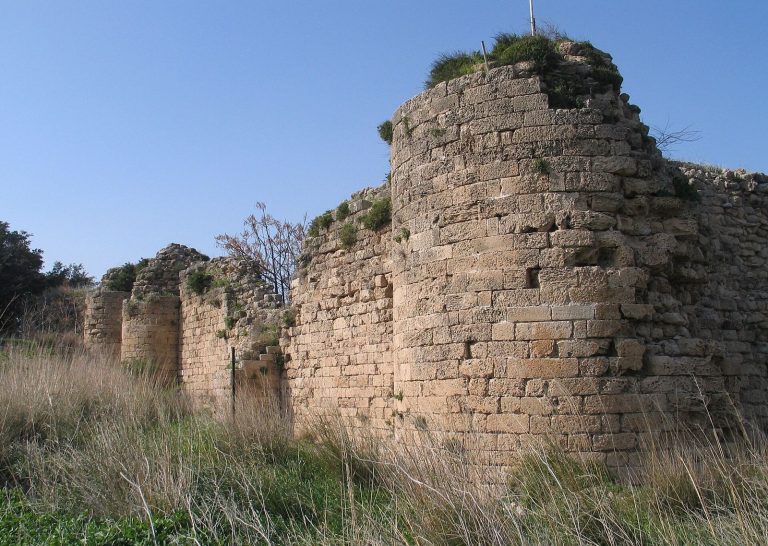
A medieval fortress gave rise to Arabic names for the site meaning Mound of the Tower and Ruin of the Tower. The fortress has often been identified as Merle, a Crusader stronghold in the coastal defenses south of Acre. Its attribution is uncertain: pottery beneath its rampart dates to after the mid-thirteenth century, supporting an alternative proposal that the Mamluk sultan Baybars built it. The Crusader fortress of Merle has also been proposed for another location southeast of Dora. The fortress was abandoned during the thirteenth century.
Modern settlement and archaeological work
During the Ottoman period, the village of Tantura developed around the mound. In 1892, a glass factory for wine bottles was established on land acquired by Baron Edmond James de Rothschild, with Meir Dizengoff as its manager. It closed after a few years and remained abandoned until the 1970s. In 1949, the Israeli communities of Dor and Nahsholim were established on or beside the area of Tantura and the archaeological site.
Archaeological investigations began under John Garstang in the 1920s. Joseph Leibowitz excavated parts of the theater and the Byzantine church in 1952. Claudine Dauphin later investigated the church, while Avner Raban studied harbor installations, including through underwater work, mainly between 1979 and 1984; Yaakov Olami also conducted a broad land survey. Large-scale excavations began in 1980 under Ephraim Stern and continued under Ayelet Gilboa and Ilan Sharon from 2003. The work has exposed occupation layers from the Late Bronze Age through the Roman period.
Research in 2020 identified evidence that a tsunami affected coastal settlements at Tel Dor during the Middle Pre-Pottery Neolithic B, a late Neolithic phase before pottery became common, between about 7900 and 7200 BCE. The wave is estimated to have reached about 16 metres and travelled 1.5 to 3.5 kilometres inland. Recovery in affected areas was slow, but the event did not substantially alter social development in the southern Levant. It has been proposed as a possible contributor to flood traditions, but is not identified with the biblical flood.
Remains
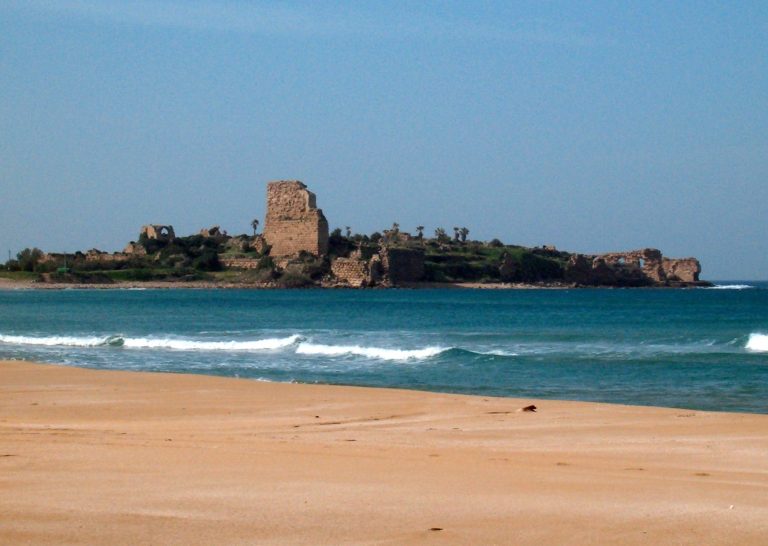
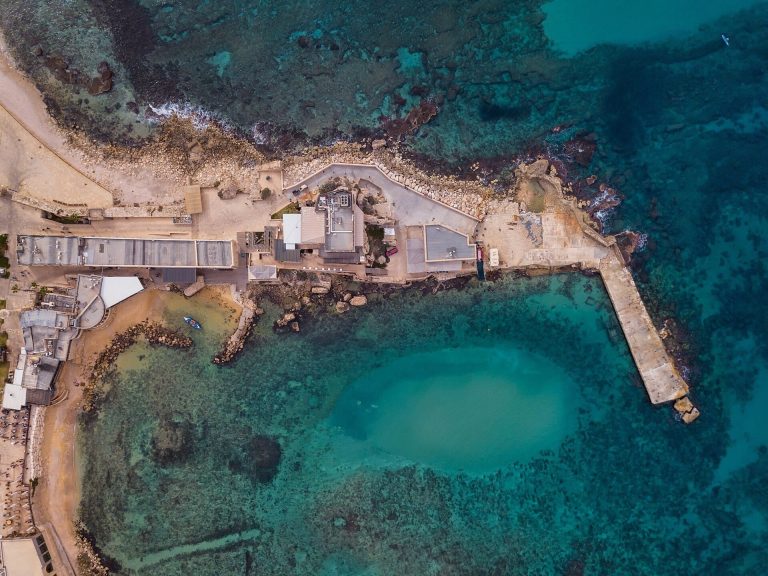
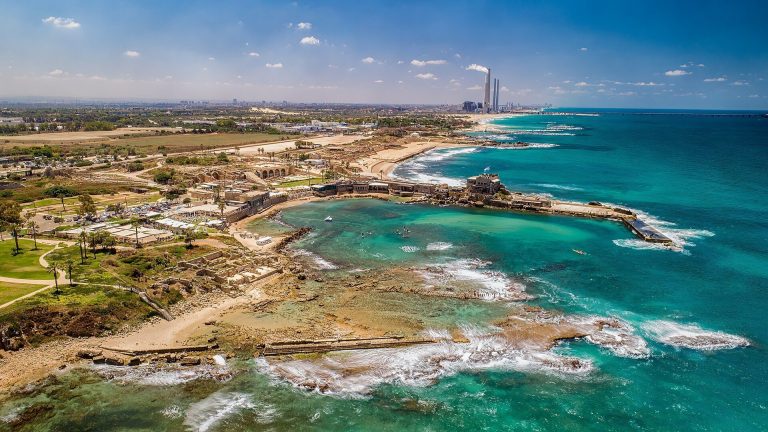
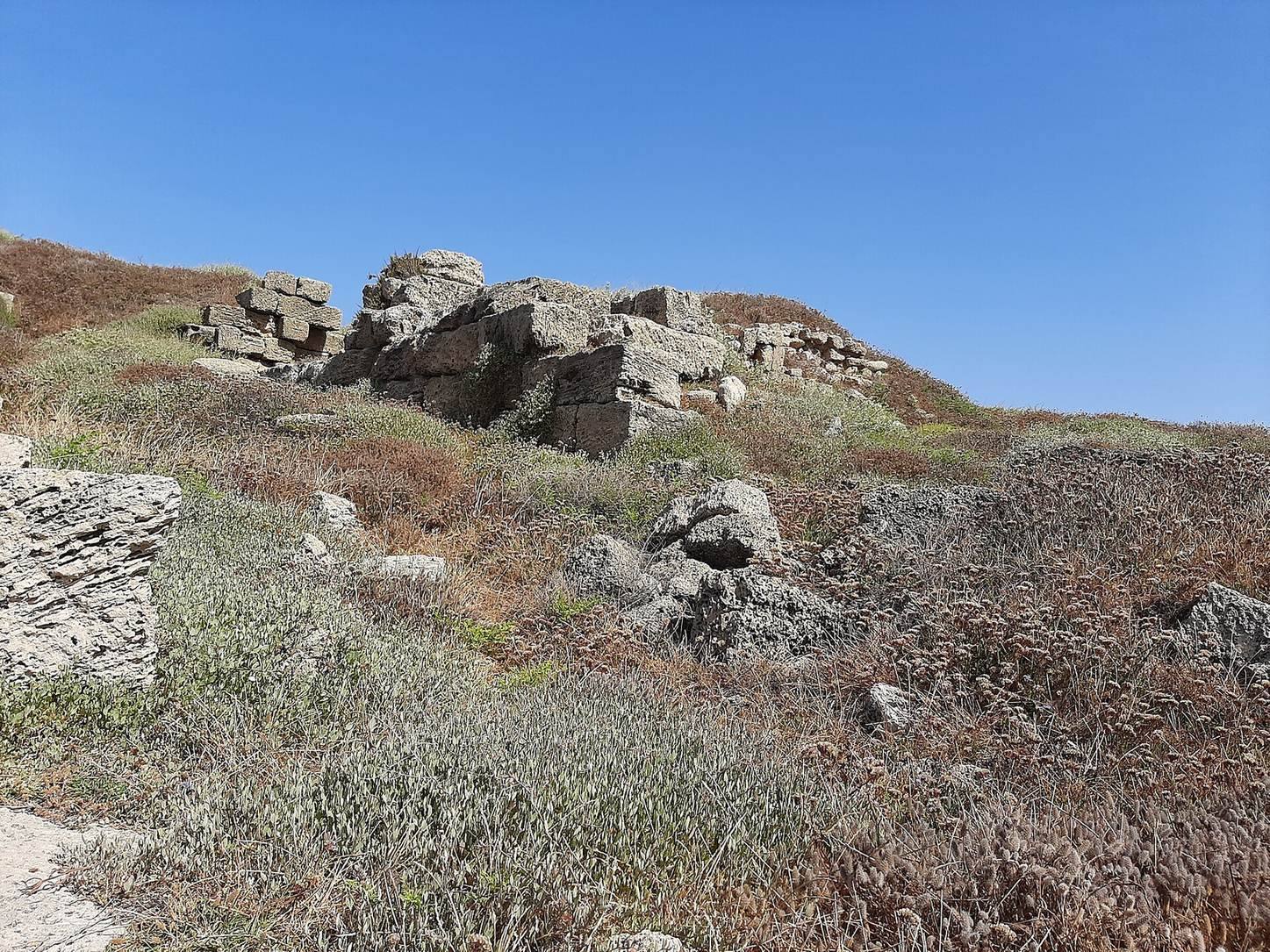
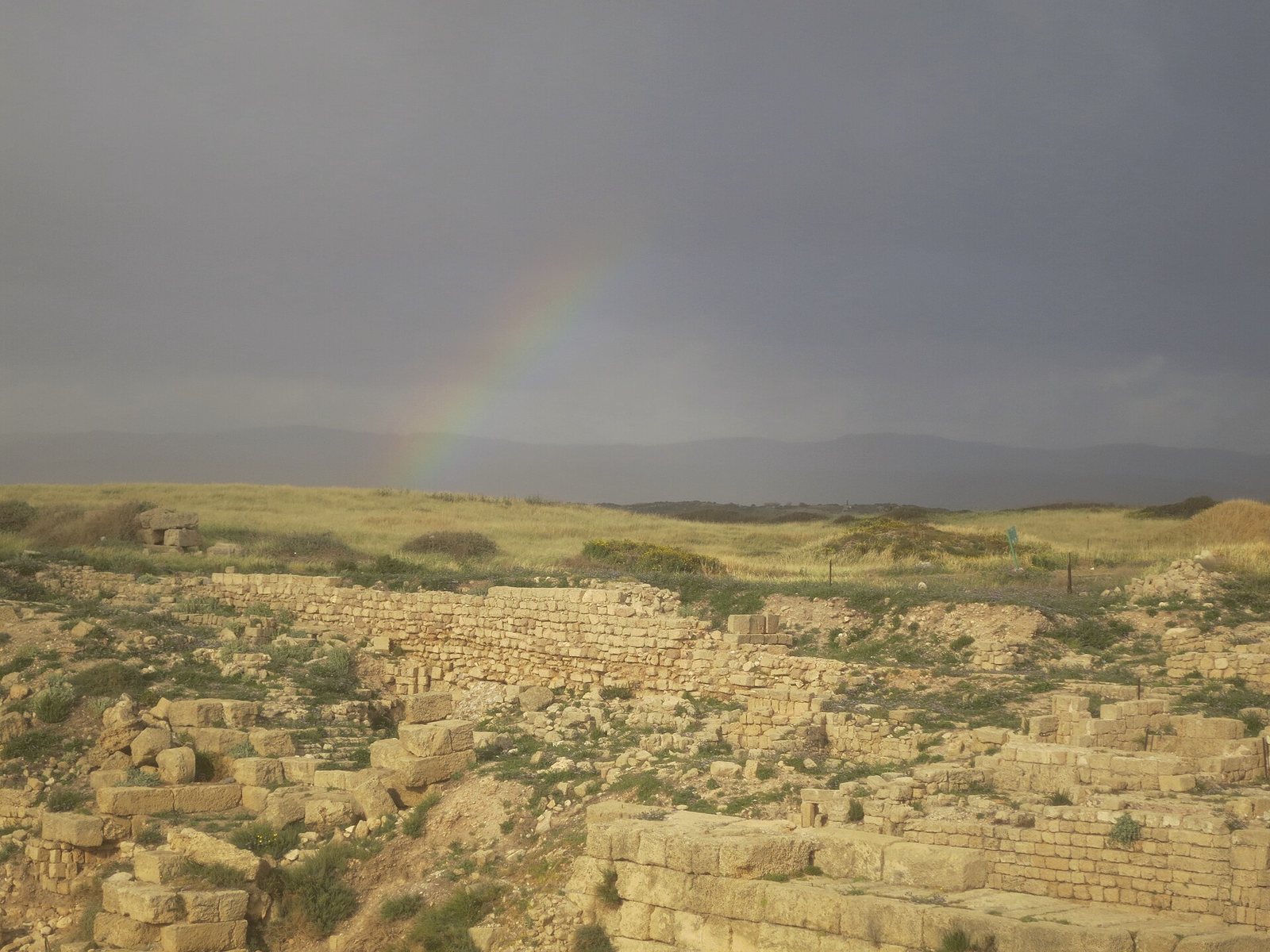
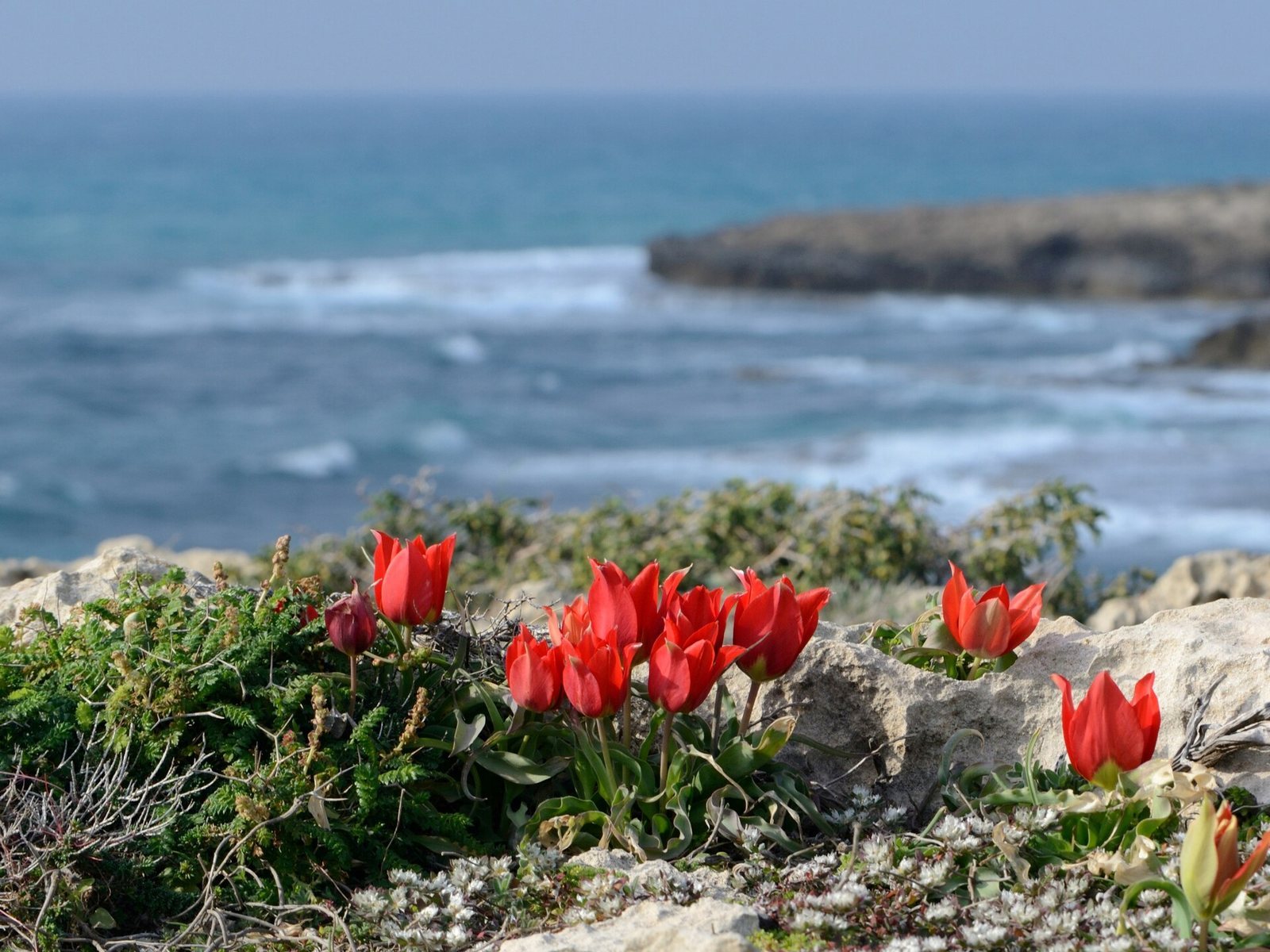
The archaeological site occupies a ridge of calcareous sandstone on a small rocky headland at the northern side of a sheltered inlet. It covers about 70 dunams, or 70,000 square metres, and rises to roughly 10 metres above sea level; low marshy ground protects the landward side. Three coves lie beside the headland. The southern and longest is enclosed by three small islands, creating a lagoon suitable for anchoring ships. This natural setting supported two or three harbors and possibly a dry dock, while a freshwater spring lay near the sea. The excavated remains span successive periods and include buildings of stone, sun-dried brick, and dressed stone blocks.
Harbor and Iron Age remains
Coastal facilities
The coves and sheltered lagoon formed the setting for Dor’s harbor installations. The natural harbor may have supported two or three separate harbors as well as a dry dock for ships. A freshwater spring near the shore added to the coastal resources. Harbor installations have been investigated both on land and underwater.
Iron Age buildings and defenses
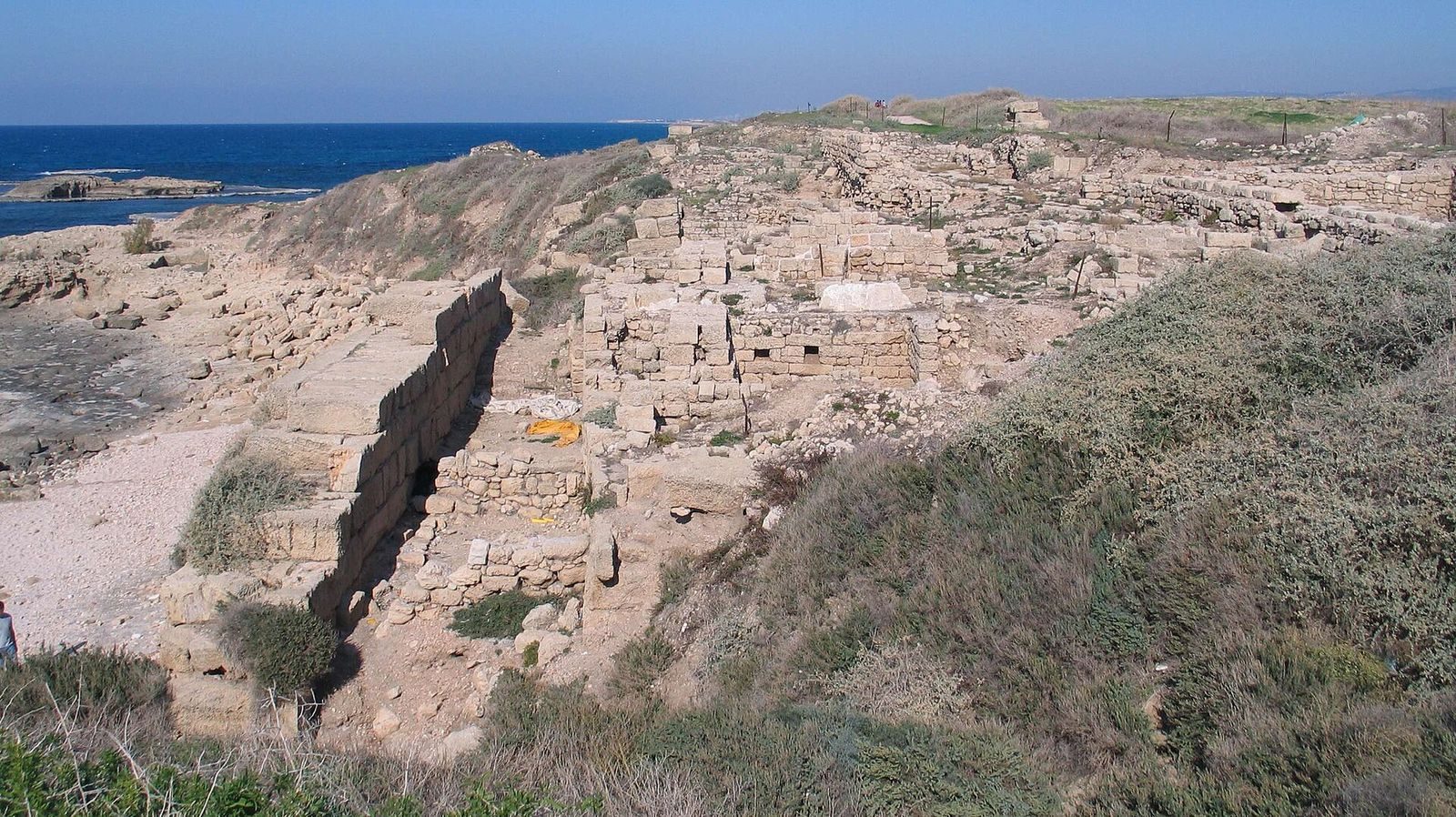
Iron Age I remains include public buildings, fortifications, and private Canaanite courtyard houses. Their pottery maintains Canaanite traditions alongside notable Cypriot influence and imported Egyptian jars. Monumental construction is especially evident in area D2. In area B, defenses from the later Iron Age II included a wall and a gate divided into four chambers; a two-chamber gate in Assyrian style was built above it. Area D5 contains a monumental building of Assyrian-period date, and large pits also belong to this phase.
Silver hoard
A silver hoard discovered in 1995 between two buildings near the southern harbor dates to the late eleventh or early tenth century BCE. The silver, placed in a ceramic jar within a cavity near a building’s foundations and concealed beneath a floor, weighed about 8.5 kilograms after cleaning. It was divided into 17 portions of similar but not identical weight; the units used are unknown. Small linen bags and clay seals with matching impressed designs had enclosed the portions. Four fabrics were identified, and the matching seals suggest the hoard belonged to one person. The seal design resembles Bronze Age examples and may already have been old when used. Isotopic analysis indicates that the silver came chiefly from Anatolia and Sardinia. Its division by weight and concealment suggest use in larger transactions rather than daily exchange; it probably belonged to a Phoenician merchant. Harbor-building finds from Cyprus and Greece also point to maritime exchange.
Persian and Hellenistic town
Persian streets and gate
During the Persian period, blocks of buildings lined streets, especially in areas A, C, and D2. Building materials shifted from sun-dried brick and rubble stone to rubble stone combined with carefully dressed blocks. The outer walls of houses may have served as a defensive boundary. The earlier gate in area B remained in use, but its forecourt was discontinued and its entrance narrowed to about three metres. Its entrance and threshold lie beneath and south of the Hellenistic tower. Other Persian remains include wall fragments and pits, as well as around twenty dog burials, some dating to the fifth century BCE and others to the fourth.
Hellenistic walls and streets
In areas A and C, Hellenistic defenses include a wall made of dressed stone faces with rubble-filled compartments and a sloping base. Square towers stood at intervals of about 50 metres, with the foundation of a stairway at the center of each. The gate in area B opened onto a city street and had an exterior forecourt. In area D2, Hellenistic streets intersect within the earlier Persian street plan. Shops stood beside the wall in areas A and C, while other streets bordered regularly arranged building blocks.
Hellenistic buildings and finds
A structure in area D1, once called the Persian palace, is Hellenistic in date: a coin of Ptolemy II was found beneath the wall against which it rests. It comprises three long rooms and a crosswise room beside a massive dressed-stone wall extending east; only the basement level survives, although several stories have been proposed. Recent excavations have also uncovered twin temples from the end of the Hellenistic period, with modeled reliefs on their walls. A monumental structure in central area G cuts through Persian-period layers and is dated to the beginning of the Hellenistic period by comparison with other excavation areas. Area D2 contains an olive press.
Figurines provide evidence of local cult practice. Military finds include sling stones, ballista stones, arrowheads, and spearheads. Imported pottery came from across the eastern Mediterranean. Administrative objects include Tanit weights, standardized measures for weighing commodities, and jar handles stamped in a distinctive Phoenician-Greek style.
Roman and Byzantine remains
Roman town
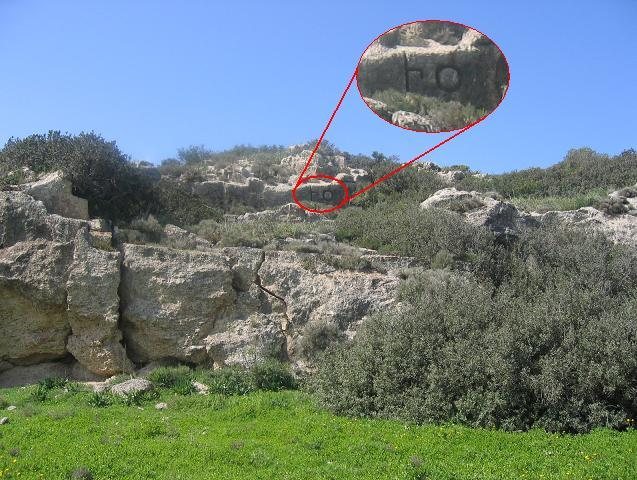
Roman remains include paved streets with drainage channels, houses, shops, public buildings, temples, and industrial installations. Some houses retain frescoes and mosaics. An aqueduct was added after the first Roman building phase; its concrete supports survive at the city end. A Greek inscription near the eastern gate is carved on a stone column that served as a statue base. The fragment honors a Roman provincial governor.
Buildings on the slopes and lower town
Roman construction extended from the mound down its slopes into a lower town containing buildings, streets, and a theater. In a later Roman phase, sacred complexes with temples occupied the west, while the eastern area included a courtyard house, a building arranged around a colonnaded court, and a long hall-shaped building. Industrial buildings and installations, together with a large building containing small rooms, stood in the south. A Roman bathhouse was found in the west, though its relationship to the two Roman building phases is uncertain. Roman temples have also been exposed in the western part of the site.
Byzantine church
The Byzantine church stands east of the mound at its foot. It is a separate structure from the Roman temples and theater and remained in use into the Islamic period.
The glass factory
The nineteenth-century glass factory stands in Nahsholim, about 500 metres south of the mound. Renovated in the 1970s, the historic building now houses the Center for Nautical and Regional Archaeology at Dor, with a museum displaying finds from the site and surrounding region as well as workrooms for archaeological expeditions.