Ubiermonument: An Early Roman Stone Tower in Cologne
Site at a Glance
- Popularity
- Very Low
- Country
- Germany
- Primary era
- Classical
- Eras represented
- Classical
- Civilizations
- Roman
- Site type
- Military
- Remains
- Tower
On this page7 sections
History
The Ubii and the pre-colonial settlement
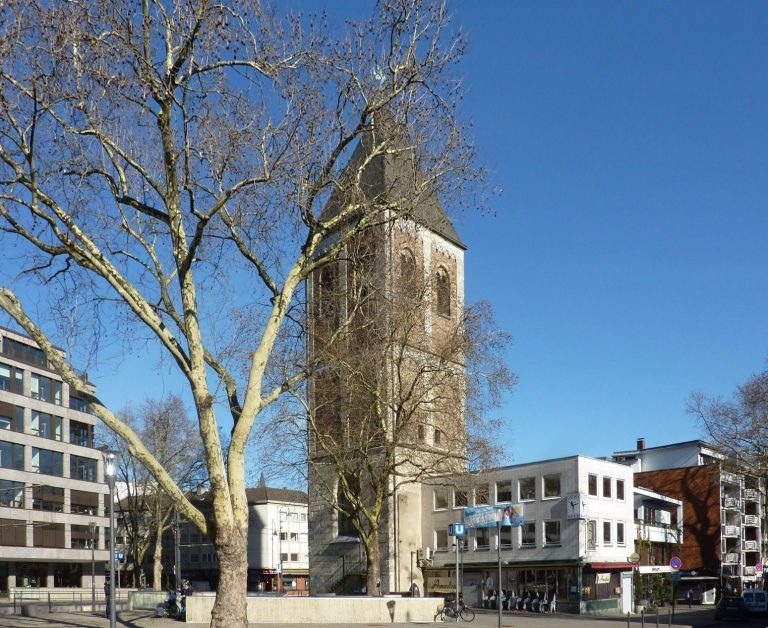
The Ubiermonument is an early Roman stone tower at the corner of Mühlenbach and An der Malzmühle in Cologne, Germany. It belongs to the period of the Oppidum Ubiorum, meaning the settlement of the Ubii, a Germanic people. Rome moved the Ubii from east of the Rhine to its western bank under Marcus Vipsanius Agrippa, a Roman general and statesman who served Augustus, Rome’s first emperor. This relocation probably took place around 20/19 BC, during Agrippa’s governorship. The Ubii’s principal settlement developed at Cologne in the final years BC.
The monument stood outside the settlement’s built-up area and predates the Roman colony, a settlement granted colonial status and civic privileges, founded in AD 50. Its exact construction date and original purpose remain uncertain. It may have formed part of the settlement’s defenses, served as a watchtower over the Roman harbor, or fulfilled both functions. One interpretation identifies it as the lower part of a tower connected with a fortification built after the Roman commander Varus was defeated by Germanic forces at the Battle of the Teutoburg Forest in AD 9.
Destruction and rediscovery
The monument had already been destroyed by the time the later Roman city wall was built. It came to light by chance in 1965, during preparations for new construction, and was excavated through 1966. The remains were subsequently conserved.
Remains
Physical remains
Stone tower
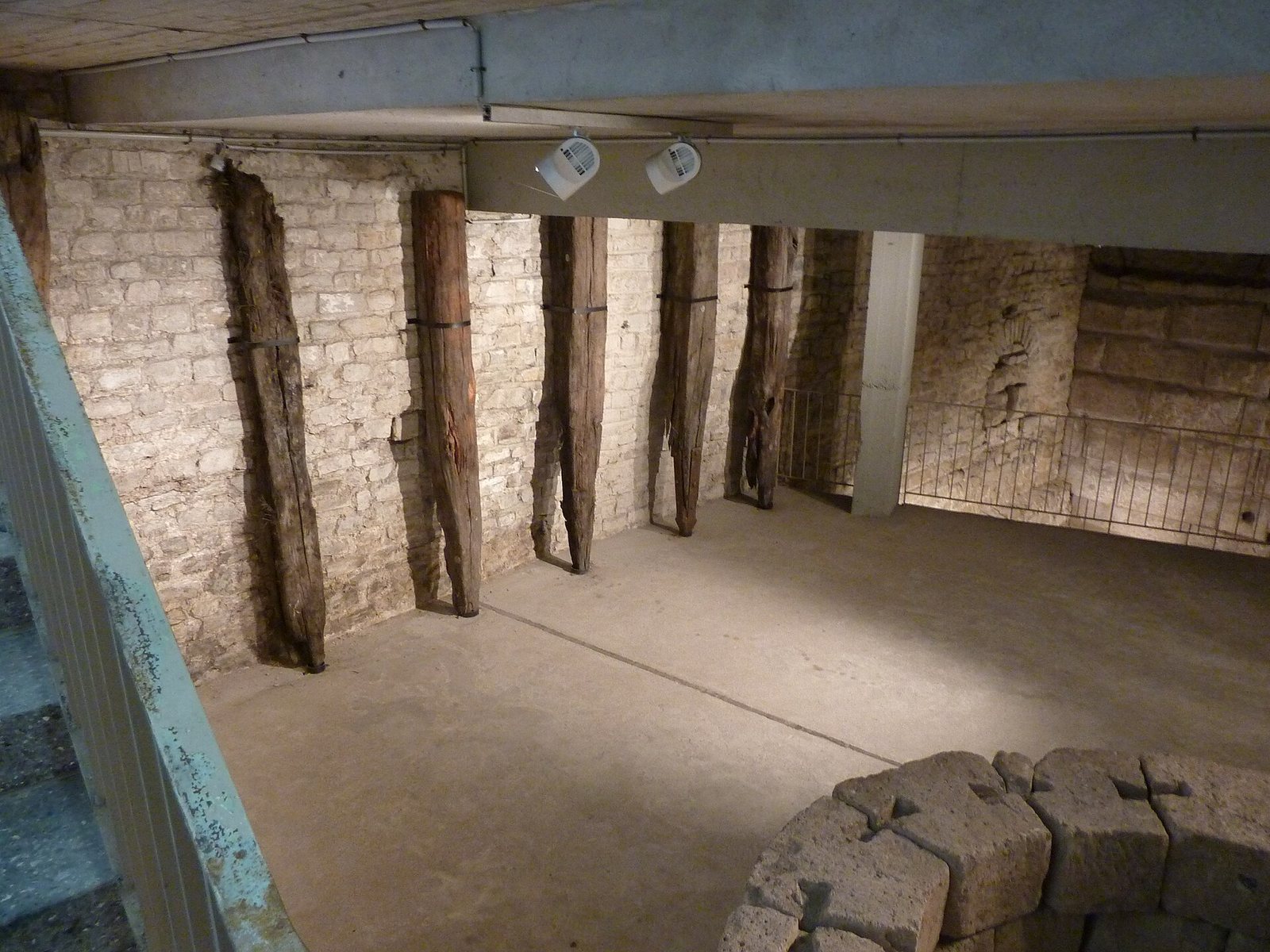
The surviving structure is an approximately square stone tower. Its foundation plate covers nearly 115 square metres, and its underside lies about six metres below the ancient city’s walking level. Oak piles driven into the Rhine lowland helped stabilize the ground beneath the heavy structure. Tree-ring analysis dates the felling of this oak to AD 4.
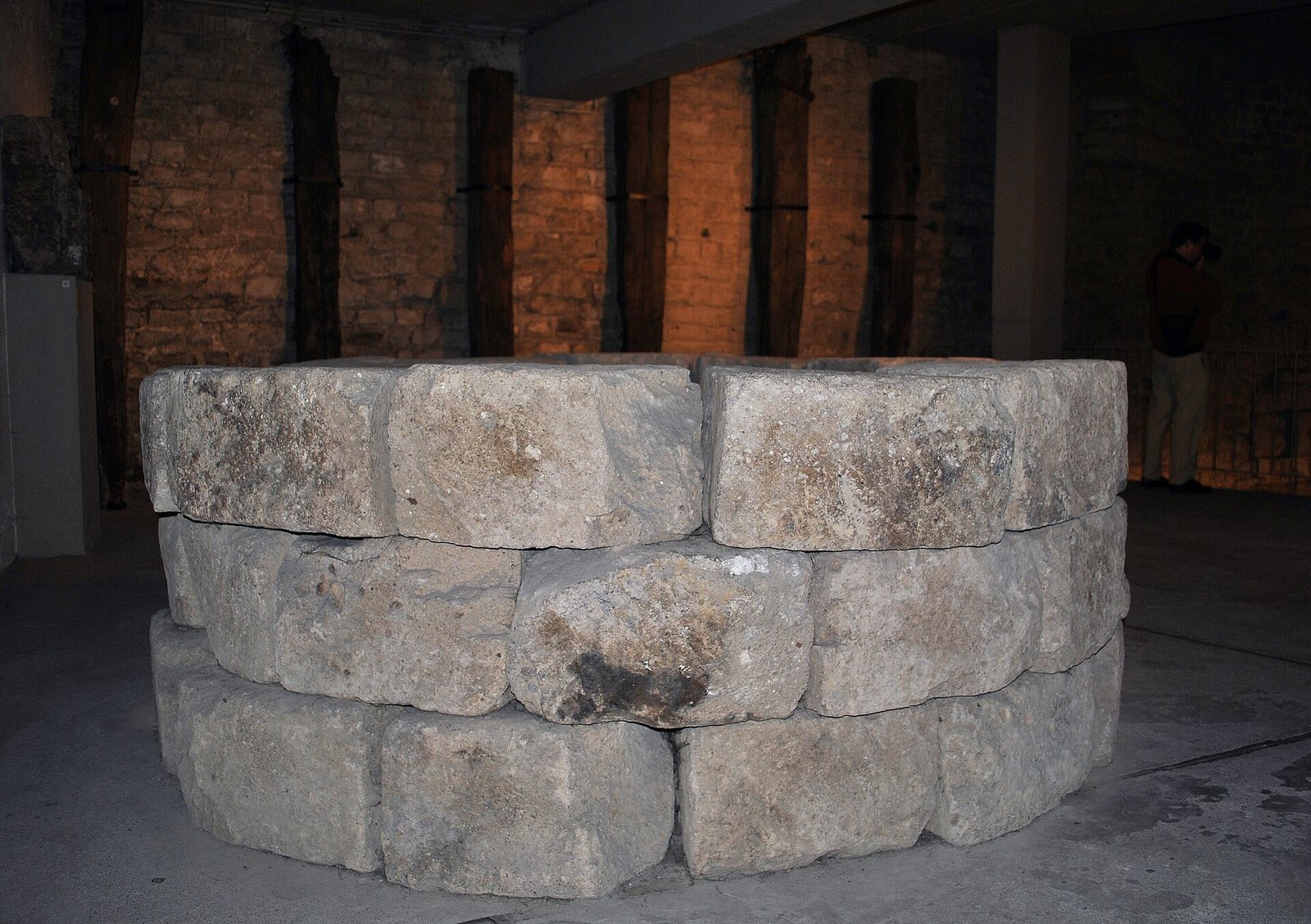
Three layers of tuff blocks form a base above the foundation plate. Tuff is rock made from compacted volcanic material. The surviving tuff masonry rises about 6.5 metres and includes as many as nine horizontal layers. The Ubiermonument is the oldest dated Roman stone building in Germany and the oldest Roman stone building in Cologne. Its regularly cut blocks also place it among the oldest dated examples of this type of stone construction north of the Alps.
Timber-and-earth wall
A proposed reconstruction links the tower to a timber-and-earth defensive wall running west from the Rhine along the Duffesbach. The wall is thought to have joined the tower on its north side, where traces of its posts remain.