Tepe Hissar: A Prehistoric Settlement in Iran
Site at a Glance
- Popularity
- High
- Country
- Iran
- Primary era
- Bronze Age
- Eras represented
- Stone Age, Bronze Age, Classical, Medieval
- Civilizations
- Sassanid
- Site type
- City
On this page15 sections
History
Early occupation and Hissar I-II
Tepe Hissar is a prehistoric settlement near Damghan in Semnan Province, northeastern Iran, whose occupation is generally dated to about 3900–1900 BCE. Its wider sequence extends from the fifth into the second millennium BCE, and the earliest occupation may have begun after 5000 BCE, although its precise date is uncertain. Archaeologists divide the settlement’s development into three main phases: Hissar I, Hissar II, and Hissar III. Hissar I belongs to the Chalcolithic, or Copper Age, when copper use preceded or overlapped with widespread bronze technology.
Hissar I and II continued traditions associated with the earlier Cheshmeh Ali settlements. A regional pottery sequence places Hissar IA after Neolithic Soft Wares, dated to about 6000 BCE, Djeitun wares of the sixth millennium, and Cheshmeh Ali wares of about 5300–4300 BCE. Copperworking was already practiced during Hissar I, and full-time craft specialists may have been present from this early phase.
Hissar II is associated with the fourth and early third millennia BCE. Its economy included farming wheat and barley, along with olives, grapevines, lentils, peas, and other legumes. Figurines of cattle, goats, and sheep point to animal herding. During roughly 3500–3000 BCE, the settlement became a major center for working metal and gemstones, especially lapis lazuli. These crafts connected Central Asian sources with Mesopotamia and Egypt and formed part of long-distance exchange with the Bactria–Margiana Archaeological Complex, a Bronze Age archaeological region in Central Asia.
Tepe Hissar has also been proposed as a stopping place on the historic Great Khorasan Road and part of a wider Central Asian network. It is associated with the proposed Greater Khorasan interaction sphere, dated to about 2400–1500 BCE, which describes regional connections rather than a single state. A tablet carrying three symbols came from a lapis-lazuli working area in Stratum II, dated by radiocarbon to 3650–3370 BCE. It has been tentatively classed as a numerical or impressed tablet and predates Proto-Elamite, an early writing tradition associated with ancient Iran.
Hissar III and abandonment
Hissar III is broadly assigned to the second half of the third and the beginning of the second millennium BCE. The phase has been interpreted as proto-urban: the settlement showed some townlike features, including greater wealth and population concentration, mass production of plain pottery, and large public and ceremonial buildings. Hissar IIIA is poorly defined as a transition between IIIB and IIIC. IIIB was the principal occupation phase.
The Burned Building was destroyed by fire while it was occupied, with its contents still inside. Its purpose remains disputed. Excavators interpreted it as the home of the settlement’s most prominent inhabitant rather than a place of worship. Other interpretations have considered it a fortification and, in view of a small fire altar, possibly a sanctuary.
By IIIC, buildings were less carefully planned and no longer followed the earlier settlement arrangement. This change has been linked to a wider decline in settlement and visible social and political complexity in northeastern Iran around the transition from the third to the second millennium BCE. Hissar was abandoned after IIIC. Richly furnished burials and two hoards from this phase indicate that valuable objects were still deposited at the settlement.
The chronology of the layers, especially IIIB and IIIC, remains unsettled. Early excavators placed the beginning of IA in the fifth millennium BCE, the end of IC around 3500 BCE, and Stratum III in the early second millennium. Radiocarbon results from a 1976 re-study instead placed Stratum I in the first half of the fourth millennium, Stratum II in its second half, and IIIB in the second half of the third millennium; they placed the end of IIIC in the first quarter of the second millennium. A 1974 sample gave a date of 1841 ± 64 BCE for the end of IIIC, while proposed dates for that phase’s end range from 2300 to 1500 BCE. Dates from comparable layers at Tureng Tepe, Altyndepe, and Yarim Tepe have also informed debate about Hissar’s chronology.
Later occupation and archaeological investigation
A large building from the Sasanian period, when the Sasanian dynasty ruled Iran from the third to the seventh century CE, was excavated on a hillock near the main mound. Its excavators described it as a palace. The site’s modern investigation began when Albert Houtum-Schindler identified it in 1877. Ernst Herzfeld surveyed it in 1925 and recommended excavation after noting looting. Erich Schmidt led two excavation seasons for the University of Pennsylvania Museum, in 1931 and 1932.
Giuseppe Tucci directed a surface survey of stone artifacts in 1972. In 1976, Robert H. Dyson and Maurizio Tosi led a re-study that combined excavation with analysis of layers, pottery, and radiocarbon dates. Esmaeil Yaghmaei directed a rescue excavation in 1995 after a railway line had been laid through the site, and further soundings followed in 2006. Tepe Hissar is listed as Iranian National Heritage under the name Tappeh Hissar; the listing dates to 1931.
Remains
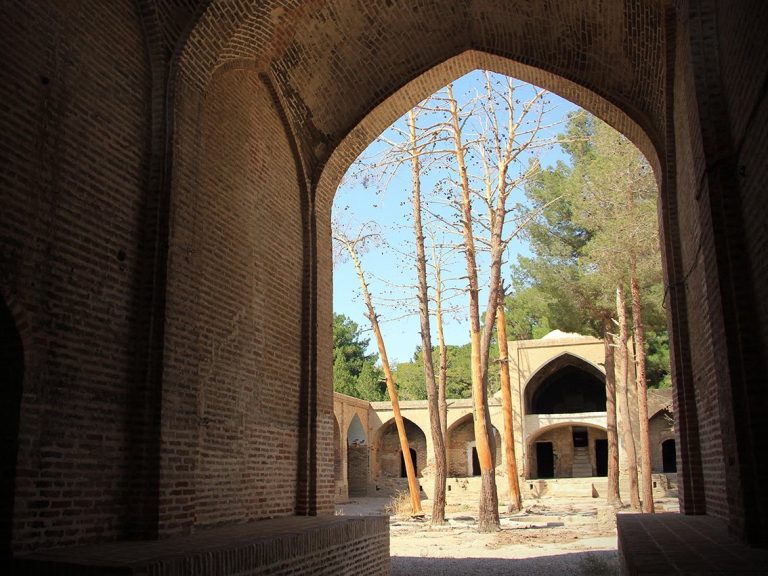
The archaeological landscape covers about 200 hectares, including numerous mounds and medieval Islamic forts; its principal section covers about 12 hectares. The mound site itself occupies roughly 6 hectares and rises about 7 metres above the plain. It measures about 600 metres across overall. The main mound is approximately 200 by 300 metres, with a lower terrace to the north, five smaller hillocks mainly to the southwest, and scattered level settlement areas. Erosion and a deep gulch divide the site. The remains lie beside a river that now runs farther east.
Prehistoric buildings
Settlement architecture
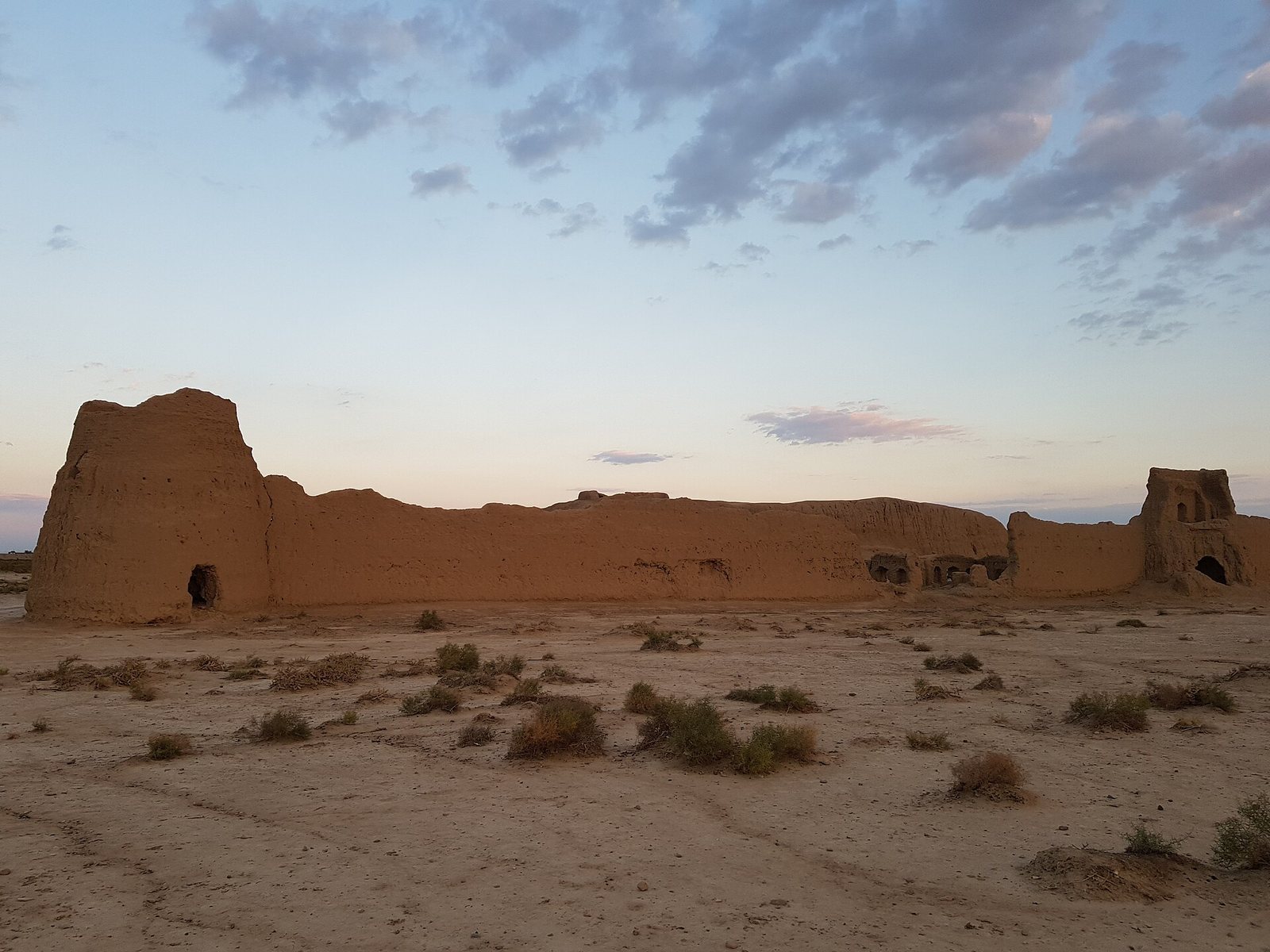
Prehistoric structures survive as ruined mud-brick walls and rooms with right-angled plans. Stratum I buildings used sun-dried mud brick, and some walls had buttresses. Brick sizes vary between periods, from about 47 × 23 × 11 centimetres in early construction to 65 × 33 × 9 centimetres in later work. Stratum II buildings used similar construction and plans to those of Stratum I. Excavations attributed to Stratum I consist of soundings, so the full extent of that settlement phase is uncertain.
The Burned Building
In Stratum IIIB, the Burned Building was the most elaborate structure excavated for that phase. Its six rooms were arranged with a courtyard, a passage through the entrance, an outdoor latrine, and several stairways leading to the roof. A tower was initially identified at the entrance, but a 1976 re-study showed that this feature was a buttress. That work also exposed another room and a hearth. The fire hardened the mud-brick walls, preserving possessions and skeletal remains.
Finds from the building included lapis lazuli, chalcedony, gold and silver ornaments, copper daggers, and large copper vessels. One dagger had a grip made with silver bands. A storeroom contained large lidded vessels, a copper digging tool, and two copper stamp seals, objects used to make identifying impressions. Flint arrowheads were found inside and outside the building.
Pottery and craft remains
Pottery and clay objects
Pottery styles change across the settlement’s phases. Hissar IA vessels were handmade and decorated with straight-line designs. Wheelmade wares from IB include animal and plant motifs, while IC pottery has dark-brown decoration on a light grey-brown surface. Hissar II pottery is greyware: IIA designs resemble those of IC, while IIB decoration differs somewhat. Stratum III is characterized by handmade, burnished greyware. Finds also include cups, bowls, vases, jugs, and other vessels, some painted red and decorated with birds, mountain goats, or gazelles. Clay objects include spindle whorls, cones, double-cones, discs, and figurines.
Metal, stone, and bone objects
Metalworking remains range from Hissar I copper knife and dagger blades, pins, and needles to the broader selection of objects from Hissar II and III. These include ornaments, weapons, tools, vessels, mirrors, boxes, pendants, and elaborately cast pins and rods. Copper and silver are especially common among the later finds, and evidence also points to the working of copper alloys and lead. Stone tools and figurines from Hissar II resemble those of the earlier phase. A 1972 surface survey recovered thousands of mostly fragmentary stone tools, chiefly drills, burins, blades, and scrapers.
Burials
Burial forms and distribution
About 16,000 ancient burials are estimated for the site. Excavations recorded 144 burials in Stratum I, 209 in II, 106 in IIIA, 270 in IIIB, and 53 in IIIC. Most were simple pit graves, and some held two people. The dead were generally buried on their sides with their legs drawn up, often wrapped in woolen garments. Five cist graves, boxlike chambers made from slabs, one vaulted grave, and one communal grave were also found. Brick-built graves were rare and belong to a later period.
Furnished graves
Cist grave CG25, assigned to Stratum II, held an adult man. Its objects included a large copper stamp seal suspended near his pelvis, a macehead, copper jewelry, earrings, coiled bracelets, and copper pins with double-scroll heads. A silver headband and beads of lapis lazuli, carnelian, and turquoise were also found across his chest. Communal grave CG15, associated with Strata II–III and containing mainly males and infants, held copper ornaments, a copper mattock, and a copper knife. Five richly furnished IIIC pit graves were named Dancer, Warrior 1, Warrior 2, Priest, and Little Girl; their grave goods often included copper objects.
Sasanian-period building
The large building on a hillock near the main mound was constructed from large baked bricks. Its excavated remains include ornamented stucco columns about 1.8 metres in diameter and walls with polychrome painting. Finds from the building included plaques, a bust, and several copper coins.