Chapelle Notre-Dame de Spéluque: A Romanesque Chapel in Ampus, France
Site at a Glance
- Popularity
- Low
- Country
- France
- Primary era
- Medieval
- Eras represented
- Medieval, Modern
- Civilizations
- County of Provence, French, Holy Roman Empire
- Site type
- Religious
- Remains
- Chapel
On this page11 sections
History
Early chapel and medieval priory
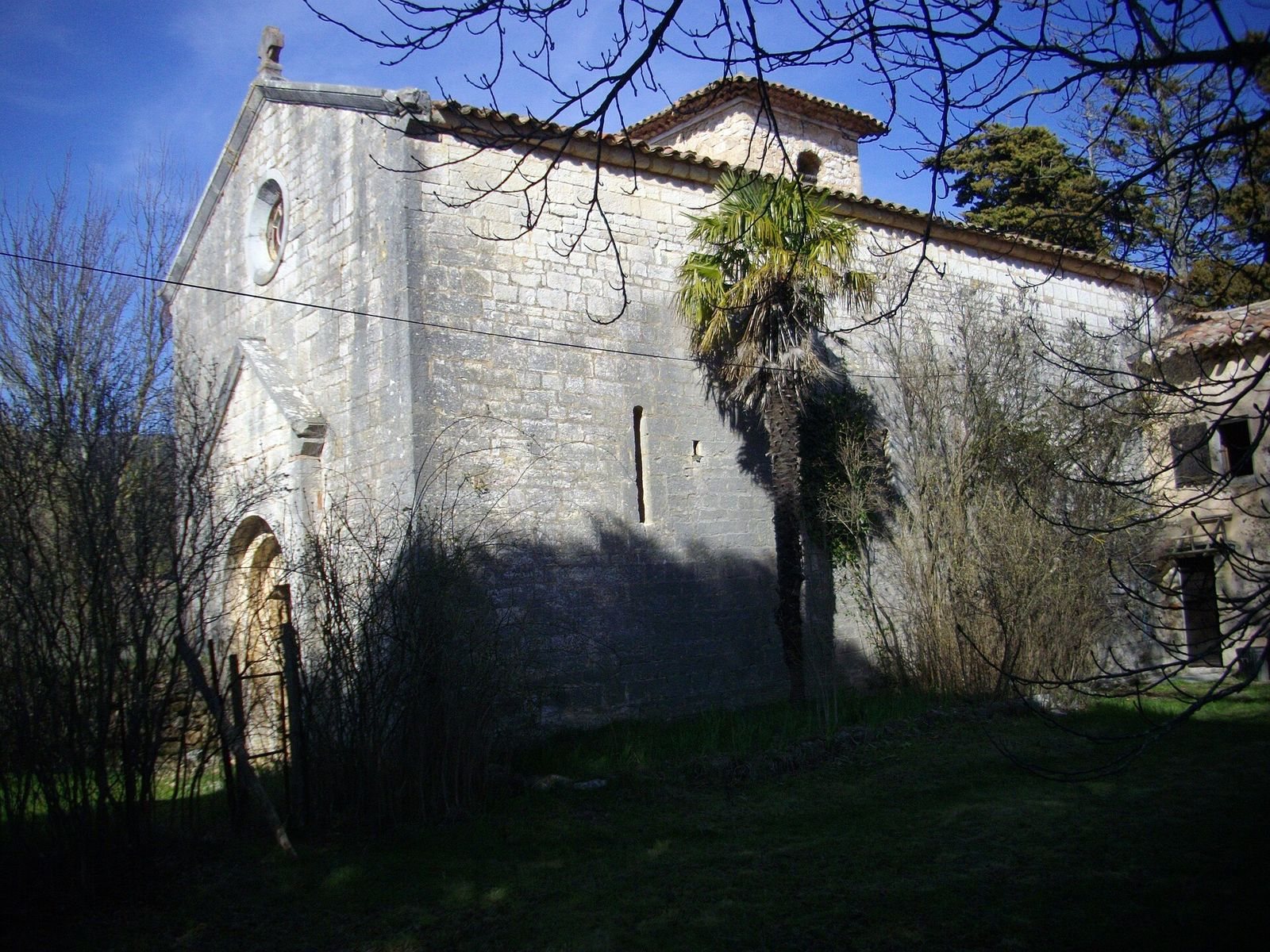
The Chapelle Notre-Dame de Spéluque stands beside the Nartuby in Ampus, France. A chapel existed here by the tenth century, and a monastery and village later grew around the church. The larger building is Romanesque, a medieval European style characterized by features such as arches and vaulted construction.
The chapel is also known as Notre-Dame du Plan. Its name may come from the northern Provençal word espeluca, meaning cave or grotto, which derives from the Latin spelunca. A Ligurian origin has also been proposed. Local tradition links the chapel’s foundation to a vow: inhabitants promised to build a church dedicated to the Virgin Mary if they defeated raiders who had entered the Tourtour plain from Fraxinet. Medieval Europeans used the term Saracens broadly for Muslim peoples, so it does not establish the raiders’ specific origin. One interpretation holds that the chapel replaced a prayer place in a cave associated with the victory.
In 990, Almerade, bishop of Riez, endowed the site with an altar dedicated to Mary in the Val d’Empure. A larger chapel was added after the earlier one became too small. Its consecration is dated to 10 January 1090 and attributed to Bérenger, bishop of Fréjus; construction is dated from 1090 into the twelfth century.
A few years later, the knight Tuan and members of his family sacked the chapel, monastery, and village. The chapel alone was repaired, given a prior, and served by four monks.
Changing religious institutions
The establishment served as a priory of Lérins Abbey, a historic Catholic monastery in Provence. A priory is a religious house led by a prior and may be dependent on a larger abbey. Bertrand de Saint-Martin, bishop of Fréjus, linked Speluca with Saint Victor, a Christian saint venerated in Catholic tradition. The establishment was later joined to the collegiate church at Pignans, a church served by a community of clergy, and then ceded to the Oratorians of Cotignac, members of a Catholic religious congregation. It remained a priory of Lérins Abbey until the French Revolution. Its religious affiliations also include the Cistercian Order, a Catholic monastic order that developed in the twelfth century and emphasized disciplined communal life, and the Diocese of Fréjus-Toulon, the bishop’s administrative territory.
Revolution and return to worship
In 1793, the chapel was sold as national property, meaning property placed under state control during the French Revolution. For about forty years it served as an agricultural shelter or sheepfold. Madame d’Autran acquired it, followed by the Jerphanion family, who returned it to worship. Claire Alice Anne-Marie de Jerphanion later sought to restore the private chapel’s religious use and welcomed a nun from Paray-le-Monial.
Protection and religious life
The chapel entered the supplementary inventory of historic monuments in 1986, and part of it was classified as a historic monument in 1990. The hermitage is outside that protection. The Diocesan Association of Fréjus-Toulon owns the chapel and makes it available to the Association of Friends of Notre-Dame de Spéluque under a 99-year lease; the association was formed on 10 November 1990.
The chapel serves as the headquarters of the Fraternity of Saint Charbel, named for a Maronite Catholic monk who lived in Lebanon from 1828 to 1898 and was canonized in 1977. Dominican sisters live there as a contemplative community. They sing Gregorian chant, unaccompanied liturgical music of the Western Church, according to the Dominican rite, the liturgical tradition of the Dominican Order. Agricultural and intellectual work supports the sisters, while the fraternity’s presence and surrounding farming help preserve the site. Storms in 2008 and 2009 damaged the roof; repairs followed under the supervision of a French architect specializing in historic buildings.
Remains
The Romanesque chapel
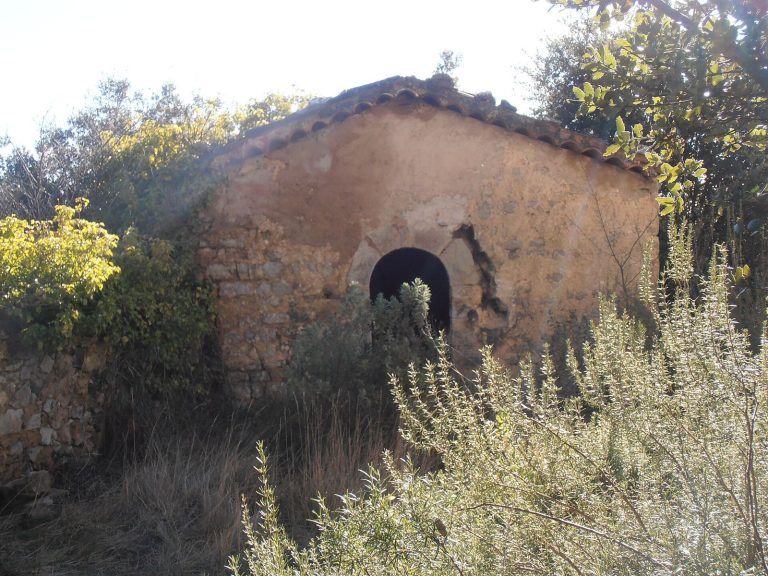
The surviving complex centers on a Romanesque chapel with a three-bay nave, a choir, and a north-side sacristy. A hermitage is attached to the south, while a cemetery and agricultural land form part of the surrounding setting.
Nave and sanctuary
The nave’s pointed barrel-shaped vault is supported by crosswise arches that rise from projecting blocks and rectangular piers. Shallow arches set into the side walls help distribute their load. The nave leads to a semicircular choir covered by a vault shaped like a quarter of a sphere. A flat-ended sanctuary is incorporated into the sacristy on the north side, which occupies the site of the earlier chapel.
Altar and stained glass
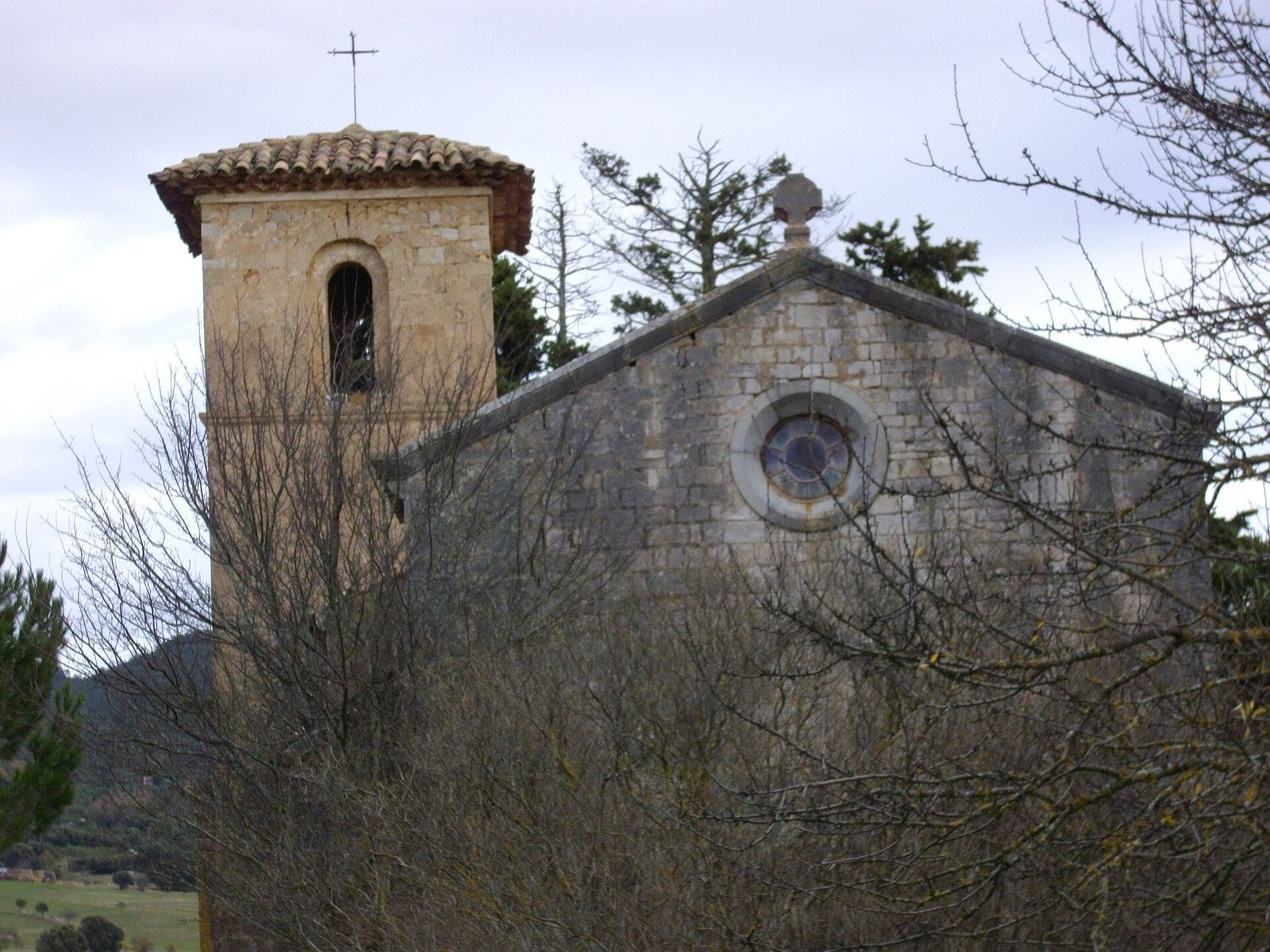
The eleventh-century altar rests on five supports: two twisted columns, two with smooth shafts, and one with a hexagonal shaft. Each has a capital decorated with foliage. A stained-glass image of the Virgin is set in the narrow apse window, and colored glass also survives in the circular opening on the west side. The glazing probably dates to the second half of the fourteenth century.
Hermitage and bell
Built in 1868, the hermitage is attached to the chapel’s south side and incorporates the sanctuary end. The bell tower was restored that year. The chapel’s bell bears the date 1843.
Roman road and surrounding landscape
Remains of the Roman road between Fréjus and Riez can be seen near the chapel. In front of the building, a cross is fixed into a cylindrical stone identified as a Roman milestone. Its shaft records the authority responsible for building or repairing the road and the distance in Roman miles to the nearest administrative city, Fréjus or Riez. The chapel, Colombier farm, and surrounding farmland form a well-preserved historic and spiritual landscape. A cemetery belongs to the chapel. Trees on the grounds include ash, horse chestnut, holm oak, and downy oak, some several centuries old, as well as a palm and a Mediterranean hackberry.