Convent of Santa Clara la Real in Toledo: A Poor Clare Monastery
Site at a Glance
- Popularity
- Low
- Country
- Spain
- Primary era
- Medieval
- Eras represented
- Medieval, Early Modern
- Civilizations
- Crown of Castile, Spanish
- Site type
- Religious
- Remains
- Monastery
On this page10 sections
History
The Convent of Santa Clara la Real is a Catholic Poor Clare convent in Toledo, Spain, founded in the mid-fourteenth century by the noblewoman María Meléndez. Poor Clares are a women’s order in the Franciscan tradition established by Clare of Assisi, the convent’s patron saint; the community belongs to the Archdiocese of Toledo. Developed between the fourteenth and seventeenth centuries, its architecture combines Mudéjar (Christian Iberian work incorporating Islamic forms) and Renaissance styles (inspired by classical antiquity). Its origins lie in the relocation and refoundation of an earlier Poor Clare community, while royal patronage later shaped its standing and resources.
The earlier community
Before the present convent was established, Toledo’s Poor Clare community lived at Santa María and San Damián in the Santa Susana valley, outside the city walls. Its nuns were known as Damianites, an early name for communities associated with San Damiano in Assisi. They followed the Rule of Saint Benedict, a guide to monastic life, while receiving spiritual direction from Toledo’s Franciscans and living according to Clare’s way.
The earlier convent is mentioned in Archbishop Juan de Medina de Pomar’s 1248 testament, and Pope Innocent IV confirmed its foundation in 1254. Some place its beginnings around 1250, with permission from Archbishop Rodrigo Jiménez de Rada. Pérez de Tudela reasoned that, if it was founded during the archbishop’s tenure, it must have been in 1247, the year he died abroad. Toledo’s 1345 ordinances prohibited residence beyond the city walls. The nuns could not afford to move and remained outside for more than a century.
Foundation within the city
María Meléndez began arranging a new foundation around 1340. In 1358 she acquired several houses in San Vicente to enlarge the future convent site. On 31 August 1368, she gave the Damianite nuns and their head, Abbess Sancha Alfonso, the Toledo houses where she lived, as well as estates, wine vats, cellars, and jars. She acquired half of adjoining houses in January 1370. A convent of Santa Clara in San Vicente is recorded that year, when María herself became a nun there. From 1372 the convent was known as Santa Clara la Real.
A papal bull issued on 27 June 1371 authorized María to establish a convent for thirty nuns. It required provision for a church with a bell tower and bells, and required the abbess to pay an ecclesiastical levy and parish tithes. On 13 June 1373, María formally founded the convent, granting it her houses within Toledo’s walls and her possessions to support a community of thirty. She increased its endowment on 3 August.
Royal protection and prosperity
Enrique II of Castile’s illegitimate daughters Inés and Isabel Enríquez took vows at the convent during the 1370s; their professions are established by 1376, though their precise entry dates are uncertain. Their dowry included income of 100,000 maravedís (a historical Iberian currency) and grain revenues measured at 35 cahíces (regional grain measures that varied by place), as well as money, jewelry, and artworks, including the image known as the Cristo de las Infantas. With more than seventy nuns besides novices, the convent was under financial strain amid inflation. The dowry eased that pressure and enabled the purchase of two neighboring houses.
In 1376 Enrique II granted the convent a jurisdictional and seigneurial lordship as a royal encomienda, an arrangement placing it under royal authority and protection. The privilege safeguarded the princesses’ dowry and the convent’s other property, and gave it the title Real. In Toledo, only Santo Domingo el Real shared that title. Enrique II’s successors Juan I, Enrique III, and Juan II confirmed the privilege in 1379, 1393, and 1442.
Enrique II’s will assigned his daughters annual income of 36,000 maravedís, 16,000 for Inés and 20,000 for Isabel, with the income to pass to the convent after both women died. Juan I and Juan II confirmed these bequests in 1385 and 1407. The nuns held an annual memorial service for the king and his wife, Juana Manuel, with a mass, vigil prayers, and a sung response. The convent also had the privilege of keeping Toledo’s city keys at night.
Inés and Isabel both became abbesses. They were elected in succession in 1387, but Inés held the formal office. From 1393, documents were signed by Inés and subsequently approved or confirmed by Isabel. Isabel is mentioned as late as 1419. Inés’s long abbacy brought a period of prosperity, supported by royal protection, privileges and exemptions from popes and church authorities, and private gifts of property and objects used in worship.
Later history
In 1836, during the Mendizábal confiscations, measures that seized and sold substantial church and institutional property, the convent’s possessions were taken and auctioned. The convent was declared a protected cultural property under Spanish law on 23 January 1981. Bookbinding is among the Poor Clare nuns’ present means of support.
Remains
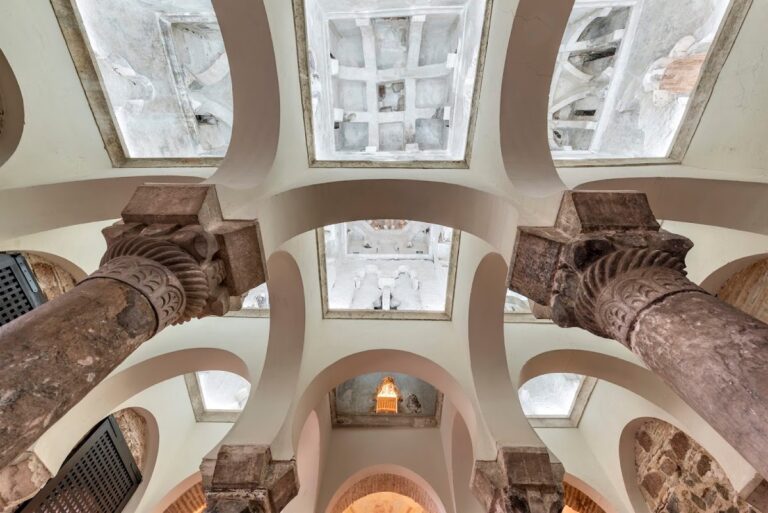
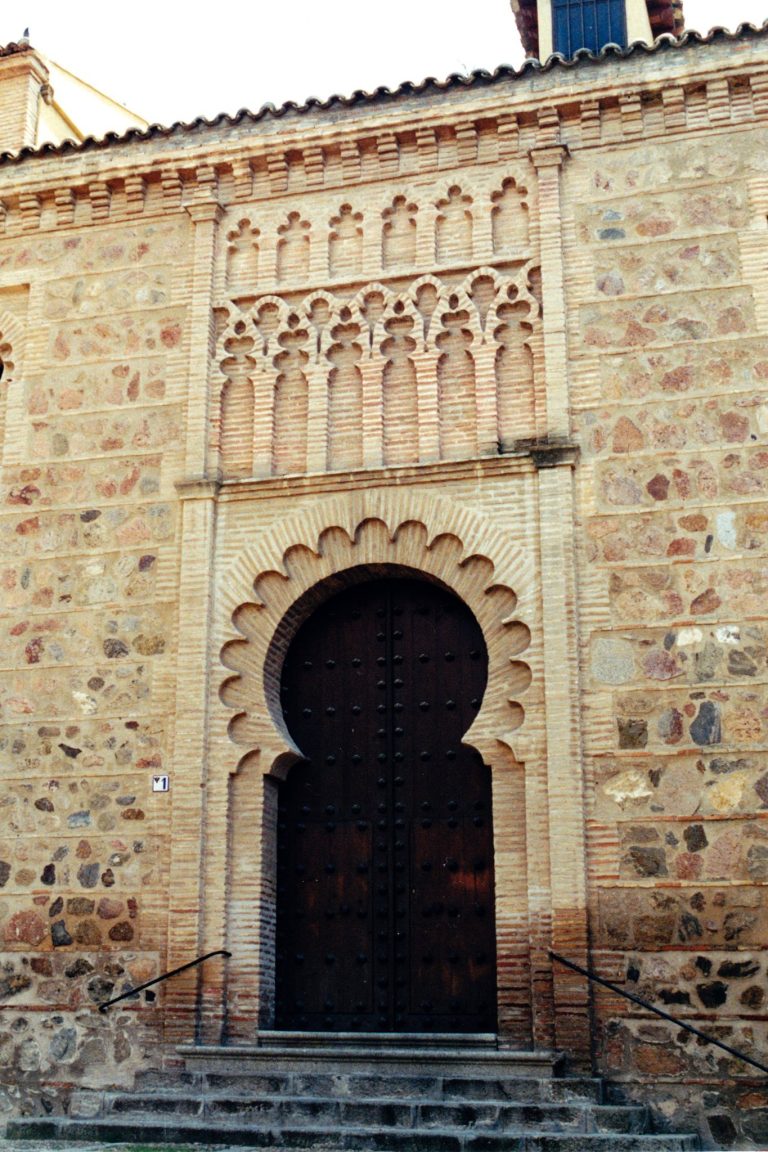
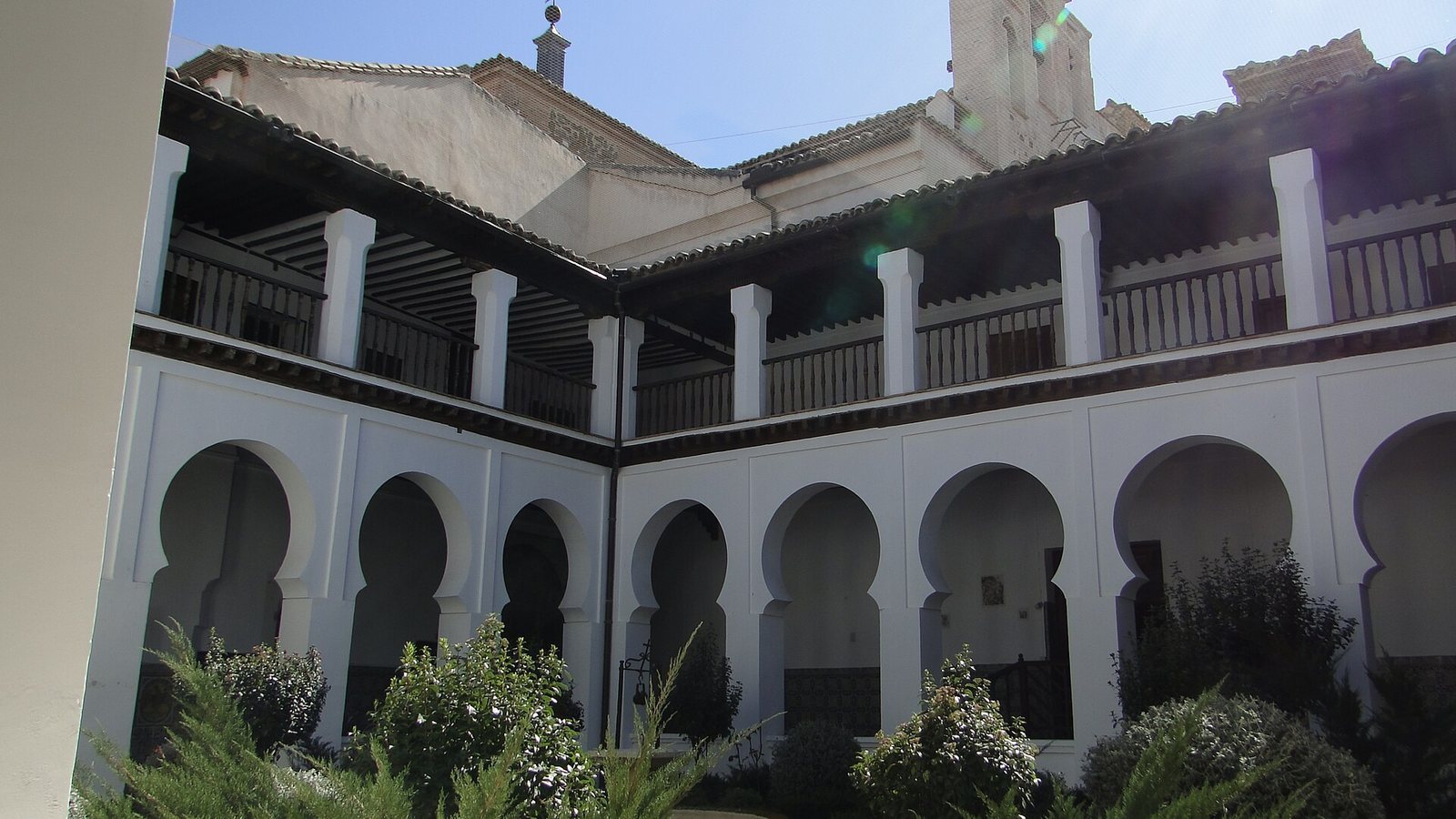
The convent stands within Toledo’s walled city, in the San Vicente district near Santo Domingo el Real and the Convent of Capuchins. Its buildings combine Mudéjar and Renaissance styles, with construction extending from the fourteenth through the seventeenth centuries. Developed from houses, the complex includes cloisters and other dependencies; some areas bear the arms of Inés and Isabel Enríquez and their father, Enrique II.
Church and choir
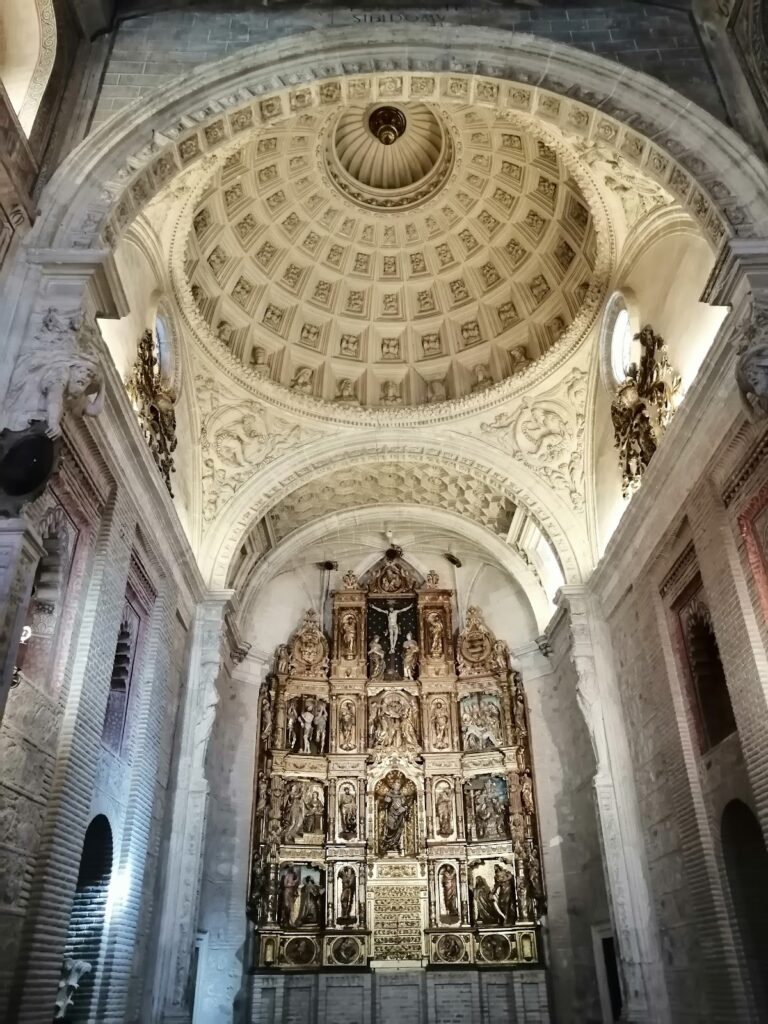
Church
The church is arranged in two naves (long sections of a church). Its main altarpiece dates to 1622 and includes paintings by Luis Tristán.
Royal burials
Four black slate slabs in the nuns’ choir cover the remains of four members of the Castilian royal family. They mark the burials of Inés Enríquez of Castile, who died around 1443; her sister Isabel, who died around 1420; Fadrique Enríquez of Castile (1388–1430), Duke of Arjona and count of Trastámara, Lemos, and Sarria, who held Santiago’s senior ceremonial staff-bearing office; and Juana Enríquez, an abbess who died around 1471. Juana is identified as the daughter of Count Alfonso Enríquez and Inés de Soto, and granddaughter of Enrique II. An alternative identification as the daughter of Admiral Alfonso Enríquez and Juana de Mendoza was later rejected.
Freestanding tomb
A freestanding tomb stands at the center of the nuns’ choir. Most modern historians attribute the remains within it to Friar Juan Enríquez, a bishop of Lugo, confessor to Enrique III, and great-grandson of Alfonso XI. The tomb is regarded as one of the convent’s notable works of sculpture.