Museo Romano La Ergastula: A Museum of Roman Asturica Augusta in Spain


Site at a Glance
- Rating
- 4.3
- Popularity
- Low
- Country
- Spain
- Primary era
- Classical
- External website
- Open
- Eras represented
- Classical
- Civilizations
- Roman
- Site type
- Museum
On this page6 sections
History
The Museo Romano La Ergastula is a museum in Astorga, Spain, established in 2000 to present the Roman city of Asturica Augusta. Its collections grew from more than three decades of archaeological excavation and research in the city, offering a historical account of Astorga’s setting, Roman expansion into northwestern Iberia, military origins, urban development, and civic life.
Archaeological protection and research
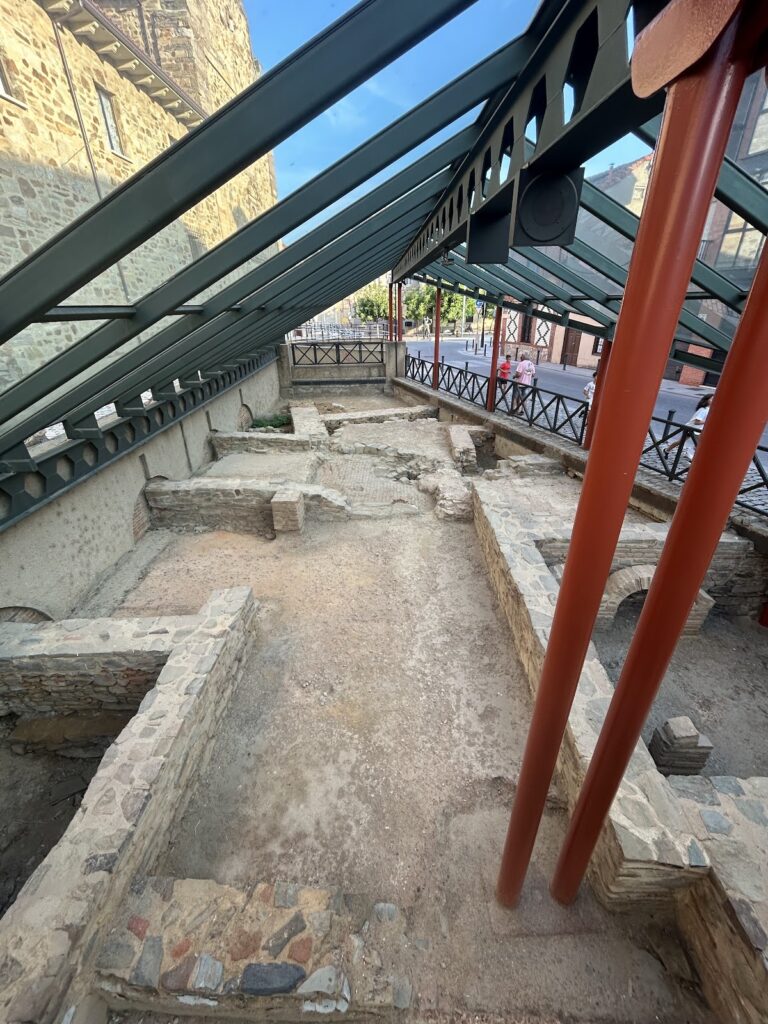
Astorga’s historic centre, enclosed by a fourth-century Roman wall, was declared a historic-artistic ensemble in 1978. Systematic archaeological excavations began within the protected area in 1984. Some of these investigations led to conservation in place, and the preserved remains later formed part of the Roman Route, a group of archaeological sites presenting Astorga’s Roman past.
The museum’s permanent exhibition follows the development of Asturica Augusta through its roads, infrastructure, public buildings, baths, houses, literary evidence, and inscriptions. It also addresses the indigenous Asturian population and the presence of the Legio Decima Gemina, the Tenth Twin Legion, in the settlement’s military origins.
Conversion of the Ergastula
The Ergastula has been recognized as a National Historic Monument since 1951 and is also listed in Spain’s heritage register as a Site of Cultural Interest. After the building was privatized in the early twentieth century, its interior was divided into four sections. Beginning in 1985, Astorga City Council acquired those divisions. Archaeological excavations inside the structure followed, and the museum’s architectural project was approved in 1996. The rehabilitated museum opened in April 2000.
Remains
The museum is organized around a Roman-period covered gallery that formed part of the ancient forum area. The surviving structure is built of Roman concrete, a durable Roman building material used in foundations, structural cores, and vaults. Its preserved gallery occupies the ground floor, while later additions rise above it.
The Roman gallery
The Ergastula is approximately 50 metres long and 5.30 metres wide, with an average height of 5.30 metres. A barrel vault covers the passage. Its original plan is thought to have been U-shaped, with the surviving gallery forming the eastern closure of the forum, the principal public and civic centre of a Roman city. Foundations extend from both ends toward the present Plaza Mayor.
The gallery may have supported a larger building, possibly an Ara Augusta, an altar dedicated to the emperor. This interpretation remains uncertain. The surviving Roman structure provides the architectural setting for an audiovisual presentation on Astorga’s Roman past.
The museum interior
Rehabilitation added two floors above the Roman structure. The first contains administrative areas, municipal archaeological services, and a room for educational workshops. The second houses the permanent exhibition in the José María Luengo Hall.
The upper-floor displays are arranged around Asturica Augusta’s roads, walls, sewers, streets, porticoes, shops, forum, baths, and houses, together with the archaeological work that has illuminated them. A separate exhibition area presents objects connected with daily life, personal hygiene and adornment, textile production, and games.