Bavay Ancient Forum: The Civic Center of Roman Bagacum Nerviorum

Site at a Glance
- Rating
- 4.4
- Popularity
- Low
- Country
- France
- Primary era
- Classical
- External website
- Open
- Eras represented
- Classical
- Civilizations
- Roman
- Site type
- Civic
- Remains
- Forum
On this page12 sections
History
Bavay Ancient Forum is a Roman archaeological site in France, at the former city of Bagacum Nerviorum, the civic capital of the Nervii. Built in the Roman period in two principal phases between the first and late second centuries AD, the forum served as the city’s public and administrative center. Bagacum also stood at an important road junction, where the Via Belgica, a major Roman road linking settlements in the northern provinces, passed through the city.
Roman foundation and development
The Nervii were a Celtic people incorporated into the Roman Empire, and Bagacum Nerviorum became their Roman civic capital. The monumental forum developed in two main building phases between the first and late second centuries AD. Its complex included a large public square, a covered or partly subterranean cryptoportico used to support or enclose the monument, a civil basilica, and a temple.
The wider Roman city also contained baths supplied by an aqueduct that carried water from a spring approximately 20 kilometers away. These facilities formed part of the urban infrastructure of Bagacum, whose position on the Via Belgica helped make it an important center in the region.
Transformation in late antiquity
By the end of the third century AD, the forum area had been equipped with defensive fortifications and converted into a fortified enclosure. This change transformed the civic complex from an open monumental center into a defensive redoubt. The last recorded evidence for the forum or fortified settlement dates to AD 430 and is associated with the road leading toward Cologne.
Rediscovery and archaeological work
Chance discoveries in the eighteenth century brought Bagacum back to attention. During the nineteenth century, uncontrolled excavations dispersed much of the archaeological material through sales. The priest Augustin Carlier responded by initiating scientific excavations, helping establish a more systematic approach to the site.
Maurice Hénault discovered the forum and baths in 1906 and founded Bavay’s first archaeological museum that year. The forum was substantially rediscovered after German bombing in 1940, during the early Second World War, exposed archaeological remains. Henri Biévelet then undertook major clearance work. From 1942 to 1976, he cleared most of the western cryptoporticoes, the esplanade, and the civil basilica. Jean-Claude Carmelez and fellow teachers and secondary-school students continued scientific exploration until 1997.
A hoard found at the site on 12 July 1969 contained 370 Roman bronze pieces and became a major part of the museum collections. The latest stated excavations took place in 2020 and 2021, when the Department of Nord’s Archaeology and Heritage Service carried out preventive work before construction of a protective roof over the cryptoportico.
Museum and protection
Hénault’s museum was followed by a successor institution inaugurated on 26 June 1946. A new museum, designed by the architects Waldschmidt and Jourdain, opened beside the archaeological remains in 1976 after its construction had been decided in 1967. It presents the history of the site and ancient Bagacum through a collection of 600 objects and Gallo-Roman antiquities excavated at Bavay and in the surrounding region.
The museum passed to departmental administration in 2000, and the Department of Nord became owner of the archaeological site in 2008. The institution was renamed the Forum antique de Bavay on 15 September 2011. Since 2004, it has presented a three-dimensional reconstruction of the forum, updated in 2011 and revised as archaeological and architectural knowledge develops.
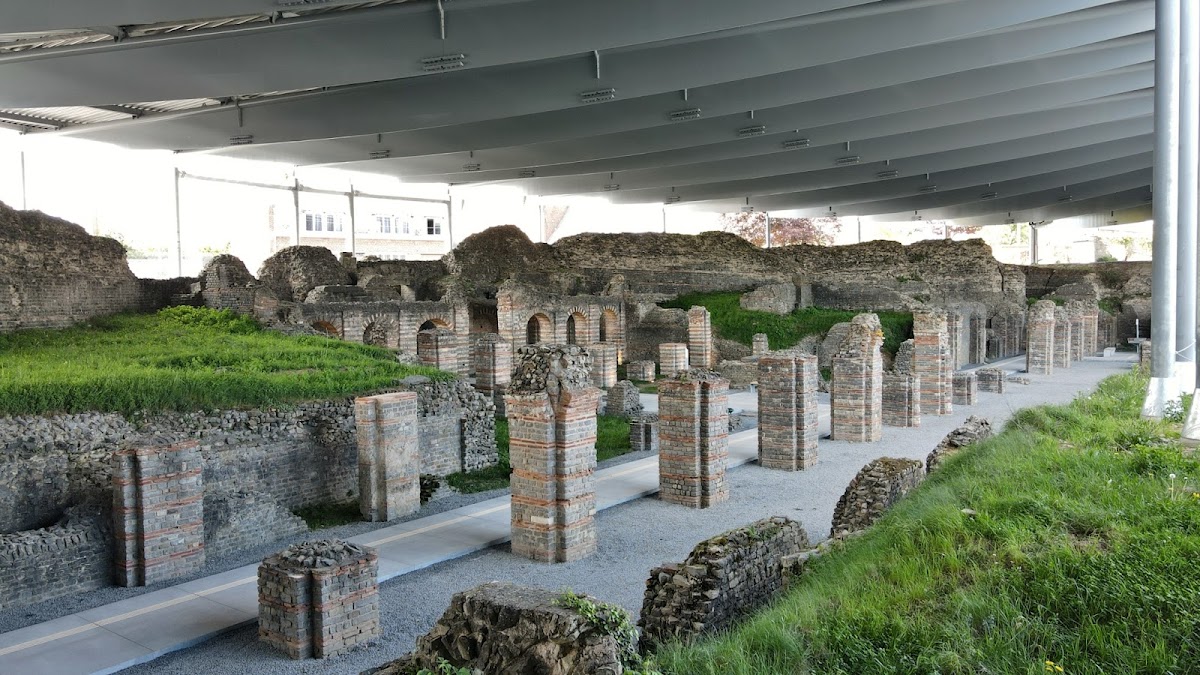
The former Roman city area received protection as a French historic monument in 1992, while the museum has held the official Musée de France designation since 2002. A protective program begun in 2012 culminated on 14 May 2022 in the inauguration of a 6,400-square-meter galvanized-steel roof over the cryptoportico. The intervention protects the remains and supports interpretation of the site’s change from forum to fortress.
Remains
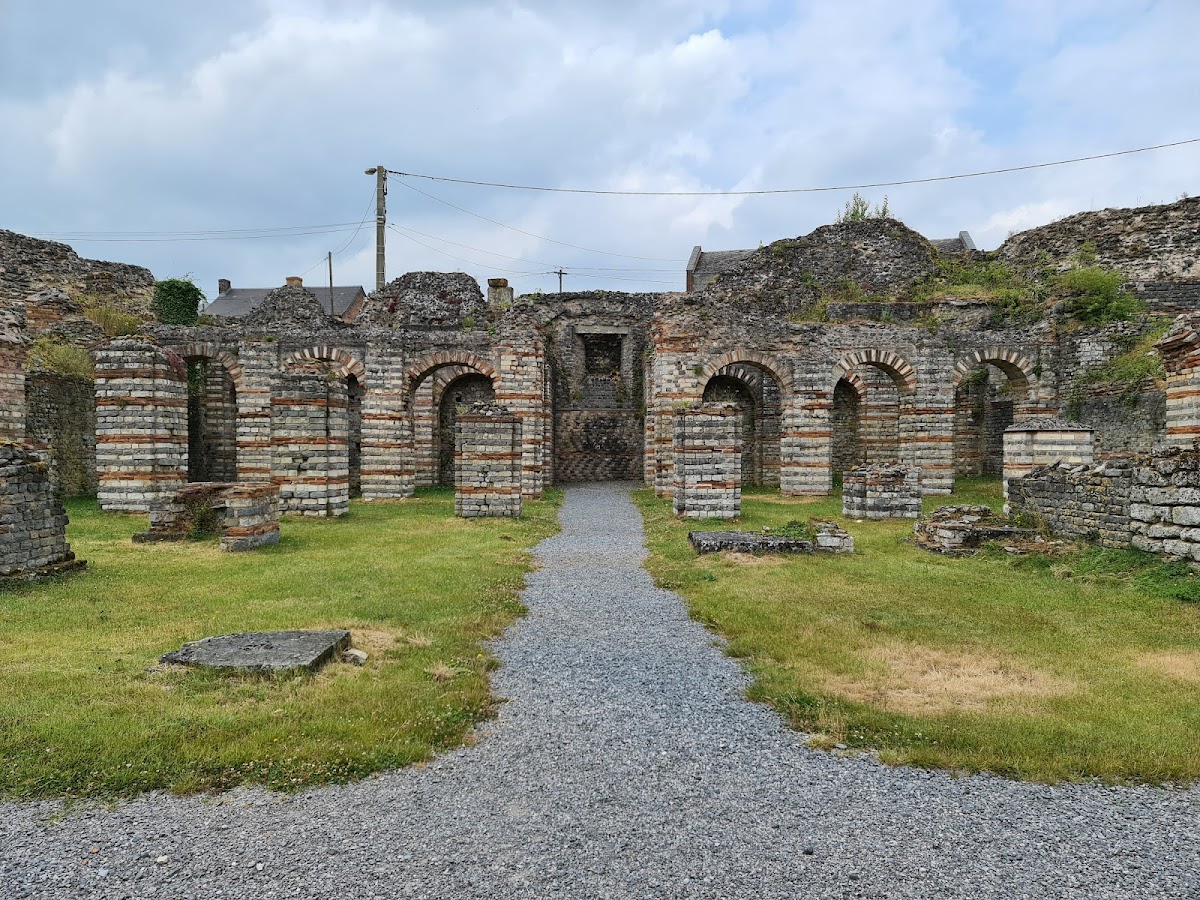
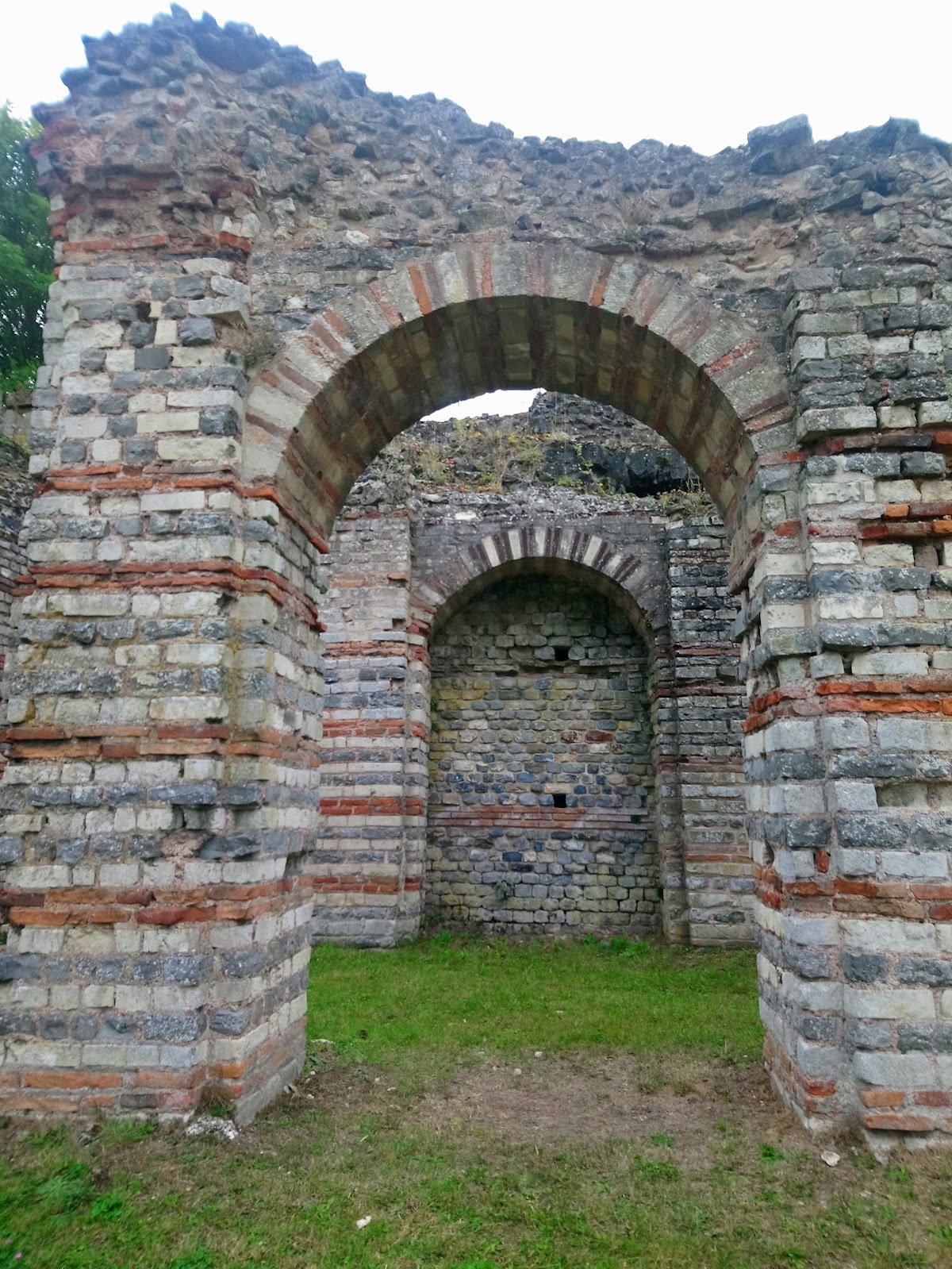
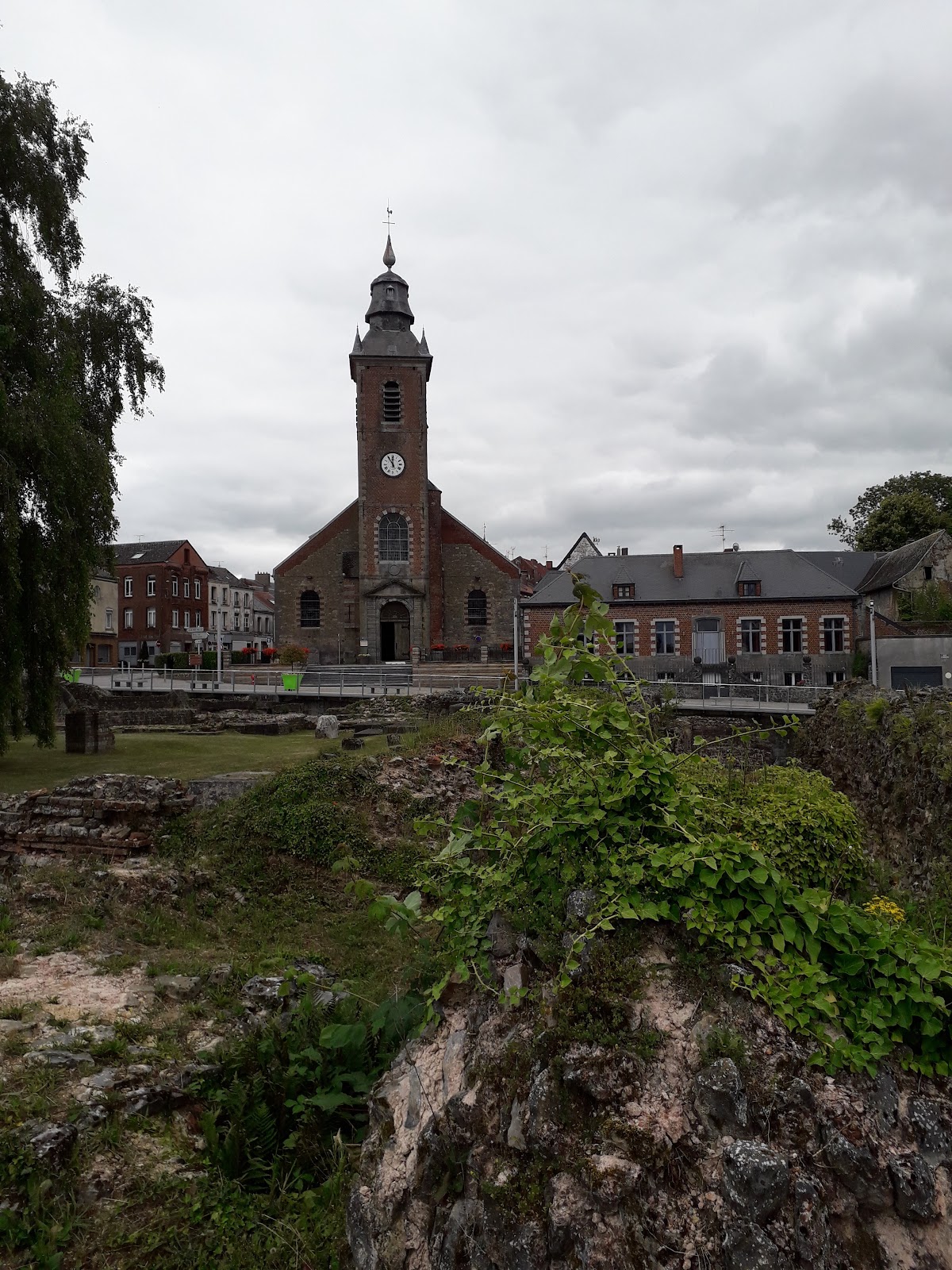
The forum covered more than 2.5 hectares and measured approximately 240 meters from end to end and 100 meters across. Buildings enclosed the complex on three sides. Within this large arrangement were the esplanade, the cryptoportico, the civil basilica, and a temple. The remains therefore preserve the principal components of a Roman civic center as well as evidence of its later defensive use.
Forum structures
Esplanade
The esplanade formed the large public square at the heart of the forum. It belonged to the monumental complex that was developed in two principal Roman phases and was exposed during Henri Biévelet’s clearance work between 1942 and 1976. Its surviving relationship with the surrounding buildings helps define the scale and organization of the former civic center.
Cryptoportico
The cryptoportico formed part of the forum’s enclosure. Its remains include interior pillars, and the western part was cleared during the work carried out between 1942 and 1976. A galvanized-steel roof now covers the cryptoportico, while bicolored arches form part of the arrangement created in 2022. Interpretation stations and scenographic devices explain the physical development from monumental forum to fortified enclosure.
Civil basilica
The civil basilica measured 98 meters in length. In this Roman setting, a basilica was a large civic building used for public, legal, or administrative purposes rather than a Christian church. The eastern part of the building was exposed during Biévelet’s clearance work, alongside the esplanade and western cryptoportico.
Temple and fortifications
A temple formed another component of the forum complex. Later defensive works equipped the area with fortifications and created a fortified enclosure by the end of the third century AD, preserving the site’s change in function within the surviving archaeological layout.
Objects and museum collections
The museum’s collections include the 370-piece hoard of Roman bronzes found at Bavay on 12 July 1969. They also include a bronze Minerva dated to the first through third centuries AD, together with other Gallo-Roman objects excavated at Bavay and in the surrounding region. These finds are presented alongside the remains and the museum’s reconstruction of ancient Bagacum.