Gallo-Roman Museum Tongeren: Belgium’s Archaeological Museum of Regional History
Site at a Glance
- Rating
- 4.5
- Popularity
- Medium
- Country
- Belgium
- Primary era
- Classical
- External website
- Open
- Eras represented
- Stone Age, Bronze Age, Iron Age, Classical, Medieval
- Civilizations
- Celtic, Merovingian, Roman
- Site type
- Museum
On this page8 sections
History
The Gallo-Roman Museum Tongeren is an archaeological museum in Belgium devoted to the prehistory, early history, and provincial Roman archaeology of Tongeren and Limburg. Established in 1954 as the Provincial Gallo-Roman Museum, it brought together collections that had been assembled in the region since the nineteenth century.
Formation of the collection
The Royal Historical and Antiquarian Society of Tongeren began collecting archaeological material from the city and surrounding area during the nineteenth century. Parts of the collection were displayed publicly in Tongeren from 1854. After the Provincial Museum opened in the Beguinage of Hasselt in 1937, its most important pieces were shown there, before returning to Tongeren when the Gallo-Roman Museum opened in 1954.
Donations and excavations carried out by the museum’s archaeological field service and Belgium’s National Department for Excavations steadily enlarged the collection. Annual attendance reached about 20,000, creating pressure for a building better suited to the museum’s growing holdings and public role.
Modern museum development
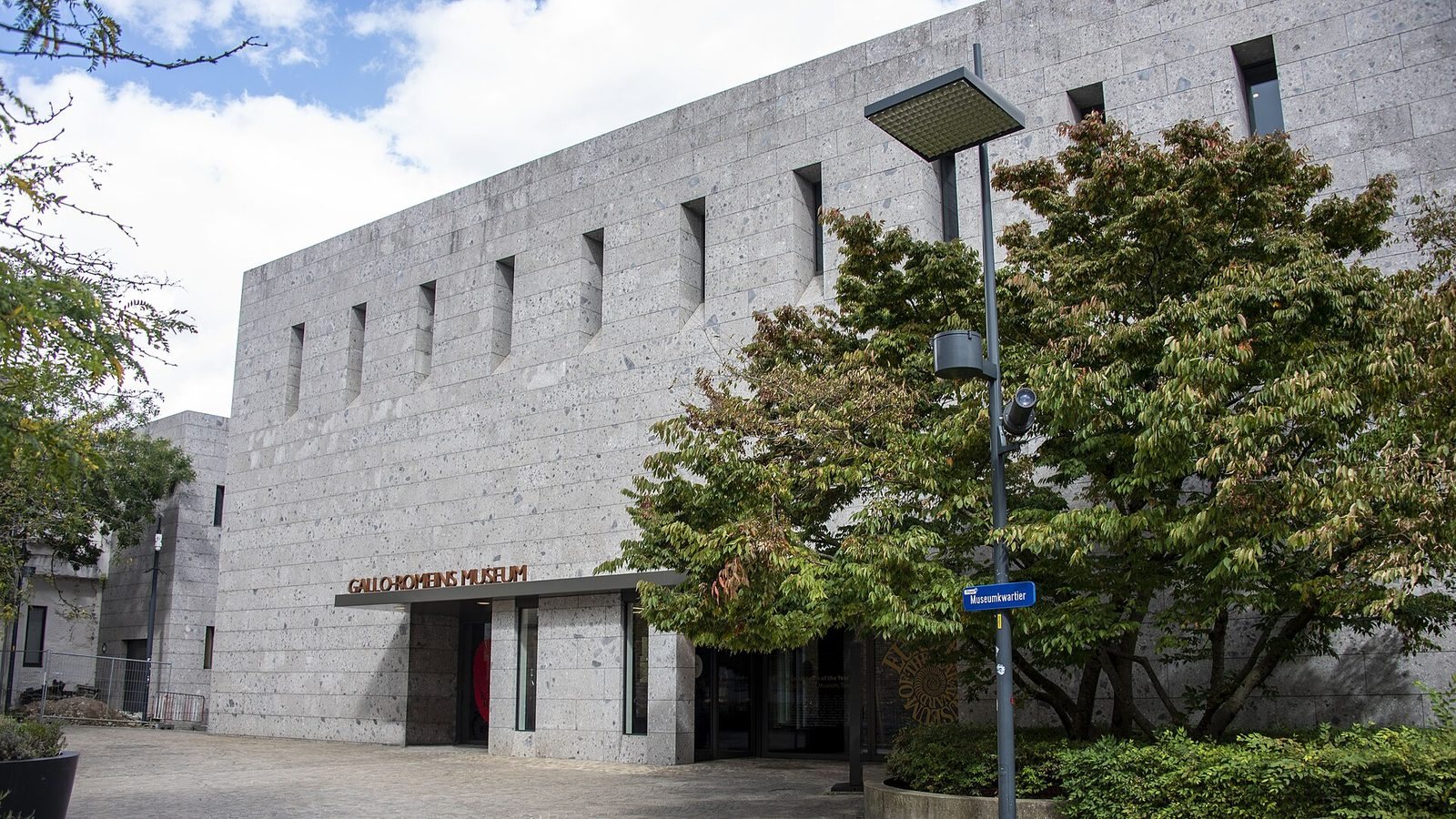
Architect Alfredo De Gregorio designed a new museum building, which opened in 1994 with renewed exhibition areas and museum operations. Further expansion began in 2006. In 2018, management passed from the Province of Limburg to the City of Tongeren.
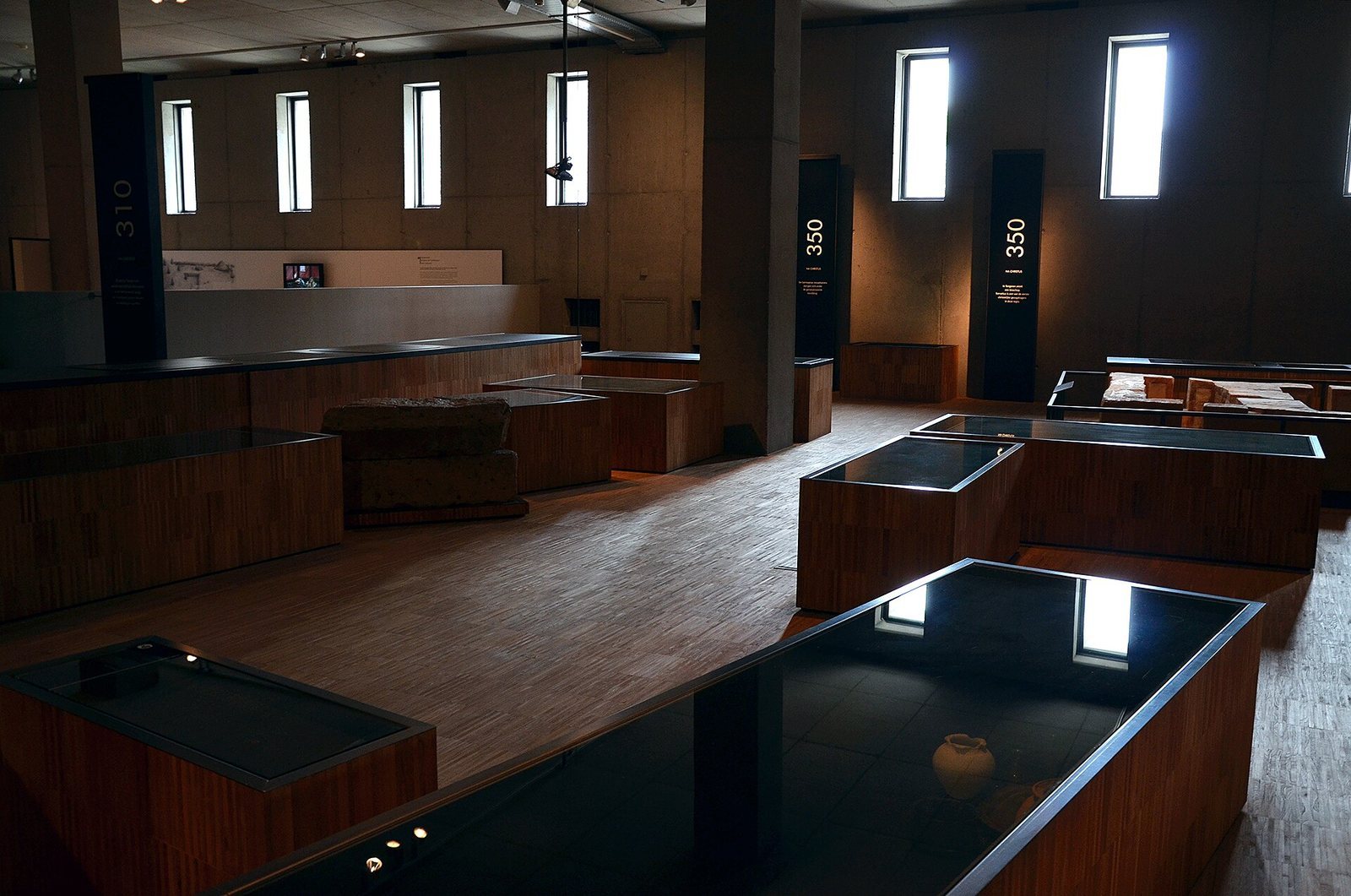
The permanent exhibition presents more than 2,000 artefacts in chronological order. It begins with Neanderthals and early Neolithic farmers, continues through Celtic and Germanic cultures and the Gallo-Roman period, and proceeds to the end of Roman rule and the beginnings of the Merovingian period. The sequence ends with the first signs of Christianity. Its interpretive motto, attributed to Marcus Aurelius, a Roman emperor and Stoic philosopher who ruled from AD 161 to 180, expresses the idea that each historical development remains connected to what came before.
Public programmes and recognition
Temporary exhibitions have addressed subjects including Neanderthals in Europe, Ambiorix and the Eburones, Sagalassos, the Etruscans, prehistory, the Vikings, gladiators, Roman beauty ideals, Stonehenge, the Roman past of Romania, and encounters with the Romans. Attendance included 145,704 visitors for the Neanderthal exhibition, 50,624 for Ambiorix, 145,900 for Sagalassos, 88,005 for the Etruscan exhibition, 39,368 for the prehistory exhibition, 95,147 for the Viking exhibition, 115,046 for the gladiator exhibition, 40,049 for Timeless Beauty, 53,045 for Stonehenge beyond the Mystery, and 32,705 for Dacia Felix.
In 2011, the museum became the first Belgian museum to receive the European Museum of the Year Award. It later received the Museum Prize in 2014 and the Romulus Prize in 2016 for presenting archaeology, Rome, the Romans, and antiquity to the public. Its reference library contains approximately 7,000 books and 350 runs of specialist journals for consultation by museum staff, external scholars, and students.
Remains
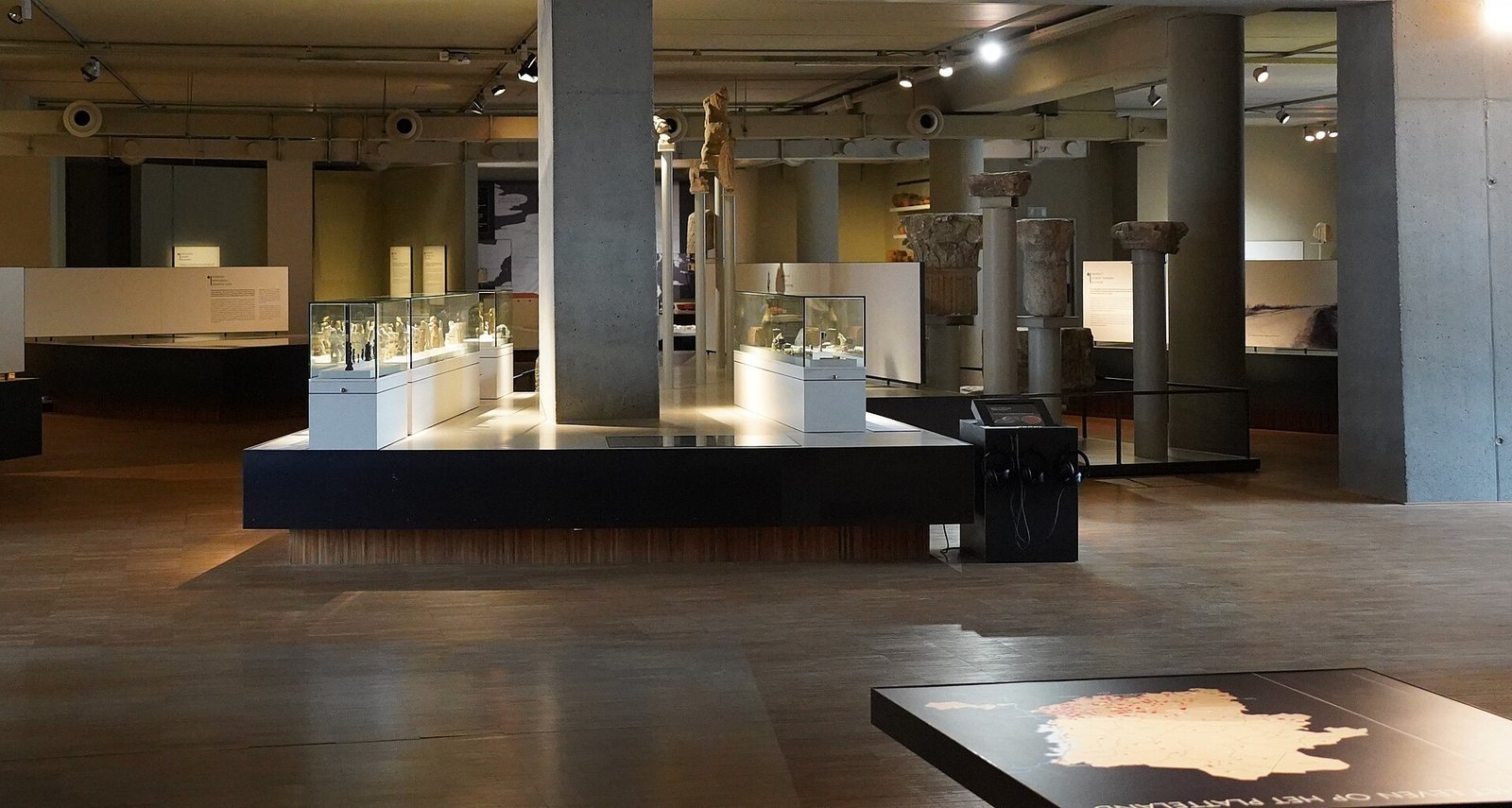
The museum is a modern archaeological museum whose building was designed by Alfredo De Gregorio and opened in 1994. Its expanded facilities have housed a chronological presentation arranged across the museum’s floors, combining artefacts with interactive displays and audio material for different age groups.
Chronological exhibition layout
The opening section presents the region’s first inhabitants, including Neanderthals. A further floor follows successive groups of early farmers, including the Bell Beaker culture, a prehistoric archaeological culture associated with distinctive bell-shaped pottery and burial practices. The third floor focuses on the Roman period and Gallo-Roman culture in Tongeren, the cultural world created through interaction between Roman institutions and local Gallic societies in Roman Gaul. The exhibition concludes with the first signs of Christianity.
Prehistoric and Iron Age objects
The collection includes a Neolithic quern from Vlijtingen, dated to 5300–4900 BC, and a bronze sword from Rekem dating to 800–700 BC. An iron sword from Schulen belongs to 50–10 BC, while gold staters of the Eburones from Vechmaal date to 55 BC. The Eburones were a Belgic people associated with the region during the Roman conquest, and Ambiorix was one of their leaders.
Roman sculpture and interpretation
A marble bust of Julius Caesar from the first century BC is displayed in the museum’s Roman-period presentation. Interactive presentations extend the interpretation of the collection, and a special audio guide has been prepared for children aged six to twelve alongside the presentation for adults.