Catacombs of San Callisto: Rome’s Christian Burial Complex



Site at a Glance
- Rating
- 4.6
- Popularity
- High
- Country
- Italy
- Primary era
- Classical
- External website
- Open
- Eras represented
- Classical, Medieval
- Civilizations
- Roman
- Site type
- Burial
- Remains
- Catacomb
On this page25 sections
History
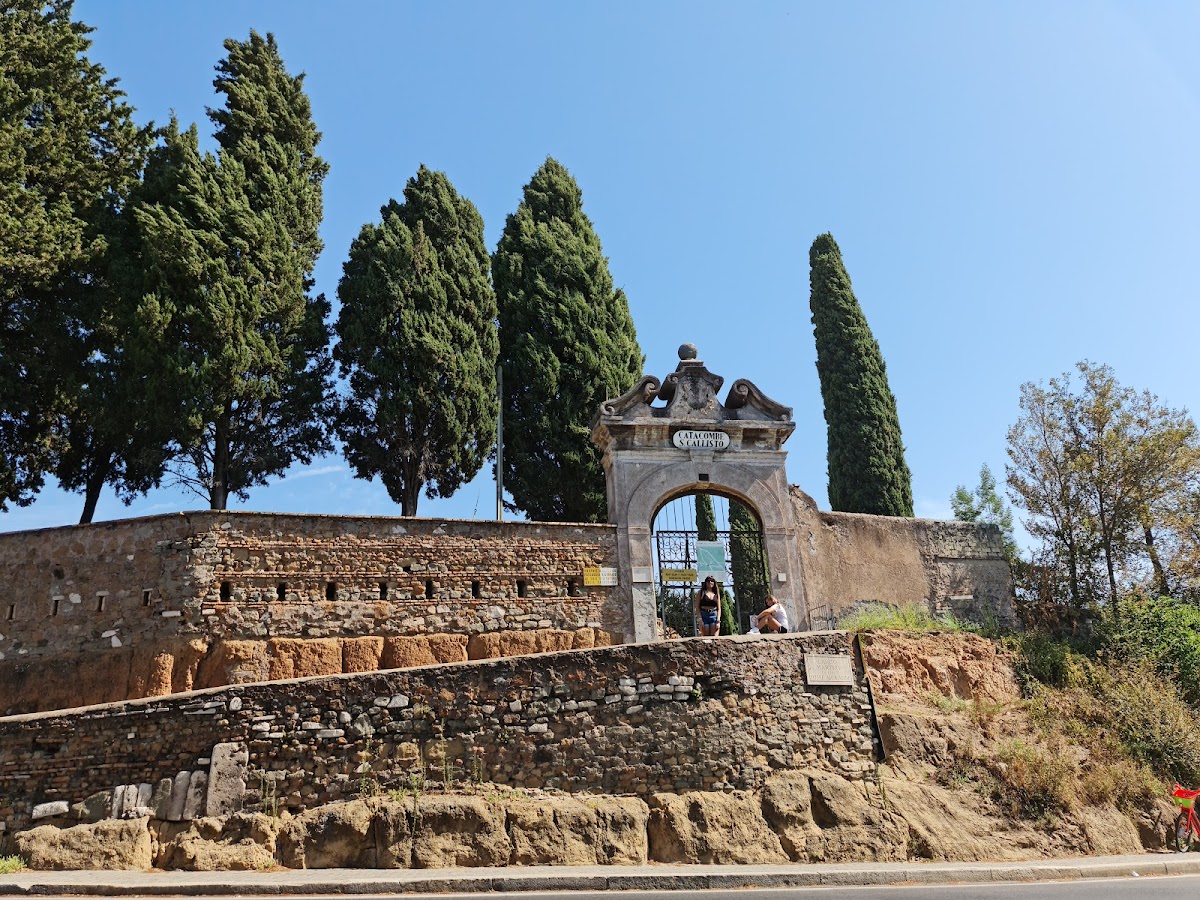
The Catacombs of San Callisto are a vast Christian underground cemetery in Italy, along Rome’s ancient Appian Way, developed between the second and fourth centuries by Rome’s Christian community. They formed part of the Callistian funerary complex, an area of about 30 hectares between the Via Appia Antica, Via Ardeatina, and Vicolo delle Sette Chiese. The catacombs themselves cover approximately 15 hectares and became one of Rome’s largest Christian burial grounds, as well as a pilgrimage destination associated with martyrs and bishops of Rome.
Formation of the communal cemetery
The complex grew from several earlier burial areas. These included the Crypt of Lucina, cemeteries associated with Saints Mark, Marcellianus, Damasus, and Balbina, and the original regions of the Popes and Saint Cecilia. Some of the land had first belonged to private owners and passed to the Church after those owners became Christians.
Pope Zephyrinus decided to establish a cemetery for all members of Rome’s Christian community. He placed the deacon Callixtus in charge of organizing and administering it, while church funds paid for the burials of poor Christians. After Callixtus became bishop of Rome, he enlarged and improved the cemetery substantially. The developing complex consequently became known by his name, although Callixtus himself was buried in the Catacomb of Calepodius.
The cemetery served both practical and religious purposes. It provided burial for members of the Christian community and housed the tombs of revered martyrs. On commemorative days, Christians gathered at the tombs for liturgies and listened to accounts of the martyrs’ deaths. Numerous prayer graffiti also show that individuals made private pilgrimages to these burial places.
Expansion and papal burials
The earliest areas included the Crypts of Lucina, the Popes, and Saint Cecilia, together with the cubicula of the Sacraments. The regions of Saints Gaius and Eusebius were added at the end of the third century. The Western Region followed during the first half of the fourth century, and the Liberian Region was created during the second half of that century. The Crypt of the Popes filled rapidly during the fourth century, so later bishops of Rome were buried in other Roman catacombs.
The catacombs are associated with about 16 popes, including Pontian, Anterus, Fabian, Cornelius, Lucius I, Stephen I, Sixtus II, Dionysius, Felix I, Eutychian, Gaius, Eusebius, Miltiades, Urban I, and Damasus I. The exact burial place of some remains uncertain. Nine bishops of Rome and possibly eight other members of the ecclesiastical hierarchy were buried in the Crypt of the Popes. A plaque installed by Pope Sixtus III around 440 lists several of the popes connected with the cemetery.
Pope Sixtus II was arrested in the catacombs during a Christian service and executed with four deacons on 6 August 258, during the persecution of Valerian. A poem by Pope Damasus about the martyrdom says that Sixtus chose to face death first rather than place his congregation in danger. Pope Eusebius was exiled to Sicily by the emperor Maxentius after a dispute over the readmission of the lapsi, Christians who had renounced their faith during persecution and later sought to return to the Church after repentance. Eusebius supported their restoration after penance, while the presbyter Heraclius opposed forgiveness. Riots followed, and both leaders were exiled. Eusebius died in Sicily, and Pope Miltiades later transferred his body to San Callisto.
The martyrs Calocerus and Parthenius died during the persecution of Diocletian in 304. A rhythmic inscription in the double cubiculum of Severus, dated no later than 304, calls the bishop of Rome “pope” and expresses belief in the final resurrection. The inscription is an early example of this usage and connects the language of the cemetery with Christian expectations of life after death.
Decline, translation of relics, and rediscovery
From the fifth century onward, increasing insecurity beyond Rome’s Aurelian Walls, the late third-century fortifications around the city, contributed to the abandonment of the catacombs. Between the fifth and ninth centuries, relics of revered saints were moved to churches inside Rome. In 609, Pope Boniface IV reportedly transferred 28 wagonloads of relics to the Pantheon, which had been converted into the church of Santa Maria ad Martyres.
By the ninth century, neglect made it difficult to locate the relics of Saint Cecilia. According to tradition, Saint Cecilia appeared to Pope Paschal I in a dream and indicated that her tomb was only one wall away. Paschal transferred her relics to Santa Cecilia in Trastevere in 821. Later removals, including a major ninth-century translation under Pope Sergius II, further emptied and weakened the Crypt of the Popes.
The catacombs were rediscovered in the mid-nineteenth century. Formal archaeological investigations associated with Giovanni Battista de Rossi began in 1848, while the rediscovery is generally dated to 1854. Scientific excavation and study continued afterward. In the twentieth century, researchers photographed the catacomb paintings, including under the direction of Joseph Wilpert. About 600 hand-coloured photographic reproductions preserve the appearance and colouring of paintings that were difficult to examine directly.
The investigated areas contain approximately half a million burials and about 20 kilometres of passageways. Only a small section is open to visitors, while substantial areas remain unexplored or inaccessible. It is still uncertain whether San Callisto connects underground with the nearby Catacombs of San Sebastiano and Domitilla.
Remains
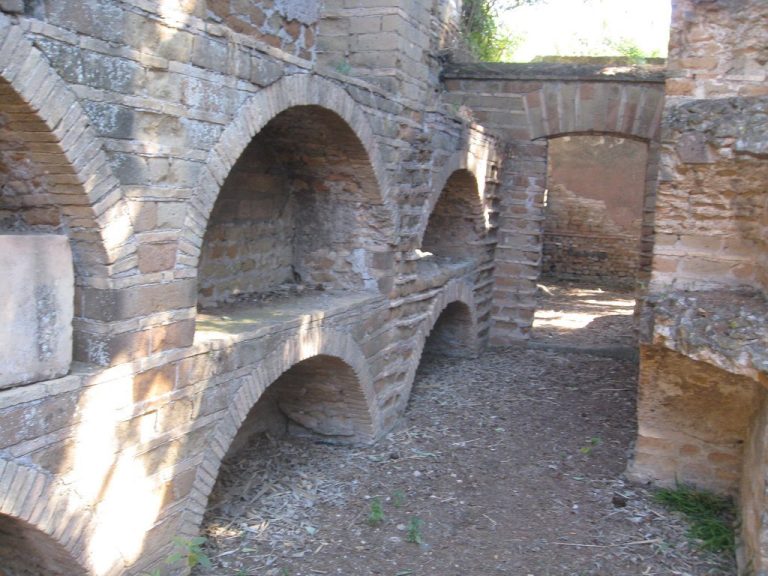
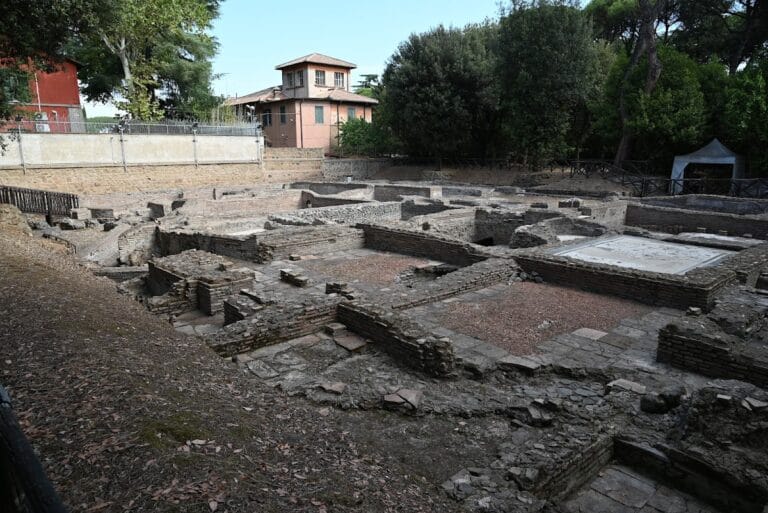
The catacombs descend through five levels and comprise galleries, crypts, cubicula, stairways, burial niches, arcosolia, and hypogea. An arcosolium is an arched recess containing a tomb, while a hypogeum is a subterranean burial complex. The principal regions are those of Lucina, the Popes, Saint Cecilia, the Sacraments, Saints Gaius and Eusebius, the Western Region, the Liberian Region, and Saint Miltiades. Above ground, the Western and Eastern Trichorae are basilicas ending in three apses and connected with the funerary landscape that developed over the underground tombs.
Above-ground basilicas and the Staircase of Damasus
Western and Eastern Trichorae
The Western Trichora was built above a burial area associated with Pope Zephyrinus and the martyr Tarsicius. The Eastern Trichora contains numerous sarcophagi transferred from the catacombs, including the small Child’s Sarcophagus. Its carved scenes show Noah in the Ark with a dove, a prophet holding a scroll, Daniel in the lions’ den with Habakkuk bringing him bread, a child praying between two saints, the Wedding at Cana, and the raising of Lazarus. Together, these images evoke baptism, Christian teaching, the Eucharist, eternal life with the saints, and the future resurrection.
Staircase of Damasus
The reconstructed Staircase of Damasus occupies the position of the fourth-century staircase built by Pope Damasus to reach the region of the Popes. Stones once used to seal tombs are displayed along it, including one with the epitaph of Agrippina. Fourth-century pilgrim graffiti in the plaster include prayers to Saint Sixtus and other saints, as well as a reference to the catacombs as “Jerusalem,” meaning a place filled with martyrs. A copy of the Good Shepherd statue stands at the lower landing, while the original is in the Vatican Museums.
Crypts of the Popes and Saint Cecilia
Crypt of the Popes
The rectangular Crypt of the Popes has four sarcophagus niches in the lower part of one wall, twelve further tombs arranged six along each long wall, and another tomb incorporated into the altar at the end. Nine bishops of Rome and eight bishops from other cities were buried there. Greek inscriptions originally identified the occupants as bishops, while the tombs of Fabian and Sixtus II also bear the letters MRT, an abbreviation for “martyr.” Greek inscriptions name Pontian, Anterus, Fabian, Lucius I, and Eutychian. Fragments of Damasus’ poetic epitaph for Sixtus II survive beside his tomb, written in lettering associated with the Roman calligrapher Furius Dionysius Filocalus.
Crypt of Saint Cecilia
The Crypt of Saint Cecilia is a large chamber whose left-wall niche held the saint’s sarcophagus. A copy of Stefano Maderno’s sculpture of Cecilia lies inside the crypt, while the original is in Santa Cecilia in Trastevere. The sculpture represents the body as it was reportedly seen when the sarcophagus was opened in 1599, with the head veiled and the fingers arranged in a gesture expressing belief in one God and the Trinity.
Frescoes in the crypt date no later than the late eighth or early ninth century. They show Christ Pantocrator, a frontal image of Christ as universal ruler, Saint Cecilia praying with raised arms, the martyr-pope Urban I, a cross between two lambs, and the Roman martyrs Polycamus, Sebastian, and Quirinus. Several Greek funerary inscriptions also survive, including one for the senator Septimius Fronto from the end of the third century.
The Sacraments and the Staircase of the Martyrs
Cubicula of the Sacraments
The five cubicula of the Sacraments were intended for members of one family. Their well-preserved early-third-century frescoes represent baptism, the Eucharist, and the general resurrection. Scenes include Moses striking the rock, Christ’s baptism in the Jordan, a fisherman, the Samaritan woman at the well, and the healing of the paralytic at the pool of Bethesda.
One painting is regarded as the earliest known representation of baptism itself. A presbyter wearing a tunic and cloak places his hand on the head of a person standing in flowing water. Other frescoes show seven people seated around a table with dishes of bread and baskets nearby, presenting an image of early Christian Eucharistic practice. The Eucharist commemorates Christ’s Last Supper through bread and wine, so the bread, fish, and wine in these paintings carry sacramental meaning.
Jonah being saved from the great fish appears repeatedly in the cubicula. The scene represents Christ’s three-day resurrection, the future resurrection of the dead, and salvation through repentance and faith.
Staircase of the Martyrs
The Staircase of the Martyrs begins beyond the cubicula of the Sacraments. Cut into the rock at the end of the second century, it predates Zephyrinus’ communal cemetery and was traditionally associated with funeral processions carrying the bodies of martyred popes.
Region of Saint Miltiades
Created in the second half of the second century, the Region of Saint Miltiades links the areas of the Crypts of the Popes and Saint Cecilia with the Crypt of Lucina. Its principal corridor, regularly used by pilgrims, is unusually broad and reaches approximately seven metres in height. Images along the passage include a dove, Christograms, a fish or ichthys, an anchor, a bird drinking from a cup, and a phoenix surrounded by rays. These motifs represent the Holy Spirit, Christ, faith, spiritual consolation, and the passage from bodily death to eternal life.
An arcosolium contains an image of the buried girl Irene praying with raised arms and a dove above her. The region also includes the Crypt of Saint Miltiades, the Crypt of the Four Seasons, the Cubiculum of Aquilina, the Crypt of Oceanus, and the Crypt of the Sarcophagi. The Cubiculum of Aquilina preserves the inscription “Aquilina dormit in pace,” meaning that Aquilina sleeps in peace. Two well-preserved sarcophagi remain in the Crypt of the Sarcophagi.
Regions of Saints Gaius and Eusebius
Crypt of Saint Gaius
The large Crypt of Saint Gaius could hold approximately 60 people and may initially have served communal worship. Its white-plastered walls surround a large central tomb for Pope Gaius, together with wall niches and graves cut into the floor. A Greek inscription on Gaius’ tomb gives his burial date as 22 April 296 and identifies him as a bishop. Graffiti mention three African bishops who came to venerate the relics of Saint Optatus, who may also have been buried there.
Crypt of Saint Eusebius
The rectangular Crypt of Saint Eusebius lies opposite the Crypt of Saint Gaius. It is smaller but more richly decorated, with marble covering on the floor and walls and three arcosolia. One held the body of Pope Eusebius. Its arch was decorated with mosaic, and Damasus’ epitaph for Eusebius was carved on the covering slab. A second marble slab in the centre repeats the epitaph. Its reverse preserves an earlier dedication to the emperor Caracalla, and the slab was probably transferred from a pagan temple in Rome at Damasus’ order.
Crypt of Calocerus and Parthenius
The crypt of the martyrs Calocerus and Parthenius lies along Passage O, north of the Crypt of the Popes. Graffiti beside the tombs identify the two martyrs, and an adjoining room provided a place for pilgrims to pray.
Family chambers and later regions
Cubicula of the Five Saints, Sophronia, and Severus
The Cubiculum of the Five Saints contains a well-preserved fresco, probably from the beginning of the fourth century. Five named figures stand in the praying pose within a paradise garden surrounded by birds and flowering and fruit-bearing trees. The Cubiculum of Sophronia is identified by two graffiti bearing her name. Two further inscriptions in the adjoining corridor express the hope that Sophronia would rest with the saints and live eternally in God.
The double cubiculum of the deacon Severus dates to the pontificate of Marcellinus, between 296 and 304. Its marble inscription describes the construction of a double chamber with an arcosolium and a shaft admitting light for Severus and his household. It also expresses hope in the resurrection and states that Severus’ daughter lived nine years, eleven months, and fifteen days.
Cubiculum of the Sheep
The Cubiculum of the Sheep contains mid-fourth-century frescoes. Its central arcosolium shows the Good Shepherd carrying a lamb among sheep. Other scenes depict two men approaching springs, Christ blessing bread and fish, Moses removing his sandals, and Peter drawing water from a rock for a Roman legionary.
Western Region
Created in the early fourth century, the Western Region contains burials from the period after the persecutions, when the area was no longer used for worship. One domed cubiculum contains approximately 50 burials. Another arcosolium preserves a severely damaged cycle of frescoes devoted to the Virgin Mary, including a relatively well-preserved Adoration of the Magi.
Liberian Region
The Liberian Region occupies the northern part of the catacombs and was created in the second half of the fourth century. Its spacious cubicula are often decorated with columns or pilasters. Surviving frescoes include Christ Pantocrator, Adam and Eve with the tempting serpent, and Susanna and the Elders.
Approximately 2,378 funerary inscriptions were found in the catacombs, most of them in the Liberian Region. They preserve names as well as occupations and social positions, including physician, presbyter, teacher, gardener, sculptor, deacon, apostolic envoy, and centurion of the Fifth Cohort. Alongside these inscriptions, the galleries contain Christian frescoes, graffiti, sculptures, sarcophagi, and symbolic motifs centered on baptism, the Eucharist, martyrdom, the Good Shepherd, paradise, repentance, and resurrection.
Crypt of Lucina
The Crypt of Lucina began in the second half of the second century as an independent underground cemetery. It consists of two hypogea formed from several cubicula connected by galleries, with two stairways leading to the surface. A tunnel joined it to the Catacombs of San Callisto only at the end of the fourth century, enabling pilgrims to reach the tomb of Pope Cornelius.
Cornelius’ tomb retains a marble slab inscribed “CORNELIUS MARTYR EPISCOPUS,” identifying him as a martyr and bishop. Frescoes beside it depict Sixtus II, the martyr Optatus, Cornelius, and the African bishop Cyprian of Carthage in episcopal dress, holding Gospels and wearing crowns of martyrdom.
Nearby chambers preserve paintings of Christ’s baptism, Daniel in the lions’ den, scenes from the Book of Jonah, the Good Shepherd, and fish, baskets of bread, and a cup of red wine representing the Eucharist. Another chamber contains early Roman frescoes, probably dating from after 175, with the Good Shepherd and praying figures on the ceiling and two fish with a basket of loaves on the far wall.