Solidor Tower: A Medieval Fortified Keep in Saint-Malo, France


Site at a Glance
- Rating
- 4.5
- Popularity
- Medium
- Country
- France
- Primary era
- Medieval
- External website
- Open
- Eras represented
- Classical, Medieval, Early Modern, Modern
- Civilizations
- Duchy of Brittany, French, Roman
- Site type
- Military
- Remains
- Castle
On this page8 sections
History
Medieval Foundation
Solidor Tower is a medieval fortified keep in Saint-Malo, France, built between 1369 and 1382 for John IV, Duke of Brittany. At the time, Saint-Malo did not recognize his authority. The fortress controlled access to the Rance estuary, monitored navigation, restricted trade between Saint-Malo and Dinan, and collected taxes on goods carried by boat.
The new complex replaced and incorporated earlier defenses. A small château known as Oreigle Tower or Aiquin Tower already occupied the site and was converted into the guardhouse. Its surrounding enclosure had been built over fourth-century Gallo-Roman fortifications defending the ancient port of Aleth. Archaeology has found no occupation layer associated with the Vikings.
Early Modern Military Control
In 1588, inhabitants of Saint-Malo seized Solidor Tower for the Duke of Mercœur, leader of the Brittany League, a Catholic political and military movement active during the French Wars of Religion. The garrison was then just five or six men. In 1590, a captain was appointed with three soldiers, a servant, and two guard dogs.
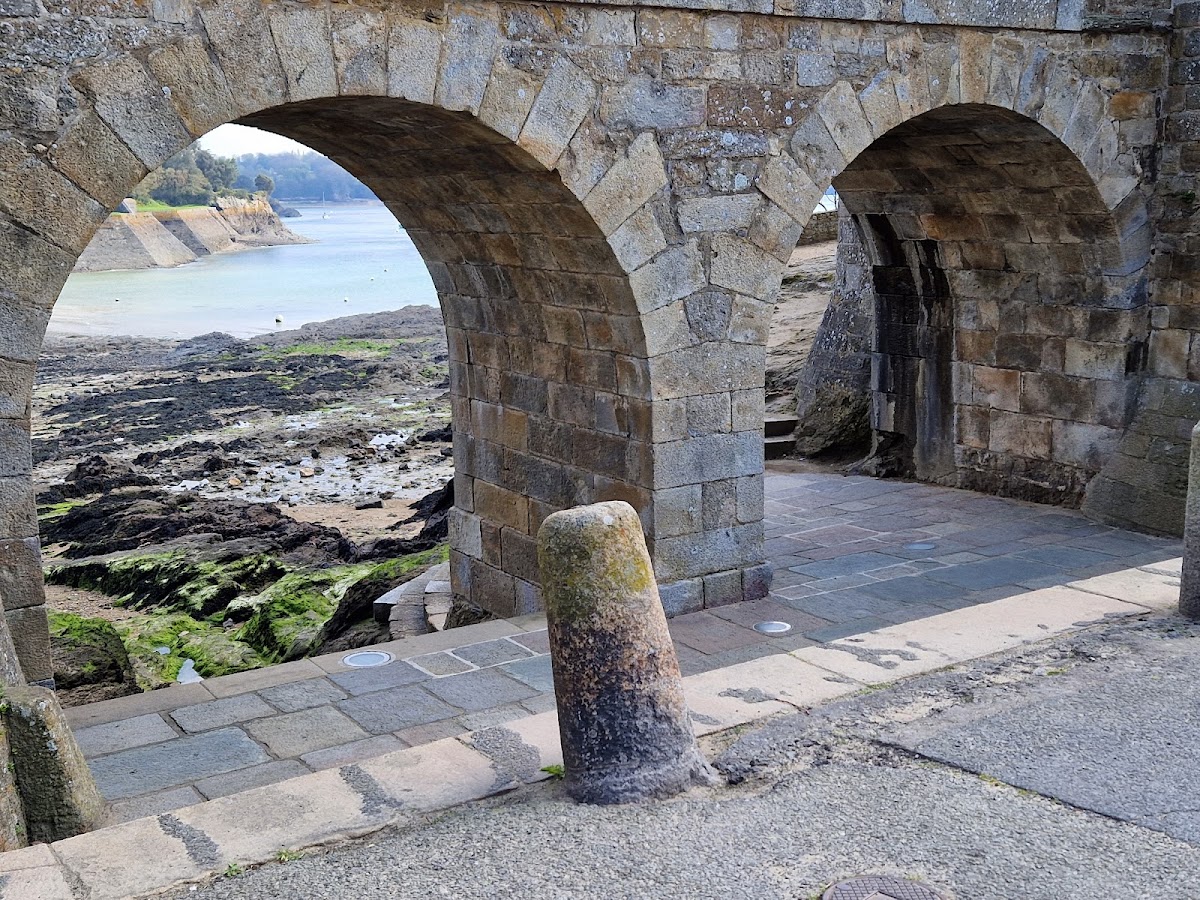
Louis XIII ordered repairs in 1636. Responsibility for the tower’s guard passed to the inhabitants of Saint-Servan in 1694, after which the engineer Siméon Garangeau prepared plans for improving its defenses. The entrance drawbridge was replaced by a stone bridge in 1756.
Prison, Heritage Site, and Maritime Memory
Advances in military technology eventually made the fortress’s original defensive role obsolete. During the French Revolution and the Empire, it became a prison for priests, nuns, and military personnel. In the Napoleonic period, it was assigned to the naval service.
In 1886, the Ministry of the Navy transferred Solidor Tower to the Historic Monuments administration. The architect Albert Ballu restored the building and gave it its present large roof. It has been protected as a French historic monument since July 1886.
From 1970 to 2019, the tower housed the Musée international du Long-Cours Cap-Hornier, a museum devoted to long-distance navigation and sailors who rounded Cape Horn. The museum closed permanently in 2022. A passenger and vehicle ferry once operated from the Solidor slipway across the Rance to Dinard, until the Rance dam entered service in 1967. That same year, Saint-Servan merged with Saint-Malo and Paramé.
Solidor Tower is also associated with Jacques Cartier’s departure in 1534 for his expedition to Canada. Jacques Cartier was a French navigator and explorer. A cross was erected at the tower’s foot in 1985 to commemorate the voyage. The fortress has appeared in works by Henri Arondel, Maximilien Luce, Charles Wislin, Pierre Boudet, Bernard Buffet, Geoffroy Dauvergne, and André Wilder. Wilder portrayed it several times, including in paintings made in 1908 and 1912; the 1908 painting was exhibited at the Salon des Indépendants in 1909.
Remains
Fortified Complex
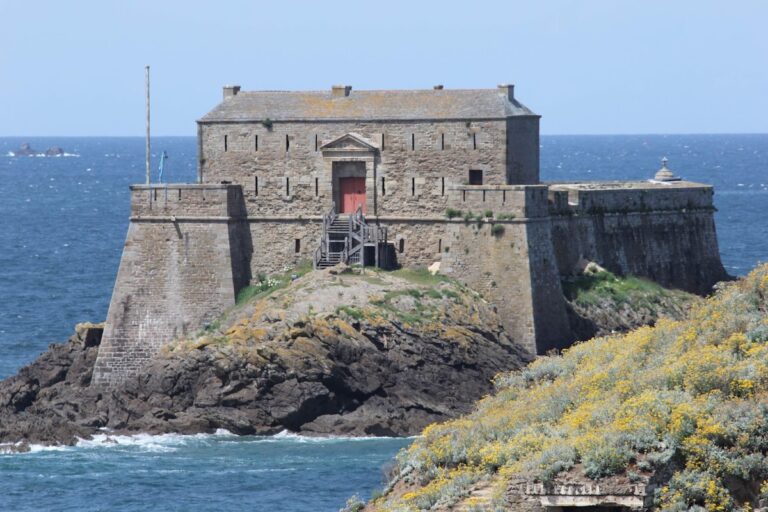
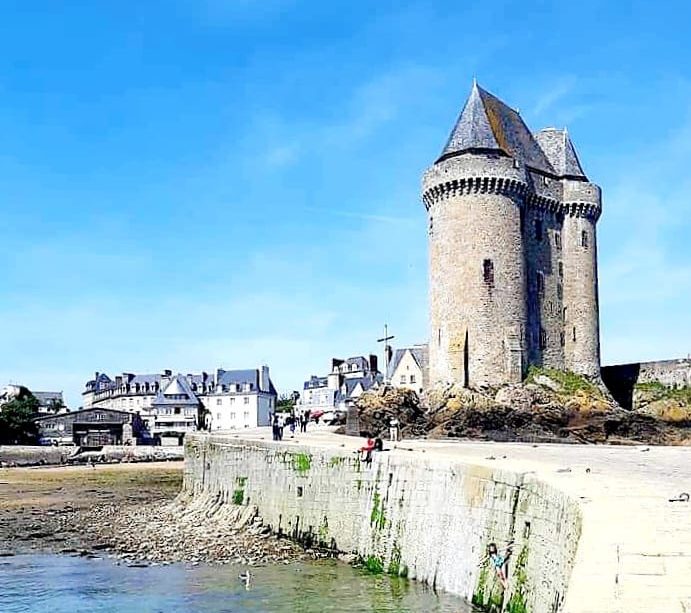
Solidor Tower stands on a rocky promontory at the mouth of the Rance in Saint-Servan, a district of Saint-Malo. The 33-metre-high keep consists of three towers linked by short curtain walls, meaning defensive walls that connect towers or other strongpoints. The complex has three levels, three rounded flank towers approximately 18 metres high, and an internal staircase of 104 steps.
The earlier small château survives in its later role as the guardhouse of the medieval complex. Elements of the enclosure built over the fourth-century Gallo-Roman defenses survive in the present entrance bastion. The tower and guardhouse have a somewhat different appearance from their early twentieth-century form, reflecting later changes and restoration.
Archaeological and Maritime Features
At low tide, a stone causeway leading toward the ancient Gallo-Roman port can be seen. The sea level was approximately eight metres lower when that port was in use, placing the surviving feature within the archaeological landscape of ancient Aleth.
Graffiti remains legible on the interior doors that once closed the prison cells. During the museum period, the tower contained collections connected with long-distance navigation and Cape Horn sailors, including maps, models, and navigational instruments. A wooden weather vane shaped like an albatross was presented to the tower in 2003 by the Chilean section of the International Association of Cape Horners.
Cartier Memorial
The cross at the foot of the tower, erected in 1985, is a commemorative feature dedicated to Jacques Cartier’s 1534 voyage to Canada. It connects the physical site with the maritime departure remembered in the tower’s later history.