Dartmouth Castle: A Coastal Artillery Fortress in Devon
Site at a Glance
- Rating
- 4.5
- Popularity
- Medium
- Country
- United Kingdom
- Primary era
- Medieval
- External website
- Open
- Eras represented
- Medieval, Early Modern, Modern
- Civilizations
- British, English
- Site type
- Military
- Remains
- Castle
On this page14 sections
History
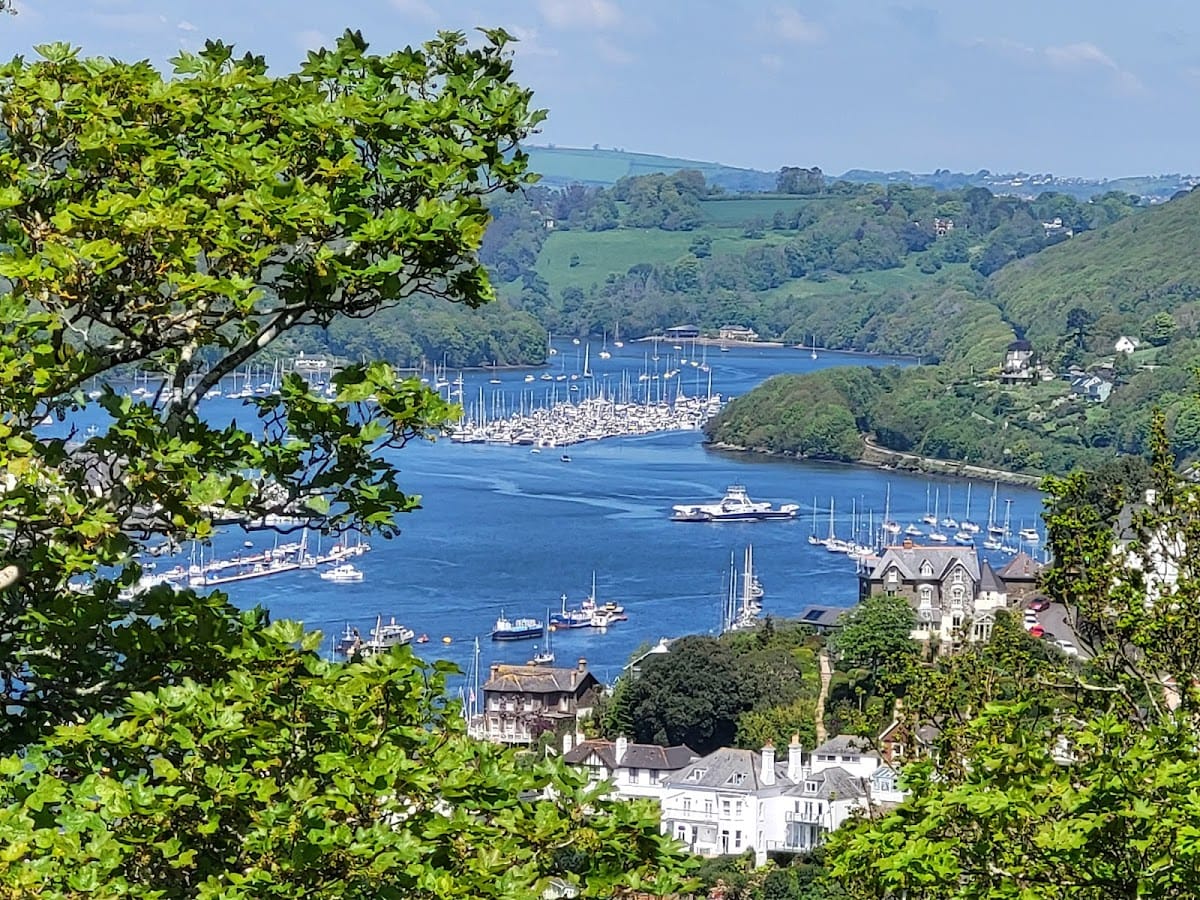
Dartmouth Castle is a coastal fortress in the United Kingdom, standing above Dartmouth harbour in Devon. It was established in the 1380s during the Hundred Years’ War, when the harbour’s value as a trading and fishing port made it a target for French attack. The site developed from a small fortified enclosure into a major coast-artillery fort, and its late-fifteenth-century expansion created the oldest known purpose-built coast-artillery fort in Britain.
Medieval foundation
By the twelfth century, Dartmouth harbour could hold as many as 600 vessels. Its activity also included piracy and privateering, especially attacks on French shipping. During the Hundred Years’ War, the French navy regarded Dartmouth as an important target. After repeated royal warnings in the 1370s, John Hawley, the town’s mayor and a privateer, received permission from Richard II in 1388 to raise money for a new fortalice, meaning a small fortified enclosure, by the sea.
The first castle was built on land in the manor of Stoke Fleming belonging to the Carew family, who lent the property because of the French threat. The enclosure included a chapel dedicated to Saint Petroc, a Christian saint associated particularly with Cornwall and nearby parts of southwestern Britain. Its defences comprised a curtain wall, mural towers, and a gate tower, while catapults and possibly early cannon were intended to attack enemy ships. The Carews later constructed a house within the fortification.
The original fortalice never saw active service, although it may have helped deter a French and Breton force commanded by Tanneguy du Chastel in 1404. That force landed at Slapton Sands instead and was dispersed by the local militia.
Harbour defences and Tudor expansion
In 1462, the Crown agreed to pay Dartmouth £30 each year for twenty years to maintain a chain across the harbour. A larger programme followed in 1481, when Henry VII promised £150 over five years for a new artillery tower, together with an annual maintenance payment that later rose from £30 to £40. Renewed fears of French invasion accelerated the work, and the tower was completed in 1495.
The expansion created a defensive system designed to block and attack vessels entering the harbour. The chain ran across the water to a tower at Godmerock on the opposite side of the River Dart, with small boats known as “cobbellys” supporting part of its route. Dartmouth also built Kingswear Castle on the other side of the estuary. The principal tower combined the harbour-chain machinery with artillery positions, linking the town’s maritime protection to the wider development of gunpowder warfare.
During renewed war involving England, France, and Spain, Henry VIII ordered improvements to coastal defences in 1543. Dartmouth Castle received three new gun batteries, including Lamberd’s Bulwarke in the south-east corner of the original fortification. Sir Peter Carew, a soldier and Dartmouth Member of Parliament, opposed the work because it encroached on the Carew family house. He seized the castle and expelled the town’s officers, but Dartmouth regained it in 1554 after Carew fled the county while facing treason charges. He returned and took it again in 1556. A later reprieve allowed the town to control the fortifications while the Carews continued to occupy their house.
The gun tower was improved and Lamberd’s Bulwarke repaired in 1597, when England feared a Spanish invasion. In 1599, the Spanish spy Hortensio Spinola described the castle as having 24 guns and 50 men and considered the harbour well protected.
Civil War and royal garrison
Dartmouth initially supported Parliament when the English Civil War began in 1642. The conflict, fought from 1642 to 1646 between supporters of Charles I and Parliament, exposed the castle’s vulnerability to attack from the land. In 1643, Prince Maurice, a Royalist commander, besieged Dartmouth and captured the castle after artillery was placed on higher ground behind it.
The threat from the landward side led to the use of Gallants Bower, an earthwork fort above the castle. It may have been built during the Civil War or originally constructed in 1627 and brought back into service during the conflict. In January 1646, Sir Thomas Fairfax led a Parliamentary army in recapturing Dartmouth. His forces took the town, then Gallants Bower, and finally forced Sir Hugh Pollard, the castle’s commander, to surrender. The Carew family house was probably badly damaged during the assault.
During the Interregnum, the period of republican government between the execution of Charles I and the restoration of Charles II in 1660, Gallants Bower was decommissioned while Dartmouth Castle remained in use. The Carew house was demolished, and Sir John Fowell became governor of the castle and local defences, with responsibility that included preventing smuggling. After Charles II was restored in 1660, the castle and its former annual subsidy were initially granted to Dartmouth again. By 1662, a royal garrison of 23 men occupied the town’s fortifications, with Fowell serving as captain and governor until 1677.
Fears of Dutch and French attack kept the castle maintained until the 1690s. The defences then declined. A survey in 1715 described them as ruinous, with artillery that was inadequately maintained. Lamberd’s Bulwarke was strengthened in 1741 and converted in 1748 into the two-tiered Grand Battery, armed with twelve guns. The older parts of the castle remained under town control and served mainly as accommodation and storage.
From active defence to heritage site
Dartmouth harbour later declined in importance as nearby Plymouth took over much of its former trade. The castle was garrisoned by the volunteer Dartmouth Artillery during the Napoleonic Wars but saw no active service. After the war, its guns were reduced and the garrison cut to a single caretaker gunner. Only two guns were serviceable in 1820.
New military technology, including shell guns, steamships, rifled cannon, and ironclad warships, prompted the rebuilding of the Grand Battery in 1859 as the Dartmouth Point Battery. Although the harbour was no longer a major military priority, it was considered potentially useful as a staging point for an attack on Plymouth. A further upgrade in 1888 installed only outdated artillery. By 1909, most of the castle was considered obsolete, so the War Office transferred it to the Office of Works, which restored the site and opened it to visitors.
Dartmouth Castle returned to military service during the Second World War, when it was rearmed to protect merchant convoys and the Philips’ shipyard. Military use finally ended in 1955. The castle then returned to the Ministry of Works for repairs, while the Dartmouth Point Battery, by then known as the Old Battery, was leased to the town for use as a restaurant. In the twenty-first century, English Heritage manages the castle. Its medieval fortifications have Grade I listed status in the United Kingdom, and the nineteenth-century gun battery is listed at Grade II*.
The change from military stronghold to visitor attraction was already reflected in an 1833 poetical illustration by Letitia Elizabeth Landon, accompanying an engraving of a painting by Thomas Allom that depicted the castle and harbour.
Remains
Medieval fortress
Original fortalice
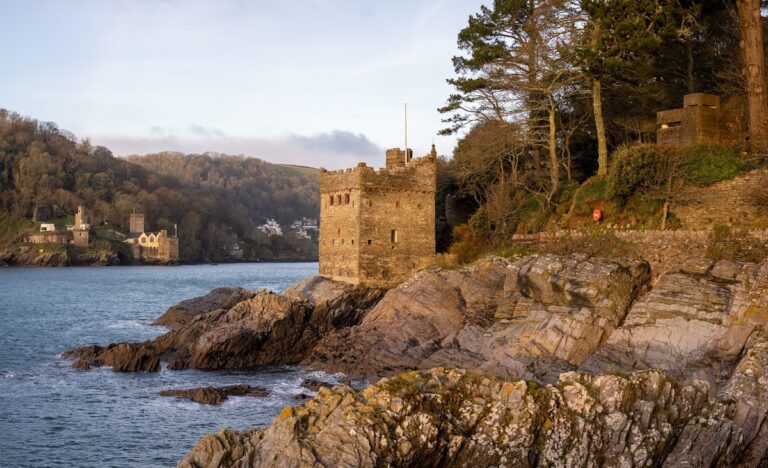
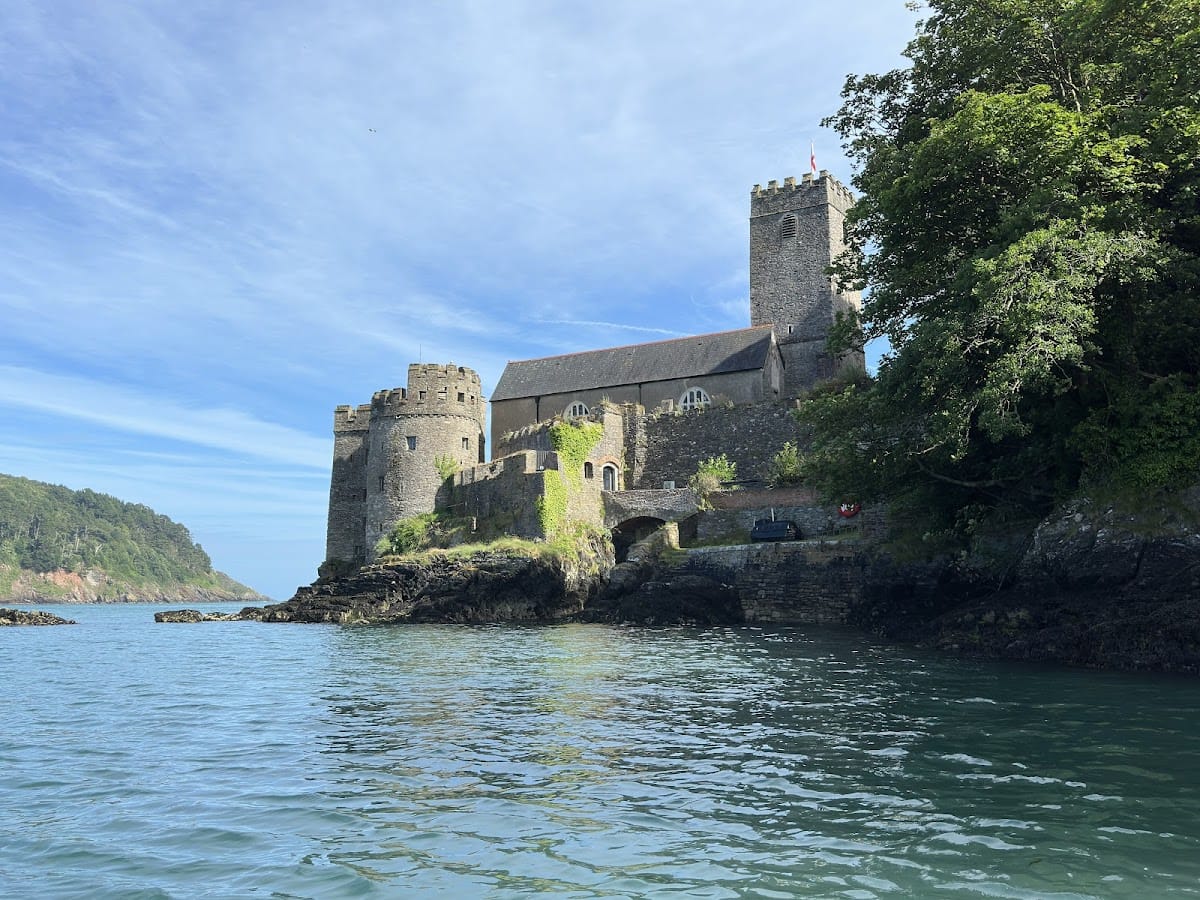
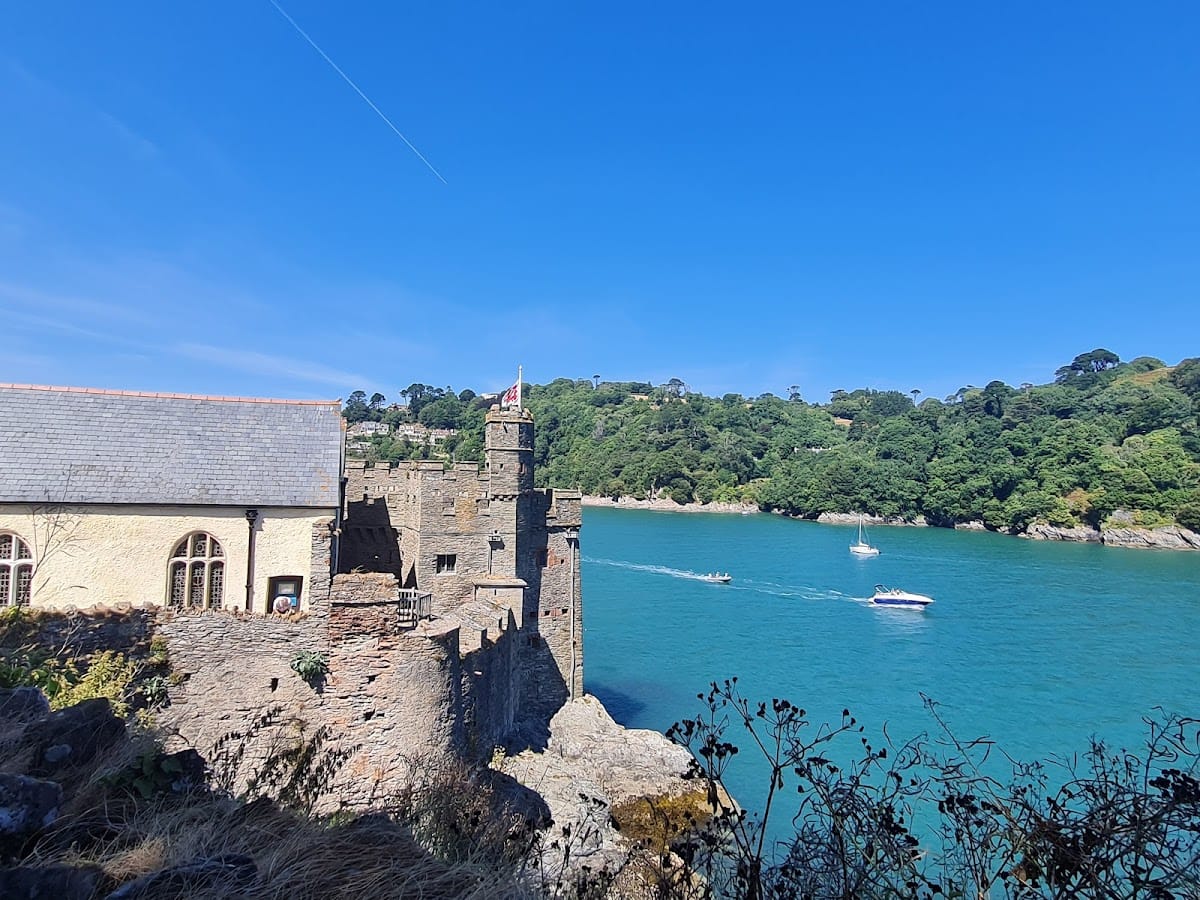
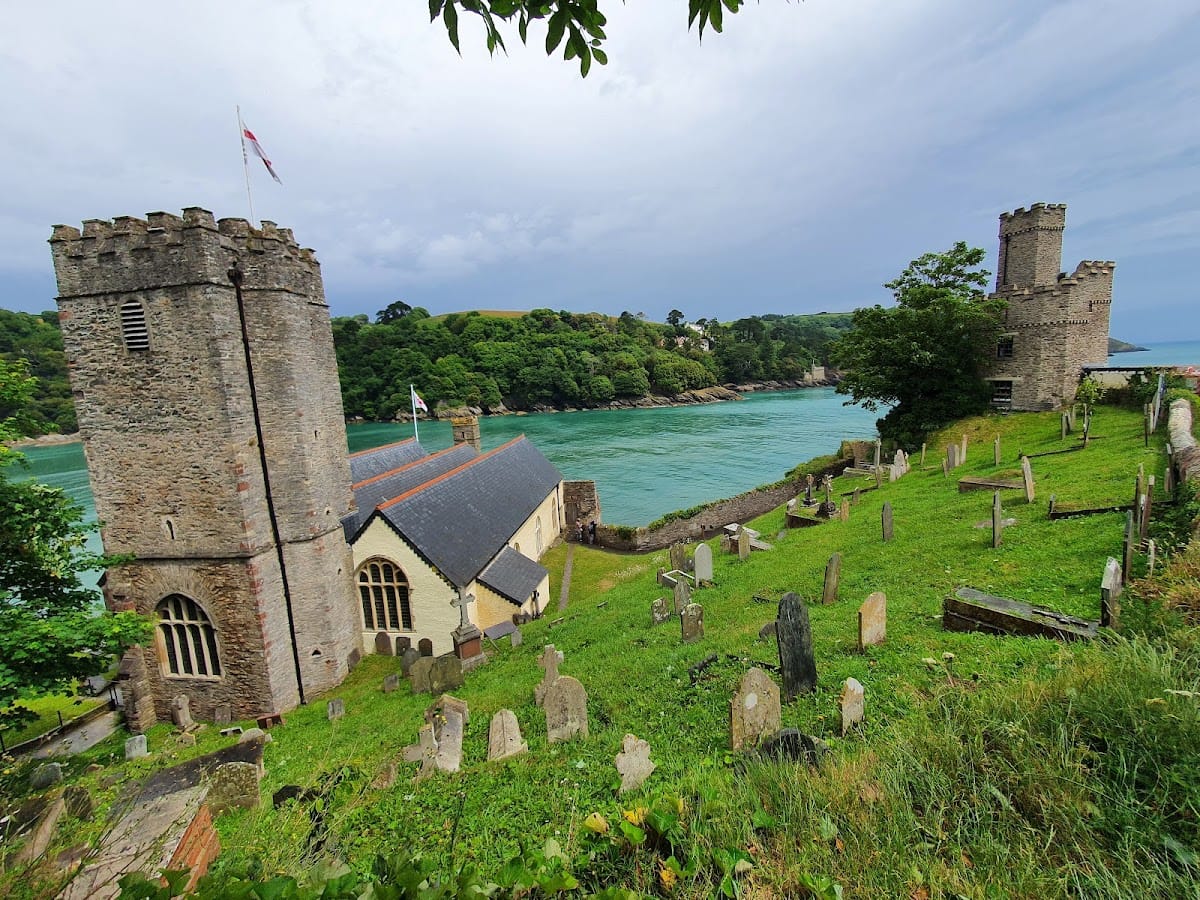
Dartmouth Castle occupies a rocky outcrop overlooking the harbour entrance. The remains of the original fortalice lie in the south-west corner. This small enclosure castle was arranged around a fortified area by a curtain wall, mural towers, and a gate tower. Surviving elements include a corner tower, part of the moat, and sections of wall approximately 7 feet 6 inches (2.29 metres) thick and up to 23 feet (7.0 metres) high.
Saint Petroc’s Church
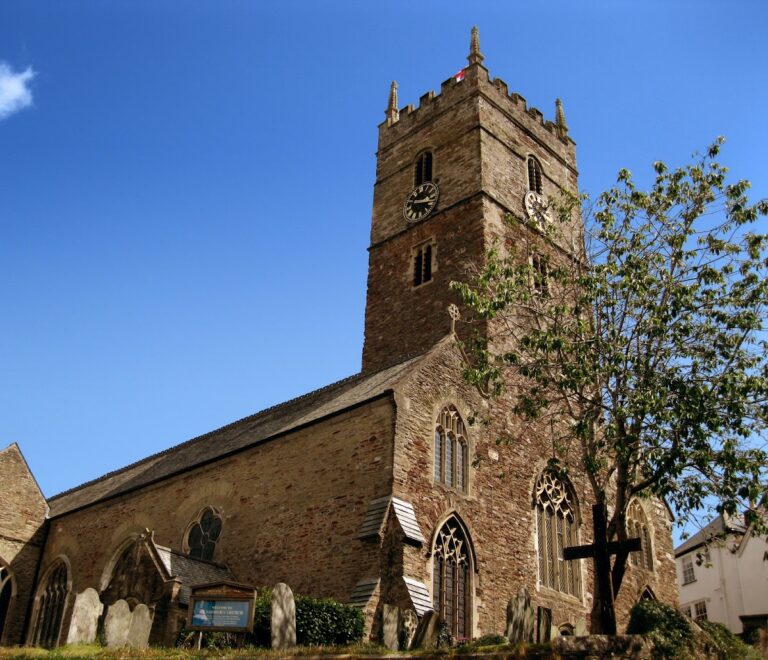
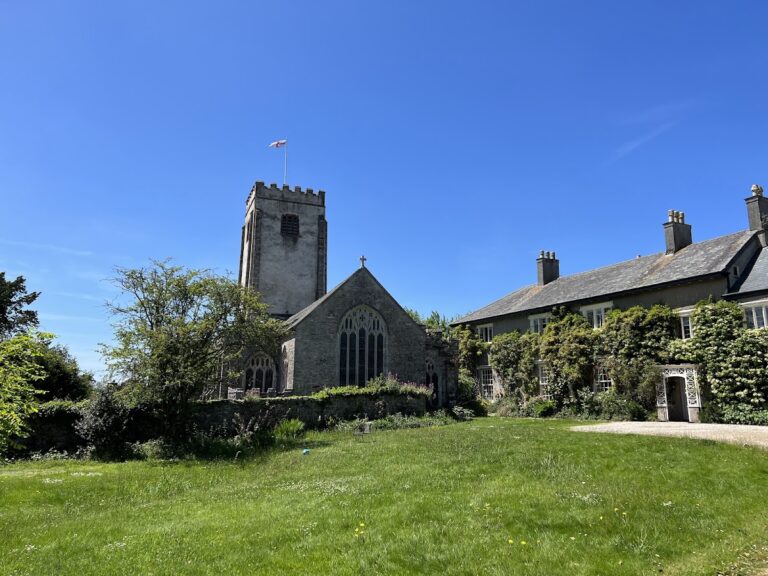
Saint Petroc’s Chapel formed part of the original fortification. Saint Petroc’s Church now stands immediately behind the main gun tower. It is a three-aisled building whose present form dates from 1641, with further alteration during restoration in 1833.
Main gun tower
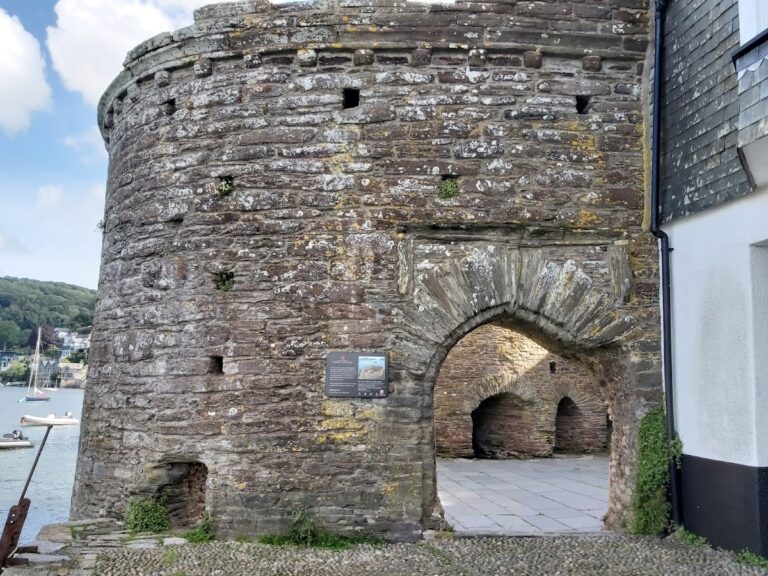
The principal gun tower dates from the end of the fifteenth century. Its semi-circular section is built from limestone rubble and contained the mechanisms for operating the harbour chain. The square section, constructed from slate, contained the guns. Together, these parts served both the chain defence and the artillery protection of the harbour entrance.
The tower rises three storeys. Each level contains a circular main room and a rectangular room, a plan probably resulting from changes made during construction. The basement originally held artillery in primitive gun ports protected from the sea by wooden shutters. Offices and living quarters for the garrison occupied the ground floor, which also contained the chain room with a pulley and capstan for raising the chain. The first floor provided further accommodation and included an oven.
Gun loops, narrow openings for firing small arms, run around the basement, ground floor, and first floor for close defence. Lighter artillery stood on the roof, whose battlements were later raised to protect against musket fire from higher ground behind the castle. An 18-foot (5.5-metre) turret rises above the roof. Two mid-sixteenth-century gun platforms flank the tower; they were altered in the eighteenth century to accommodate newer artillery.
Old Battery and later military works
Dartmouth Point Battery
The Old Battery dates from 1861, when it was known as the Dartmouth Point Battery. It occupies the former site of the Grand Battery and Lamberd’s Bulwarke, to the south-east of the medieval core and facing the sea. The 1859 battery used shell-proof granite defences to protect three traversing gun emplacements, positions where guns could be rotated horizontally, for 68-pounder guns directed toward the sea. Two 10-inch, 86-hundredweight guns stood on the roof, while a small 8-inch howitzer covered the harbour entrance.
A guard room stands on the north-east side above the magazines. The landward side was protected by a ditch, rifle loops, and murder holes, openings used to attack assailants below a defensive position. The main battery contains three vaulted casemates, protected chambers designed to hold artillery, for traversing heavy guns aimed out to sea. It also includes a smaller position covering the harbour entrance and two further heavy guns that would have stood on the roof.
A white concrete building was originally a coastal gun position disguised as a medieval turret and now serves as a ticket office. Behind the Old Battery stands a nineteenth-century tower that functioned as a lighthouse from 1856 to 1886.
Second World War defences
During the Second World War, two 4.7-inch (11.9-centimetre) quick-firing guns dating from the First World War were installed in concrete gun houses. Officers lived in a nearby cottage, non-commissioned officers in the castle, and other ranks in the nineteenth-century fortifications and later in temporary Nissen huts, prefabricated military buildings developed for rapid construction during the First World War.
Harbour-chain system
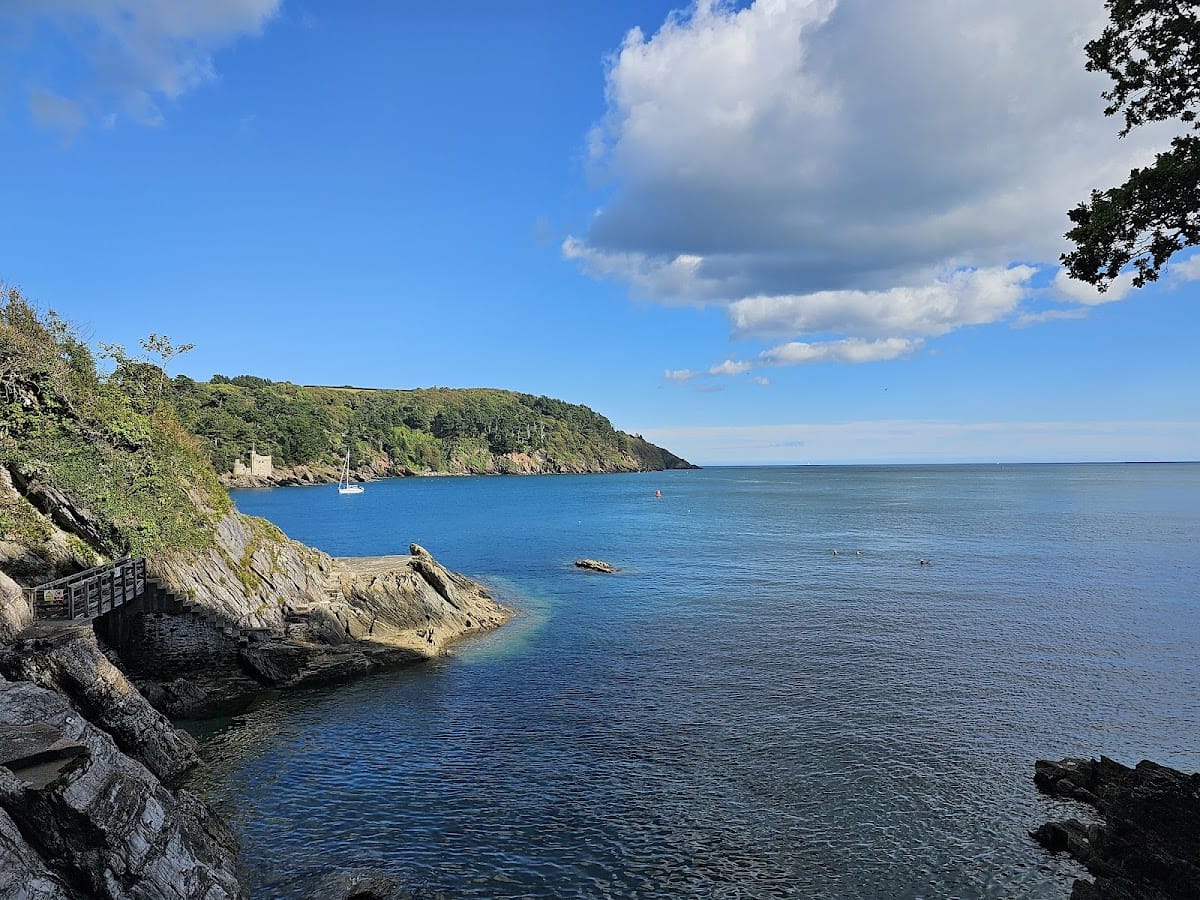
The castle’s defensive system extended beyond the rocky outcrop. A harbour chain ran from the castle across the entrance of the River Dart to a defensive tower at Godmerock on the opposite bank. Small boats supported part of the chain’s route, while the chain room in the main gun tower contained the pulley and capstan used to raise it. The arrangement was intended to close the harbour entrance during an attack.