Kingswear Castle: An Artillery Fort Protecting Dartmouth Harbour


Site at a Glance
- Rating
- 4.1
- Popularity
- Very Low
- Country
- United Kingdom
- Primary era
- Medieval
- External website
- Open
- Eras represented
- Medieval, Early Modern, Modern
- Civilizations
- British, English
- Site type
- Military
- Remains
- Fort
On this page7 sections
History
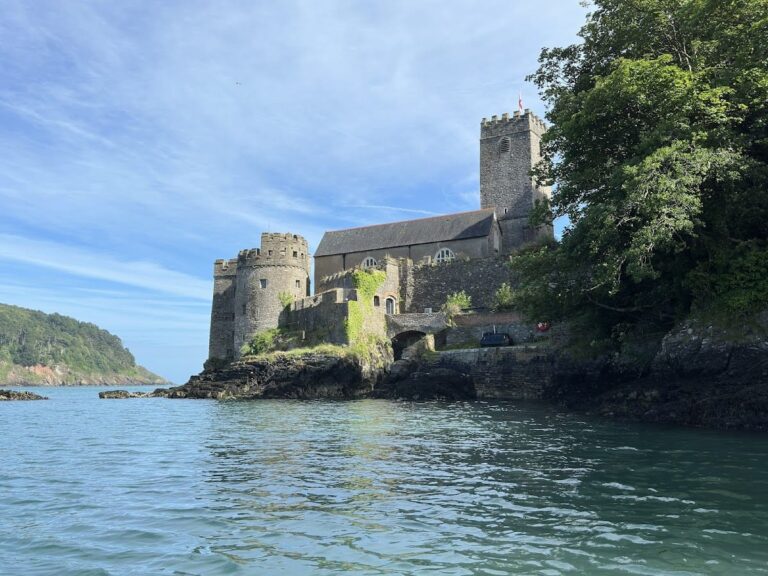
Kingswear Castle is an artillery fort in Kingswear, United Kingdom, built between 1491 and 1502 to protect Dartmouth and its harbour at the entrance to the River Dart estuary. An artillery fort was a defensive structure designed to mount cannon against ships or land forces. The castle formed part of a late fifteenth-century response to the threat of French invasion and was one of the first purpose-built artillery forts in Britain.
Foundation and Tudor defence
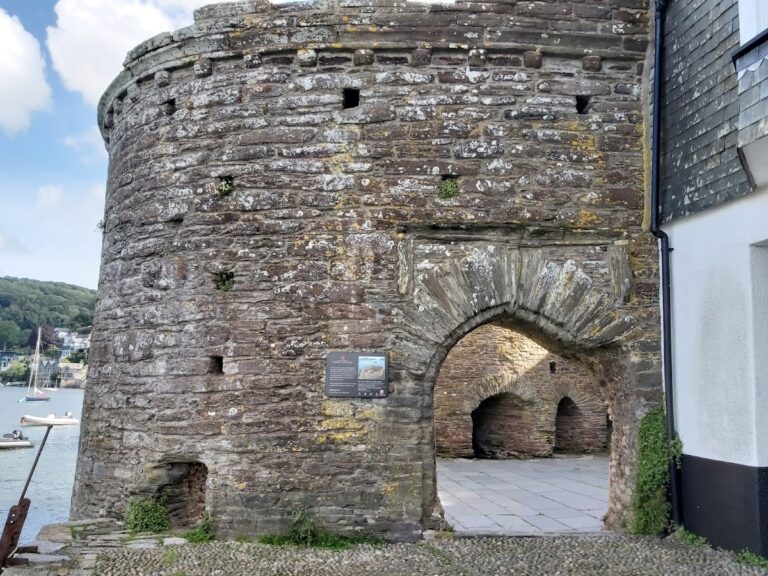
During the medieval period, Dartmouth was an important trading and fishing port, with a harbour capable of accommodating up to 600 vessels. Concern about a French attack, combined with the town’s wish to retain a valuable royal subsidy, led Dartmouth to develop Dartmouth Castle on the western side of the estuary between 1486 and 1495. Kingswear Castle followed on the eastern side, with construction beginning in 1491 and completion in 1502. Together, the two positions guarded the approach to the harbour.
A survey in the 1570s recommended that four brass guns should be maintained at Kingswear Castle. Improvements in the range of artillery soon reduced the need for forts on both sides of the river, however. By the end of the sixteenth century, the castle’s military usefulness had declined and it was not normally manned.
The English Civil War and Restoration
The English Civil War was a series of conflicts in the 1640s between supporters of King Charles I and Parliament. Dartmouth supported Parliament when war began in 1642 and spent money on the castle’s doors. Prince Maurice besieged and captured the town in 1643. An earthwork fort known as Mount Ridley or Kingsworth may have been built behind Kingswear Castle at this time to protect its vulnerable landward position. It may instead have been constructed in 1627 and reused during the war.
In January 1646, a Parliamentary army led by Sir Thomas Fairfax recaptured Dartmouth and took Kingswear from Sir Henry Cary, the High Sheriff of Devon. A High Sheriff was the Crown’s senior ceremonial and administrative representative in an English county. Sir John Fowell became governor of the local defences and was also charged with preventing smuggling, while Cary received a heavy fine from Parliament.
After the restoration of Charles II in 1660, guns had been mounted on the castle roof by 1661. The original roof had accidentally burned during the Civil War and was replaced with lead. Fowell retained his post as governor. Charles briefly returned control of the defences to the town, but authority soon passed to the Crown.
Decline, restoration, and later use
Kingswear Castle fell into ruin during the eighteenth century, although twelve-, nine-, and eight-pounder guns were still installed there in 1717. These guns weighed approximately 5.4, 4, and 3.6 kilograms respectively. In 1855, businessman Charles Seale Hayne commissioned the local architect Thomas Lidstone to restore the ruined fort as a summer house. The ground floor was redesigned, a conical roof was added, and a detached round tower was built on the north-west side.
During the Second World War, the castle was used by the Royal Marines and strengthened with a concrete blockhouse. Sir Frederic Bennett bought it in 1955, converting it into a private residence and constituency base. After his retirement from politics in 1987, he sold the castle to the Landmark Trust, a British heritage organization that preserves historic buildings and adapts them for temporary accommodation. The Trust restored the ground floor to its original appearance and recreated the earlier flat lead roof. Kingswear Castle is protected as a Grade I listed building, the highest level of statutory protection for historic buildings in England.
Remains
The artillery tower
The surviving castle is a three-storey square artillery tower built from slate rubble with red sandstone detailing. Its ground floor contains large rectangular gun-ports fitted with wooden shutters. Positioned close to the water at the harbour entrance, these openings allowed guns to cover both the sea and the anchorage. The first floor would have held additional guns and provided accommodation for the garrison, combining defensive and residential functions within the tower.
Setting and later additions
Kingswear Castle stands beside the River Dart estuary and Dartmouth harbour. The surrounding terrain is generally flat, while the sea lies to the south-east. The highest nearby ground reaches approximately 144 metres above sea level about one kilometre east of the castle. The nineteenth-century conical roof and detached round tower on the north-west side formed part of the summer-house conversion. The later restoration recreated the flat lead roof, and the concrete blockhouse added during the Second World War remains part of the castle’s later military fabric.