Ketef Hinnom: A First Temple Period Burial Complex in Jerusalem
Site at a Glance
- Rating
- 4.6
- Popularity
- Very Low
- Country
- Israel
- Primary era
- Iron Age
- Eras represented
- Iron Age
- Civilizations
- Israelite
- Site type
- Burial
- Remains
- Necropolis
On this page10 sections
History
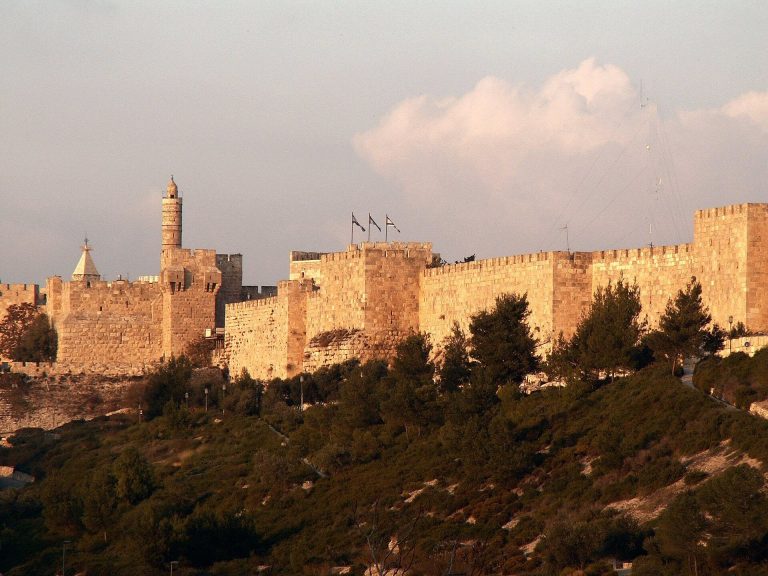
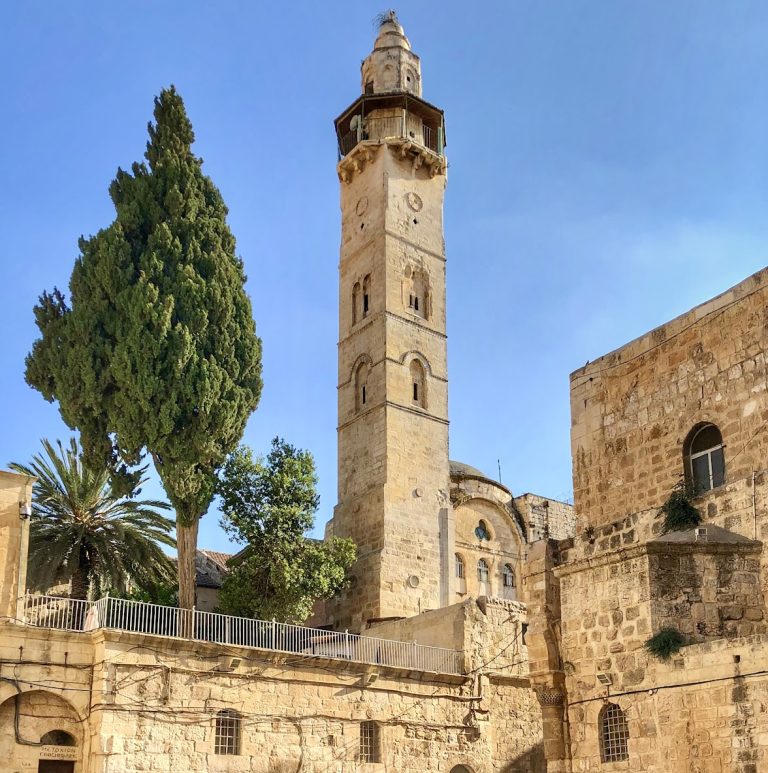
Ketef Hinnom is an archaeological burial complex in Jerusalem, Israel, created during the First Temple period by the people of the kingdoms of Judah, principally in the seventh and sixth centuries BCE. The site formed part of Jerusalem’s ancient necropolis, or cemetery of tombs, at the meeting point of the Valley of Rephaim and the Valley of Hinnom, southwest of the Old City.
The Judahite Burial Complex
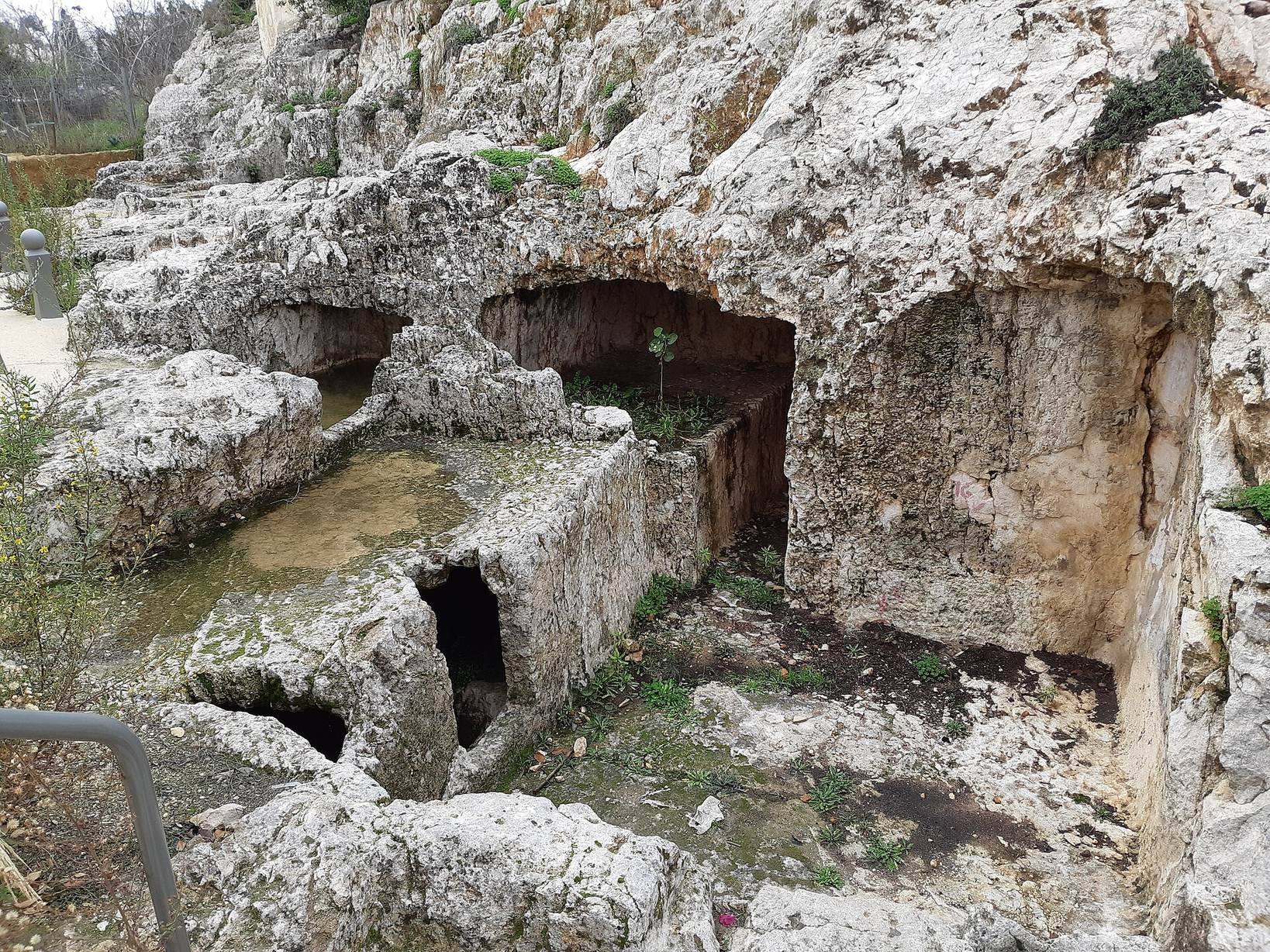
The tombs belong largely to the Iron Age, the archaeological period during which much of the Judahite burial complex was established. The dead were placed in rock-hewn chambers cut into the hillside, with offerings and amulets accompanying the burials. After the bodies decomposed, the bones were transferred to pits beneath the burial benches, allowing the chambers to receive further members of the same families over an extended period.
The complex was disturbed and reused in later centuries. Most of the burial pits were emptied by grave robbers, while the tombs were used during the Ottoman period to store rifles. A road was subsequently laid across the graves. During the British Mandate period, St. Andrew’s Scottish Church was built above the tombs, and the Menachem Begin Heritage Center was constructed beside them in the early 2000s. These changes separated the burial complex from much of its former natural landscape.
Excavation and the Silver Scrolls
A salvage excavation in 1975 brought the site to wider attention, although the tombs had been examined in several excavations from the early twentieth century onward. The largest and most comprehensive investigation took place in the early 1980s under the Israeli archaeologist Gabriel Barkay. In 1979, during this work, a 13-year-old excavation assistant noticed pottery and bones protruding from what had seemed to be an empty deposit in Chamber 25 of Cave 24. A collapsed section of the chamber roof had protected the material from grave robbers.
Two small silver scrolls were found in the protected deposit. They were carefully unrolled over three years because of their fragility. Later examination using advanced photography and computer enhancement clarified parts of the writing and supported a date shortly before the Babylonian destruction of Jerusalem in 586/587 BCE. Barkay first placed the inscriptions in the late seventh or early sixth century BCE and later favored the beginning of the sixth century BCE, based on the letter forms and associated pottery. Johannes Renz and Wolfgang Röllig challenged that dating because the inscriptions were damaged and the deposit also contained some fourth-century BCE material, but later study supported the earlier date.
The scrolls are among the most important discoveries for the study of the Hebrew Bible. They preserve the oldest surviving biblical passages currently known and contain one of the earliest recorded declarations identifying YHWH, the ancient Israelite divine name. Their wording also links them with protective divine formulas used on later Israelite amulets. Barkay named the site through an association between the biblical “shoulder of the Jebusite” and the Valley of Hinnom. The wider necropolis includes other Iron Age burial systems, Roman shaft tombs, a Byzantine church, and a cremation cemetery associated with the Tenth Roman Legion.
Remains
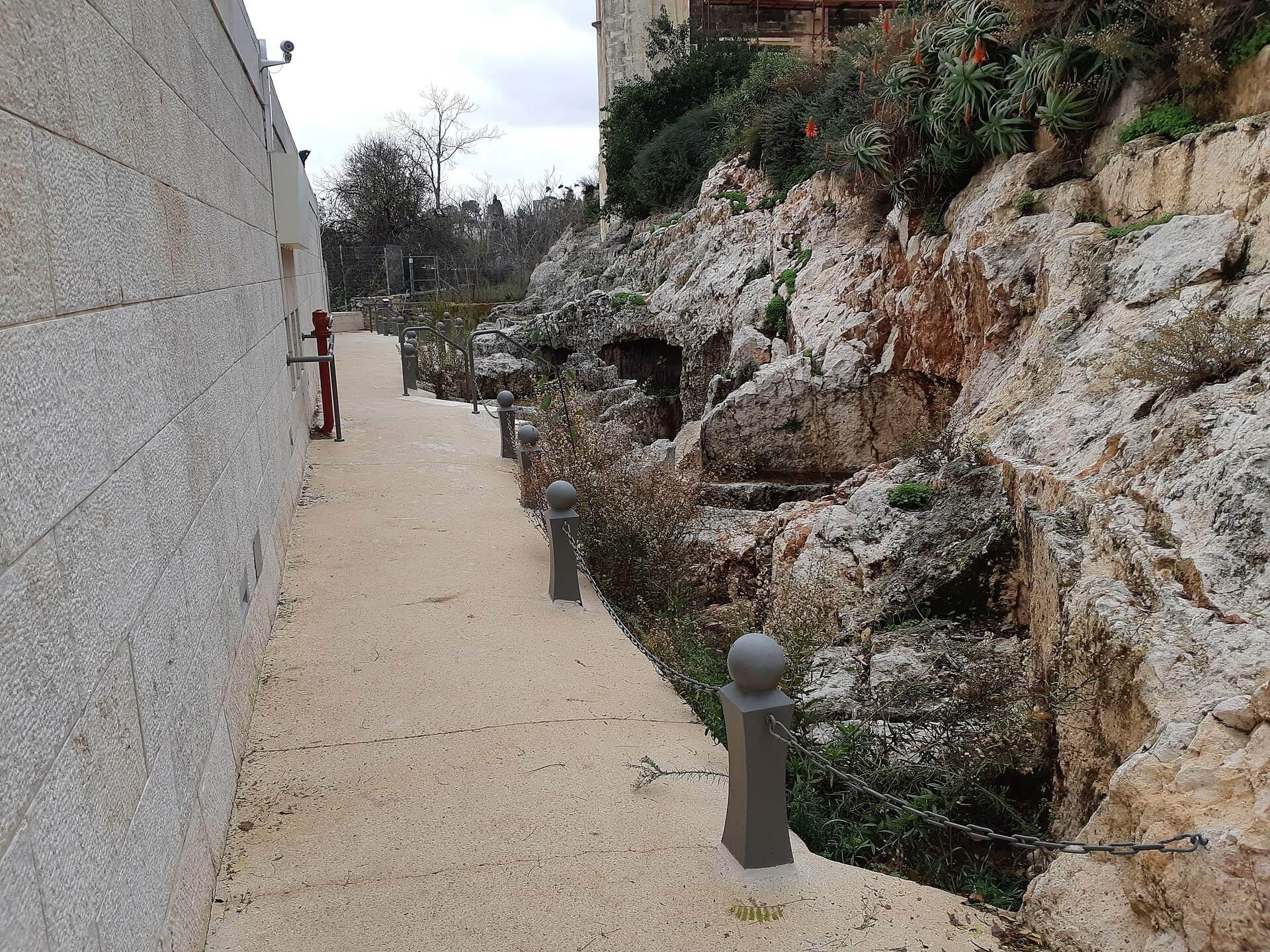
Ketef Hinnom consists of rock-hewn burial chambers cut into a hill containing natural caves. The complex lies beside St. Andrew’s Church and the Menachem Begin Heritage Center, near the ancient road from Jerusalem to Bethlehem. Its monumental layout included a threshold stone about 2.80 metres long, while the original threshold was approximately 5 metres wide.
Rock-Hewn Tombs
Burial Chambers
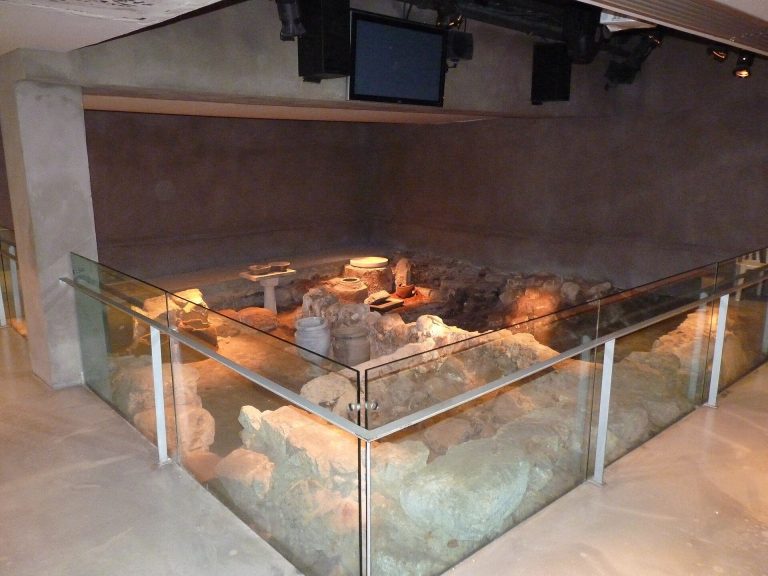
Seven burial caves were exposed during excavation. Five contained a single burial chamber, while two had several chambers. In the multi-room caves, a large chamber cut into the bedrock gave access to smaller rooms. Carved burial benches lined the chambers, and shallow headrests helped stabilize the heads of the dead. Offerings and amulets were placed with the bodies, which lay on the benches before their bones were transferred to the pits below.
Collection Pits
A large pit beneath each bench received bones and associated offerings after approximately one year. Barkay initially called these spaces “gathering places,” although the term was later considered interpretively problematic because the relevant biblical expression refers to joining the world of the dead rather than specifically to collecting bones. The established name nevertheless continued to be used.
Most of the cave ceilings collapsed over time. In one pit, the ceiling separating the pit from the bench above split across its full width. The lower section fell into the pit and buried its contents, while the upper section remained in place. This concealed the deposit from robbers, who apparently assumed that the pit was empty. The preserved space contained the remains of approximately 95 individuals and about 1,000 grave goods, including jewelry, pottery vessels, amulets, and coins. One coin from the island of Kos dates to the seventh century BCE and is regarded as one of the earliest coins found in the land of Israel.
Silver Amulets
Scroll KH1
The larger silver scroll, designated KH1, measures approximately 27 by 97 millimetres. It is about 99 percent silver and 1 percent copper and was rolled around itself as a small sheet. Its inscription uses ancient Hebrew script rather than the square Aramaic-derived Hebrew script used today, and its letter forms have been compared with those of the Siloam Inscription.
KH1 preserves approximately 77 characters, although 17 are not clearly legible. The surviving lines refer to keeping a covenant, showing mercy to those who love YHWH and keep his commandments, redemption, and YHWH as restorer and rock. They also preserve part of a blessing asking YHWH to bless and protect the recipient. The wording has close parallels in Exodus 20:6, Deuteronomy 5:10, Deuteronomy 7:9, Daniel 9:4, and Nehemiah 1:5.
Scroll KH2
The smaller scroll, KH2, measures about 11 by 39 millimetres and contains approximately 49 characters, of which 15 are not clearly legible. Its text closely parallels the Priestly Blessing in Numbers 6:24–26, asking YHWH to bless and protect the recipient, make his face shine upon that person, grant favor, and give peace. Some portions of the biblical blessing are not preserved on the scroll.
One proposed reading of the damaged opening is “You are blessed, Netanyahu son of Berechiah,” but the incomplete text makes this reading uncertain. The scrolls were apparently worn on the body as protective amulets. They are now preserved at the Israel Museum.