Ham Long Buddhist Temple: A Lien Tong Buddhist Patriarchal Center
Site at a Glance
- Rating
- 4.5
- Popularity
- Low
- Country
- Vietnam
- Primary era
- Early Modern
- Eras represented
- Medieval, Early Modern, Modern
- Civilizations
- Dai Viet, Nguyen dynasty
- Site type
- Religious
- Remains
- Monastery
On this page15 sections
History
Ham Long Buddhist Temple is an ancient Buddhist temple in Thái Bảo, Nam Sơn, Bắc Ninh, Vietnam, established in the twelfth century under the Ly dynasty. Temple tradition dates its foundation to 1158, during the reign of King Ly Anh Tông, and attributes its creation to Nguyễn Minh Không, a Vietnamese Buddhist monk who served as a royal religious preceptor. During the feudal period, the temple stood in Lam Sơn Dương commune, Lam Sơn Nam canton, Quế Dương district, Từ Sơn prefecture, in the Kinh Bắc region.
Foundation under the Ly dynasty
Ham Long was built more than half a century after Dạm Pagoda and about a century after Phật Tích Pagoda. It was smaller than both in scale and area, but its later religious history gave it a distinct place within the Buddhist landscape of the region. Its early foundation connected the site with the Ly dynasty, which ruled Vietnam from 1009 to 1225.
Như Trừng Lân Giác and the Lien Tong tradition
During the early eighteenth century, under the Later Le dynasty, the Venerable Trịnh came to practice at Ham Long. His secular name was Trịnh Thập, and he was also known by the religious names Như Trừng Lân Giác and Cứu Sinh. He was a son of Trịnh Bình, the younger brother of Lord Trịnh Cương, and had previously been a royal son-in-law. He studied with the Zen master Chân Nguyên before receiving permission to leave secular life.
Như Trừng converted his residence in Thọ Xương district into Liên Tông Pagoda, now known as Liên Phái Pagoda. He later practiced at Ham Long, where the complex was extensively rebuilt. The work created or renewed a front hall, a Three Jewels hall dedicated to the Buddha, the Dharma, and the Sangha, a patriarchal hall for venerating religious founders and predecessors, monks’ quarters, and a stupa garden.
Như Trừng founded the Lien Tong branch of Trúc Lâm Zen, a Vietnamese Zen tradition established during the Tran period. Before his death, he appointed Zen master Tịnh Nhãn as abbot of Ham Long. After Như Trừng died in 1737, the temple venerated him as the first patriarch among the eighteen patriarchs of the Lien Tong branch. Ham Long consequently became a Buddhist patriarchal center associated with this lineage.
Restoration, destruction, and institutional continuity
The temple was restored in February 1928 through contributions from monks, nuns, and lay Buddhists from twenty-one provinces. A monument stela recording the work was erected in the second lunar month of that year. In 1951, the complex suffered major losses during the Viet Minh’s scorched-earth resistance policy, which involved destroying structures and resources in areas affected by the conflict. When Dạm Pagoda was dismantled, statues of the imperial consort Y Lan and King Ly Nhân Tông were transferred to Ham Long for safekeeping.
Ham Long became a national-level historical and cultural monument on 18 January 1988 under Decision 28-VH/QD of the Ministry of Culture. A formal monument certificate followed six years later. Major modern restoration continued under the abbot Thích Thanh Dũng. The patriarchal hall was restored in 1995. In 1997, the upper sanctuary and front hall were restored, four stupas in front of the entrance were rebuilt, and a sixteen-bay guesthouse and other structures were constructed or renewed.
At the end of 2000, Bắc Ninh Province established its Intermediate Buddhist School, with its headquarters within the temple grounds, and Thích Thanh Trung was identified as its principal. In 2007, Nam Sơn was transferred from Quế Võ district to Bắc Ninh city, placing Ham Long within the city’s administrative territory. The temple is administered by the Bắc Ninh provincial branch of the Vietnam Buddhist Sangha.
Religious traditions and conservation
Ham Long is traditionally regarded as a major national center for containing trùng, a Vietnamese belief that deaths may recur within the same family or lineage over a short period. This tradition associates the practice with Như Trừng, who composed the Ten Vows for Saving Life scripture and prepared carved printing blocks bearing talismans intended to release afflicted spirits. The temple holds an annual festival on the fifteenth day of the second lunar month, attended by Buddhists and local residents.
On 20 March 2014, Buddhist authorities in Bắc Ninh and the Ham Long patriarchal temple held a groundbreaking ceremony for auxiliary works that included an inner three-gate entrance, a landscape pond, a rest pavilion, and a parking area. Ham Long also forms part of the Dạm Pagoda–Ham Long Temple monument complex, for which Bắc Ninh Province approved a conservation, restoration, and rehabilitation plan on 10 June 2016.
Remains
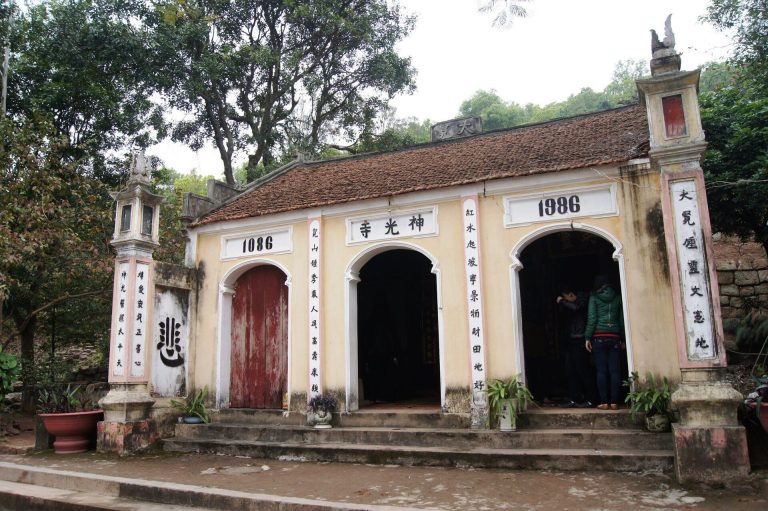
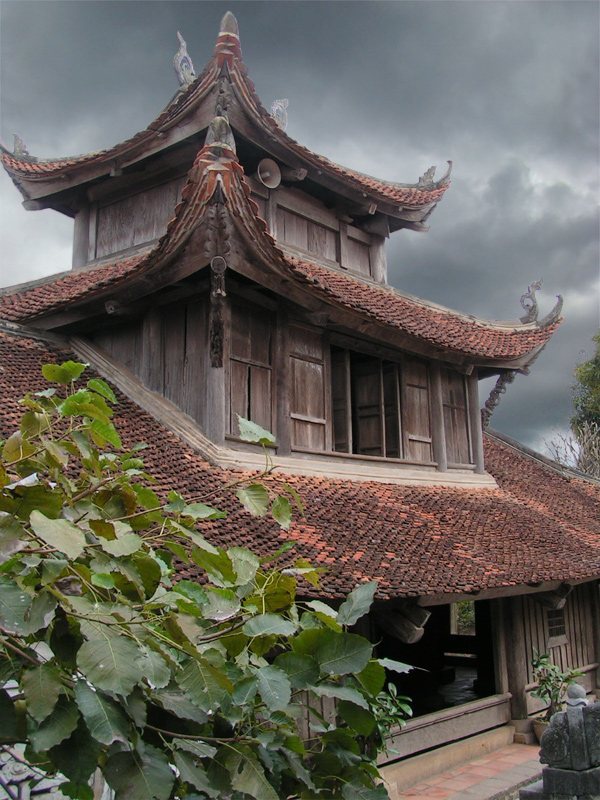
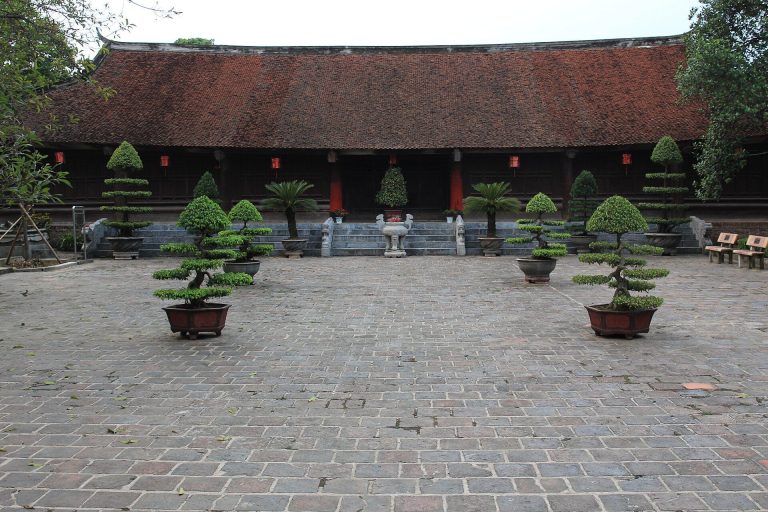
Ham Long stands on Lam Sơn Mountain in Thái Bảo residential quarter, Nam Sơn ward, Bắc Ninh city. The present complex is an expanded group of Buddhist buildings and memorial structures, including a front hall, Three Jewels hall, patriarchal hall, monks’ quarters, guesthouse, stupa garden, and supporting buildings. The protected core covers 0.98 hectares and includes the current temple grounds and the old stupa garden from the feudal period.
Temple buildings and inscriptions
Temple halls and precincts
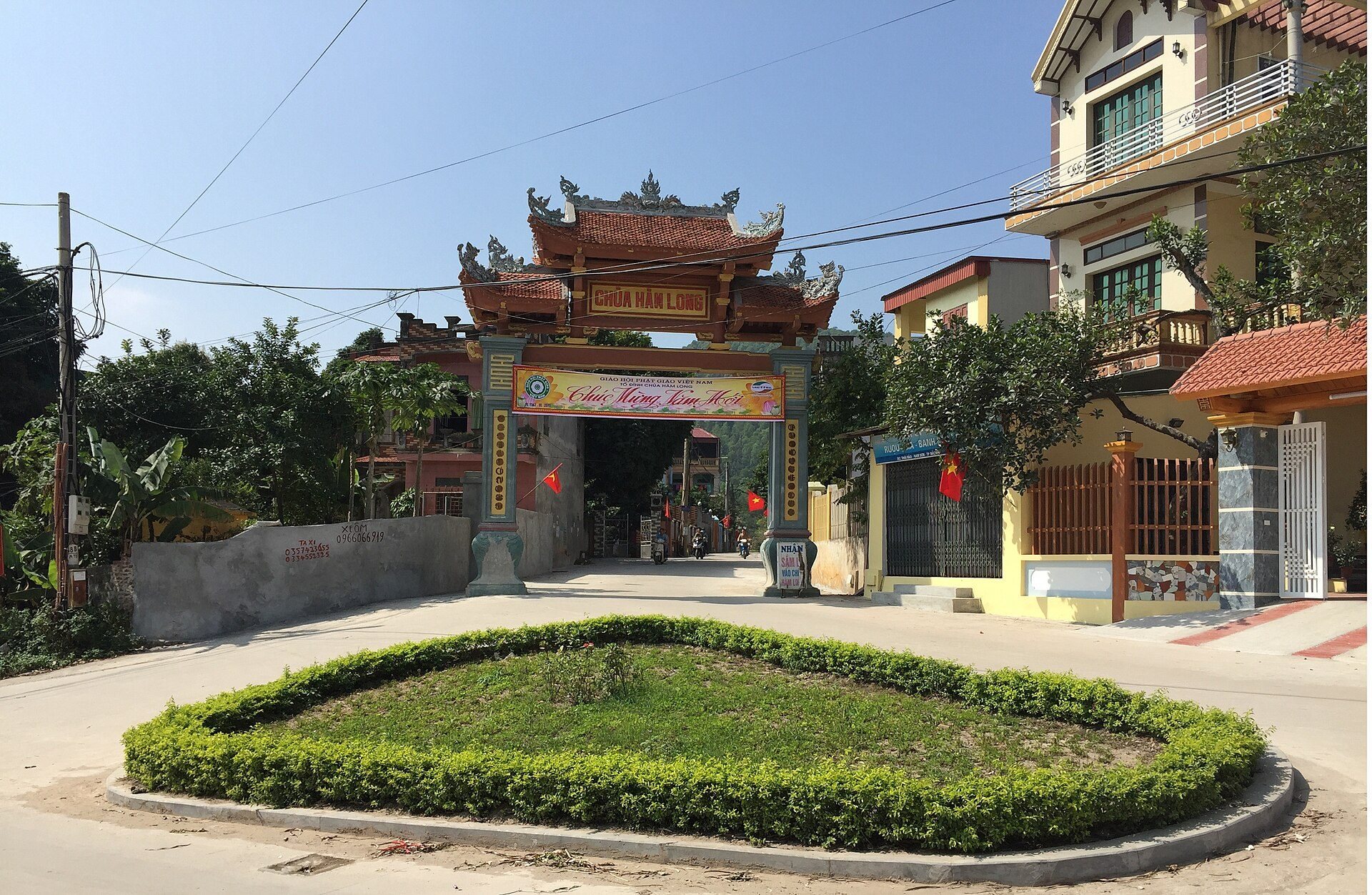
The temple’s principal buildings reflect its development from a smaller Ly and Tran-period foundation into a larger patriarchal complex. The protected structures include the three-gate entrance, dining hall, and connecting passage between the patriarchal hall, the shrine to the imperial consort Y Lan, and the Three Jewels hall. A second protection zone of 1.61 hectares adjoins the front of the temple and is intended for supporting facilities, including inner and outer three-gate entrances, a parking area, a landscape pond, and access roads.
Ly Tran House inscriptions
The Ly Tran House is a named precinct within the complex. Inscriptions on its bronze pillars refer to Nguyễn Minh Không’s religious practice and to the Venerable Trịnh, identifying him by the title Giác Tổ and the epithet Cứu Sinh. An inscription in the rear sanctuary describes the opening of the mountain temple at Ham Long, connects it with the teaching of the royal preceptor Khổng Lộ, and traces the later development of the Lien Tong Zen tradition. It also links that tradition with Phật Tích and identifies the inscription as locally composed.
Stupas and memorial structures
Stupa garden
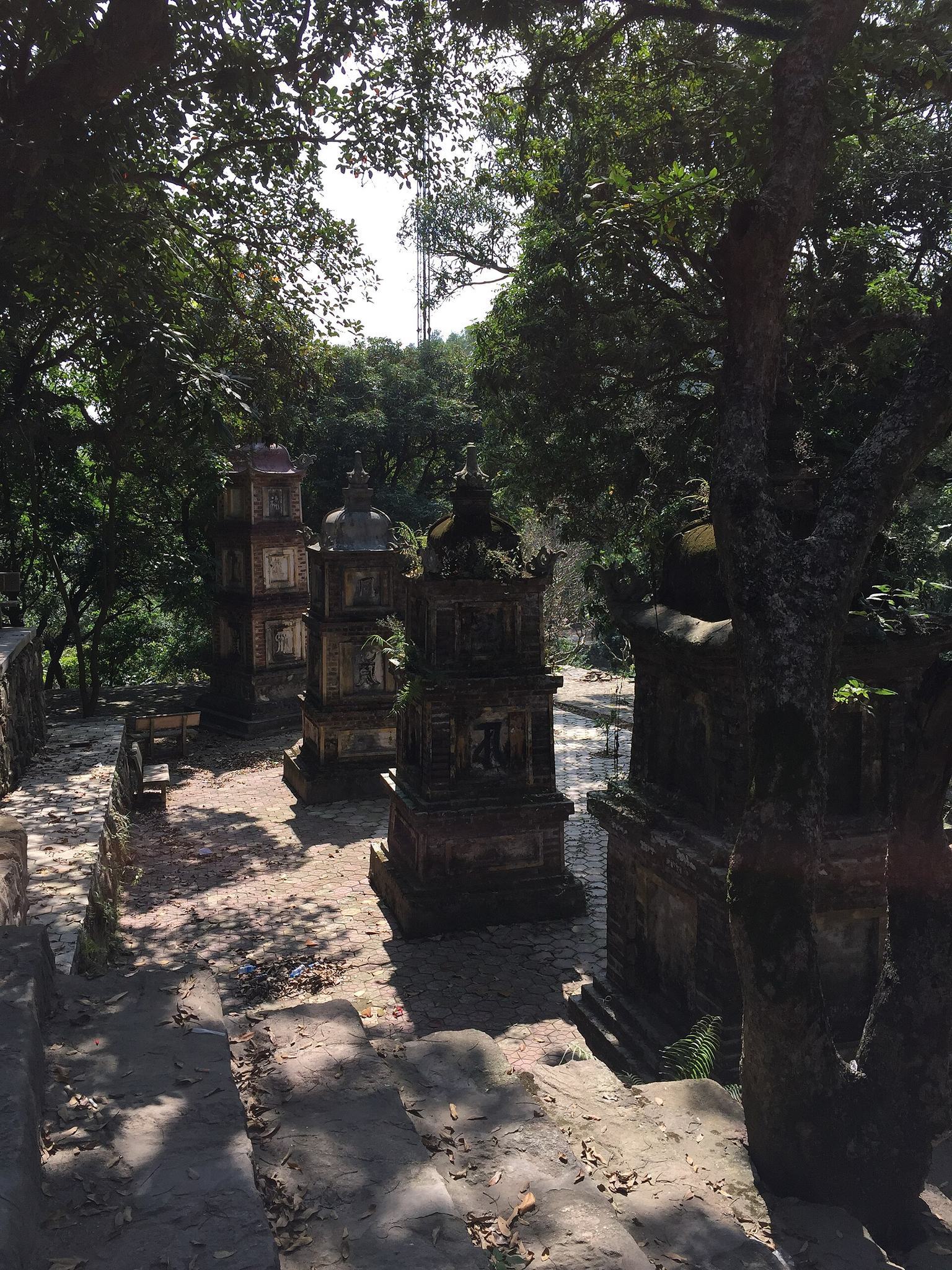
The temple preserves fourteen old burial stupas dating from the Tran, Later Le, and Nguyen periods. Four additional stupas were rebuilt in front of the entrance in 1997. Together, these structures form part of the temple’s memorial landscape and reflect its long association with Buddhist teachers and religious lineages.
Stupas of Như Trừng Lân Giác
Two stupas are associated with Như Trừng Lân Giác. One is built of brick and is linked with his relics. The other is a stone structure known as the Patriarch Như Trừng Lân Giác Stupa, which is said to contain the fruits of his lifelong religious practice. Their differing materials and stated functions express the two forms of remembrance attached to the patriarch.
Sculpture and architectural decoration
Bronze Buddhist statues
The surviving Buddhist sculpture includes four notable bronze statues cast locally. They comprise a 2.10-metre image of Shakyamuni Buddha, images of Ananda and Kasyapa listed at 1.86 metres, and a 1.58-metre image of Queen Maya, the Buddha’s mother. Their calm and composed expressions are regarded as distinctive features of the group’s artistic character.
Inscriptions on the front hall
A passage describing the temple’s historical landscape is inscribed on the brick-built columns of the front hall. It compares the surrounding forms with the dragon, phoenix, tortoise, and qilin. The same imagery appears in the traditional explanation of the name Ham Long: the southeast and southwest are associated with the phoenix and tortoise, while a dragon-like ridge descends from the northwest toward the temple. The site is also traditionally described as resembling six gathered sages and the four auspicious animals.