San Miguel Ixtapan: An Epiclassic Archaeological Center in Mexico
Site at a Glance
- Rating
- 4.5
- Popularity
- Low
- Country
- Mexico
- Primary era
- Medieval
- External website
- Open
- Eras represented
- Classical, Medieval
- Civilizations
- Aztec
- Site type
- Religious
- Remains
- Sanctuary
On this page16 sections
History
San Miguel Ixtapan is an archaeological site in Tejupilco Municipality, State of Mexico, Mexico, whose main ceremonial development took place during the Epiclassic period, around 750–900 CE. The builders cannot be identified with certainty, although the site has close connections with Otomi culture and with communities of the Balsas region, Michoacán, Guerrero, and the Central Highlands. Its fertile setting, major spring, basalt suitable for construction, and saltpeter wells helped make it an important center between the Central Highlands and the warmer lowlands.
Early occupations
Activity at San Miguel Ixtapan began much earlier than its monumental phase. Some figurines indicate activity during the Formative period, broadly dated here to around 800–200 BCE, when settled agricultural communities and more complex societies were developing in Mesoamerica. Other figures resemble material from Teotihuacán phases III and IV. Teotihuacán was a major urban and political center in central Mexico before its decline, and these objects indicate continued occupation during the Classical period.
An even earlier human presence is represented by a body found during work on a pyramid-like basement. The burial included prepared food, a necklace, and a green-stone mask, and dates to about 2000 BCE. The culture connected with this individual is unknown and predates the better-understood occupation of the site by roughly two thousand years.
Epiclassic growth
San Miguel Ixtapan expanded after the decline of Teotihuacán, during the Epiclassic period, a time from approximately 750–900 CE when several regional centers developed across Mesoamerica. This was the site’s greatest period of growth. Most of the visible ceremonial structures were built then, and the settlement may have helped regulate movement and exchange between Tierra Caliente, the warmer lowland regions around the Balsas basin, and the Central Highlands.
The area’s resources also shaped its importance. Salt exploitation is reflected in the meaning of the place name, which derives from words for salt and place. Nearby saltpeter wells provided another valued pre-Hispanic resource, while corn cultivation depended on water. Connections with Tula, another major central Mexican center associated with the Toltec period, and with other parts of the Central Highlands appear alongside links to Michoacán and Guerrero.
Postclassic transformations
At least four occupation stages can be distinguished. A Late Classic phase, around 500–750 CE, is represented partly by residential remains. During the Early Postclassic, around 900–1200 CE, older monuments were reused, altered, extended, and reorganized. After 1200 CE, another group associated with Mexica, the Indigenous people commonly called Aztecs, reoccupied the site and built simple houses over earlier structures. They remained there until the Spanish invasion.
During the Late Postclassic, Mexica groups occupied the wider region through tribute arrangements or military alliances directed against the Purépecha, another Indigenous political community of western Mexico. Mexica forces conquered the region around 1475–1476, during the reign of Axayacatl. By the time of the Spanish conquest, both Matlatzinca and Nahuatl were spoken in the region. Construction at San Miguel Ixtapan during this final phase was limited, although earlier buildings continued to be used.
Archaeological investigation
Farmers first brought the site to archaeological attention after finding stones and other remains while plowing. The first report dates to 1958, when the carved basalt model was identified. Formal excavation began in 1985, initially concentrating on the model and later establishing the sequence of occupations and the arrangement of the structures.
Construction of the site museum began in 1993. The Instituto Mexiquense de Cultura established it in 1994, and it opened in 1995. More than 800 objects from controlled excavations, mortuary offerings, and areas near the ballgame court are preserved there. The collection spans the Formative period, the Epiclassic, especially 750–900 CE, and later Postclassic burials. The excavated area covers only part of the former settlement, making San Miguel Ixtapan an important archaeological source for southwestern State of Mexico, a region that had previously received limited investigation.
Later building activity also reused ancient material. The Church of San Miguel Ixtapan in the modern town was constructed with carved stone blocks taken from the archaeological remains, and another reused block stands in the church atrium.
Remains
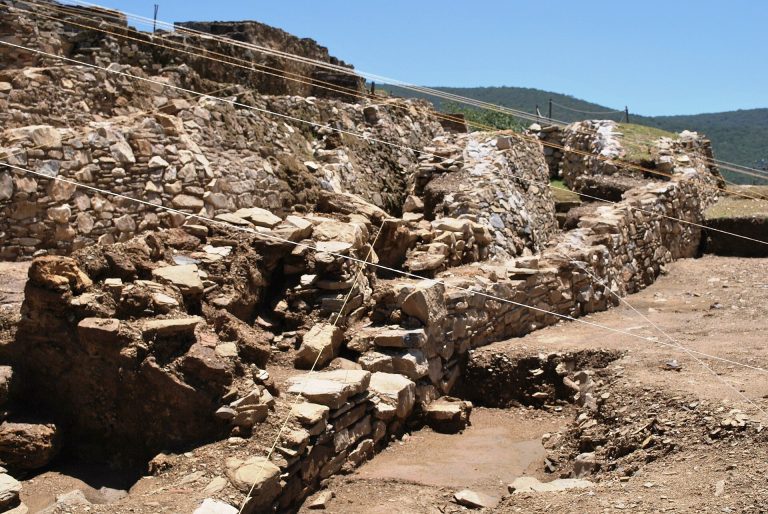
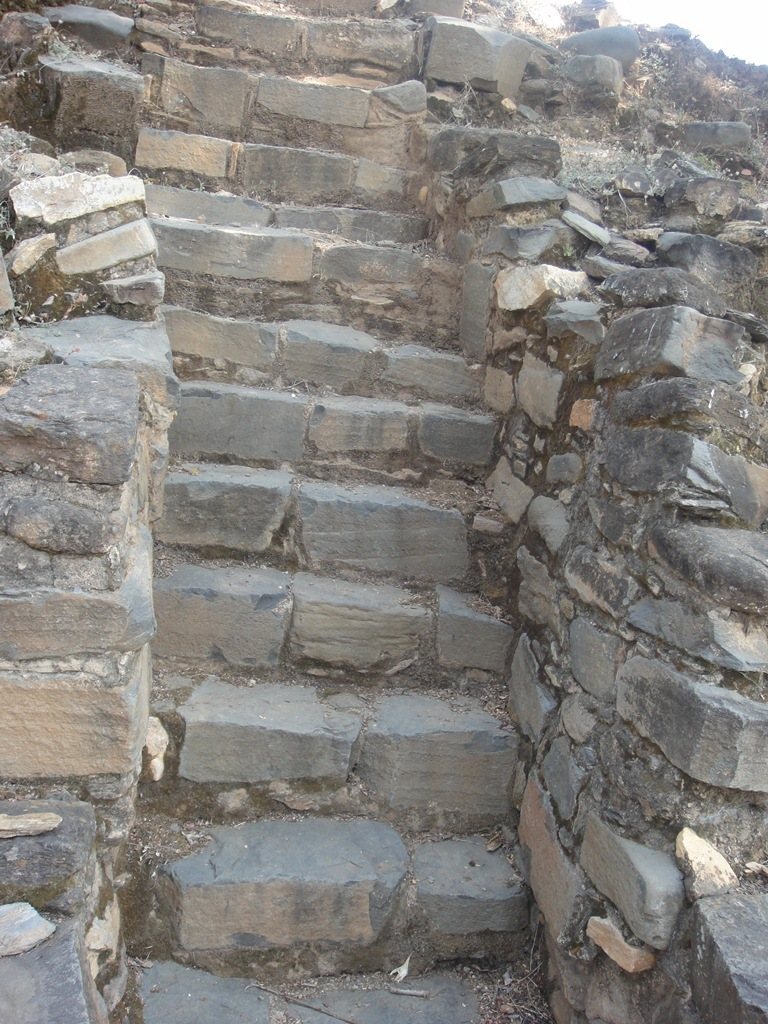
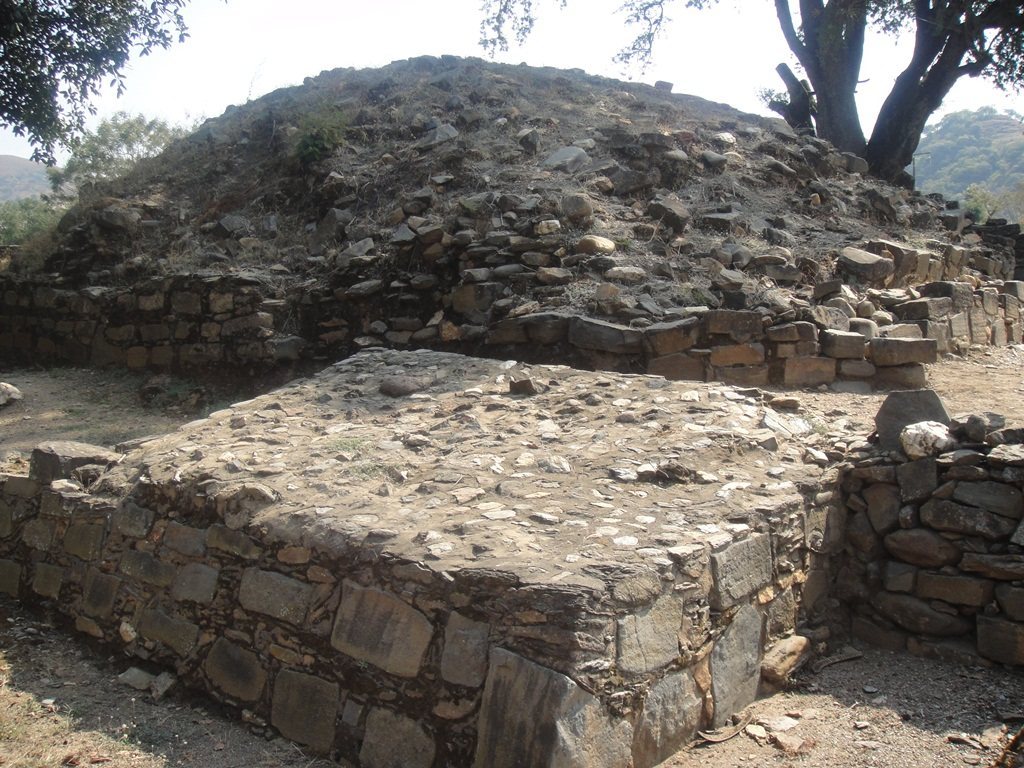
The excavated ceremonial area contains large earthen mounds, platforms, stairways, patios, rooms, enclosures, drainage installations, and a ballgame court. These features form part of a larger settlement whose original extent was greater than the modern excavation. Basalt was an important building material, and many structures retain stucco surfaces that may have protected them during later invasions and disturbances.
Monumental structures
Basement 3
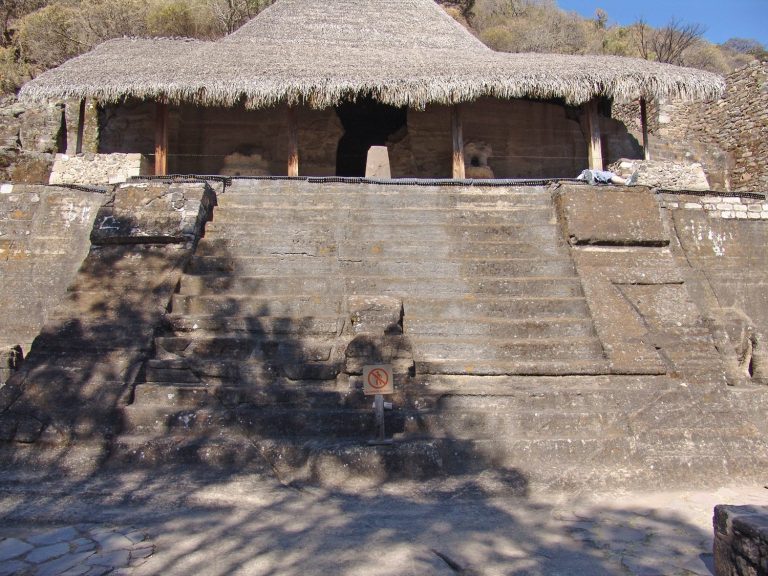
The principal monumental building, called Basement 3, rises through three superimposed bodies. Rooms occupied its upper section and were reached by a stairway bordered by sloping side walls called alfardas. Its second level contains residential and ceremonial enclosures at different heights, showing repeated changes to rooms and access routes. An upper chamber retains stucco on its floor and walls and probably served as a resting room for a king.
A small niche at the northwestern corner of Basement 3 holds a sculpture of Tlaloc, the Mesoamerican deity of rain, storms, and agricultural fertility. A northern stairway descends from the niche level. Built from large basalt blocks, it leads to an outside patio enclosed by a wall, below which remains of a drainage system can be seen.
Sunken patio
A sunken patio south of Basement 3 was used for offerings and rituals. It contains a sacrificial stone and has two access stairways. One stairway has finished side walls and leads toward the sculpture enclosure.
Partially explored mound
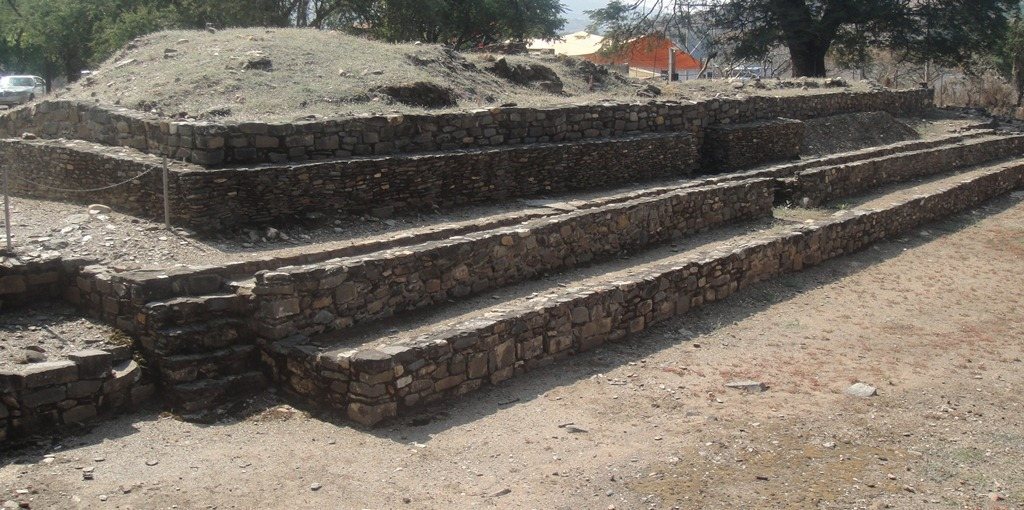
Another mound retains red stucco on its eastern side and a recessed stairway on its western side. A large tree growing on top limited the exploration of this structure.
Ballgame court
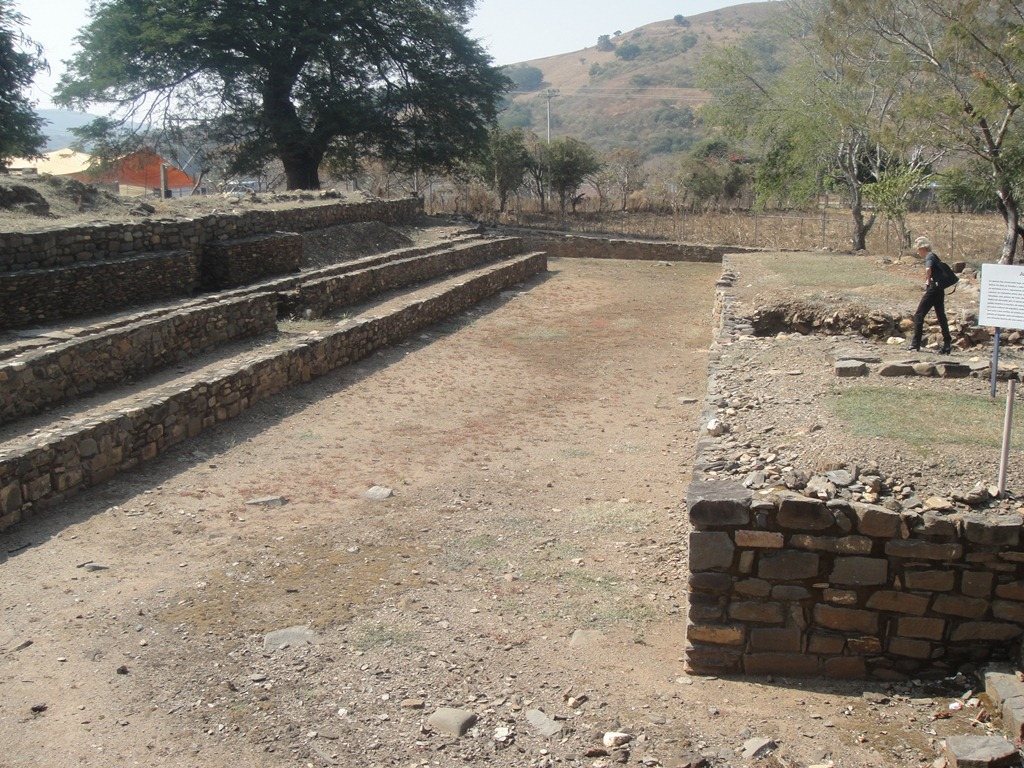
The ballgame court has a double-T, or capital-I, plan oriented from east to west. Its playing area measures about 50 meters long and 7.5 meters wide, while the end zones measure approximately 15 by 7.8 meters. The court was excavated below the surrounding ground level, so stairways provided access. A platform along its southern side contained numerous human burials with rich offerings, probably dating to the Postclassic period.
Enclosures and sculpture area
Sculpture Enclosure
The Sculpture Enclosure contained offerings, figurines, and two green-stone sculptures set into the floor. One represents Huiztocihuatl, a goddess associated with salt water and salt production, and the other represents Tlaloc. Many basalt and green-stone figurines now displayed in the museum came from this area. Several nearby enclosures lie south of Basement 3 and west of the sunken patio, with entrances facing east or west and associations with the Sculpture Enclosure and the Banquette Enclosure.
Banquette Enclosure
The Banquette Enclosure retains stucco on its floor and walls and probably served as a resting room for a king. It includes a ceremonial walkway decorated with a molding bearing architectural stone nails.
Carved basalt model
The carved basalt model is a rocky outcrop measuring about 3 by 4 meters. Its surface includes representations of ballgame courts, platforms or foundations, stairways with side walls, and roofed temples, creating an elaborate image of a ceremonial center or city. It does not match any known archaeological site. It may portray an idealized city, a place intended for future construction, or a votive object, meaning an offering made for a religious rite. The carving includes as many as five spaces resembling ballgame courts.
Museum collections
The museum displays figurines, ceramic masks, anthropomorphic sculptures, vessels, stone disks, a ballgame-court ring, and other excavated objects. Formative figurines include pregnant women whose elaborate ceramic style resembles material from Tlapacoya and Tlatilco. Many of these pieces came from deep layers of the ballgame court. Other clay figures resemble objects from Teotihuacán phases III and IV.
Epiclassic objects include sculptures with crossed arms, ceramic masks with features covering the eyes, and stone disks bearing a central double-serpent image. Two anthropomorphic stelae, carved green-stone monuments, were set into the ground in the sculpture area. The collection also includes vessels resembling material from the Balsas region, including examples identical to vessels from the Caracol dam near Arcelia in Guerrero, as well as deity representations, feather objects, and the skeleton of an important individual displayed in the condition in which it was found.
Late Postclassic burials contained shell beads, necklaces, copper needles, earrings, obsidian bezotes, ornaments worn through the lower lip, spear points, darts, and numerous vessels. Many of these objects remain well preserved in museum cases, providing material evidence for the changing ritual and social practices of the site’s later occupants.