Ngawen: An Eighth-Century Buddhist Temple Compound in Central Java
Site at a Glance
- Rating
- 4.7
- Popularity
- Low
- Country
- Indonesia
- Primary era
- Medieval
- Eras represented
- Medieval
- Civilizations
- Unclassified
- Site type
- Religious
- Remains
- Temple
On this page10 sections
History
Ngawen is an eighth-century Buddhist temple compound in Ngawen village, Muntilan, Magelang Regency, Central Java, Indonesia. Built in the late eighth century in the Central Javanese temple tradition, it is slightly earlier than Borobudur and is associated with the Sailendra dynasty, a ruling house that sponsored major Buddhist monuments in the region during the eighth and ninth centuries.
The Sailendra Period
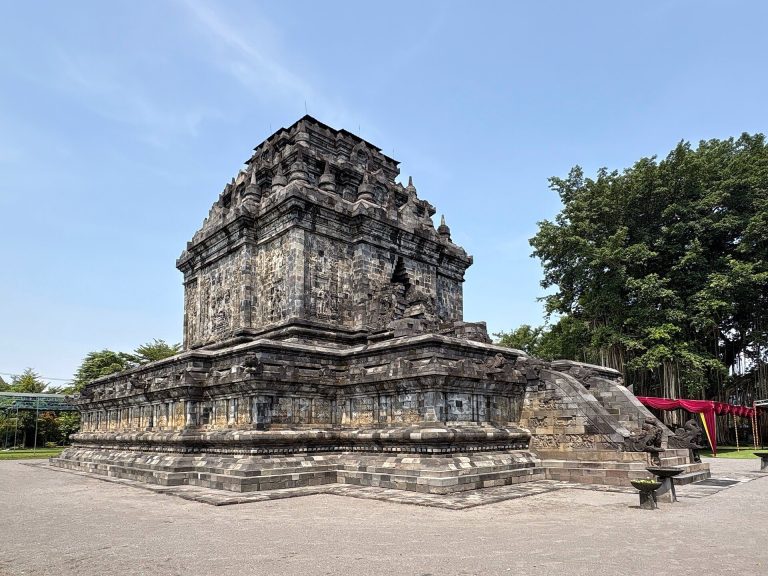
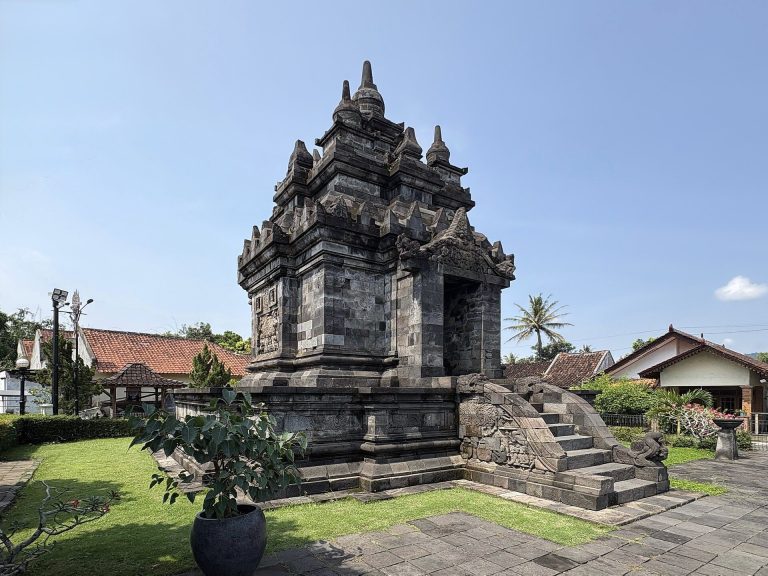
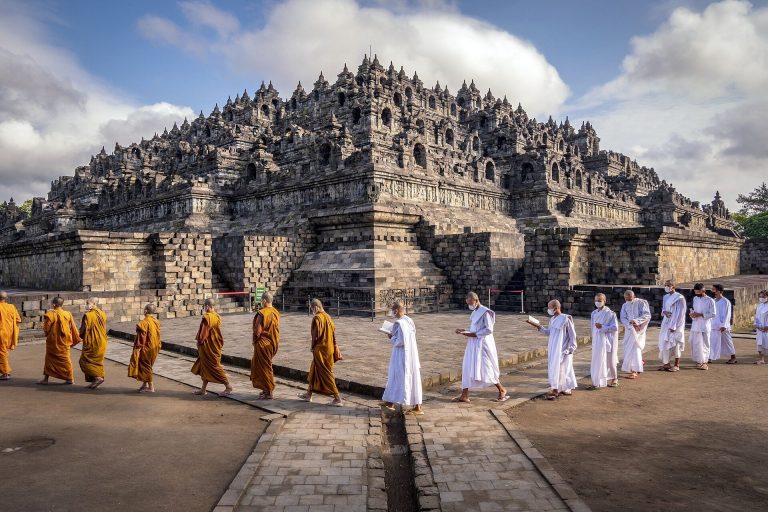
Ngawen belongs to the same religious and cultural setting as the nearby temples of Mendut, Pawon, and Borobudur. Together, the four sites form a west-to-east alignment that angles slightly toward the northeast, with its eastern end directed toward the summit of Mount Merapi. Their relationship places Ngawen within a wider landscape of Buddhist construction under Sailendra patronage.
The original name of the compound remains uncertain. Ngawen derives from the Old Javanese word awi, meaning “bamboo.” An inscription dated 824 records that the Sailendra king Indra established a sacred structure called Venuvana, or “bamboo forest.” J. G. de Casparis identified Venuvana with Mendut, while R. Soekmono proposed Ngawen because of the linguistic connection between Ngawen and Venuvana.
Volcanic deposits from Mount Merapi may have covered the temple for more than a thousand years. The original base lies approximately two metres below the present ground level, indicating how deeply the compound became buried before its modern investigation.
Rediscovery and Reconstruction
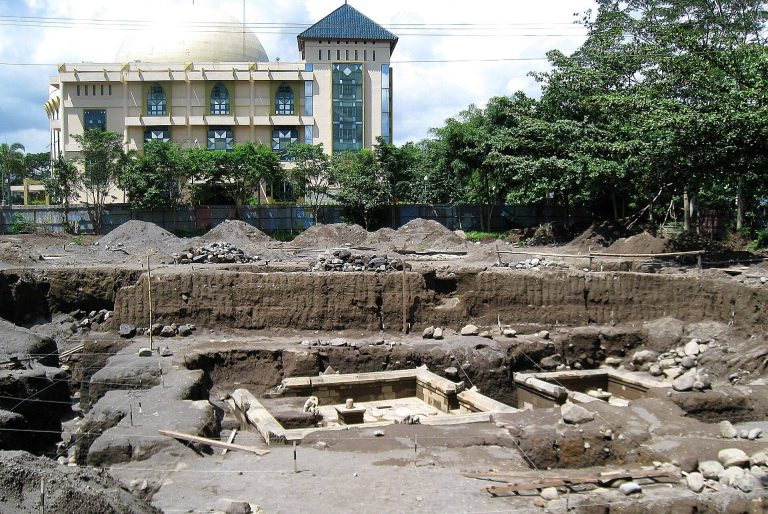
Villagers in the surrounding area knew of the ruins during the nineteenth century. The first official observations took place in 1874, when the Dutch archaeologist Holpermand examined the site. Van Erp referred to Ngawen in 1911 and attributed the destruction of the temples to an eruption of Mount Merapi. In 1920, he investigated the compound further, draining the waterlogged site to make the remains accessible for study.
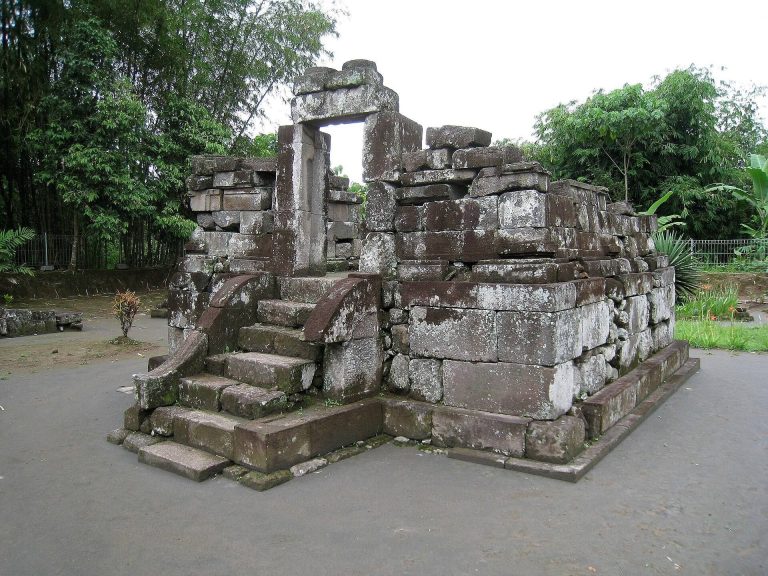
The Dutch archaeologist P. J. Perquin began systematic study in 1925. Reconstruction of the northern main temple, Temple II, continued from 1925 to 1927, producing the only fully restored temple in the compound. The other four temples remained ruinous because they had suffered severe damage and because too few original stones survived for comparable reconstruction.
Ngawen has also been affected by repeated looting and theft. Two statue heads were stolen during looting in the 1970s, and further incidents occurred in 1999. The compound forms part of Central Java’s official archaeological protection area.
Remains
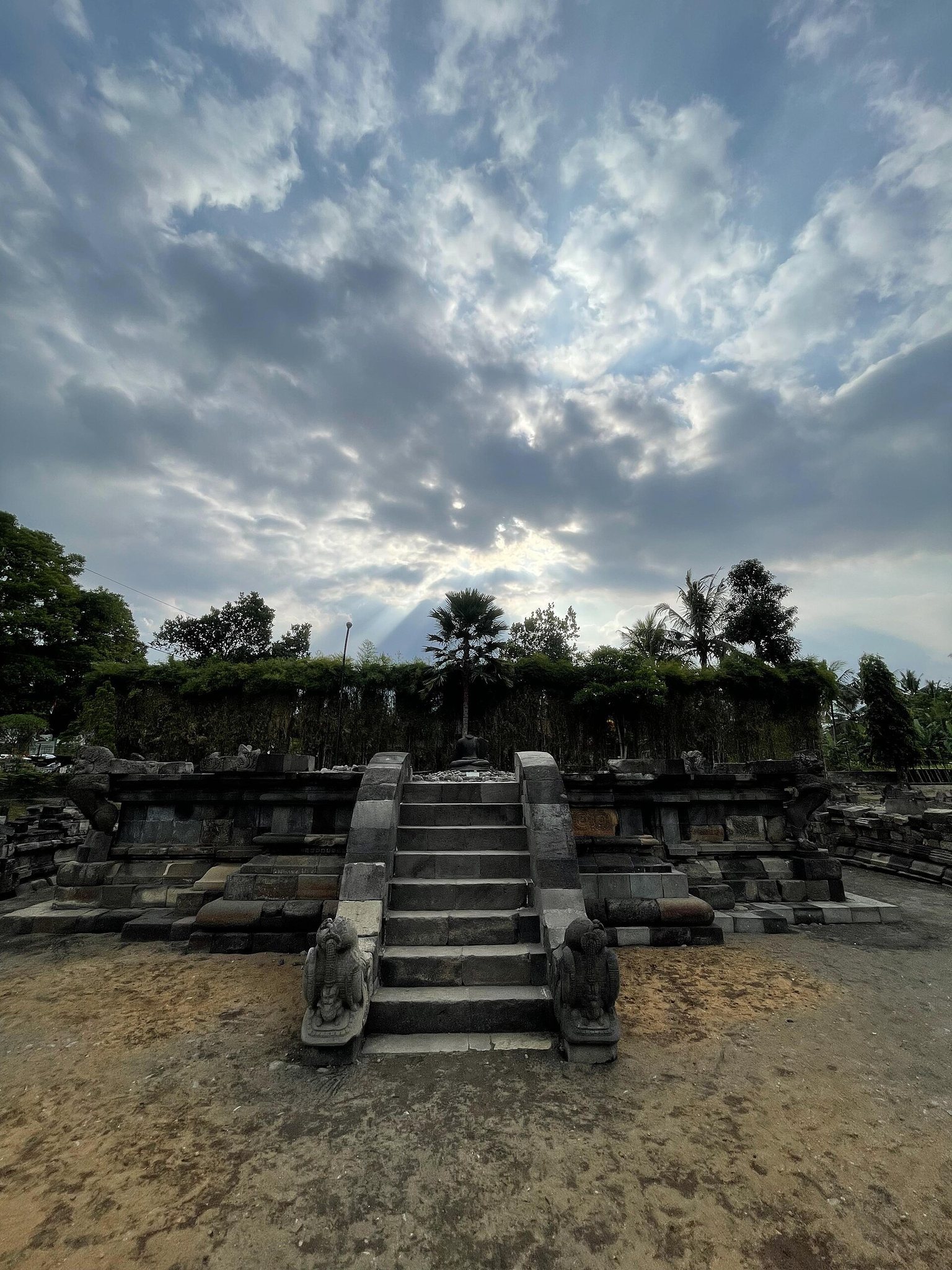
The compound covers approximately 3,556 square metres between a village and rice fields. Five east-facing temples stand on square bases in a north-to-south row, numbered from Temple I in the north to Temple V in the south. Temples II and IV are the larger main temples, while Temples I, III, and V are smaller perwara, or ancillary, temples placed between them. The buildings are made of andesite stone in a typical Central Javanese temple style.
Temple Arrangement and Construction
Temple II
Temple II is the reconstructed northern main temple. Its base measures approximately 13 by 12 metres, and the building rises about 7 metres high. Its corners carry distinctive sculptures of rampant lions, a feature especially associated with Temples II and IV. The lions’ open mouths may have channelled rainwater, making them a rare example in Java of sculpture that may also have served a practical drainage function.
Temple I and the Other Temples
Temple I is the least well-preserved building and survives at foundation level. Temples III and V are also smaller ancillary structures, while Temple IV is the second large main temple. All five buildings share the compound’s east-facing orientation and north-to-south arrangement, although Temple II is the only one to have been fully reconstructed.
Carved Decoration and Buddhist Imagery
The lower walls include figures of kinnaras and kinnaris, celestial beings shown with partly human and partly bird-like forms. The eastern stairs and the upper gateway areas carry Kala-Makara ornaments, a Javanese protective design combining a Kala head with a mythical aquatic Makara creature. Above the inner portal, beneath a Kala head, a carving depicts deities in a heavenly realm.
The outer walls of Temple II contain niches decorated with Kala heads and heavenly scenes. These niches may originally have contained images of bodhisattvas or Taras. The decorative program also includes Kalpataru, the mythological wish-fulfilling tree, accompanied by kinnara and kinnari figures.
Image of Ratnasambhava
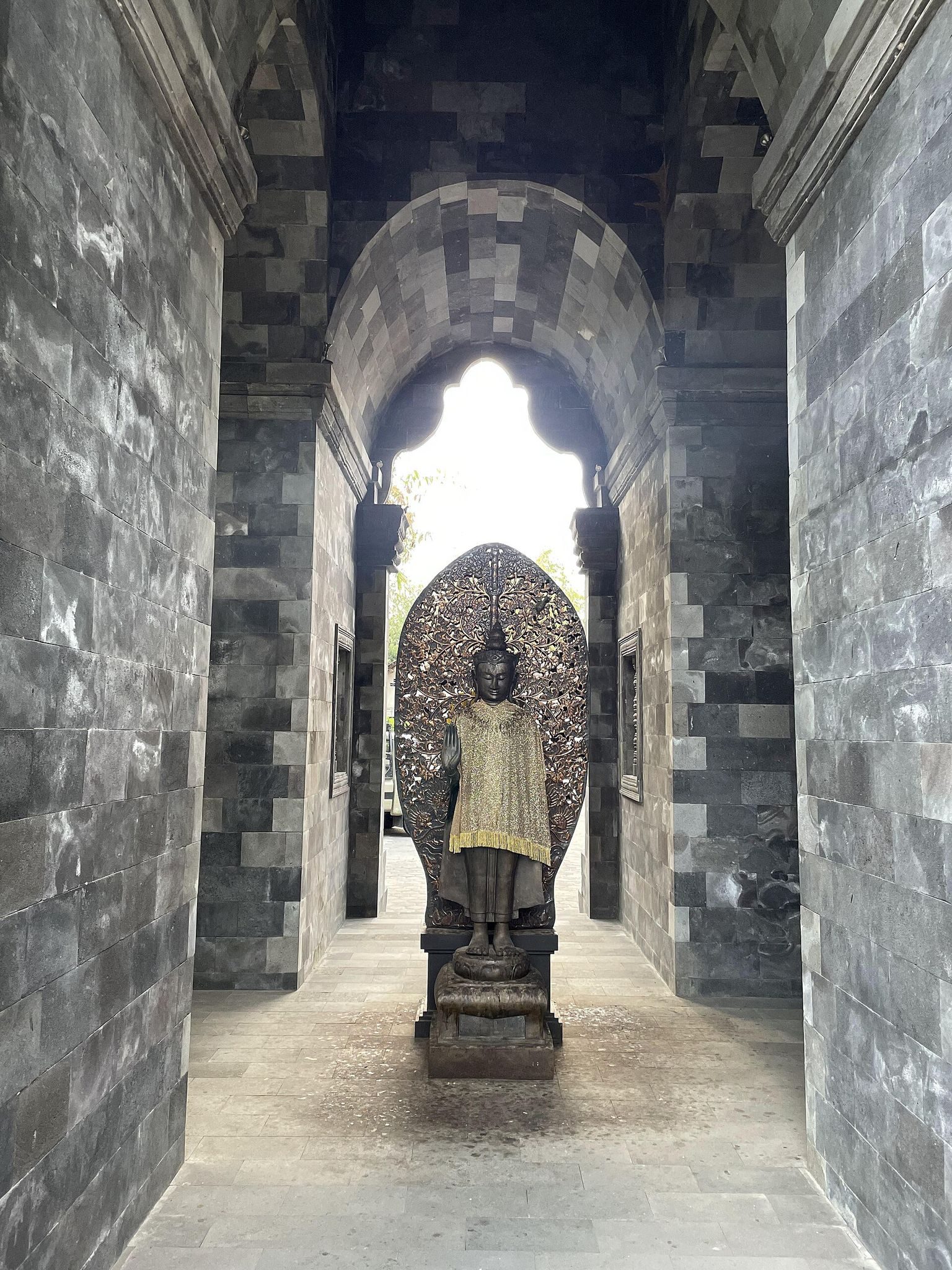
Inside the principal square chamber stands a headless stone image of the meditating Dhyani Buddha Ratnasambhava, whose raised hand forms the Varamudra gesture. Dhyani Buddhas are transcendent Buddhist figures associated with meditation, wisdom, and the symbolic directions. Two further Dhyani Buddha images found at the site reinforce the Buddhist character of the compound.
Roof and Religious Interpretation
The roof of Temple II was crowned with small ratna pinnacles rather than a stupa. A ratna is a jewel-shaped pinnacle commonly used in Javanese Hindu temple architecture, while a stupa is a Buddhist monument or finial associated with relics and enlightenment. The surviving upper structure includes a large opening above the principal chamber. The combination of Buddhist images with ratna pinnacles has led to the theory that the building may first have been Hindu before being converted or remodelled as a Buddhist temple.
The five temples have also been interpreted as a representation of the five Dhyani Buddhas and their directional associations. In this reading, Amitabha occupies the west, Ratnasambhava the south, Akshobhya the east, Vairocana the zenith, and Amoghasiddhi the north. This interpretation connects the compound’s five-part layout with a Buddhist symbolic system extending across the entire temple group.