Manassas National Battlefield Park: Civil War Battlefields in Virginia
Site at a Glance
- Rating
- 4.7
- Popularity
- Medium
- Country
- United States
- Primary era
- Modern
- External website
- Open
- Eras represented
- Modern
- Civilizations
- Unclassified
- Site type
- Military
On this page18 sections
History
Manassas National Battlefield Park, at 6511 Sudley Road in Prince William County, Virginia, United States, preserves the sites of two major American Civil War engagements, the First Battle of Bull Run in 1861 and the Second Battle of Bull Run in 1862. The American Civil War was the 1861 to 1865 conflict between the United States and the Confederate States of America over secession, slavery, and federal authority. Both battles ended in Confederate victories.
A Strategic Borderland
During the Civil War, the Manassas area held strategic importance because it lay near the frontier between the United States and the Confederate States of America. The two battles were among the conflict’s first major engagements. The First Battle of Bull Run, also called the First Battle of Manassas, took place on July 21, 1861. The Second Battle of Bull Run, or Second Battle of Manassas, followed from August 28 to 30, 1862.
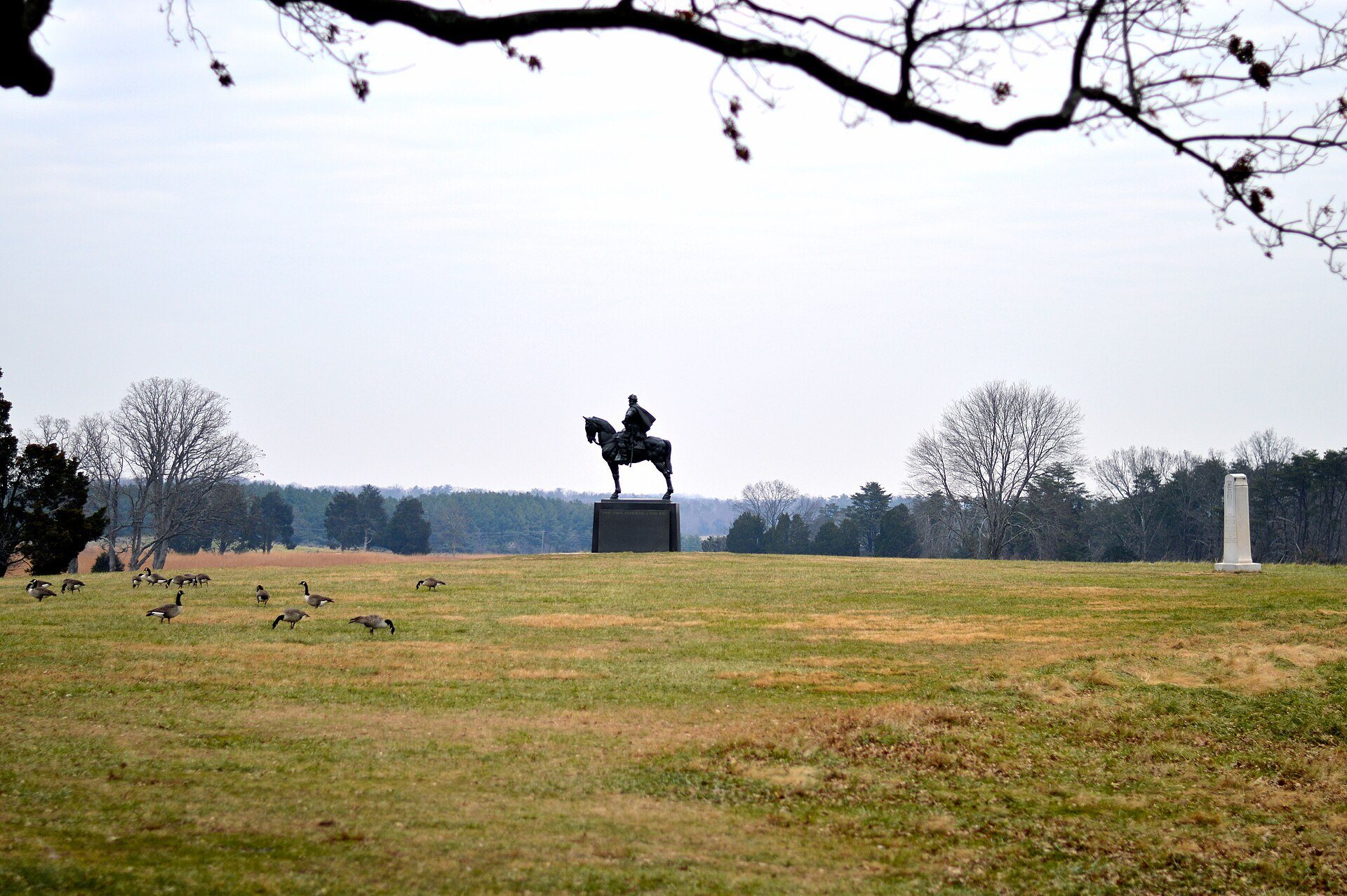
During the first battle, Portici served as Confederate headquarters, while the Stone House became a hospital. It continued in that role during the Second Battle of Bull Run. Confederate General Thomas J. Jackson acquired the nickname “Stonewall” during the first battle. A later bronze monument on Henry Hill commemorates the episode and Jackson’s role in it.
The Second Battle of Bull Run
The second battle unfolded across several parts of the preserved battlefield. After Confederate forces captured Pope’s supply depot, they deployed along the Unfinished Railroad Grade. Union forces directed major attacks against the Deep Cut, which followed the same railroad embankment. A large Confederate counterattack led by General James Longstreet took place at Chinn Ridge.
Preservation and Commemoration
In 1911, Civil War veterans held the Manassas Peace Jubilee on land that later became part of the park. The event promoted renewed national unity. The battlefield became a park in 1936 because of its historical importance and is administered by the National Park Service, the U.S. federal agency responsible for national parks and other protected historic and natural sites. It was added to the U.S. National Register of Historic Places on October 15, 1966. The park is also identified as a historic district and a national battlefield park.
The park encompasses approximately 5,073 acres and preserves numerous mid-nineteenth-century structures and battlefield sites. In 2014, the discovery of bone fragments led to the recovery of the skeletal remains of two Union soldiers from what is believed to have been a surgeon’s pit, a pit associated with battlefield medical operations and the handling or burial of casualties. Carbon dating indicates that the soldiers died during the Second Battle of Manassas in August 1862. On June 19, 2018, the remains were transferred from the National Park Service to the U.S. Army for planned burial at Arlington National Cemetery.
Remains
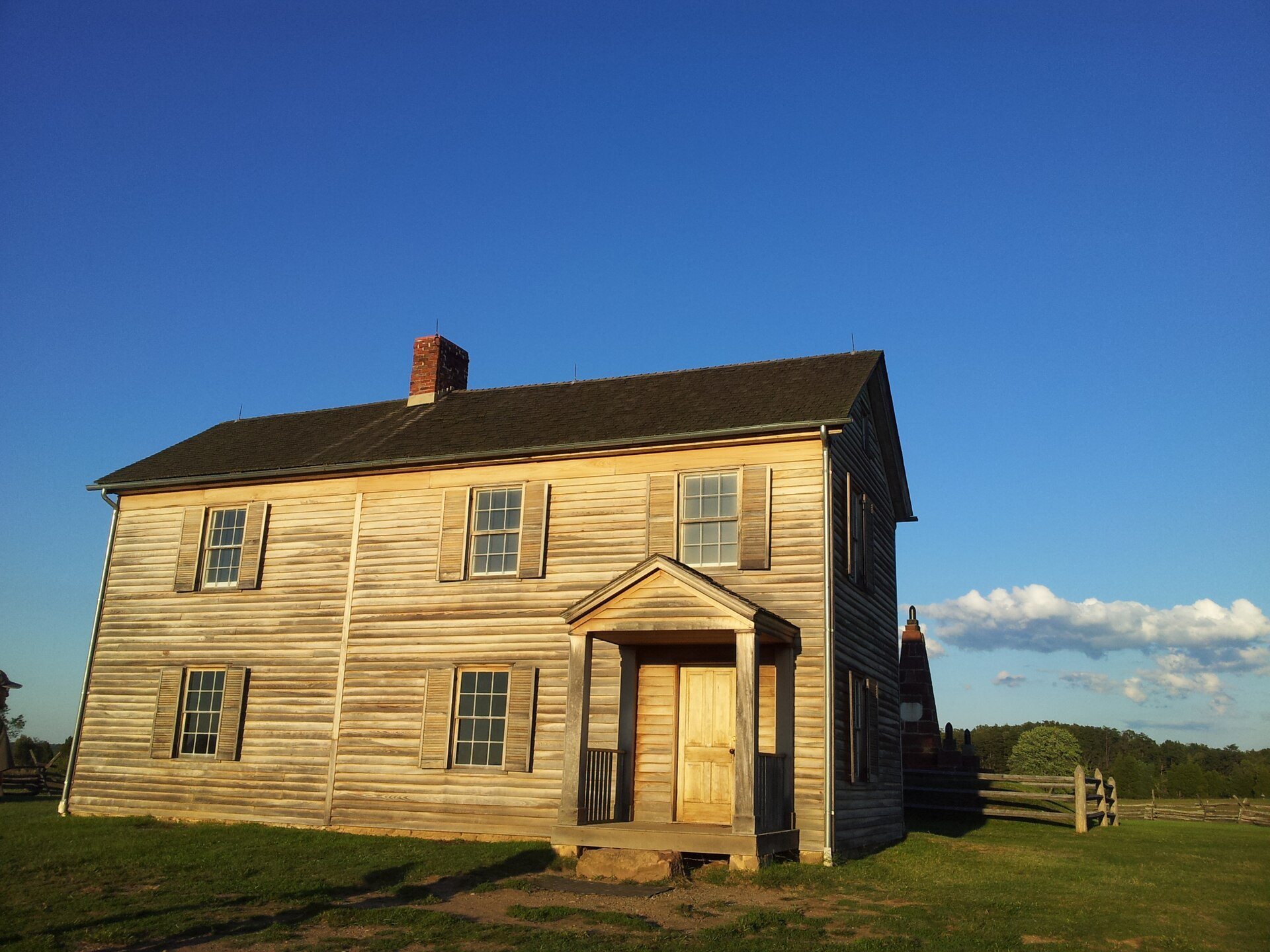
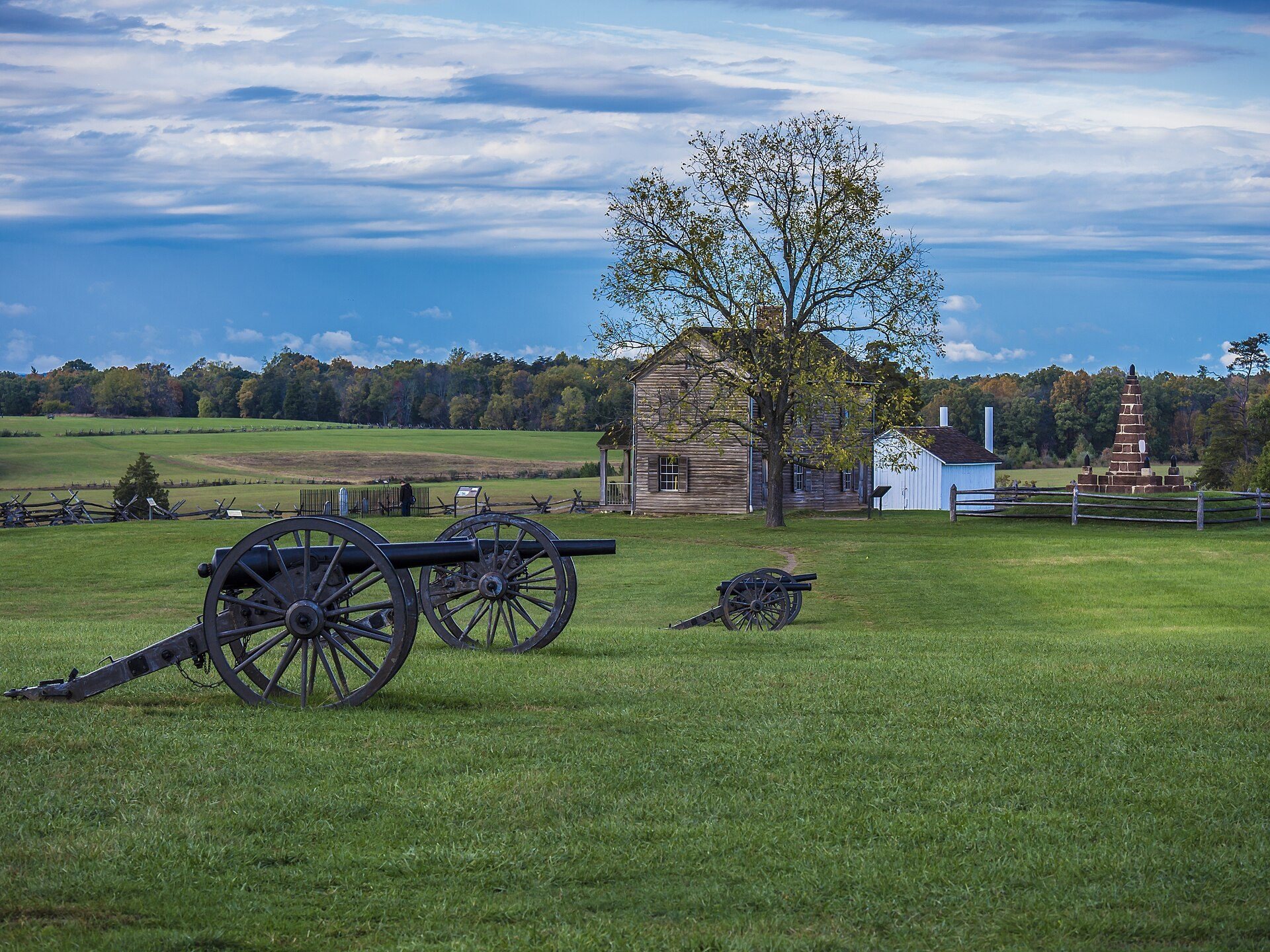
The preserved landscape combines battlefield positions, roads, bridges, plantation sites, military monuments, and surviving or ruined buildings. These features extend across the park’s approximately 5,073 acres and retain physical connections to the fighting of 1861 and 1862.
Henry Hill and the First Battle Landscape
Henry Hill Visitor Center
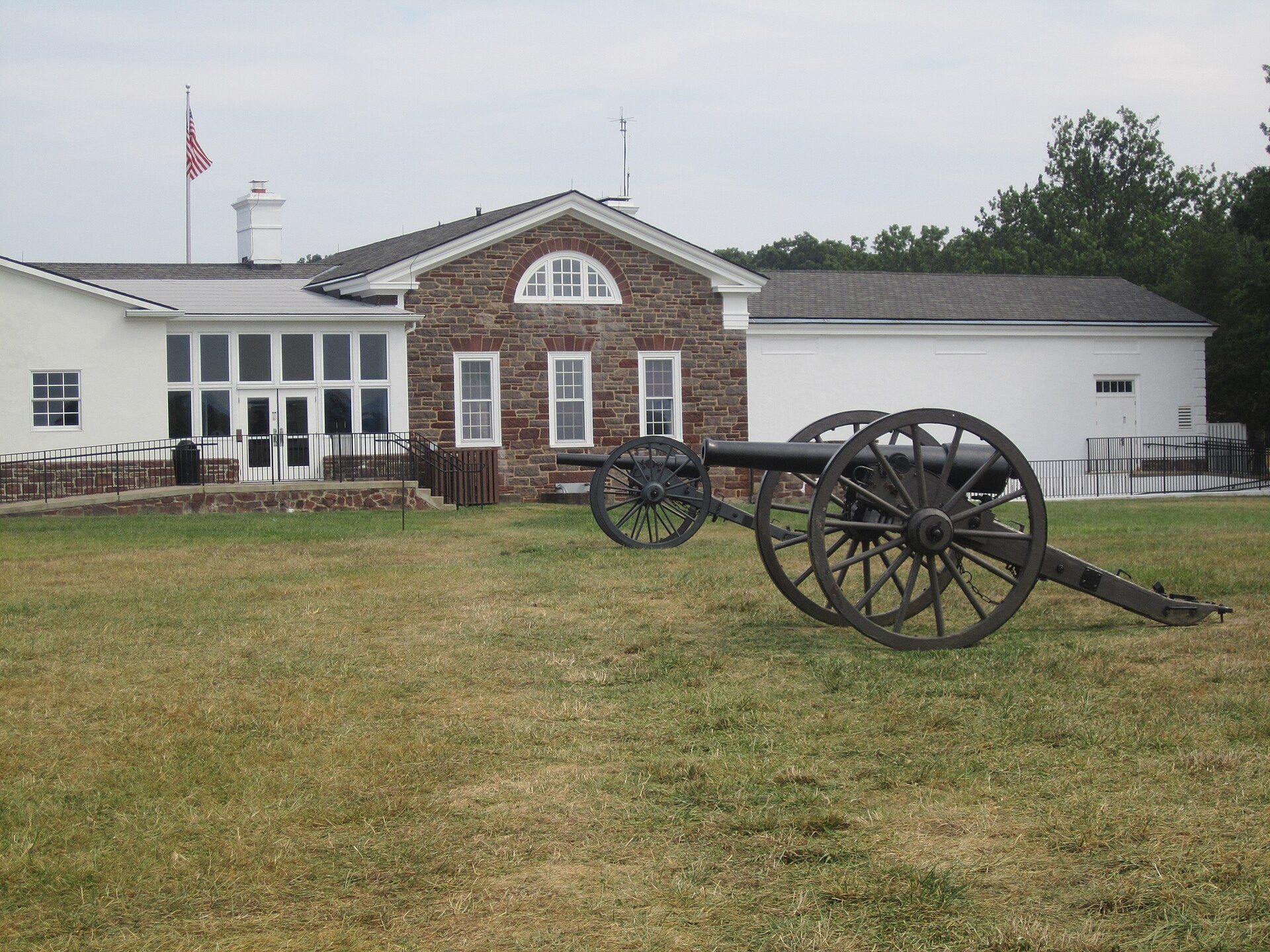
The Henry Hill Visitor Center stands on Sudley Road near the park’s south entrance. Its exhibits on the First Battle of Bull Run include Civil War-era uniforms, weapons, and field equipment, together with an electronic battle map. The building also presents the orientation film Manassas: End of Innocence.
Matthews Hill and Hazel Plain
Matthews Hill marks the opening phase of the First Battle of Bull Run. Across from the Henry Hill Visitor Center, Hazel Plain was the Chinn family plantation. The plantation is now ruined, with its foundation surviving.
Robinson House and the Jackson Monument
Robinson House was the former home of James Robinson, a free African American resident whose house stood on the Henry Hill battlefield. Arson destroyed the building in 1993, and its remains now survive as ruins. The bronze Stonewall Jackson Monument also stands on Henry Hill, commemorating General Thomas J. Jackson and the origin of his nickname during the first battle.
Second Battle Positions
Brawner’s Farm and Battery Heights
Brawner’s Farm marks the opening phase of the Second Battle of Bull Run and contains a museum dedicated to that battle. Nearby Battery Heights was the position from which Confederate artillery fired on Union troops attacking near the farm.
Unfinished Railroad Grade and Deep Cut
The Unfinished Railroad Grade is the railroad embankment where Jackson deployed Confederate troops before the Second Battle of Bull Run. Along the same grade, the Deep Cut was the position against which Pope launched the bulk of his attacks.
Chinn Ridge and the New York Monuments
Chinn Ridge lies across from Hazel Plain. A trail leads to a boulder commemorating Union Colonel Fletcher Webster, who was killed while leading an unsuccessful attempt to repel the Confederate counterattack. Two New York monuments commemorate the 5th and 10th New York Regiments. They mark the location where the 5th New York Zouaves lost 123 men in five minutes during the advance of Hood’s forces.
Roads, Plantations, and Civil War Sites
Stone House and Stone Bridge
The Stone House stands near the intersection of Sudley Road and Lee Highway. It served as a hospital during both battles. North of Lee Highway, at the Fairfax–Prince William county line, Stone Bridge crosses the landscape. Union forces retreated across it after the Second Battle of Bull Run.
Groveton and Its Cemetery
Groveton was a Civil War-era village that has disappeared. A small frame house associated with Lucinda Dogan survives there, near a Confederate cemetery.
Portici and Yorkshire Plantation
Portici was the plantation of Francis Lewis and served as Confederate headquarters during the First Battle of Bull Run. Minor company-level skirmishes took place on the surrounding plains, while the plantation site itself is now in ruins. Yorkshire Plantation marks the former plantation of Wilmer McLean, who later became associated with the Confederate surrender at Appomattox.
Archaeological Evidence
The recovered remains of two Union soldiers came from a suspected surgeon’s pit containing bones from several other limbs. Their identification with the Second Battle of Manassas is supported by carbon dating indicating death in August 1862. The remains were removed from the park and transferred to the U.S. Army in 2018.