Tyre Hippodrome: A Roman Chariot-Racing Arena in Lebanon
Site at a Glance
- Rating
- 4.6
- Popularity
- Low
- Country
- Lebanon
- Primary era
- Classical
- Eras represented
- Classical
- Civilizations
- Byzantine, Roman
- Site type
- Entertainment
- Remains
- Circus
On this page9 sections
History
Tyre Hippodrome is a Roman-period chariot-racing arena at Tyre in Lebanon, built during the second century AD. An earlier first-century date has also been proposed, while major works are associated with the late second century, when Tyre became the capital of the Roman province of Syria Phoenice. The arena primarily hosted chariot races and may also have accommodated other athletic events.
Roman-period use
The hippodrome may have hosted competitions connected with celebrations of the imperial cult, the Roman practice of publicly honoring the emperor and his household through religious ceremonies and festivals. It may also have been used for at least some events of the Tyrian Games. A late-fourth-century geographical work, the Expositio totius mundi et gentium, lists the building among the five leading racetracks of the Levant under Roman rule.
The arena may have been used during the Diocletianic Persecution, the empire-wide persecution of Christians initiated under Emperor Diocletian in the early fourth century, as a place where Christians were tortured to death. This possible use remains uncertain.
Abandonment and rediscovery
A protective wall was built around the hippodrome in the fifth century to shield it from winds and desert conditions. The measure did not prevent the structure’s eventual abandonment in the seventh century. Afterward, the abandoned building was plundered and had been buried by the thirteenth century.
The hippodrome remained buried until 1947, when it and the surrounding site were cleared. The work after that date was not a substantial archaeological excavation and was not accompanied by a major scholarly publication. The first study devoted to the structure appeared in 2012. The hippodrome now forms part of Tyre’s UNESCO World Heritage designation. It has been described as the second-largest hippodrome of the ancient world and as tenth among comparable buildings in the provinces of the Roman Empire.
Remains
Layout and setting
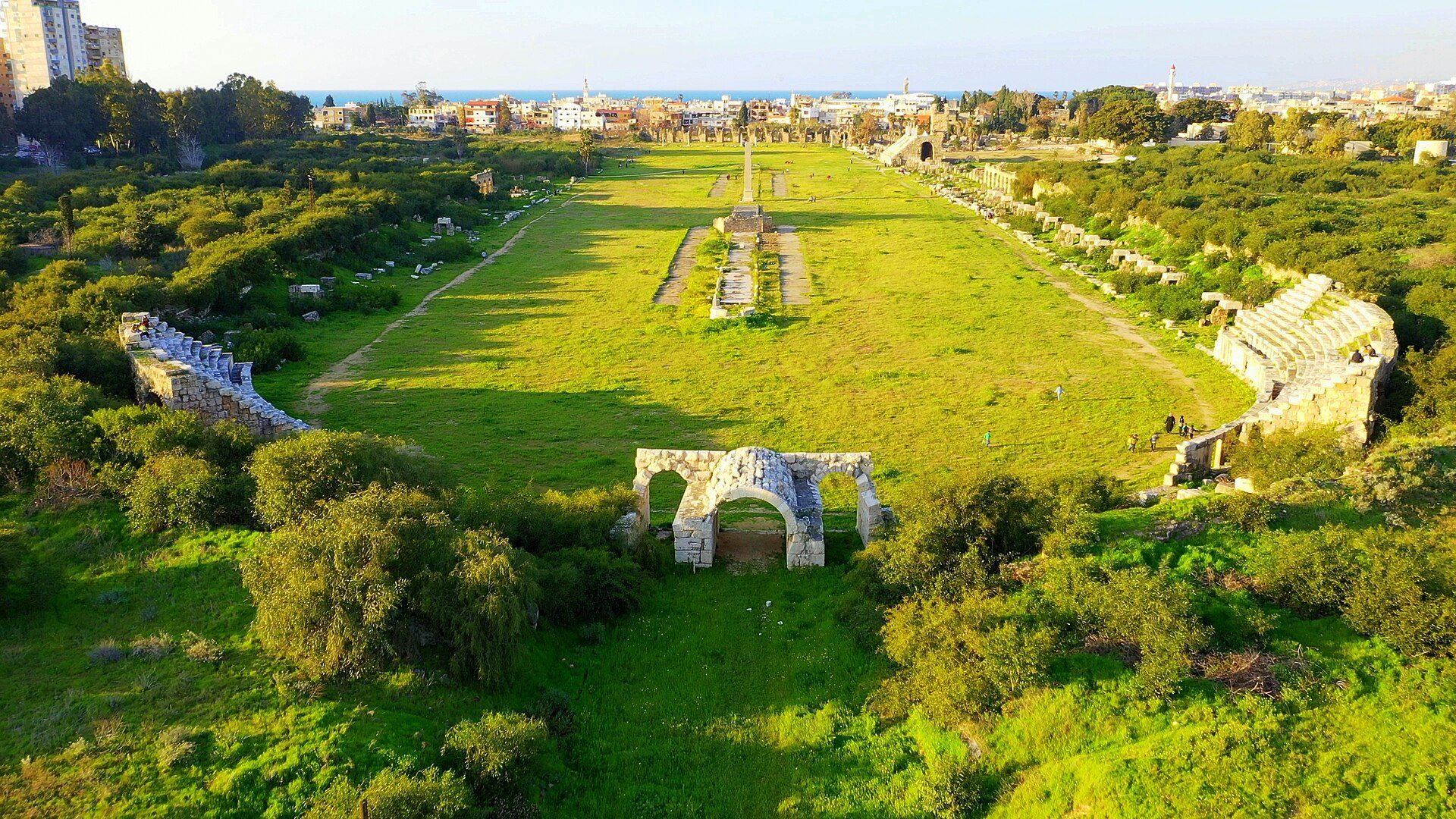
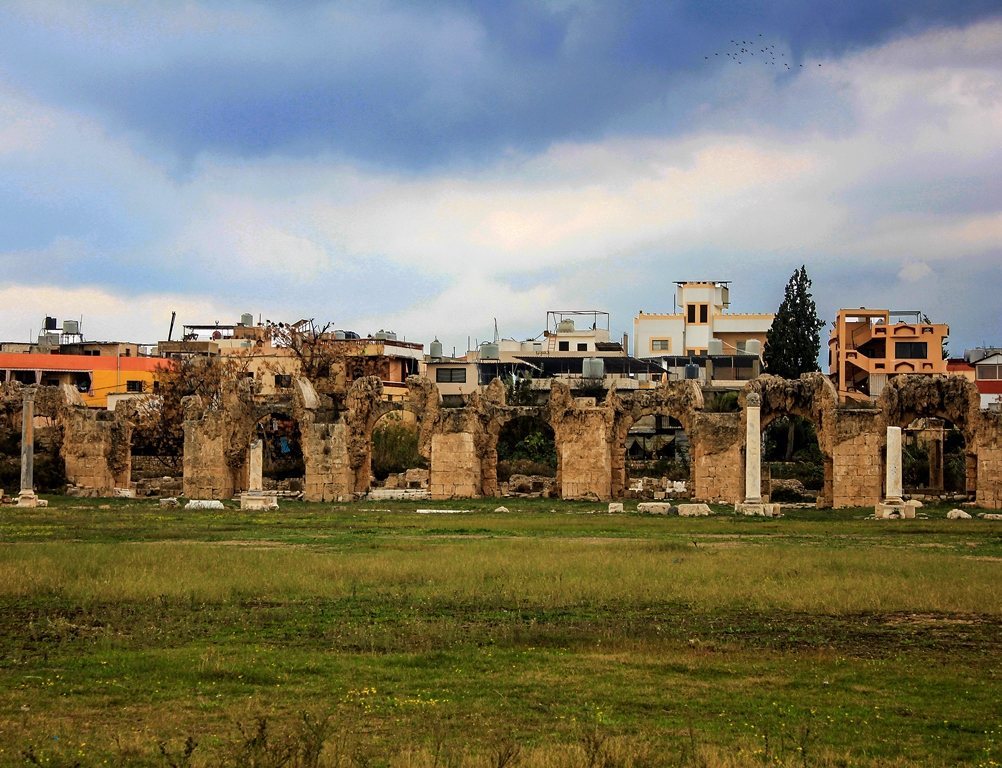
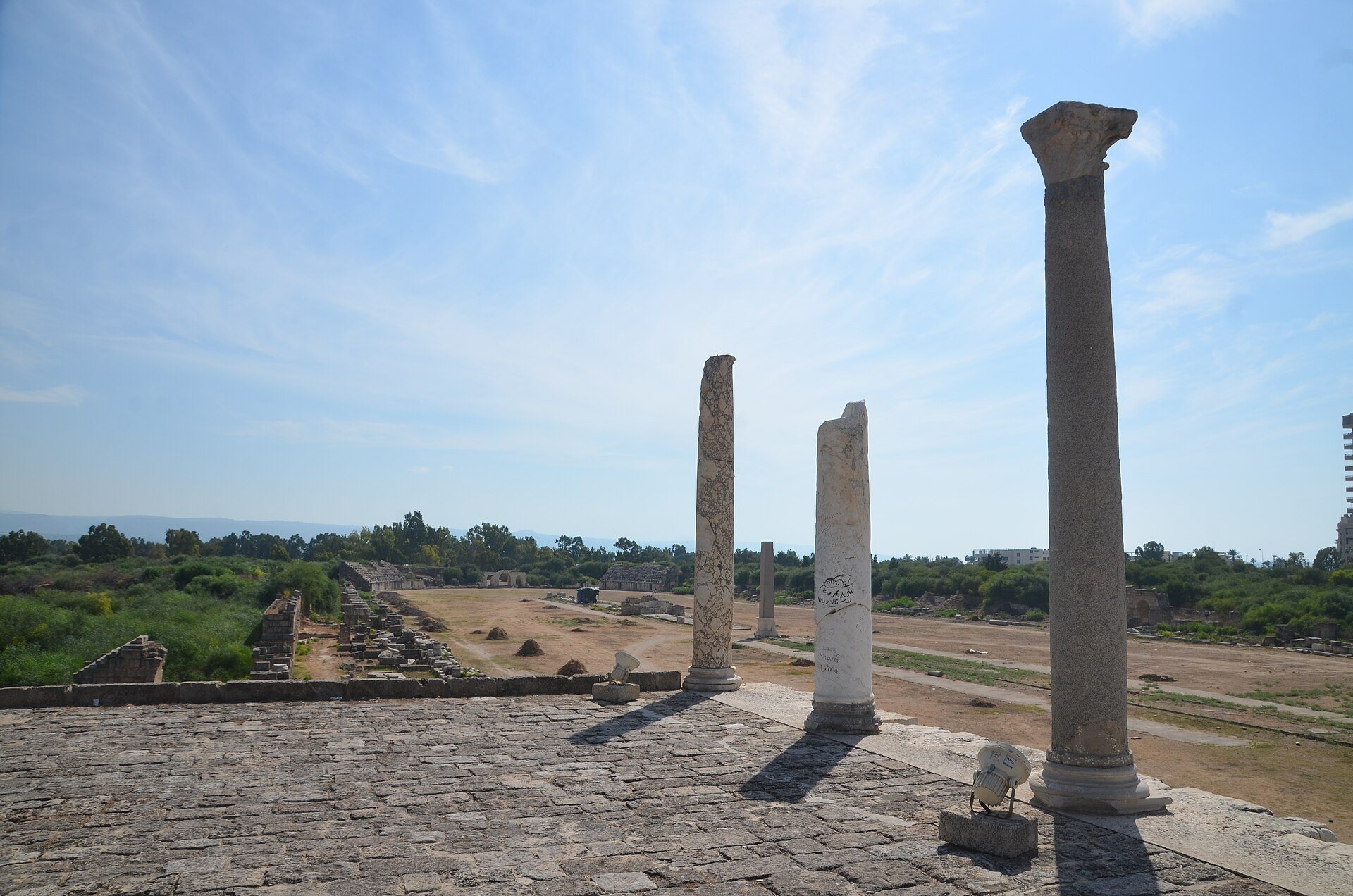
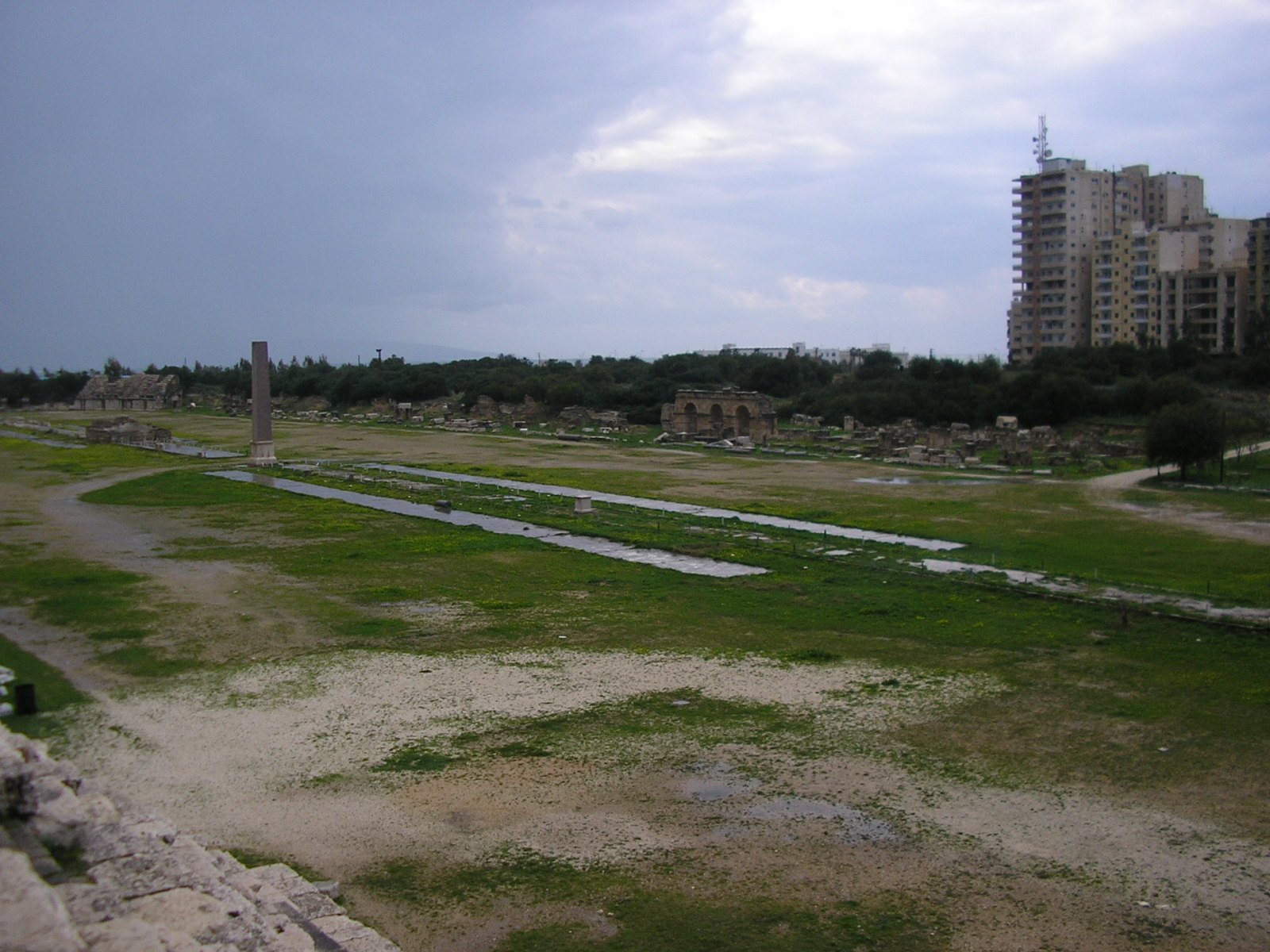
The hippodrome stands on the mainland portion of ancient Tyre, a Phoenician coastal city whose territory also included an island joined to the mainland by a tombolo, a coastal landform connecting an island with the shore. The arena lies near and parallel to the south of the Al-Bass Necropolis. It has a horseshoe-shaped plan. Commonly given dimensions are approximately 480 metres long and 90 metres wide, although another measurement records 468 metres by 123 metres. The site covers about 54,500 square metres, while the racing track itself is reported as 447 metres long.
Seating and racing structures
Spectator seating
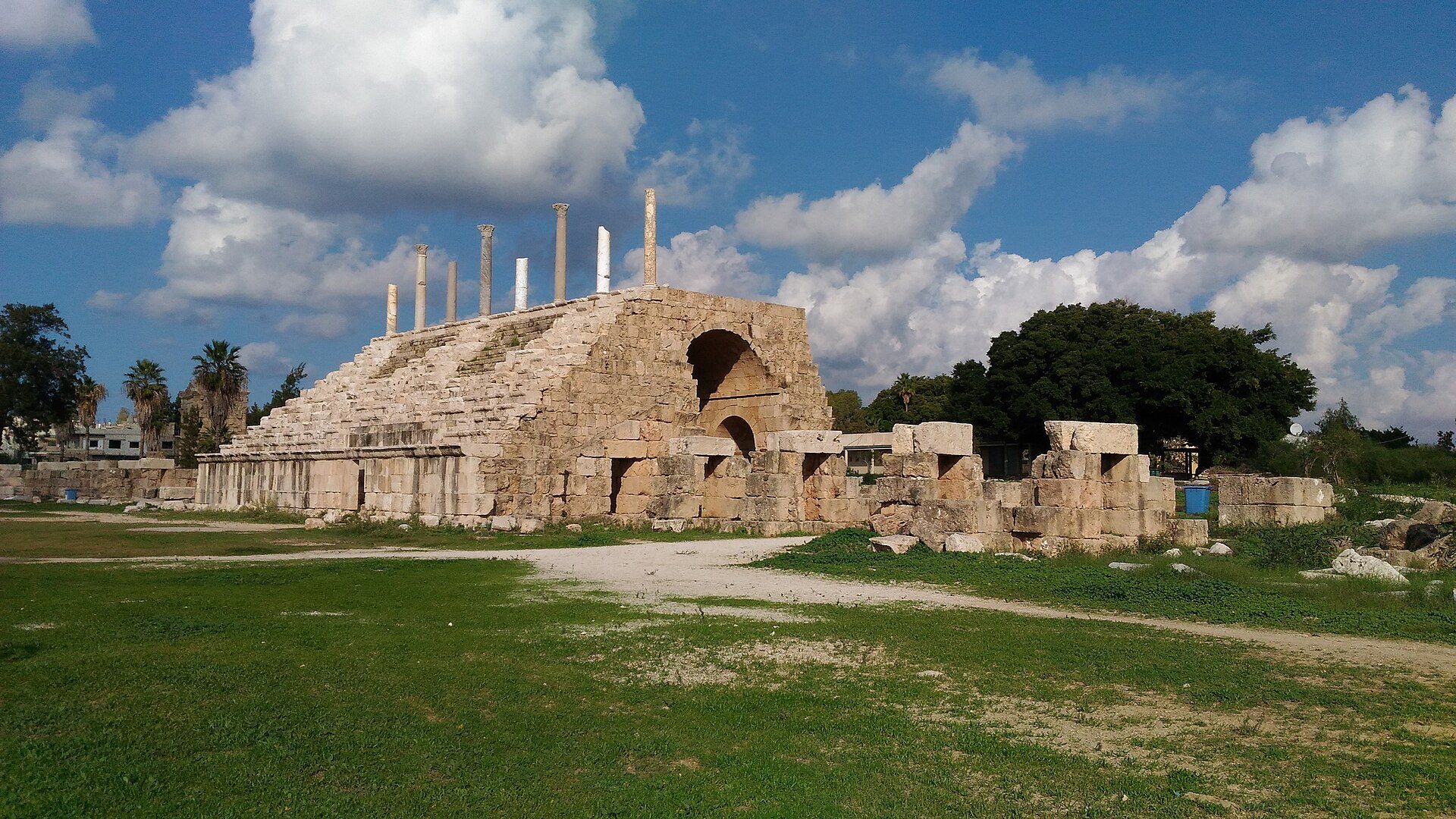
The spectator seating, or cavea, consists of tiered rows arranged above a gallery. Parts of the seating have been restored, and the surviving seating areas are described as being in good condition. Capacity estimates range from about 20,000 spectators to more than 35,000, with one estimate reaching 36,500.
Starting stalls and central barrier
The starting stalls, known as carceres, remain visible. An arch is preserved beneath the seating. Parts of the central barrier, or spina, also survive, including a section bearing an obelisk. The hippodrome is regarded as one of the largest and best-preserved Roman hippodromes of its type.
Turning posts and the course
Stone turning posts called metae remain in place at both ends of the course. Charioteers had to complete seven circuits, turning around these posts at high speed. This was a particularly dangerous part of the race and often caused serious accidents.