Huaca Pucllana: A Lima Culture Ceremonial Center in Peru
Site at a Glance
- Rating
- 4.6
- Popularity
- High
- Country
- Peru
- Primary era
- Medieval
- External website
- Open
- Eras represented
- Classical, Medieval
- Civilizations
- Wari
- Site type
- Religious
- Remains
- Sanctuary
On this page15 sections
History
Huaca Pucllana is a Lima culture archaeological complex in Miraflores, Lima, Peru, whose monumental occupation dates mainly from about AD 400 to 700. Built during the Regional Developments period, when distinct societies and political traditions emerged across the Andes, it began developing during the first centuries AD, and the Great Pyramid may have been started around AD 200. The site became a ceremonial center administered by a priestly elite whose religious and political authority was connected with water resources, agriculture, and maritime communities.
Lima ceremonial center
The Lima culture created Huaca Pucllana as a theocratic center, using monumental adobe architecture for ceremonies and political-religious activities. Its position on the lower Rimac Valley provided access to the coast, the lomas, and the intakes of irrigation canals. Lomas are coastal ecosystems where seasonal fog supports vegetation in an otherwise arid landscape. Huaca Pucllana was contemporary with other Lima centers, including Maranga, Cajamarquilla, Pachacamac, Catalina Huanca, and Copacabana.
The complex was repeatedly remodeled. Earlier buildings were covered with fill and new construction, while ceremonies connected with rebuilding included feasting, the deliberate breaking of vessels, offerings, and human sacrifice. Twenty-six sacrificed women were found in the large plaza called Hatun Pata. Men and children were also sacrificed in smaller numbers, and anthropological analysis indicates violent deaths. Two human remains discovered on the fifth platform in 2007 had been placed in construction fill during a remodeling episode dated to Middle Horizon 1B, an early phase of the Andean period generally dated from about AD 600 to 1000.
Huari and Ychsma occupations
After a period of abandonment, the Huari, also called Wari, culture reused Huaca Pucllana mainly as an elite cemetery around AD 800 to 900. The Huari were a major Andean polity whose burial practices and material culture appear at the site after the Lima occupation. The highest parts of the pyramid were destroyed and converted into burial grounds. Twenty-four Huari tombs have been identified, including the burial of a high-ranking priest and the tomb known as the Lady with Blue Eyes, whose eye positions contained two blue stones. The intact tomb called the Lord of the Unkus contained three adults in separate shrouds, two with masks, and a sacrificed child.
A later occupation associated with Ychsma-style ceramics continued at the site from approximately AD 1000 to 1532. Ychsma was a central-coast tradition closely associated with Pachacamac, a major pilgrimage and ceremonial center. At Huaca Pucllana, this phase involved burials, offerings, and probably settlement. Its vessels were often shaped or decorated as female figures, and the material suggests that offering vessels took the place of the human sacrifices associated with the Lima period. Ritual activity continued until the arrival of the Spanish.
Decline and archaeological work
Huaca Pucllana lost importance during the Viceroyal period and the early Republic. Neglect, use as a rubbish dump, and motocross damaged the complex, while smaller pyramids and evidence for houses, roads, avenues, and parks were destroyed. The site covered about six hectares in the modern period, roughly one-third of its area in the 1940s.
The name Pucllana appears in colonial forms including Pugliana, Pullana, and Puliana, and the site was also called Huaca Juliana. One interpretation links the name with Quechua words for a sacred place and a place of play. Colonial documents also associate it with a territorial boundary recorded by the curaca Pedro Chumbi Charna of Huatca. A curaca was an Indigenous Andean leader who could exercise authority over land, labor, and settlements, but the precise origin of the site’s name remains uncertain.
Archaeological research, conservation, and restoration began in 1981 under a multidisciplinary team led by Isabel Flores Espinoza, with support from Peru’s Ministry of Culture and the Municipality of Miraflores. This work recovered and interpreted earlier architecture and made Huaca Pucllana one of the most extensively investigated archaeological sites in metropolitan Lima. Peru recognizes the complex as Cultural Heritage of the Nation and protects it under laws safeguarding cultural heritage. A small exhibition hall opened in 1984.
Remains
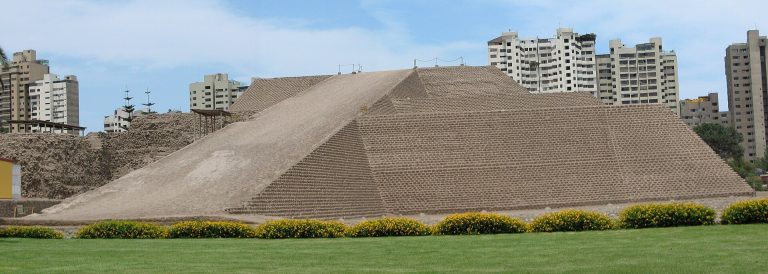
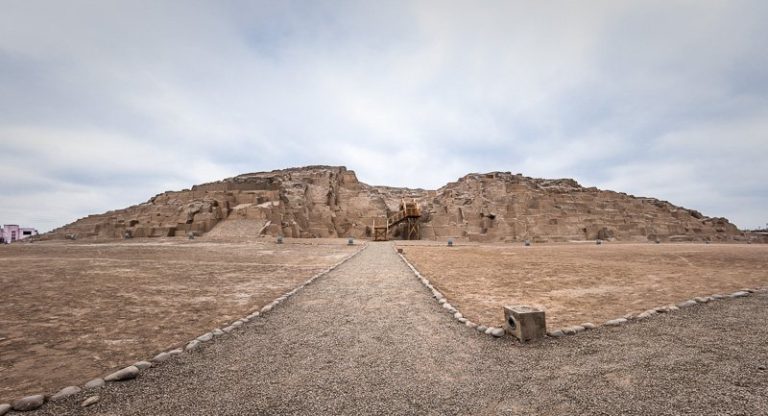
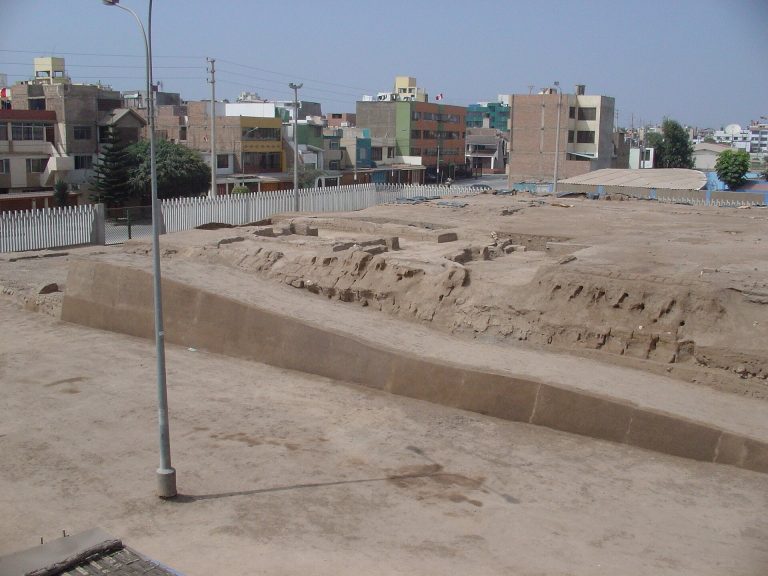
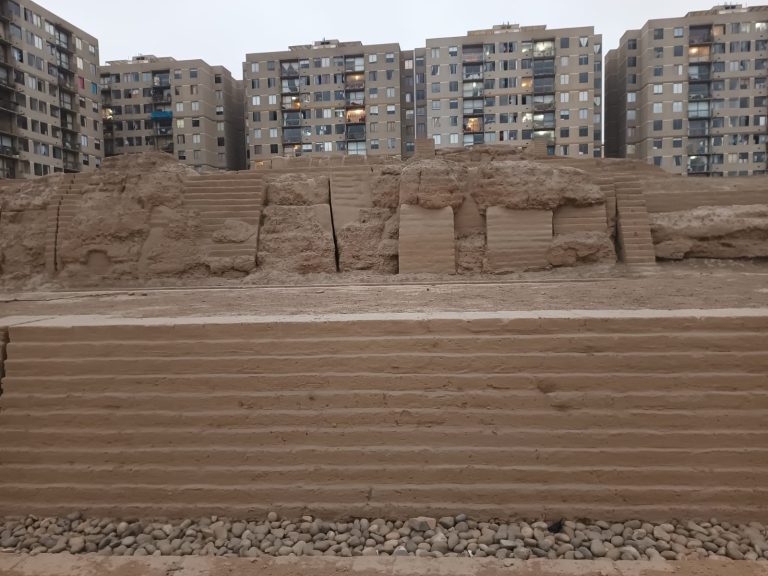
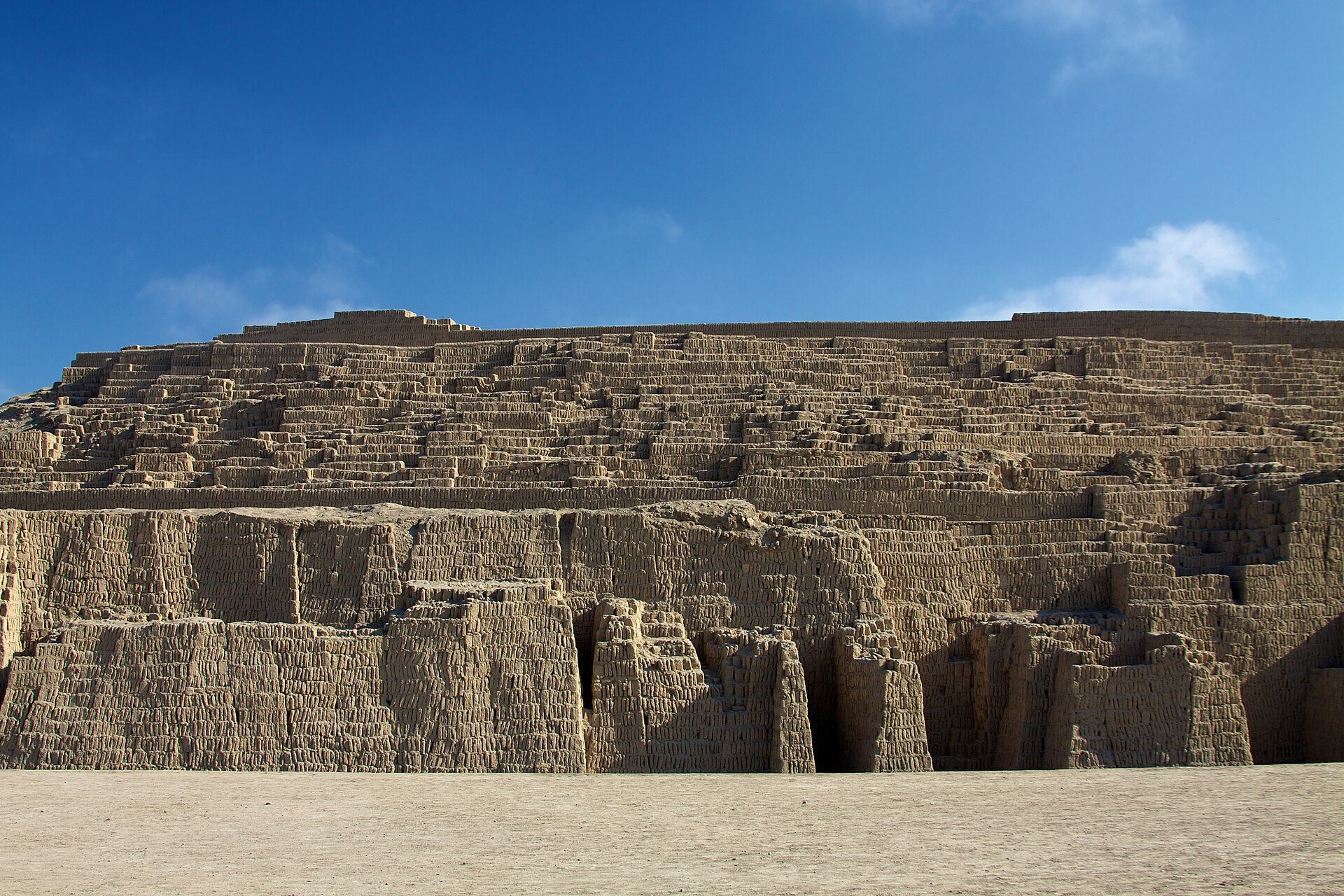
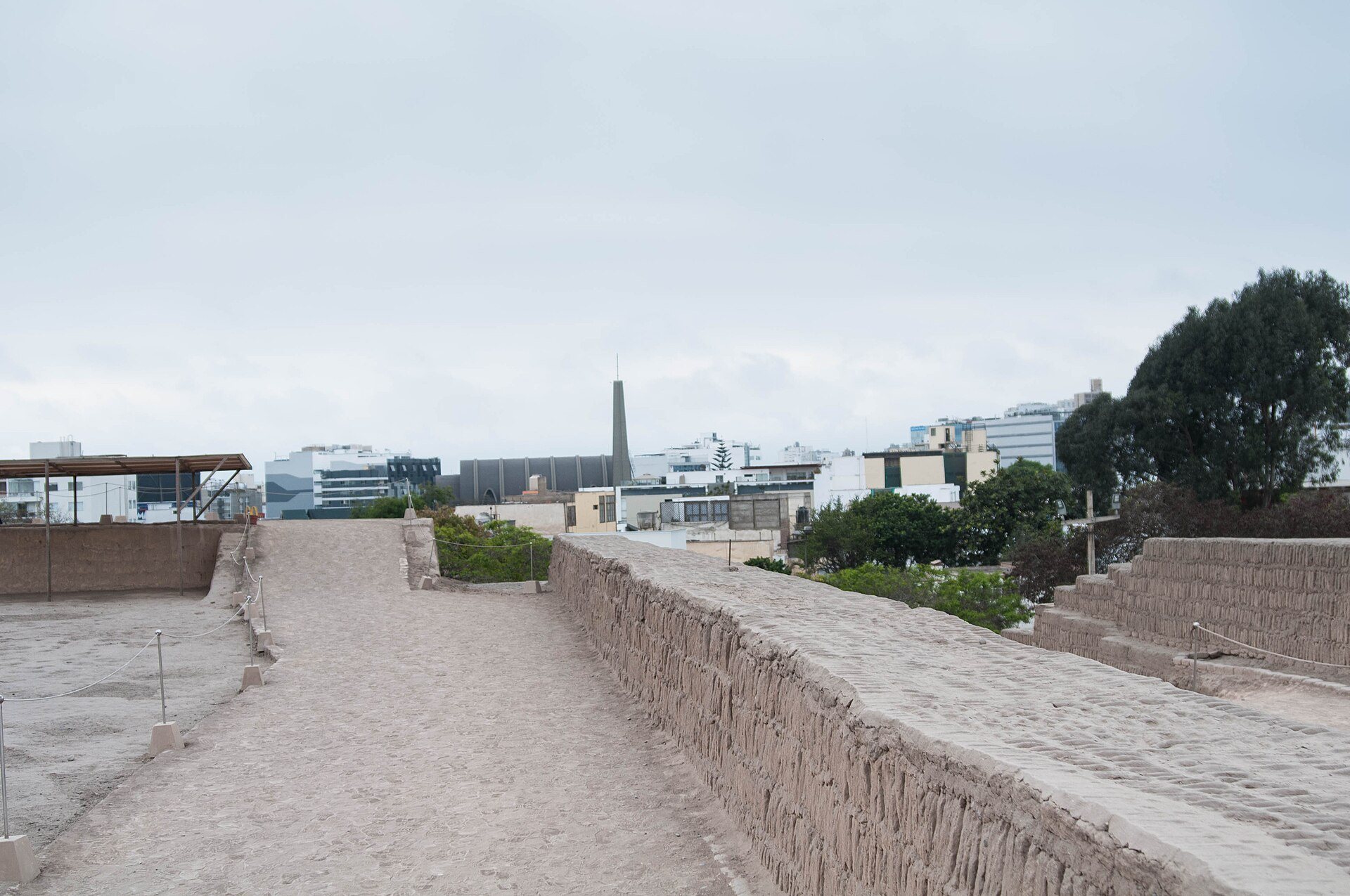
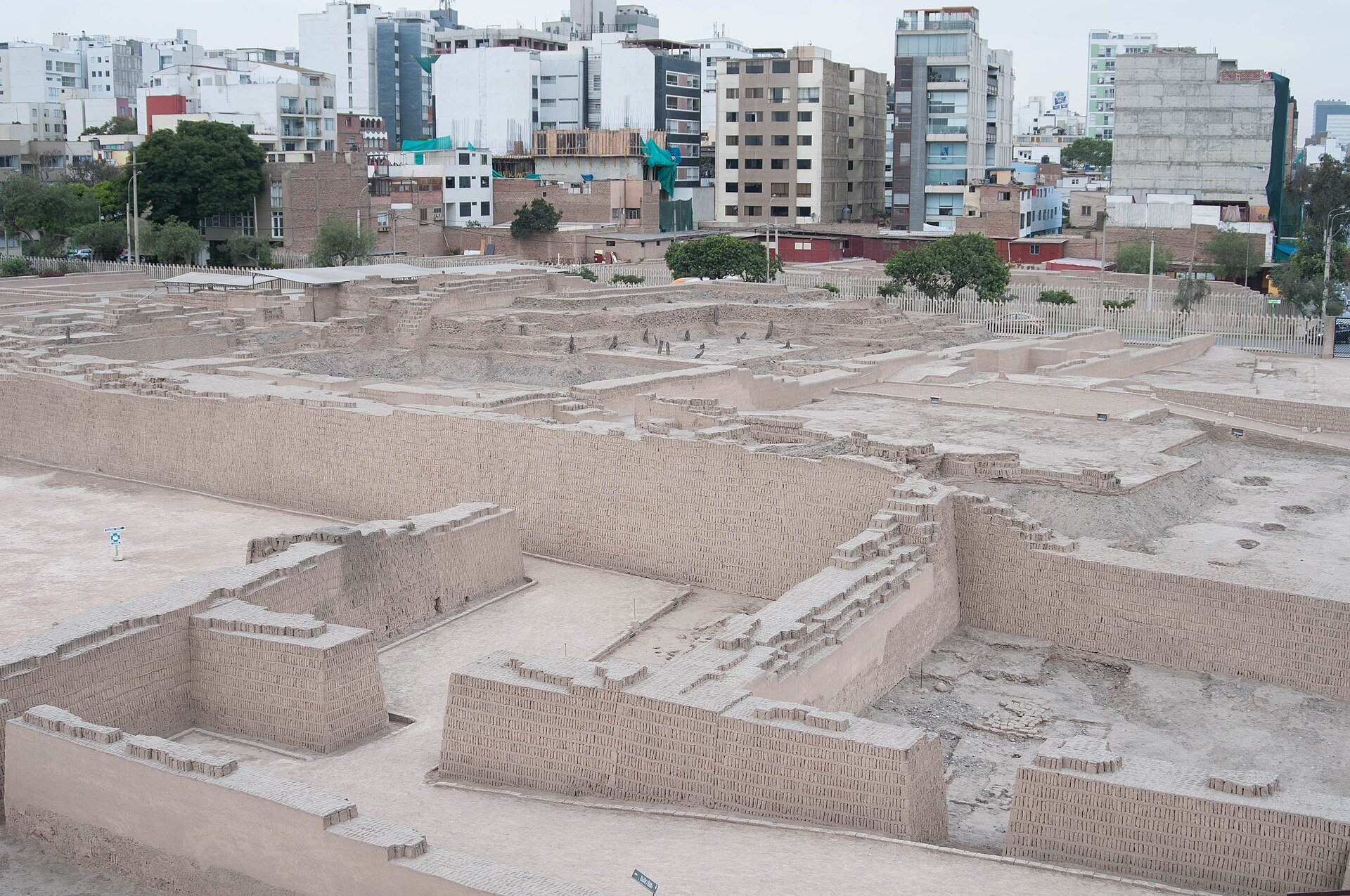
Huaca Pucllana covers about six hectares and consists chiefly of adobe construction set over fills of rounded stones and gray sand. The complex included several pyramids, plazas, patios, enclosures, walls, ramps, and access passages. Its surviving core is dominated by the Great Pyramid, an elongated, stepped structure about 25 meters high and oriented from southwest to northeast.
Layout and construction
Complex and Great Pyramid
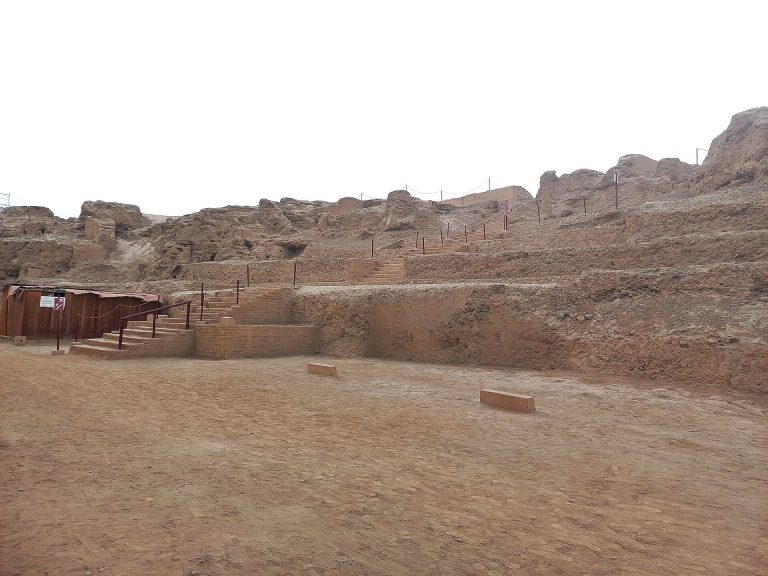
The site was divided into upper and lower areas. The upper area is associated with elite activities, while the lower area contained ceremonial and functional spaces. A large dividing wall separated two sections: one had benches and deep offering pits, and the other contained small clay and adobe structures interpreted as administrative courtyards and patios.
The Great Pyramid’s upper levels contain patios with stepped structures painted yellow, reached by zigzag ramps and passageways. Its southern end held burial areas for Lima elites, including adults and children. The pyramid was remodeled many times, and later builders buried or destroyed earlier walls and architectural elements before adding new construction.
Adobe building techniques
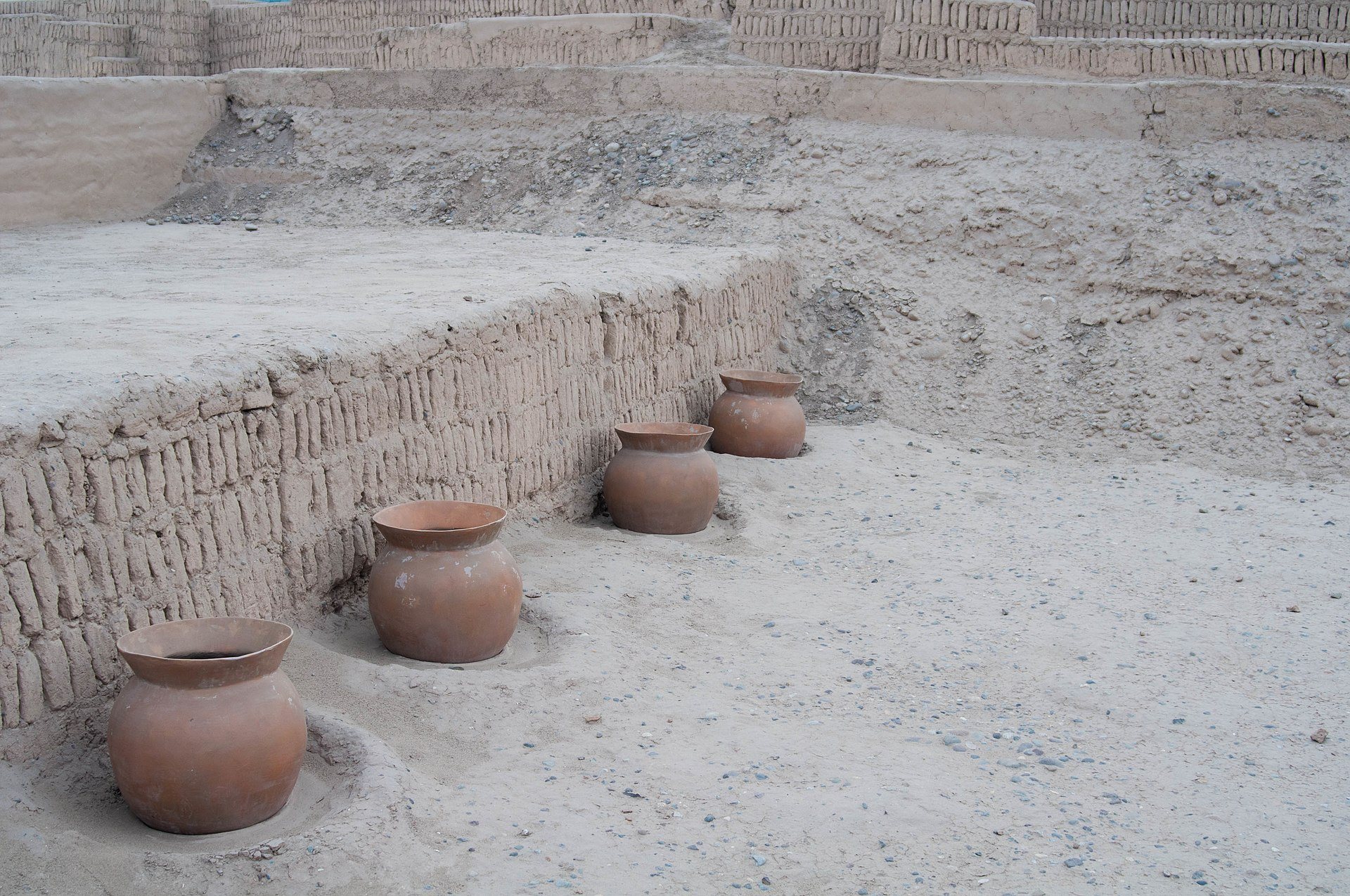
Three construction phases are distinguished by their materials. The earliest used rammed-earth walls, made by compacting damp earth within temporary forms. A later phase used square parallelepiped adobes, while the final phase used rectangular bricks set vertically in a bookshelf arrangement. This last technique produced the complex’s greatest extent. The bricks were joined with mortar at their bases and tops, with small spaces along their sides.
The walls formed slightly inclined trapezoidal panels, with wider bases than upper sections. This shape provided visual balance and resistance to seismic movement. Walls along the Great Pyramid could reach about eight meters in height, while those in the lower sector reached approximately four meters. Fine mud plaster covered the walls, which were often painted yellow. The color appears to have held sacred importance, and some pyramid walls carry graffiti.
Ritual spaces and deposits
Offerings and remodeling ceremonies
Small pits about 20 centimeters deep on the upper part of the Great Pyramid contained mollusks, plants, and fish bones. Other deposits included broken large vessels with marine imagery, food remains, and broken domestic vessels associated with ramps and passageways. These materials belong to rituals held before or during rebuilding episodes and included thanksgiving ceremonies directed toward deities.
Marine imagery and shark cult
Marine subjects dominate much of the site’s Lima pottery. Late Lima vessels use red, white, and black to depict sharks, waves, sea lions, eels, octopuses, and other sea creatures. Shark images also appear on textiles associated with burials and on ritual objects. Shark remains occur in feasts, offerings, construction fills, and funerary contexts.
A large shark-decorated vessel was placed on the floor of a room before the room was buried. The repeated connection between sharks, remodeling, feasting, sacrifice, and offerings supports an interpretation of a marine cult in which the shark represented a sea deity. Later Nievería ceramics show strong influence from the southern coast and highlands.
Burials and archaeological displays
Lima burials
Huaca Pucllana was primarily a ceremonial center, but it also contained burials of Lima elites placed on litters with little grave furniture. A Lima burial found in the center of the pyramid in 2010 included a warrior with a sling and may indicate a warrior elite.
Huari tombs
The Huari cemetery occupied the pyramid’s highest areas after their destruction and reuse. The tomb called the Lord of the Unkus contained three adults in separate burial shrouds, two wearing masks, together with a sacrificed child. Another burial, known as the Lady with Blue Eyes, contained two blue stones positioned in the eye area.
Exhibition and reconstructed spaces
The site exhibition hall presents excavated Lima material, including ceremonial vessels, miniature funerary offerings, ceramic shark sculptures, and implements associated with sacrifice. It also displays well-preserved polychrome Huari textiles and offerings from Huari tombs. The archaeological area includes a circuit through part of the pyramid and the lower sector, where full-scale reconstructions represent Lima inhabitants, Huari tombs, and Ychsma offering rituals alongside visible excavation and conservation areas.