Puye Cliff Dwellings: An Ancestral Pueblo Settlement in New Mexico
Site at a Glance
- Rating
- 4.6
- Popularity
- Low
- Country
- United States
- Primary era
- Medieval
- External website
- Open
- Eras represented
- Medieval
- Civilizations
- Ancestral Puebloan
- Site type
- City
On this page10 sections
History
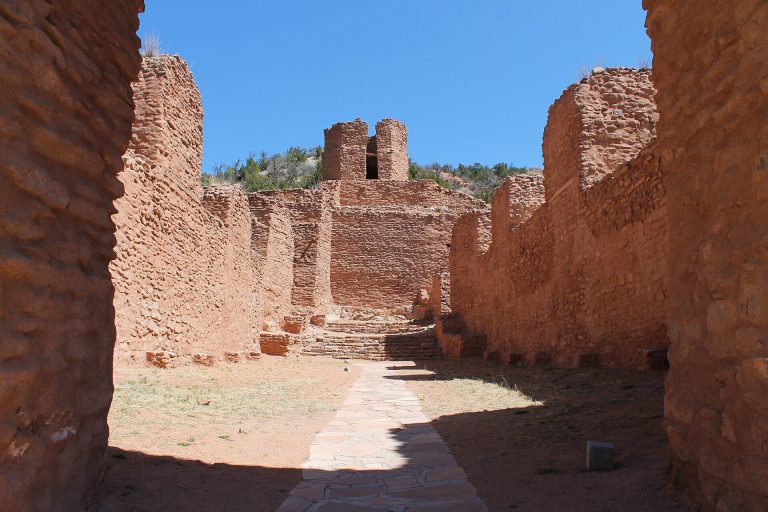
Puye Cliff Dwellings are the ruins of a Pueblo settlement in Santa Clara Canyon on the Santa Clara Pueblo Reservation in New Mexico, United States. Pueblo peoples, Indigenous communities of the American Southwest, occupied the area from approximately AD 900 to 1580. The settlement developed into its best-known form during the late thirteenth or early fourteenth century, within the Pueblo III period, when communities increasingly gathered into larger villages.
Early Occupation and Growth
Earlier inhabitants lived in dispersed farmsteads east of the Jemez Mountains, where they hunted game and cultivated food. Over time, communities became more concentrated. Puye was one of several Pueblo III settlements in the region, alongside Otowi, Shufinne, Tsankawi, Tsirege, and Tyuonyi. At its height, as many as 1,500 Pueblo people lived at Puye.
The settlement was abandoned in the late sixteenth century after drought forced its inhabitants toward the Rio Grande valley. Oral tradition among the present-day inhabitants of Santa Clara Pueblo holds that they are descendants of the people who lived at Puye. Santa Clara Pueblo lies approximately 10 miles (16 km) east of the site.
Excavation and Preservation
Archaeologist Edgar Hewett and the Southwest Society of the Archaeological Institute of America excavated Puye Cliffs in 1907. This was the first systematic excavation of a prehistoric pueblo in the Rio Grande valley. Puye Ruins became a National Historic Landmark and was added to the U.S. National Register of Historic Places in 1966. The protected area covers approximately 1,350 acres (550 hectares).
In 2000, the Cerro Grande Fire began when a planned tree burn in nearby Bandelier National Monument escaped control. The fire devastated Santa Clara Canyon and affected the setting of the Puye Cliff Dwellings.
Remains
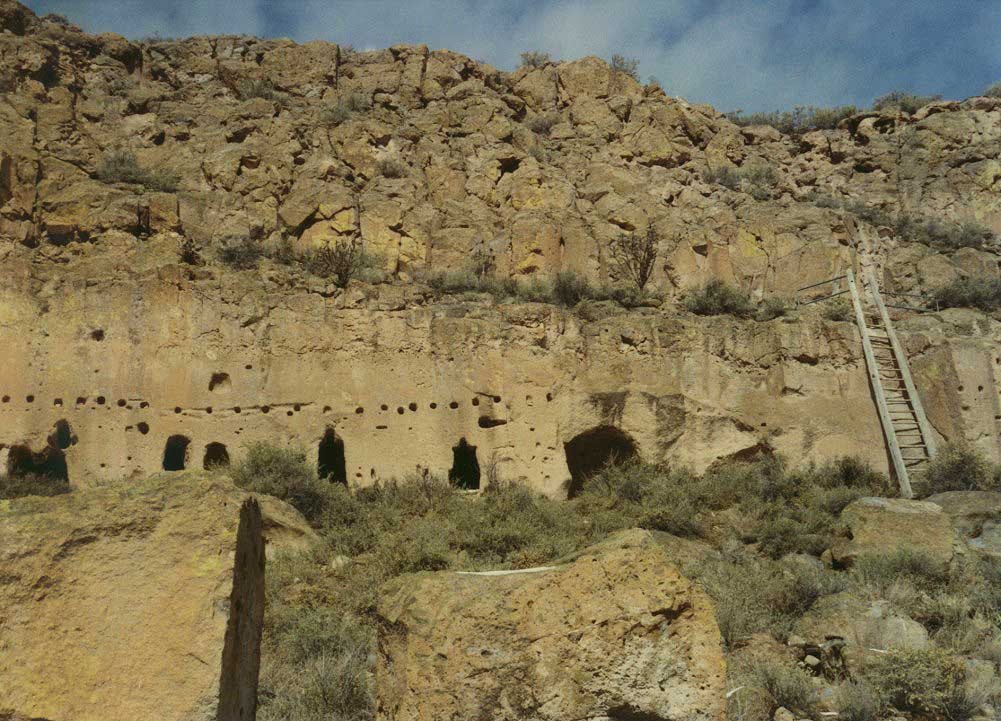
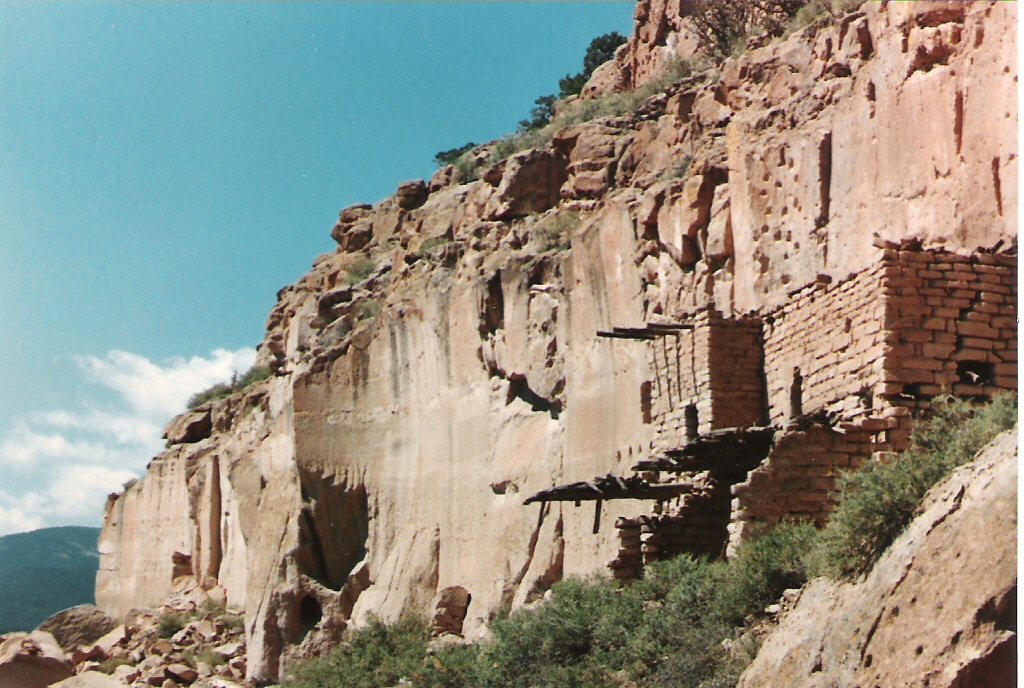
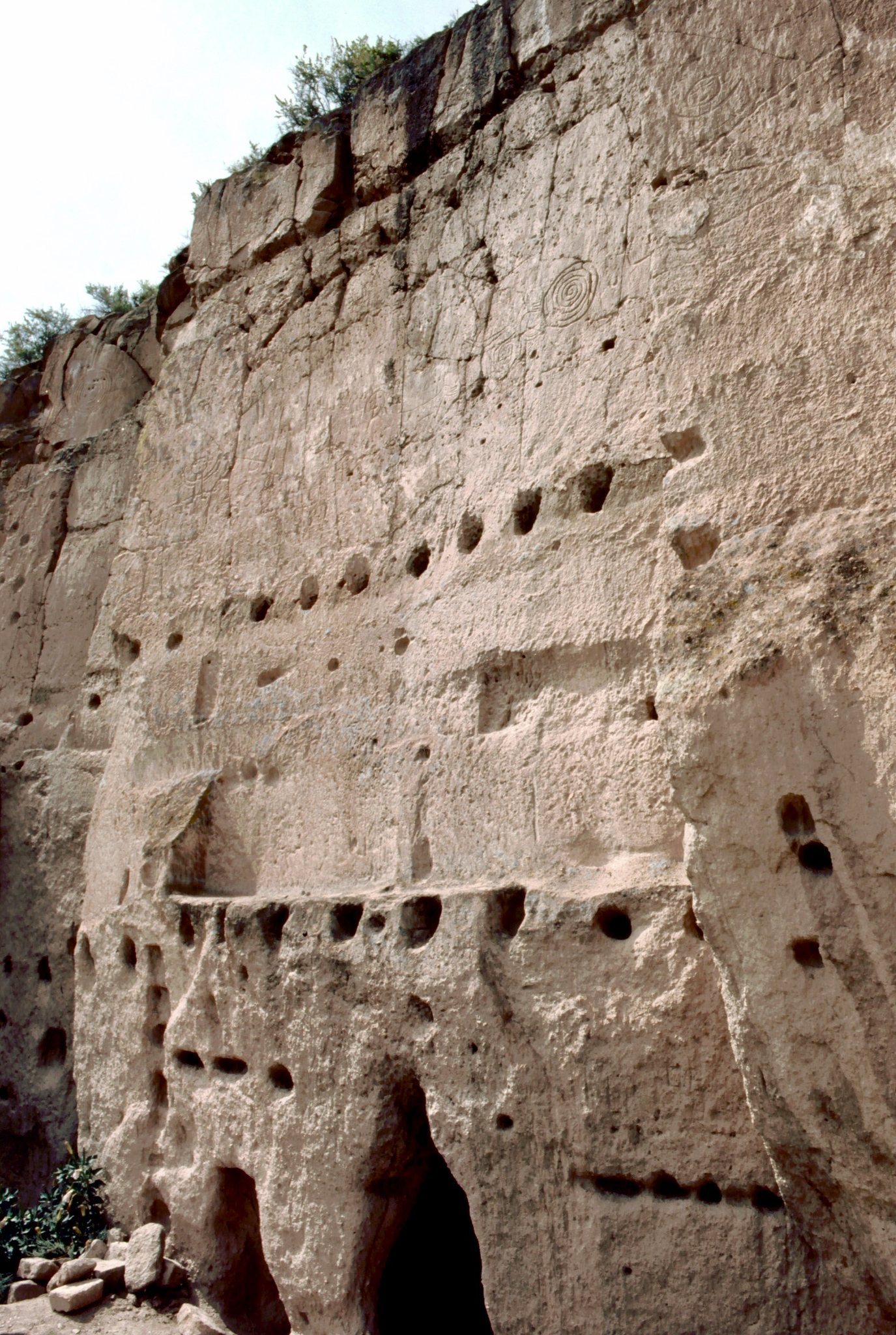
The complex occupies the northern end of the Puye Formation, a geological formation east of the Jemez Mountains made from volcanic deposits. Its cliff ridge rises approximately 200 feet (61 m) and consists of relatively soft Bandelier Tuff, a volcanic rock formed from ash and other material. The rock could be cut with wooden tools, allowing rooms, footholds, and passages to be shaped into the cliff. The site combines two levels of cliff dwellings with mesa-top, surface, and cave dwellings.
Cliff Dwellings
Carved Rooms
One level of cliff dwellings extends for more than 1 mile (1.6 km), while the other runs for approximately 2,100 feet (640 m). About 740 rooms were carved into the cliff. Ruins at its foot probably represent further dwellings, although the total number of rooms is unknown because the northern part of the complex and the upper levels have not been fully counted. Some cliff dwellings have been partially reconstructed.
Paths and Access
Approximately twelve stairways and ladders connect the cliff dwellings with the mesa top. These include paths with steps cut into the rock, as well as routes marked by worn footholds and finger-and-toe holes sometimes called Moki steps. Rows of holes cut into the mesa beside the cave dwellings supported roof beams and may also have provided attachment points for wooden ladders leading down toward the cliff dwellings.
Mesa Settlement
Cave and Surface Dwellings
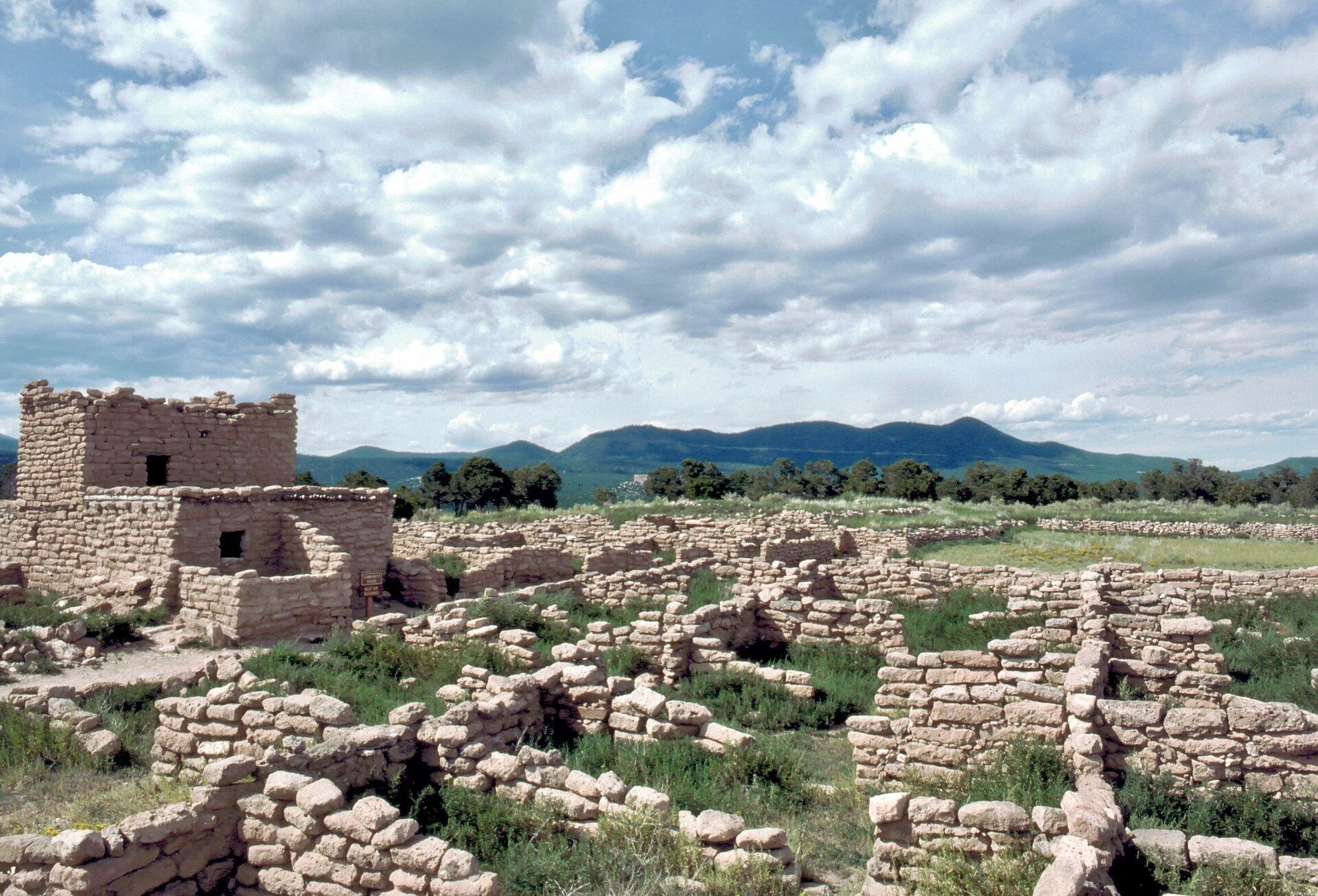
Cave dwellings dating to the Pueblo II period stood on the mesa, a flat-topped elevated landform with steep sides. A multistory pueblo village was built around them. The southern part of the complex contained 173 ground-floor rooms, and a large plaza occupied the center. Foundations at the base of the cliff indicate additional houses built from rock rubble. These structures may have expanded gradually into multistory buildings, while some caves may have been used for storage.
Community and Ceremonial Features
Many of the paths from the cliff lead toward the large community house on the mesa. The building has been partially reconstructed. The mesa also contains a kiva, a ceremonial or communal chamber found in many ancestral Pueblo settlements, together with petroglyphs and other ruins.