Tel Akko: An Archaeological Tell and Ancient Port City
Site at a Glance
- Rating
- 4.4
- Popularity
- Low
- Country
- Israel
- Primary era
- Iron Age
- External website
- Open
- Eras represented
- Bronze Age, Iron Age, Classical, Medieval
- Civilizations
- Achaemenid, Canaanite, Crusader, Phoenician
- Site type
- City
On this page19 sections
History
Tel Akko is an archaeological tell in Acre, Israel, occupied for thousands of years because of its position near a natural anchorage in Haifa Bay and international trade routes. The mound preserves evidence of settlement from the Early Bronze Age through the Hellenistic period, with later remains from Roman, Byzantine, Crusader, and Ottoman phases. Its history reflects the changing political, commercial, and cultural connections of a major eastern Mediterranean port.
Early and Middle Bronze Age Settlement
The first settlement was established during the Early Bronze Age, approximately 3300–2200 BCE. It began as an agricultural community and was abandoned around 3000 BCE. Settlement resumed during the Middle Bronze Age, approximately 2000–1550 BCE, when a fortified city developed on the mound. Its defenses included a massive stone wall, an earthen rampart, and a two-storey citadel built of mudbrick.
Canaanite and Phoenician Akko
During the Late Bronze Age, especially in the fourteenth and thirteenth centuries BCE, Akko became a major Canaanite coastal city. Its port maintained commercial contacts with Cyprus and cities in the Aegean, while the city also connected with Egypt, Syria, Lebanon, and other Mediterranean lands. Agriculture, metalworking, and the production of purple dye from sea snails supported the city’s economy.
Akko appears in the Egyptian Execration Texts, thirteen Amarna Letters, inscriptions from Ugarit, and Egyptian inscriptions of Seti I and Ramesses II. These references place the city within the diplomatic, political, and commercial networks of the Late Bronze Age.
At the beginning of the Iron Age, a new population identified with the Sherden, one of the Sea Peoples associated with Sardinia, settled in the city. Akko was among the cities that the Israelite tribe of Asher did not dispossess, and the city is mentioned once in the biblical Book of Judges.
Iron Age Decline and Assyrian Attacks
Akko declined and contracted during the eleventh century BCE, but it flourished again under Phoenician rule in the ninth century BCE. The Phoenicians were eastern Mediterranean coastal communities linked by maritime trade, port cities, craft production, and commerce across the sea.
Sennacherib, a king of the Neo-Assyrian Empire, destroyed Akko during his campaign against the rebellious ruler Luli of Sidon. The city remained an important port until the middle of the seventh century BCE, when it was again destroyed by fire and its inhabitants were exiled. Ashurbanipal later attacked Akko, killing some inhabitants, deporting others to Assyria, and incorporating them into the royal army.
Persian and Hellenistic Transformation
The final major flourishing of the tell took place during the Persian period, after the Achaemenid Persian conquest of the southern Levant. Settlement expanded westward, and the commercial center moved toward the coast. This shift began the transfer of the urban center toward the area of present-day Old Akko.
During the Hellenistic period, most residential districts also moved west of the tell, which was abandoned at the end of the second century BCE. The city was then called Ptolemais, probably in honor of Ptolemy II, who initiated the reconstruction of Akko’s harbor. The name may have referred particularly to the new settlement on the western slopes and west of the tell. It remained in use through the Hellenistic and Roman periods and appeared on coins minted in the city.
Later Names and Historical Events
Early Muslim-period documents from the ninth century refer to the city as Akka. During the Crusader period, the tell was called Toulon and was also known as Richard the Lionheart’s Mound. Richard I of England took part in the Third Crusade, and the latter name connected the mound with his presence during Saladin’s siege of Akko in 1191.
The popular name Napoleon’s Mound refers to Napoleon’s siege of Akko in 1799, when French forces used the tell as an observation post. Tel Akko was captured during the Israeli War of Independence in Operation Ben-Ami on the night of 14 May 1948. The capture was completed at 03:30, allowing Israeli forces to move north, capture Akko, and lift the siege of Kibbutz Yehiam.
Excavation and Interpretation
Excavations directed by Moshe Dothan of the University of Haifa took place from 1973 to 1989. Rescue excavations in 2005 revealed remains dating from the Persian period through the Middle Ages, along with part of a Roman-period cemetery. Further Roman cemetery remains were exposed in 2006.
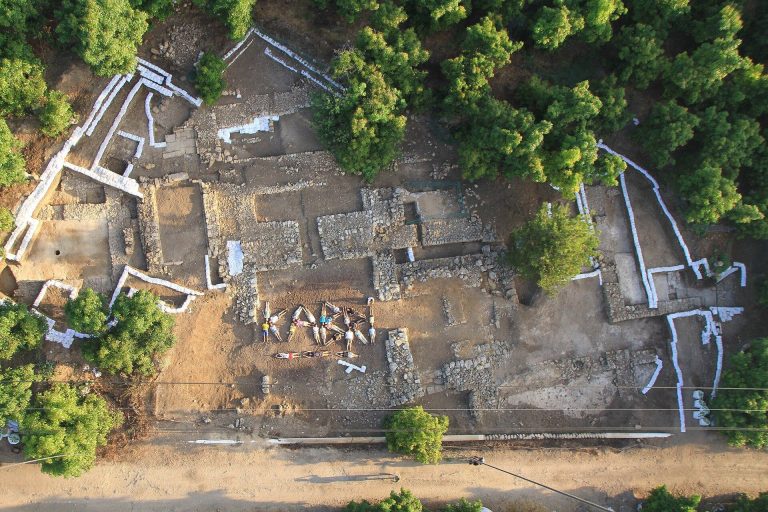
Since 2010, ten summer excavation seasons have been directed by Ann Killebrew of Pennsylvania State University and Michal Artzi of the University of Haifa, with participation from additional American institutions. Tami Schneider is also among the archaeologists associated with the investigation of the site. The archaeological and heritage presentation of Tel Akko brings together evidence from Canaanite, Phoenician, Persian, Hellenistic, Roman, Byzantine, Crusader, and Ottoman periods.
Remains
Tell and Settlement Layout
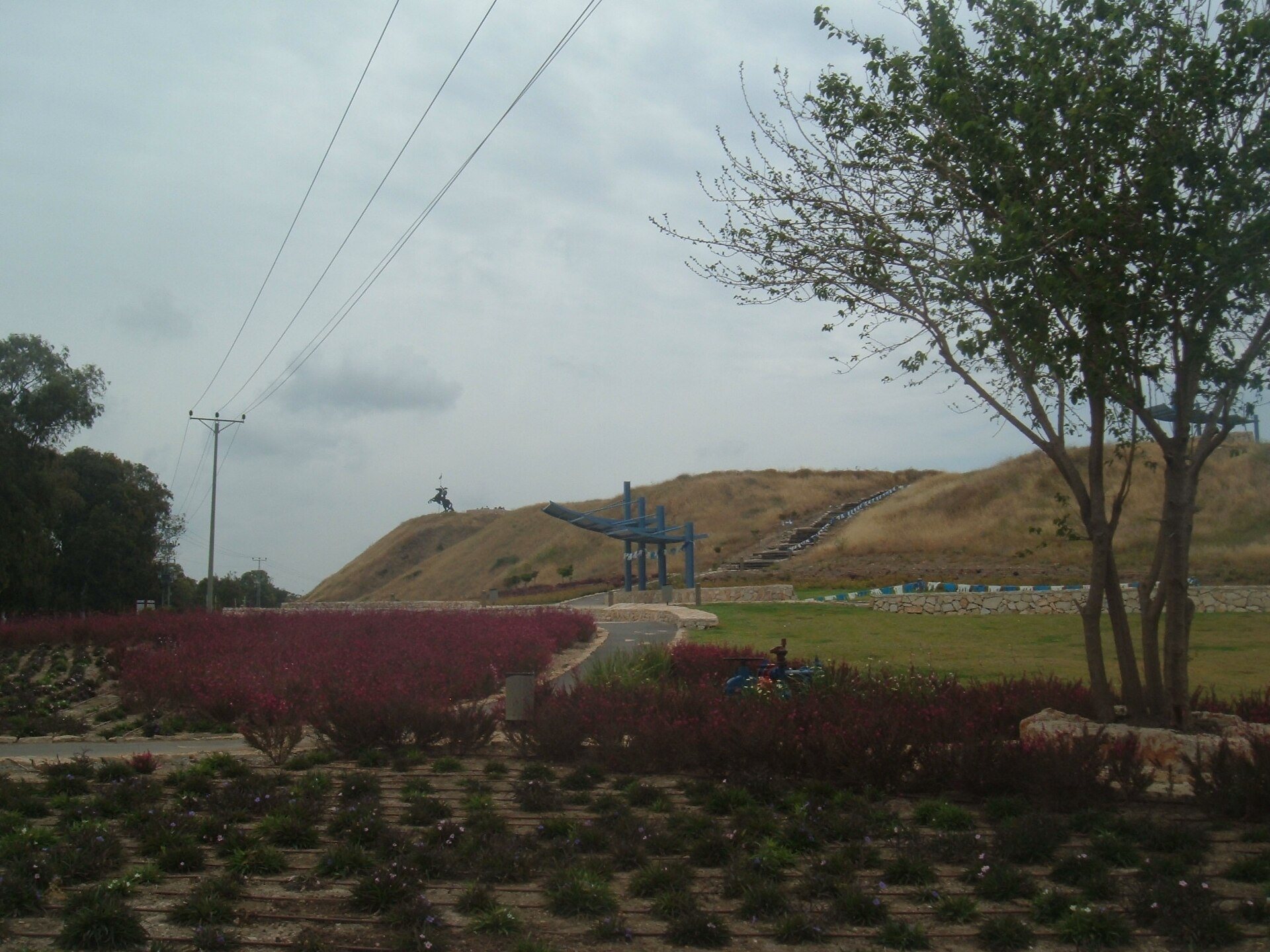
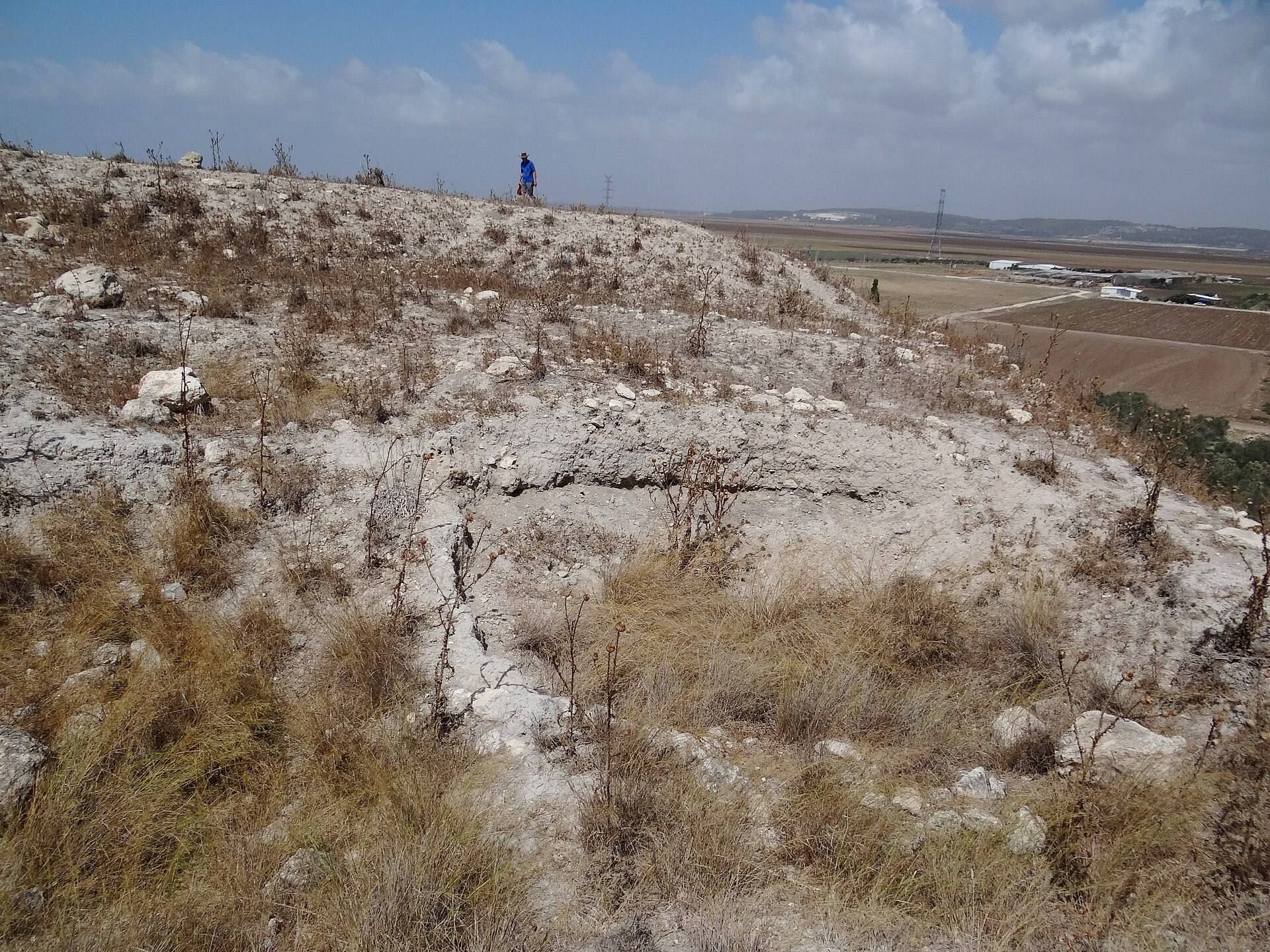
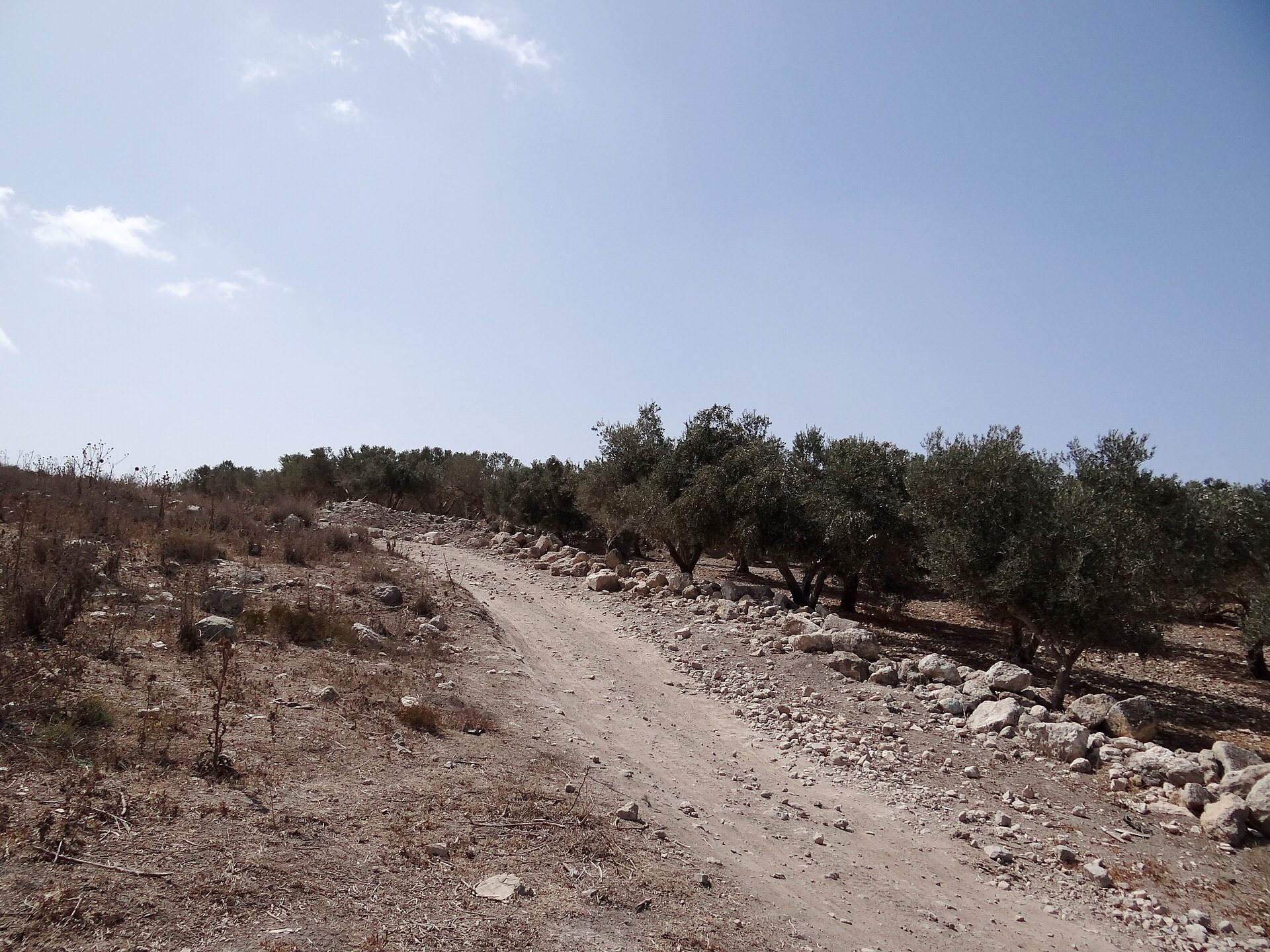
Tel Akko rises approximately 30 metres above sea level and covers about 200 dunams. The mound is approximately 600 metres long and 350 metres wide, about 700 metres east of the Mediterranean coast and approximately 750 metres north of the present course of the Naaman River. Its southern part was destroyed during the last several centuries, chiefly through the extraction of earth for construction. The name Tel al-Fukhar, meaning “Mound of Potsherds,” probably refers to the large quantity of pottery fragments found on the mound. Another explanation connects the name with pottery workshops that operated at its foot until the 1980s and may have used earth taken from the ancient defensive ramparts.
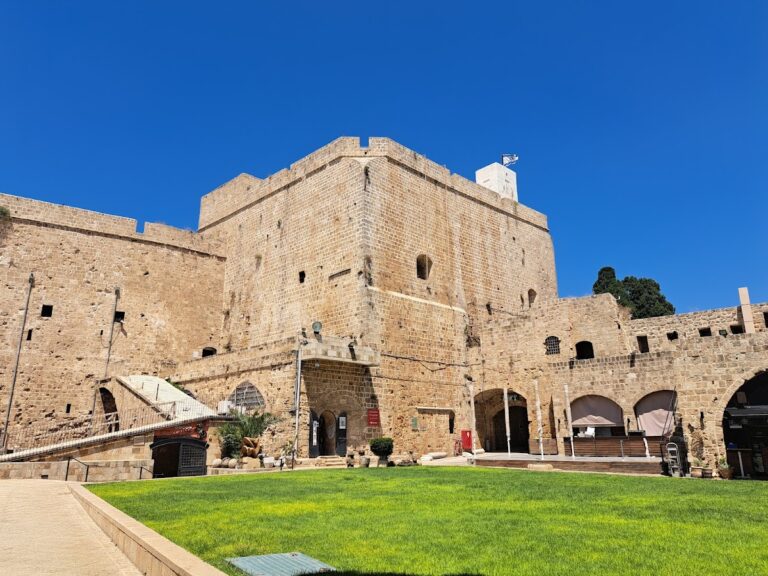
Archaeological remains on the tell extend from the Middle Bronze Age to the beginning of the Hellenistic period. More limited finds belong to the Roman and Byzantine periods, while a Crusader fortress later stood on the mound. The site’s physical evidence therefore combines settlement layers, defenses, industrial activity, residential areas, and later military use.
Middle Bronze Age Defenses
Fortification Wall and Citadel
The Middle Bronze Age city was protected by a Cyclopean wall, meaning a fortification made with very large, roughly fitted stones, together with a defensive earth rampart. A two-storey citadel of mudbrick formed part of the fortified settlement. These remains belong to the period when Akko developed from an earlier settlement into a fortified city.
Sea Gate
A west-facing city gate known as the Sea Gate was uncovered in the Middle Bronze Age defenses. Its orientation connected the fortified city with the western side of the mound and the maritime zone beyond it.
Harbors and Maritime Structures
Late Bronze Age Port
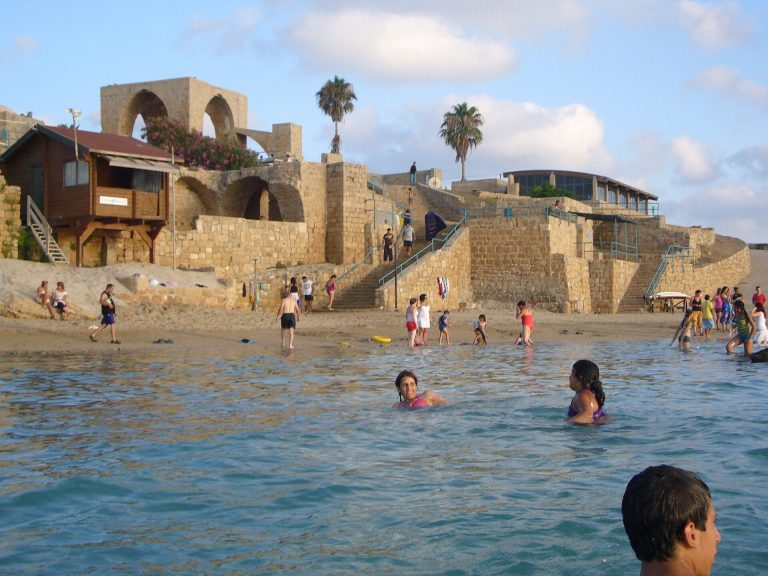
During the Late Bronze Age, Akko’s port lay at the mouth of the Naaman River, which was then closer to the tell than the river’s present mouth. The port supported contacts with Cyprus, Aegean cities, Egypt, Syria, Lebanon, and other Mediterranean lands.
Persian-Period Harbor
During the Persian period, the Phoenician harbor lay beneath the modern breakwater. It was built from ashlar blocks, carefully cut and finished stones used in formal masonry. Its projecting mole, a structure designed to shelter an anchorage from waves and currents, was probably the broadest of its period among Phoenician harbors.
Iron Age Buildings and Finds
Residential and Public Areas
Iron Age excavations have revealed residential buildings, storage facilities, public buildings, and ruined structures. Together, these remains reflect the organization of the settlement and the material activities carried out within it. Ceramic vessels, sculptures, building materials, inscriptions, silver, and other objects are associated with the period’s cultural and commercial life.
Silver Hoard
A small silver hoard weighing 257.6 grams was found in Area A, at the northern and highest point of the tell, above the high and steep northern rampart in Area B. It came from Stratum VII, Locus 762, an area interpreted as residential rooms with several industrial installations. The deposit contained tokens, threads, and cut ingots. Other Iron Age finds included silver coins, bracelets, earrings, necklaces, and additional silver jewelry. They show that silver served as a means of payment and formed an important part of trade and material culture. Interdisciplinary research into the metal’s sources has also provided evidence for early Phoenician searches for metals in the western Mediterranean.
Later Monument on the Summit
A large iron statue of Napoleon mounted on a charging horse stands on the summit of the tell and faces north. Israel Ben Ezra, a project coordinator for the Akko municipality, made the statue using Jacques-Louis David’s painting of Napoleon crossing the Alps as its model.