Site of Nanyue Kingdom Palace: Royal Complex of Ancient Panyu
Site at a Glance
- Rating
- 4.5
- Popularity
- Low
- Country
- China
- Primary era
- Classical
- Eras represented
- Classical, Medieval
- Civilizations
- Unclassified
- Site type
- Domestic
- Remains
- Palace
On this page8 sections
History
The Site of Nanyue Kingdom Palace in Guangzhou, China, formed part of the palace complex of Panyu, the capital of the Nanyue Kingdom in southern China. Panyu is the historical name of the city that corresponds broadly to present-day Guangzhou. The complex later served the Southern Han, a tenth-century regional dynasty based in southern China with its political centre at Guangzhou.
The palace within ancient Panyu
The palace complex contained royal buildings, underground stone structures, and an imperial garden. It represented one part of Panyu, an important commercial city in the Lingnan region, the area of southern China associated broadly with lands south of the Nanling Mountains. The archaeological remains therefore relate to both the political centre of the Nanyue Kingdom and the later Southern Han regime.
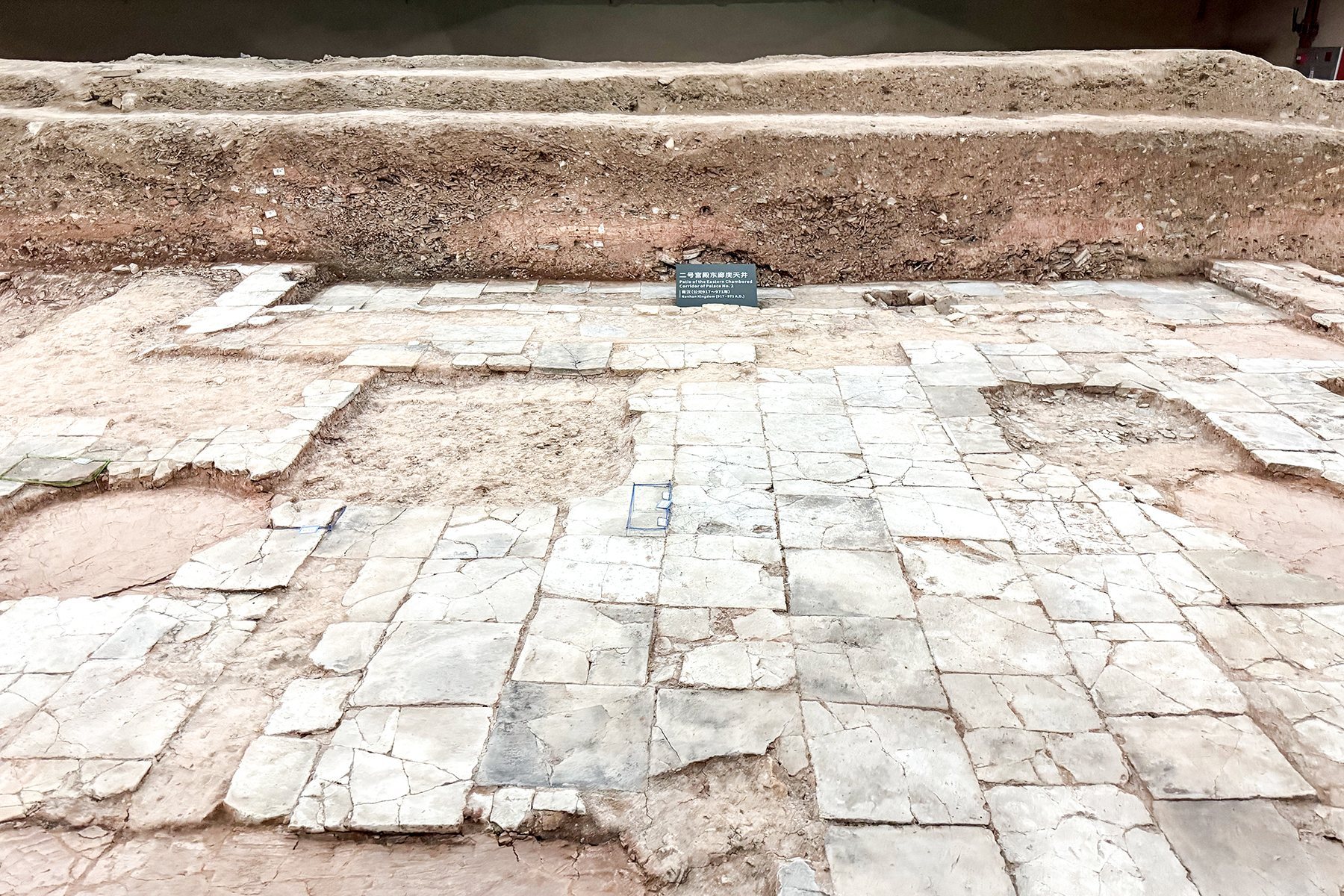
Successive periods left overlapping foundations and other architectural remains at the site. The archaeological layers extend from the Nanyue Kingdom through the Republic of China period, creating a complex record in which later construction sometimes cut across earlier remains.
Discovery and archaeological importance
The imperial garden was discovered in 1995. The palace remains were selected among China’s ten major national archaeological discoveries in both 1995 and 1997. Excavation has so far exposed only part of Palace 1 and one corner of Palace 2, while the central area of the palace complex remains underground.
The excavated evidence indicates that the palace was only one component of Panyu. Commercial and residential districts, city walls, and other parts of the ancient city are expected to have existed, but they have not been identified within this site.
Remains
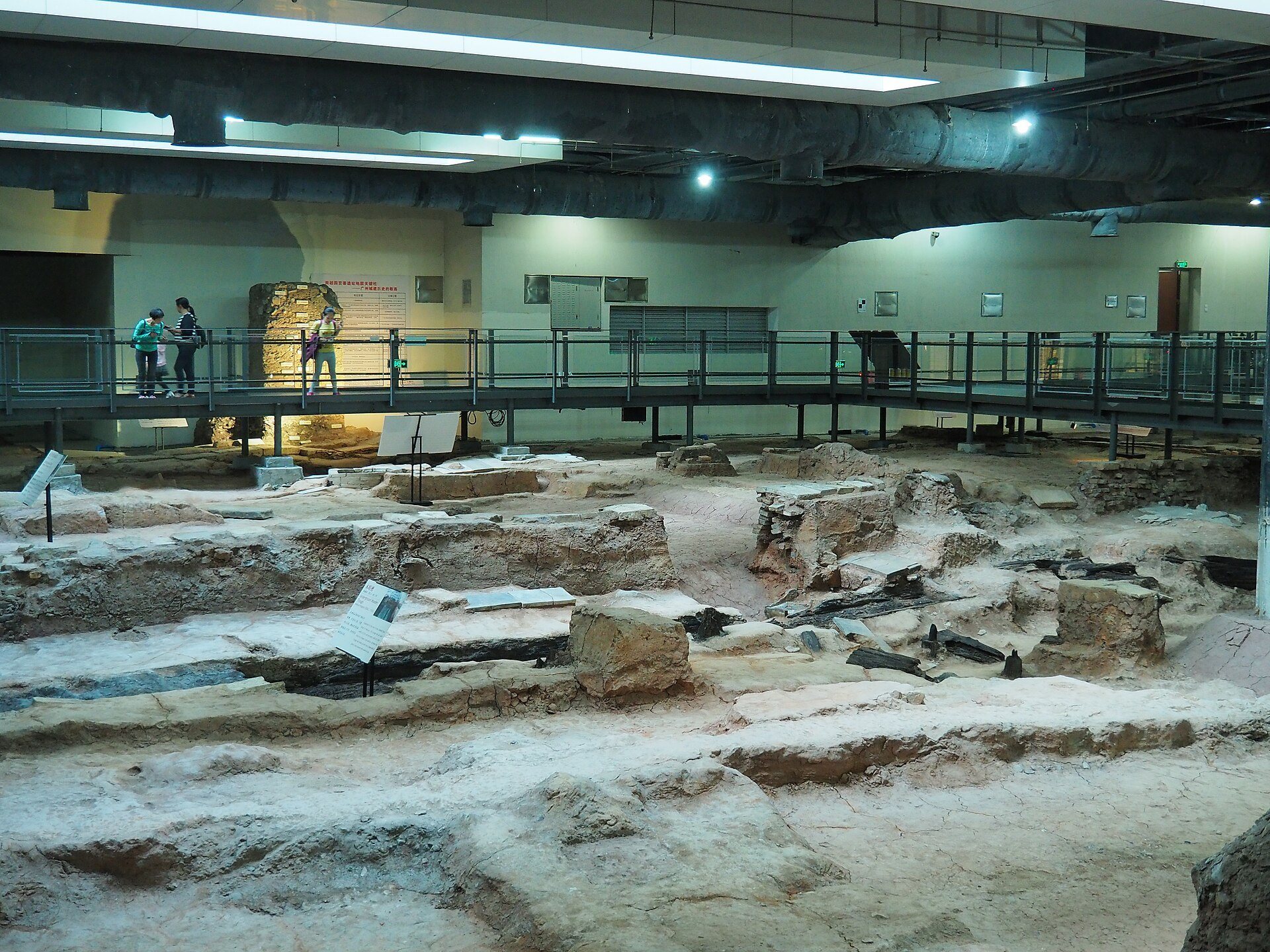
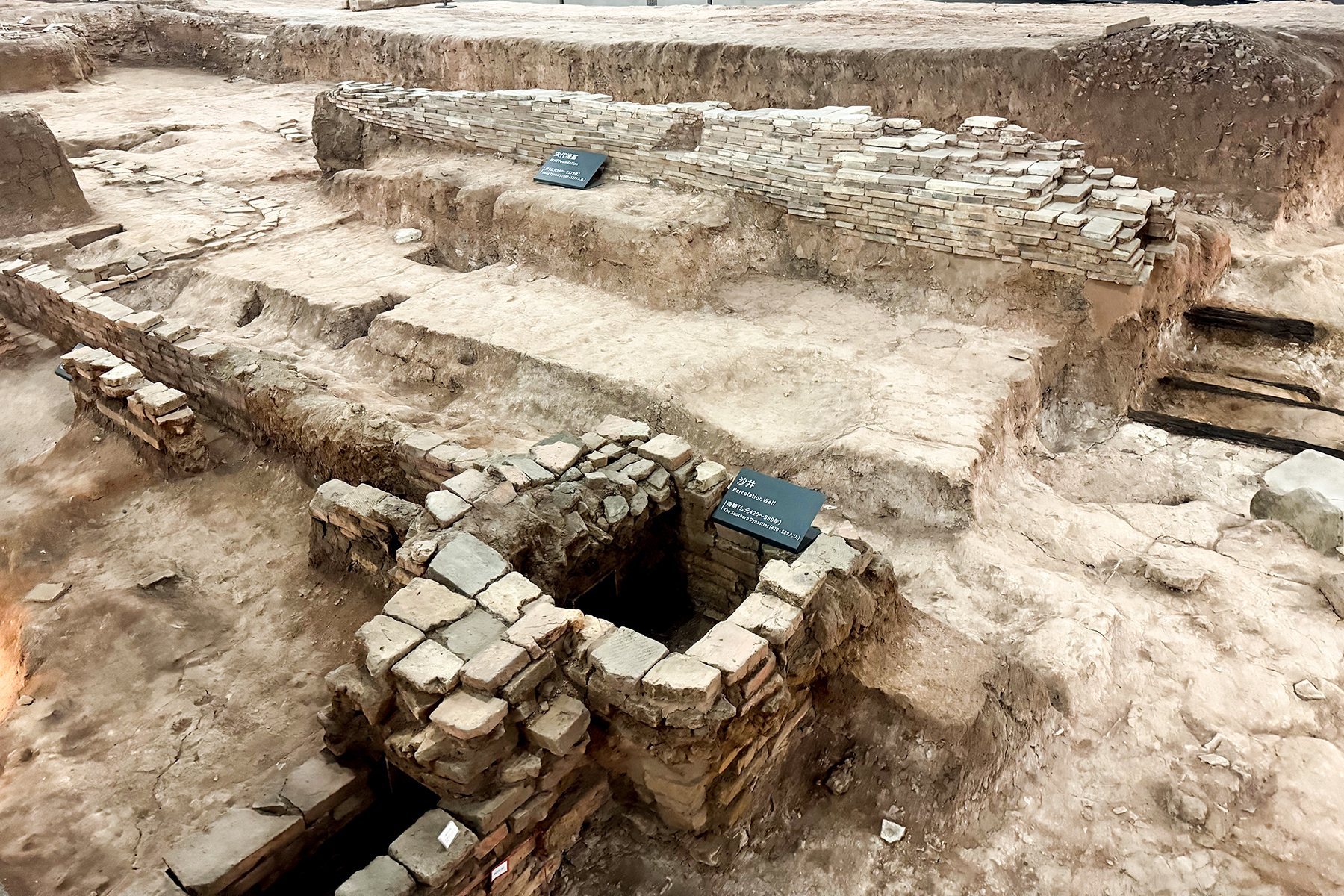
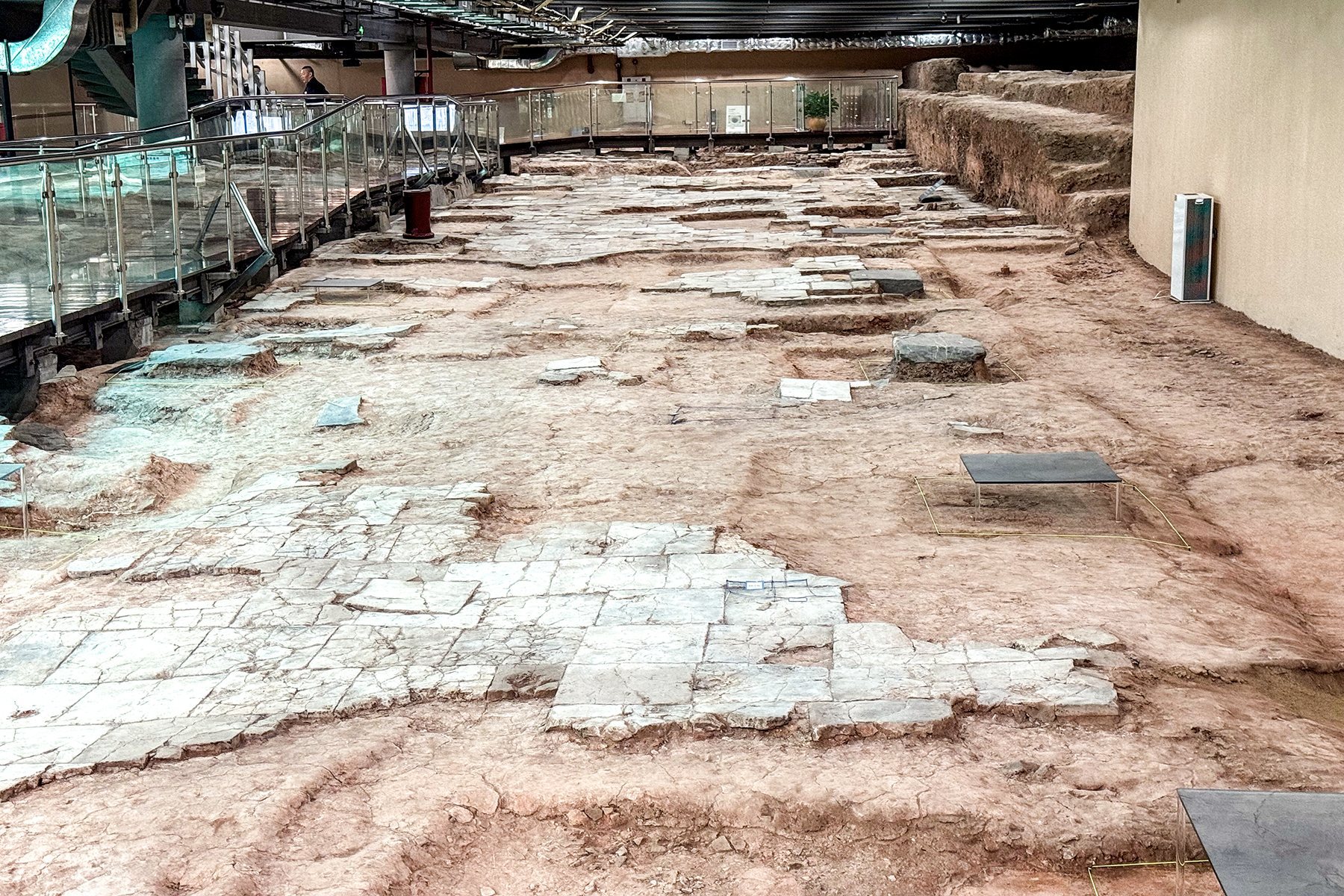
The excavated area covers more than 350 square metres in the southeast corner of what is now Guangzhou Children’s Park. Beneath and around it, the core of the palace complex extends underground across more than 200,000 square metres. The surviving remains combine royal buildings, garden features, wells, drainage installations, stone construction, and foundations from several periods.
Palaces and stone construction
Royal palace remains
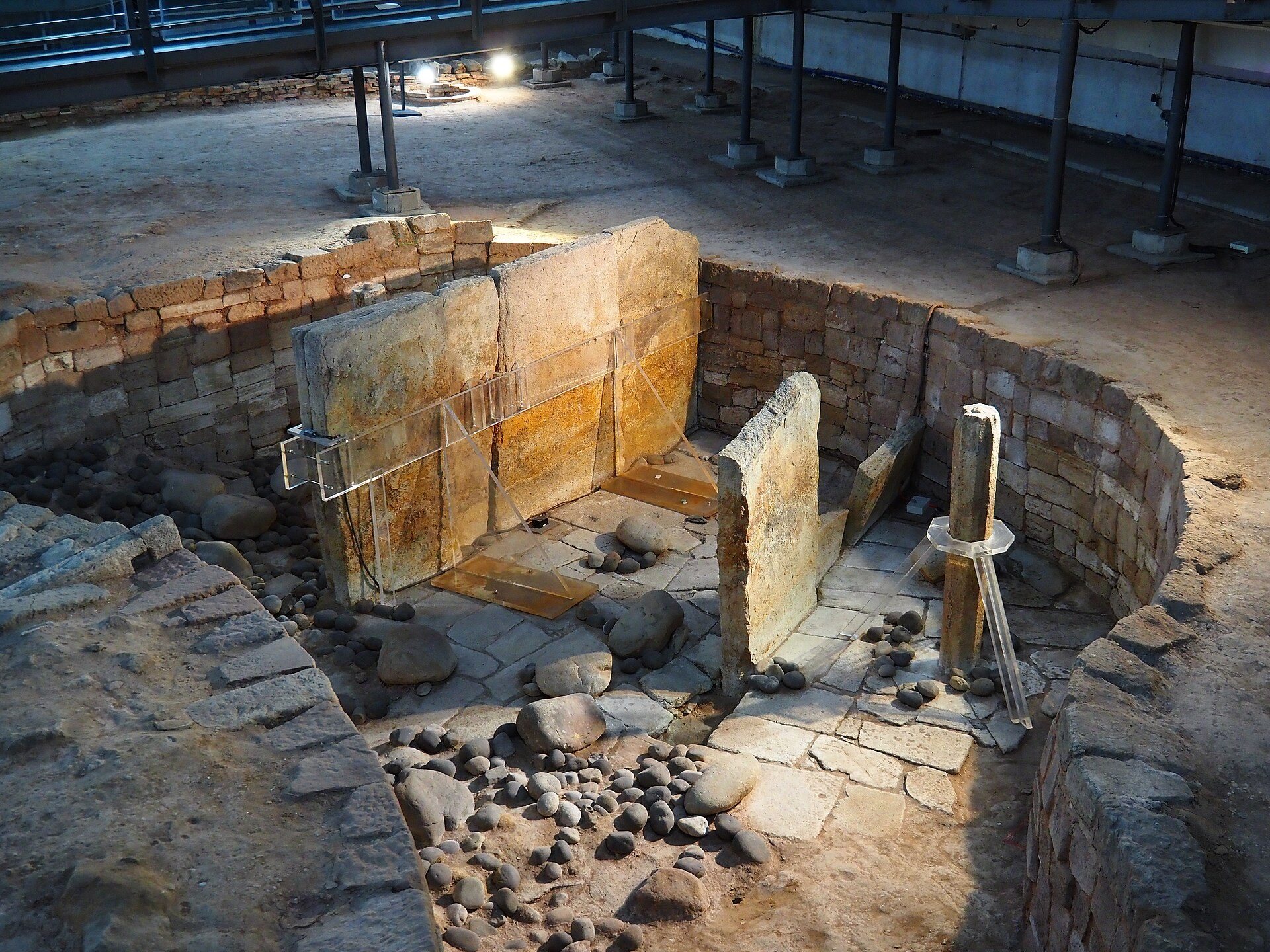
The exposed palace area includes part of Palace 1 and a corner of Palace 2. Foundations from different periods overlap within the archaeological layers, showing how the complex changed over time. Stone columns, beams, walls, and doors occur alongside bricks. The concentration of stone building materials has given the remains the appearance of a “stone city.”
Some structural features have been compared archaeologically with construction found in ancient Roman architecture. This comparison concerns the form of the architecture and does not establish a Roman connection to the palace.
Garden and water installations
The imperial garden includes a rockery garden, while numerous wells and a drainage system form part of the surviving infrastructure. Garden features and water installations are physically intermingled with architectural foundations from successive periods, preserving the relationship between the palace complex and its landscaped spaces.
Underground archaeological layers
Much of the palace complex remains below ground, and the excavated remains represent only a limited portion of its buildings. The surviving foundations, wells, drains, and garden elements occupy a thick archaeological layer extending from the Nanyue Kingdom to the Republic of China period. Their intermingling preserves evidence of repeated construction and alteration across the site’s long history.