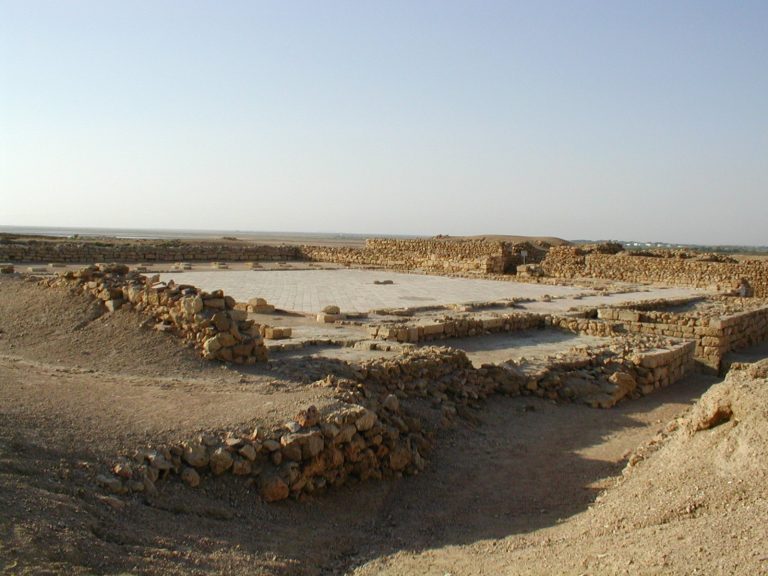
Makli Necropolis: A Historic Funerary Complex in Pakistan
Site at a Glance
- Rating
- 4.5
- Popularity
- Low
- Country
- Pakistan
- Primary era
- Early Modern
- Eras represented
- Medieval, Early Modern
- Civilizations
- Mughal
- Site type
- Burial
- Remains
- Necropolis
On this page19 sections
History
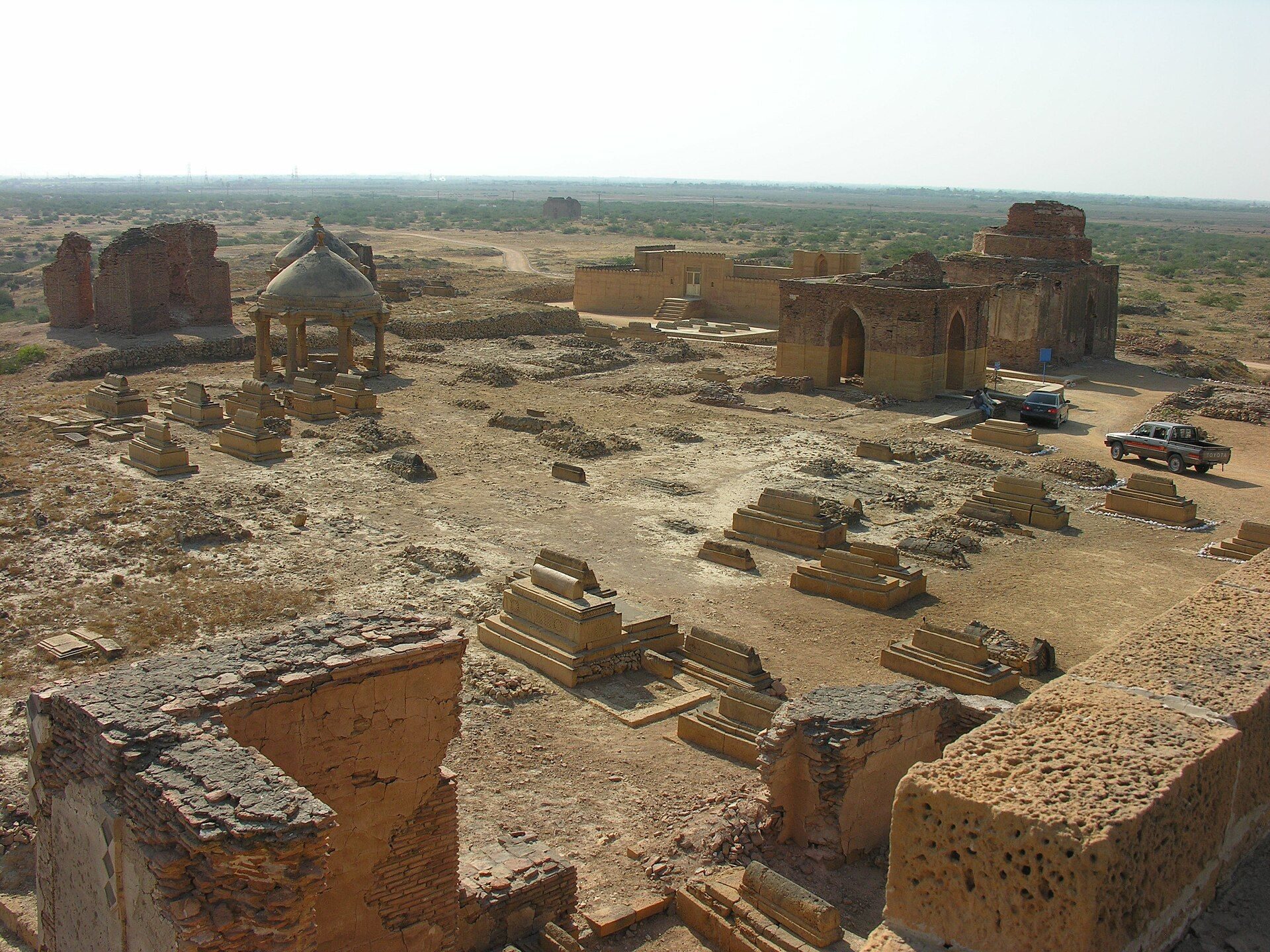
Makli Necropolis is a vast funerary complex near Thatta in Sindh, Pakistan, developed under successive ruling dynasties between the fourteenth and eighteenth centuries. Extending across approximately 10 square kilometres, it contains roughly 500,000 to 1 million graves and funerary monuments associated with rulers, governors, warriors, Sufi saints, martyrs, scholars, poets, writers, and ordinary people. Its architecture reflects the Lower Sindh tradition later known as Chaukhandi, which combines regional Islamic, Hindu, Persian, Gujarati, and Mughal influences.
Before and during the Samma period
Before the rise of the Samma dynasty, the area passed through several phases of rule. These included a Brahmin dynasty, Arab rulers following the conquest associated with Muhammad ibn Qasim, the Abbasids, the Habbarids, and Mahmud of Ghazni. Around 1351, the Samma leader Jam Unar ibn Babina gained power and established his headquarters at Samui, a settlement near Thatta on Makli Hill. This decision greatly increased the political importance of the area.
The site’s later development as a major burial ground was closely connected with Hamad Jamali, a Sufi saint, poet, and scholar. He established a khanqah, a Sufi religious centre for communal gatherings, spiritual instruction, and the training of disciples, at the lower settlement of Samui. Hamad Jamali was later buried beside it.
Tradition relates that Jam Tamachi, a Samma ruler, visited Hamad Jamali with a monetary offering and asked for his prayers. At the saint’s suggestion, the ruler used the money to build the mosque now known as Makli Mosque. Hamad Jamali is also said to have instructed that future burials should take place around the mosque. Samma rulers and other members of the community subsequently began using Makli as their principal burial ground instead of the earlier Samma cemetery at Pir Ar, also called Pir Patho.
Makli’s dynastic importance grew as the Samma rulers established their capital near Thatta. Jam Tamachi’s veneration of Hamad Jamali and his wish to be buried near the saint further strengthened the association between the ruling family and the hill. The name Makli has several traditional explanations. One legend connects it with a Hajj pilgrim who entered a state of spiritual ecstasy and declared the site to be his Makkah, after which Hamad Jamali supposedly called it Makli, or “Little Makkah.” This explanation remains unconfirmed. The historian Ali Ahmad Brohi instead proposed a connection with an ancient Mahakali temple.
Arghun, Tarkhan, and Mughal rule
The principal dynastic phases represented at Makli are the Samma period, approximately 1350 to 1520; the Arghun period, approximately 1520 to 1555; the Tarkhan period, approximately 1555 to 1592; and Mughal provincial rule, approximately 1592 to 1793. The most architecturally elaborate tombs are concentrated broadly in the Mughal-period span from about 1570 to 1640. The changing dynasties are reflected in distinct groups of monuments and in the development of funerary forms.
Jam Nizamuddin II, also known as Jam Nanda, was a major Samma ruler associated with the northern royal mausoleum group. His tomb was completed in 1510. Darya Khan, his adoptive son, was born enslaved but became a general after defeating an Arghun army. He received the title “Hero of Sindh” and later served as Madrul Muham, or prime minister. His tomb was built after his death in 1521.
Isa Khan Tarkhan I, who ruled from 1554 to 1565, is associated with an important change in Makli’s funerary architecture. His tomb includes a separate area for five royal women. The tradition continued under the Tarkhans and the Mughals, whose southern monuments include those associated with Mirza Jani Beg, Mirza Ghazi Beg, Nawab Shurfa Khan, Mirza Muhammad Baqi Tarkhan, Mirza Jan Baba, and the younger Nawab Isa Khan Tarkhan.
Makli also remained a setting for religious institutions and local conflict. Its hill contains khanqahs connected with Hamad Jamali, Isa Langoti, and other Sufi figures. During the Kalhora period, a battle between the Kalmati and Jokhio groups took place at Makli in 1770. A second battle between the same groups occurred there in 1789 during the Talpur period.
Conservation and heritage status
Makli was inscribed in 1981 as a UNESCO World Heritage Site under the name “Historical Monuments at Makli, Thatta,” recognizing it as an outstanding expression of Sindhi civilization between the fourteenth and eighteenth centuries. Its physical integrity has been threatened by siltation, encroachment, poor management, vandalism, and solid waste. The 2010 Pakistan floods caused additional damage, as did the temporary use of parts of the cemetery as a camp for local residents.
UNESCO monitoring in 2005 raised concerns about the site’s condition and warned that it might be removed from the World Heritage List. Conservation measures and official advocacy helped retain its status. Review processes in 2016, 2017, and 2019 prevented removal and restored Makli from the List of World Heritage in Danger. A conservation project for the tombs of Sultan Ibrahim and Amir Sultan Muhammad, announced in 2014, was completed by 2017. In 2019, a UNESCO mission expressed satisfaction with digital crack monitoring and weather-monitoring equipment installed at the site.
Administrative responsibility passed from the federal government to Sindh in 2010. Sindh authorities prohibited new burials and vehicle entry within the cemetery in 2018, and boundary signs reaffirmed the burial prohibition in 2021. A major international conference on Makli’s history was organized by Sindh’s Department of Culture, Tourism and Antiquities in January 2018.
Remains
Layout and funerary architecture
Makli occupies a raised plateau and hill area approximately 6 kilometres from Thatta, near the apex of the Indus River Delta. The necropolis extends northward from Pir Patho at the southern end of the Makli Hills in an approximately diamond-shaped layout. Its eastern boundary follows the ridge of the hills. The largest monuments generally stand in the south, while the principal Samma tombs are concentrated in the north. A national road between Thatta and Karachi divides the site into northern and southern sections.
The southern section includes the tombs of Muhammad Hashim Thattevi, Abu al-Qasim Naqshbandi, and Adam Naqshbandi. The northern section contains the shrines of Abdullah Shah Ashabi, Shah Murad Shirazi, Sheikh Jiyo Chiragh Makli, and Shukrullah Sayyid Qazi. Across the necropolis, funerary architecture takes several forms, including enclosed mausolea, open-sided domed chhatris, or canopies, family enclosures, and individually carved open-air graves.
Mausolea and enclosure tombs
Most mausolea are square chambers containing graves beneath domes. They are built from brick or stone masonry, sometimes with glazed-tile decoration. Enclosure tombs are generally quadrangular walled spaces containing the graves of members of one family. The principal materials throughout the necropolis are sandstone, brick, and glazed tiles, with red brick and blue and white tiles frequently used for surface decoration.
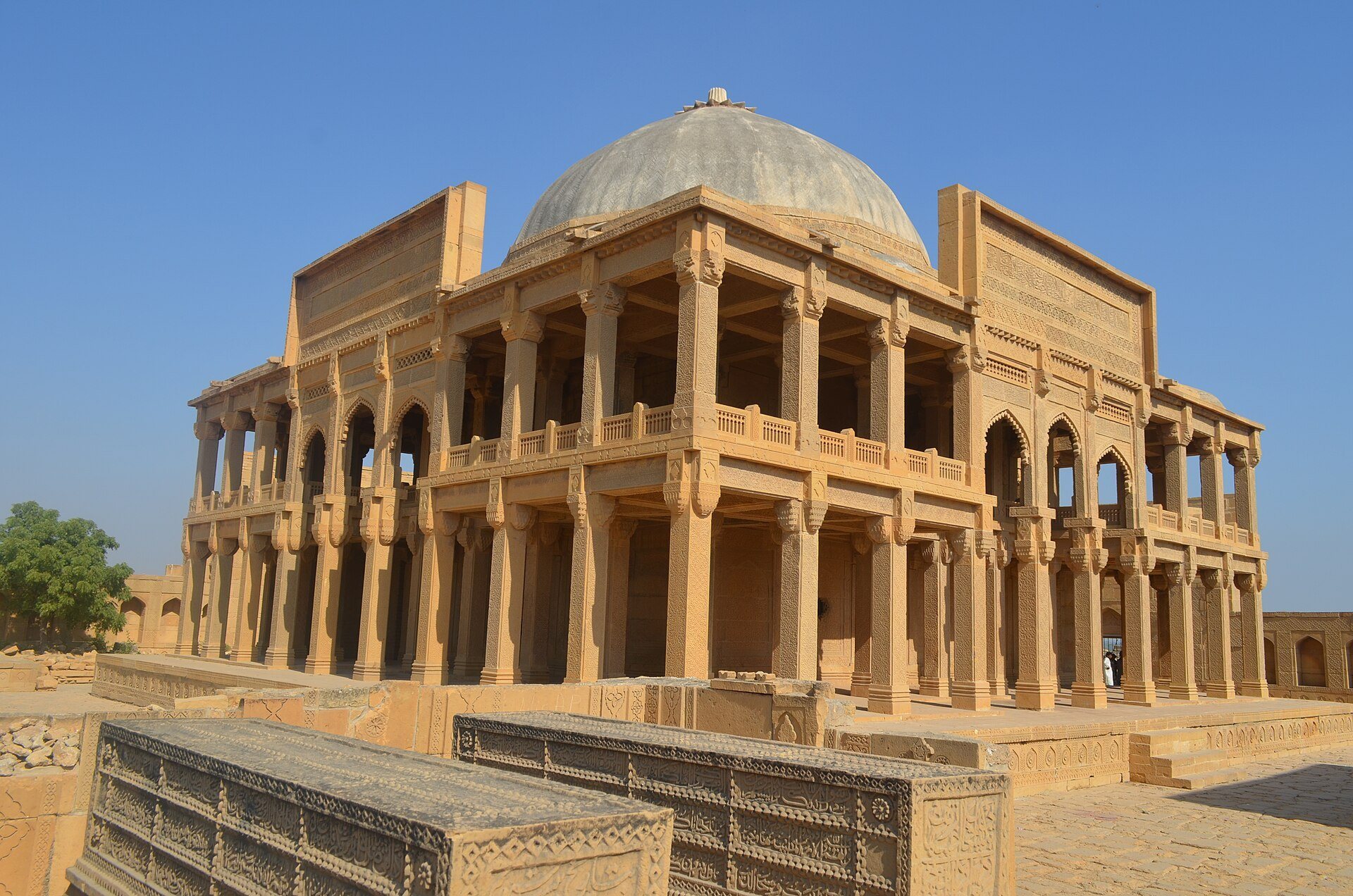
Early graves commonly use three to six sandstone slabs stacked into small pyramidal forms. Later examples stand on small plinths and add carved rosettes, circular patterns, more complex ornament, and Arabic calligraphy containing biographical information about the deceased. Some later graves are made almost entirely of brick, with only one sandstone slab. Open graves are distributed throughout the necropolis and are distinguished by elaborate stone carving, a tradition also found elsewhere in Sindh and Balochistan, including the Chaukhandi cemetery near Karachi.
Canopies and carved graves
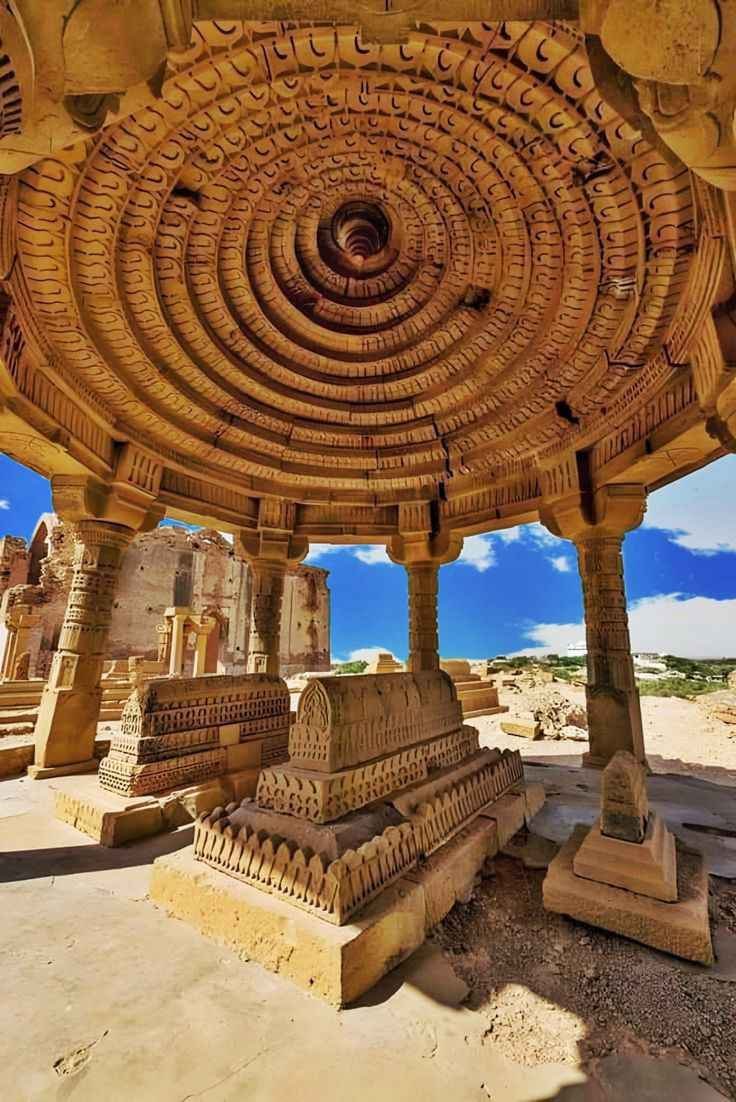
The most characteristic Chaukhandi structures are yellow sandstone domed canopies. They were formerly plastered white and fitted with wooden doors. Their domes may indicate the prominence of the person buried beneath them, while the undersides carry carved floral designs, sometimes including lotus flowers. Other monuments display extensive blue tilework associated with Sindh. Funerary pavilions and canopy tombs influenced later funerary architecture beyond Lower Sindh, including in neighbouring Gujarat.
Many graves carry Persian and Arabic poetry, prose, and Quranic verses. At least 17,000 stone graves are described as having broadly similar construction. Persian inscriptions are particularly abundant across the necropolis. Men’s graves are commonly decorated with carvings of weapons, daggers, and swords, while women’s graves are described with jewellery motifs and designs resembling woodblock prints. One monument contains a large enclosure whose graves were coated with cement but formerly carried selected verses from the Divan of Hafiz. Another tomb bears a verse by an unidentified poet.
Northern Samma monuments
The northern Samma cluster covers approximately 5 acres. Its monuments show strong Gujarati influence and combine Muslim and Hindu decorative elements. The tombs of Jam Nizamuddin II, Mubarak Khan, Malik Rajpal, and other prominent figures form the principal group. The structures combine carved sandstone, geometric ornament, floral decoration, inscriptions, and forms that developed during the Samma period.
Tomb of Jam Nizamuddin II
Jam Nizamuddin II’s tomb is a sandstone square measuring 11.4 metres on each side. Completed in 1510, it is decorated with floral and geometric medallions. Its cuboid form may have been inspired by the Kaaba in Makkah. The dome was never completed, leaving the interior exposed to the elements.
A large, finely carved Gujarati-style jharoka, or South Asian balcony, projects from the monument and is topped by a small peak, giving the tomb a temple-like appearance. Fourteen decorative bands on the exterior contain Quranic verses and Hindu symbols. Most of the ornament is geometric, apart from a frieze showing local ducks. Some of the stone resembles material from an ancient temple.
Tomb of Darya Khan
The tomb of Darya Khan was built after his death in 1521. Its form resembles a Rajasthani fort, providing a distinctive monument within the northern royal group.
Tarkhan and Arghun monuments
The Tarkhan and Arghun group includes the monuments of Muhammad Isa Khan Tarkhan I, Baqi Beg Tarkhan, Ahnsa Bai, Sultan Ibrahim, and Mir Sulaiman. Sixteenth-century pyramidal tombs associated with the Tarkhan period use floral-topped minarets. The group also includes structures that mark the transition toward more elaborate Mughal-period forms.
Tomb of Isa Khan Tarkhan I
The tomb of Isa Khan Tarkhan I is rectangular and represents a new cenotaph-style form. A cenotaph is a commemorative tomb structure that does not necessarily contain the deceased’s body. The interior walls are completely covered with Quranic verses, and a designated area accommodates the graves of five royal women.
Mausoleum of Isa Khan Tarkhan II
The mausoleum associated with Isa Khan Tarkhan II, also identified as Isa Khan Hussain II Tarkhan, is a substantial stone monument combining Gujarati, Islamic, and Mughal forms. Construction reportedly began in 1627 and ended 18 years later. The building has two storeys, cupolas, balconies, carved stones eight feet long, and a fortress-like entrance.
A legend connected with the mausoleum claims that Isa Khan ordered the craftsmen’s hands cut off after they completed the building, preventing them from constructing a rival monument. The story is preserved as a tradition associated with the tomb.
Tomb of Jan Beg Tarkhan
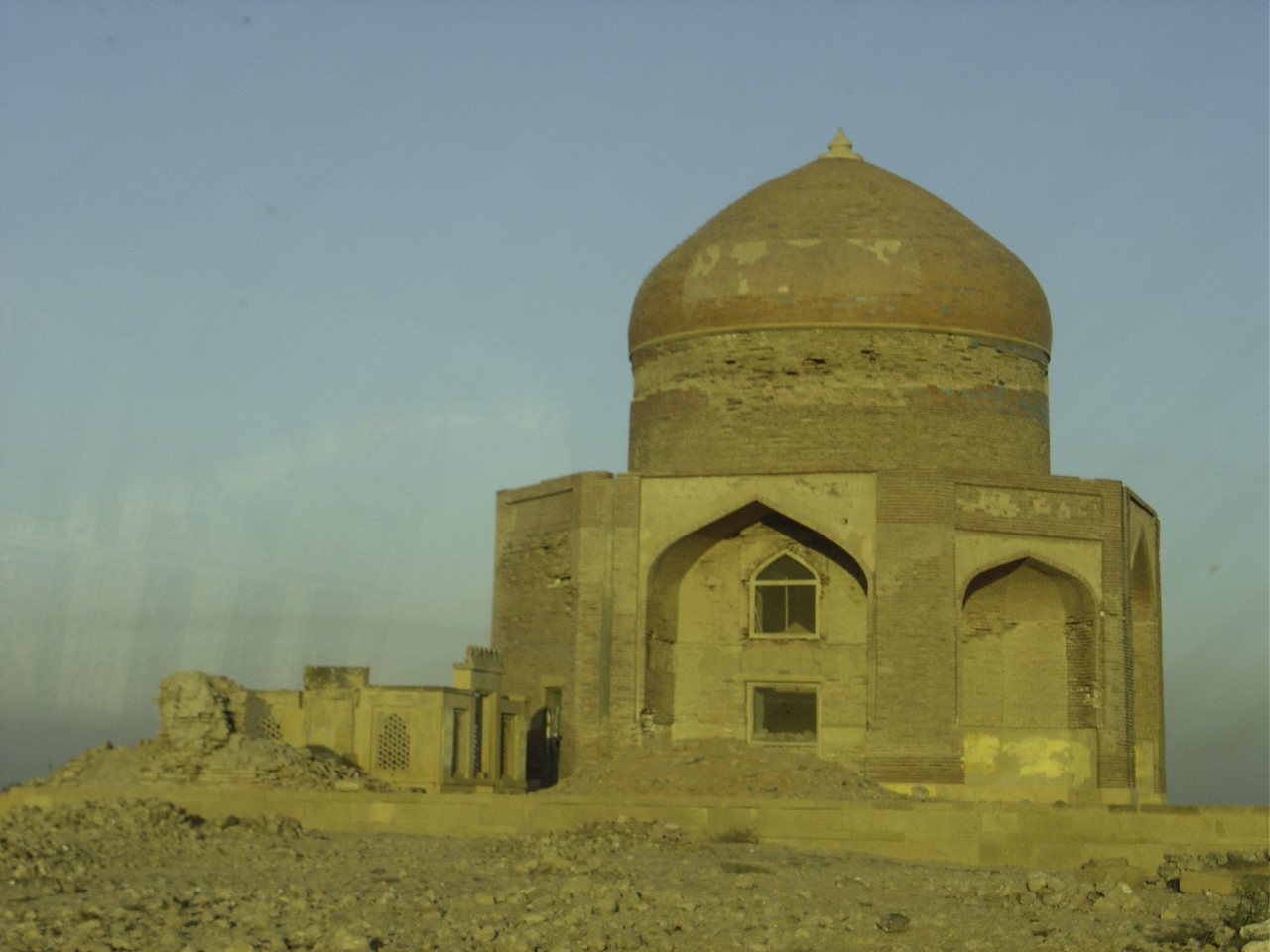
Jan Beg Tarkhan died in 1600. His tomb is an octagonal brick structure with a dome covered in blue and turquoise glazed tiles.
Mughal-period groups and religious structures
The southern Mughal group contains the mausolea of Mirza Jani Beg and Mirza Ghazi Beg, the tomb of Nawab Shurfa Khan, the enclosure of Mirza Muhammad Baqi Tarkhan, the enclosure or tomb of Mirza Jan Baba, and the restored tomb of the younger Nawab Isa Khan Tarkhan. Other Mughal-associated monuments are connected with Jani Beg Tarkhan, Ghazi Beg Tarkhan, Baqi Beg Uzbek, Tughril Beg, Muhammad Isa Khan Tarkhan II, Jan Baba, Diwan Shurfa Khan, and the family of Nawab Amir Khan al-Baqa.
Later large monuments incorporate corridors and designs associated with cosmological ideas. Seventeenth-century structures in the Leilo Sheikh area include large buildings that resemble Jain temples when viewed from a distance and show strong Gujarati influence. Some large tombs carry carvings of animals, warriors, and weapons, an unusual feature within Muslim funerary architecture. One monument is said to use approximately 180,000 individually designed tiles, each with a different pattern.
Makli Mosque
Makli Mosque is described as the only mosque on the hill. It is a brick-built congregational mosque with an arched structure. The remains of its surrounding wall stand opposite the tomb of Jam Nizamuddin II. The mosque’s historical importance is tied to the tradition that Jam Tamachi built it at Hamad Jamali’s suggestion, after which burials around the religious centre helped establish Makli as the principal Samma cemetery.
Khanqahs and Sufi shrines
The hill contains khanqahs associated with Hamad Jamali, Isa Langoti, and other Sufi figures. These centres provided places where religious teachers instructed disciples and followers. Shrines and tombs associated with Hamad Jamali, Abdullah Shah Ashabi, Shah Murad Shirazi, Sheikh Jiyo Chiragh Makli, Shukrullah Sayyid Qazi, and other Sufi figures form part of the wider funerary landscape.
Makli Eidgah
The Makli Eidgah is a large open prayer ground traditionally used for Eid al-Fitr and Eid al-Adha prayers. An inscription is set into its wall on the side facing the qibla, the direction of prayer. The structure was prepared in 1633 during the Mughal period and substantially repaired during the Talpur period in 1864. It continues to be used for Eid prayers.