Al Naslaa: A Split Sandstone Formation in Saudi Arabia
Site at a Glance
- Rating
- 4.6
- Popularity
- Low
- Country
- Saudi Arabia
- Primary era
- Stone Age
- Eras represented
- Stone Age
- Civilizations
- Unclassified
- Site type
- Civic
- Remains
- Rock Art
On this page4 sections
History
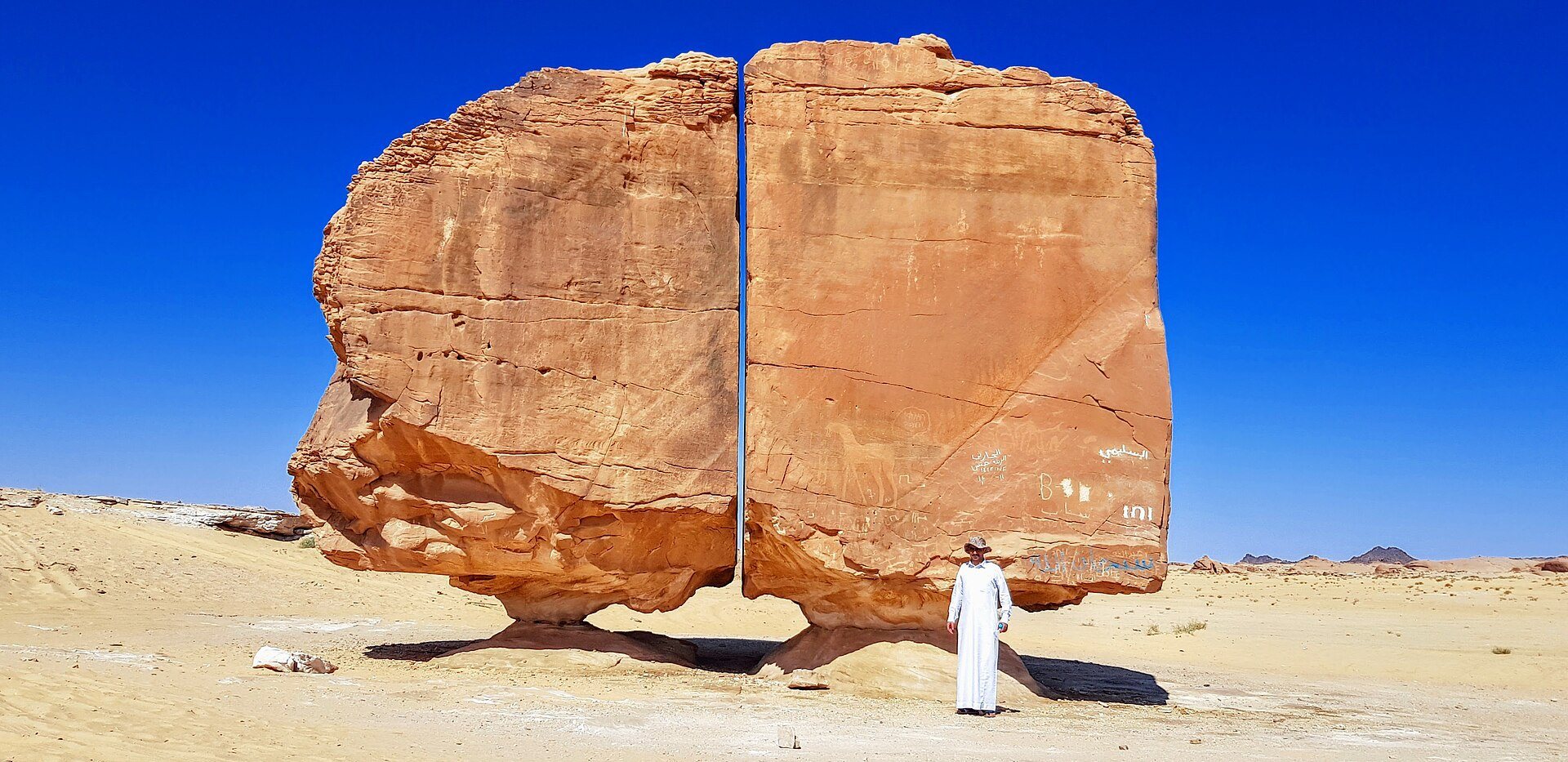
Al Naslaa is a geological landform in Saudi Arabia, approximately 50 kilometres south of the Tayma oasis, an oasis settlement and historic region in the north-west of the country. The formation consists of sandstone, a sedimentary rock made from compacted and cemented sand grains, and is known for the unusually straight division between its two sections.
The precise cause of the split remains undetermined. Explanations under examination include mechanical and chemical weathering, the effects of wind, rain, temperature changes, and broader geological forces. One hypothesis places the formation along a fault or another geological weakness, where ground movement may have begun the fracture. Sand carried by wind could then have widened and smoothed the opening over thousands of years. Another explanation emphasizes wind erosion and chemical weathering, possibly encouraged by moisture retained beneath the protected underside of the rock.
Popular claims that the division was made deliberately by people or created through extraterrestrial activity are unsupported. The south-eastern face bears prehistoric petroglyphs, indicating that the formation was also a surface for human marking in the distant past. Interpretations of the carvings include religious or spiritual symbolism, while another possibility is that some motifs related to navigation or the observation of celestial events.
Remains
Sandstone formation
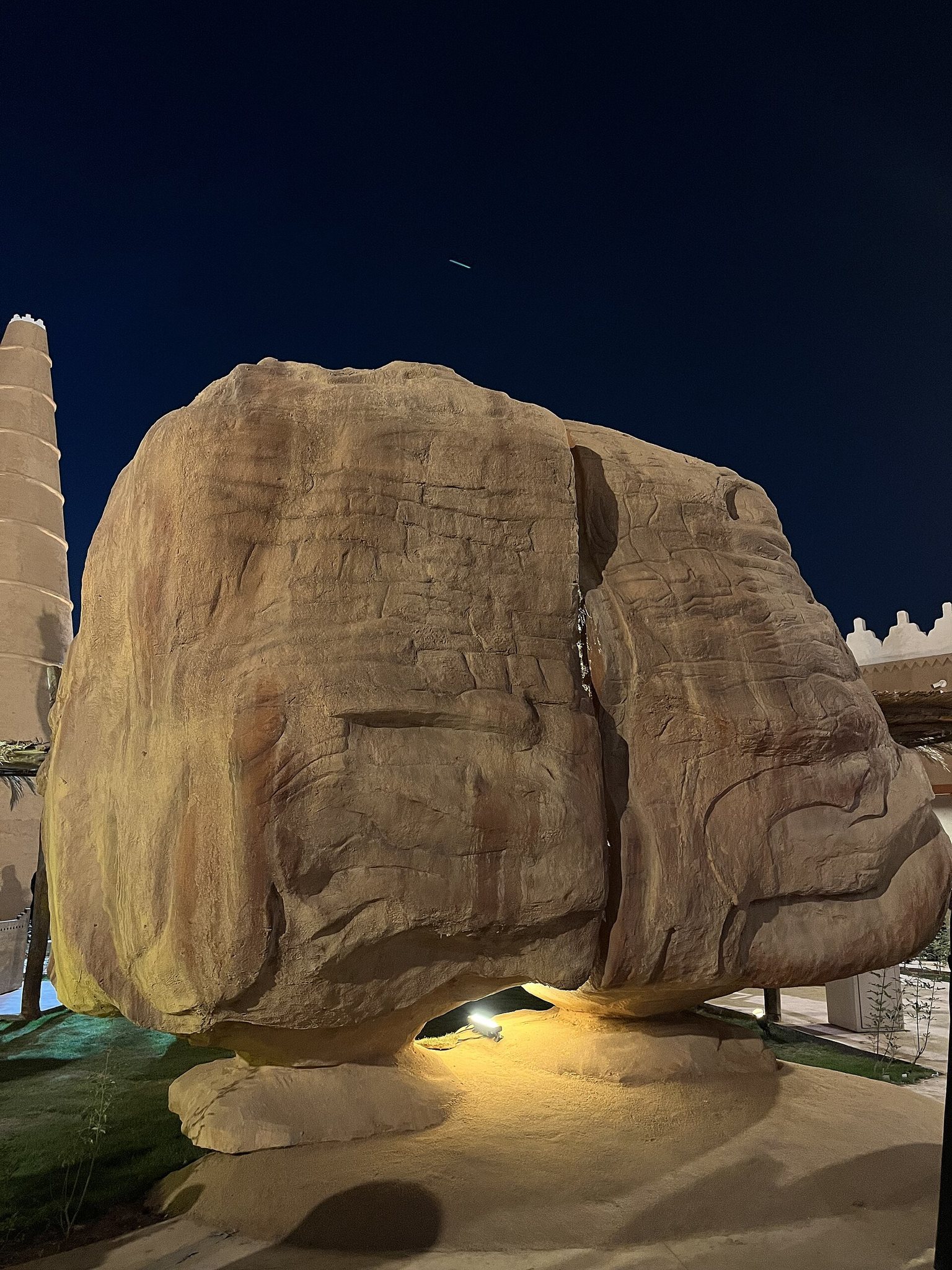
Al Naslaa is approximately 6 metres high and 9 metres wide. Its two roughly symmetrical sandstone sections are separated by a narrow, remarkably straight split. The opening is a geological joint, meaning a natural fracture along which rock has divided without necessarily experiencing major displacement. Each section rests on a small natural pedestal, giving the formation its distinctive balanced appearance.
Petroglyphs
Numerous petroglyphs, images or symbols carved into a rock surface, cover parts of the south-eastern face. The carvings include animals, horses, ibex, hunting scenes, and human figures. They are believed to date from prehistoric times, and some interpretations identify particular motifs as religious or spiritual symbols. Other interpretations propose an astronomical role connected with navigation or the observation of events in the sky.