Edakkal Caves: A Prehistoric Rock Shelter and Petroglyph Site
Site at a Glance
- Rating
- 4.1
- Popularity
- Very High
- Country
- India
- Primary era
- Stone Age
- External website
- Open
- Eras represented
- Stone Age, Bronze Age, Iron Age, Classical, Medieval
- Civilizations
- Unclassified
- Site type
- Civic
- Remains
- Rock Art
On this page7 sections
History
Edakkal Caves are two natural rock cavities in Nenmeni, Kerala, India, on Ambukutty Mala at about 1,200 metres above sea level. The site lies near an ancient route linking the Mysore highlands with ports on the Malabar Coast. Its carvings indicate repeated human occupation from the Neolithic, or New Stone Age, beginning around 6,000 BCE, through approximately 1,000 BCE.
Prehistoric occupation
The petroglyphs suggest that people used the area during several periods of prehistory. Some of the oldest carvings may be more than 8,000 years old, while the wider group is generally associated with the Neolithic period and later prehistoric activity. The Stone Age carvings are rare in southern India and are described as the only known examples in the region apart from those at Shenthurini in Kollam, Kerala.
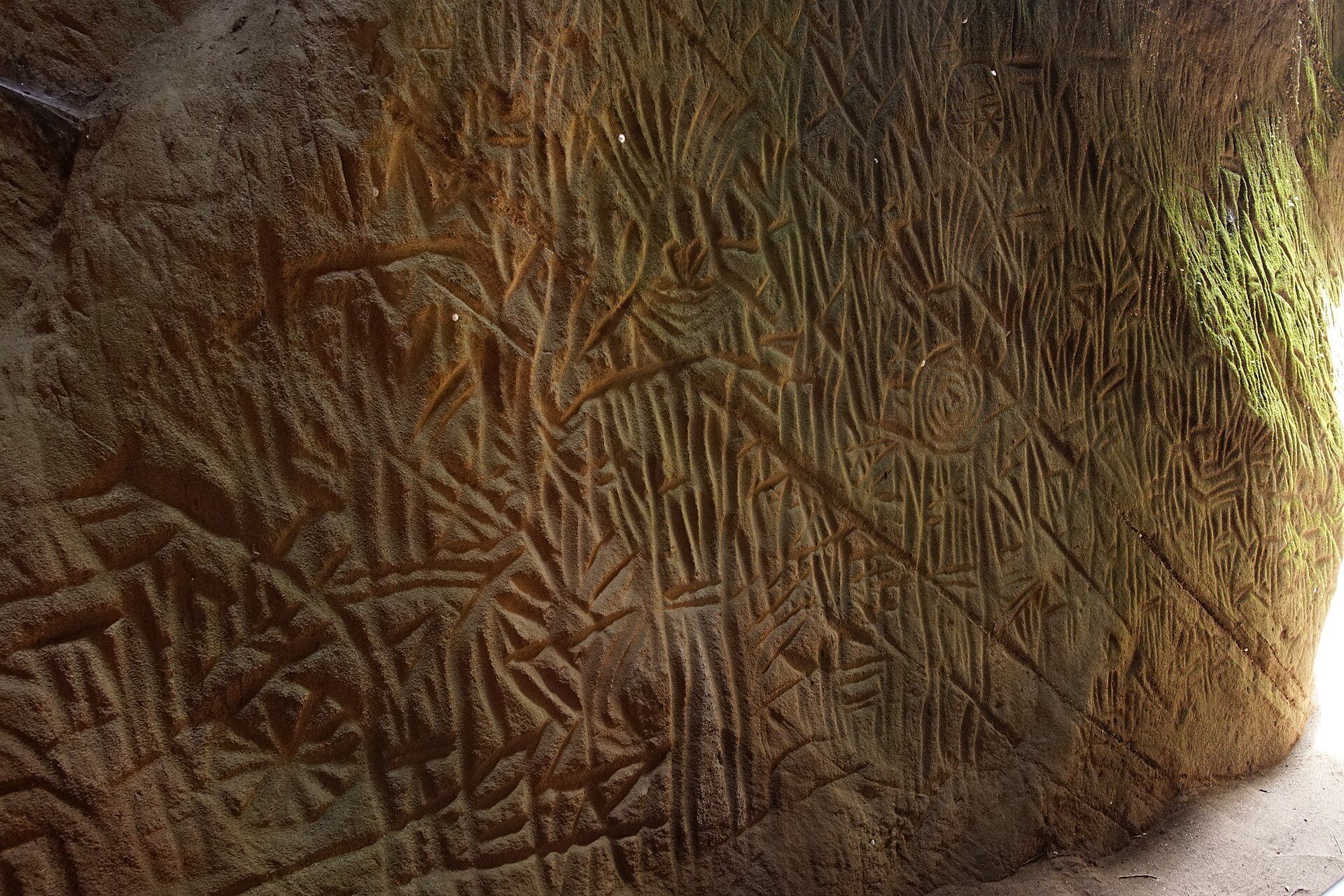
The images include human and animal figures, tools, and symbols whose meanings remain undeciphered. One figure identified in September 2009 as a “man with jar cup” has prompted discussion about a possible connection with the Indus Valley, or Harappan, civilization, a Bronze Age culture centred in the northwestern Indian subcontinent. The proposed relationship is considered an indication of possible cultural transmission rather than an established fact. The Indus script scholar Iravatham Mahadevan regarded the find as a major discovery.
Rediscovery and later history
Fred Fawcett, a police official of the former Malabar state, discovered the caves in 1890. He recognized their anthropological and historical importance and published an article that brought the site to scholarly attention. A later Prakrit prose inscription, associated with Edakkal and attributed to the Kadamba ruler Vishnuvarman, is dated approximately to the fifth or sixth century CE. Prakrit refers to a group of ancient Middle Indo-Aryan languages used in inscriptions and literature. Edakkal is designated a State Protected Monument.
Remains
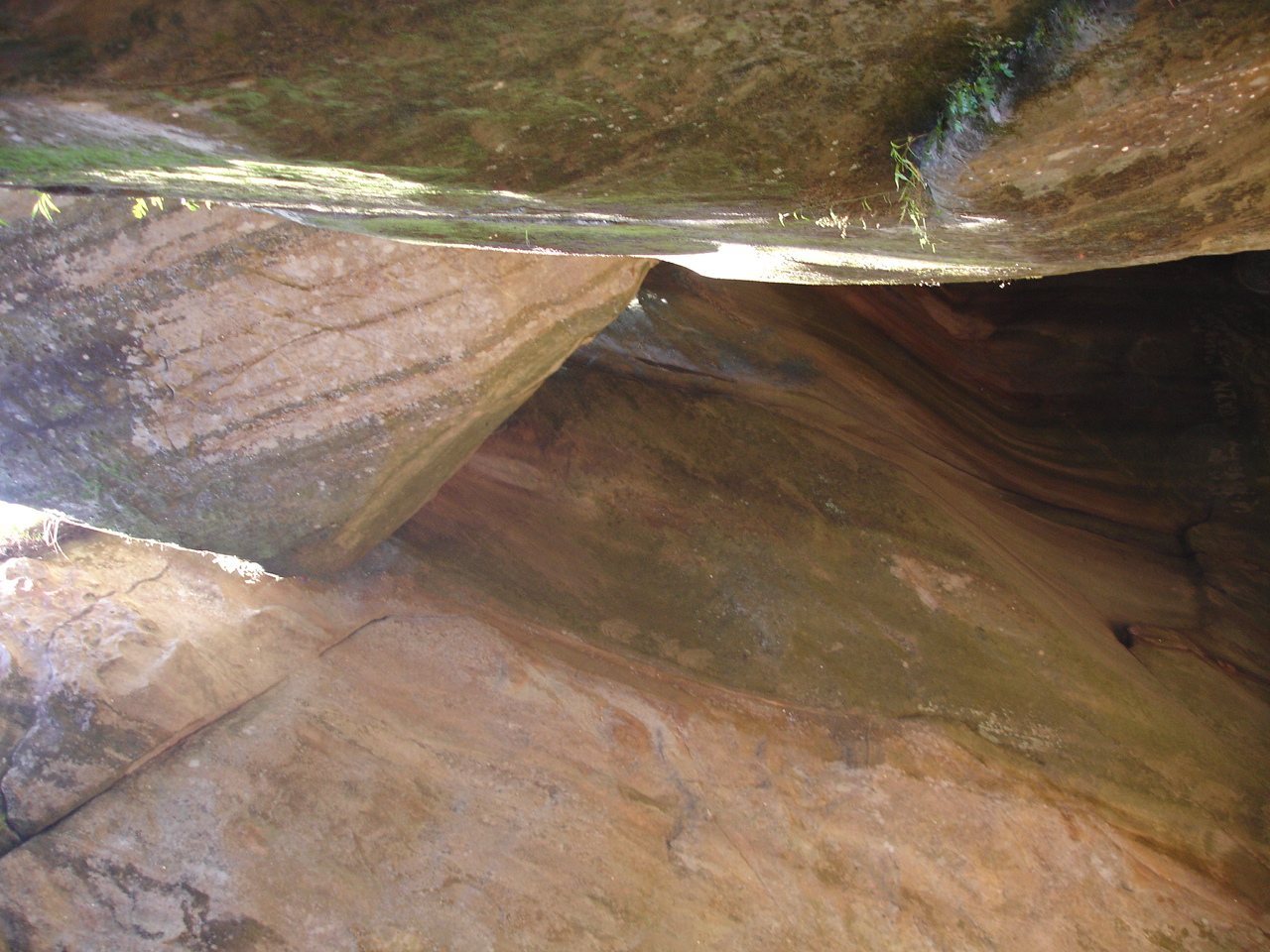
The site consists of two natural formations created when part of the rock separated from the main mass. They are technically a cleft, rift, or rock shelter rather than fully enclosed caves. A rock shelter is a naturally protected space beneath or beside an overhanging rock. The principal formation measures approximately 29 metres in length, 6.7 metres in width, and 9.1 metres in depth. A rock weighing several tons rests along one side and covers the cleft, creating its cave-like roof.
Carved rock surfaces
Petroglyphs
The interior rock surfaces carry at least three categories of petroglyphs. These are images or symbols incised, pecked, or carved into rock. The carvings depict people, animals, human tools, and undeciphered signs. Their dates range broadly from the Neolithic period around 6,000 BCE to approximately 1,000 BCE, with some of the oldest images possibly more than 8,000 years old.
Prakrit inscription
A prose inscription in Prakrit is associated with the site and is attributed to Vishnuvarman of the Kadamba dynasty. It is dated approximately to the fifth or sixth century CE and represents a later historical layer within the rock shelter.