Ahmad Shah’s Mosque: A Fifteenth-Century Royal Mosque in Ahmedabad
Site at a Glance
- Rating
- 4.7
- Popularity
- Low
- Country
- India
- Primary era
- Medieval
- Eras represented
- Medieval
- Civilizations
- Unclassified
- Site type
- Religious
- Remains
- Mosque
On this page8 sections
History
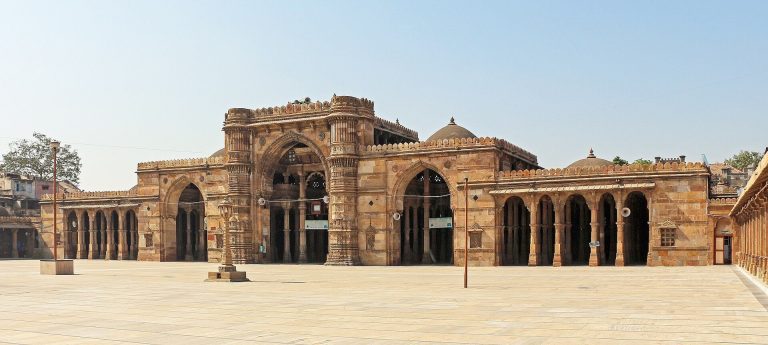
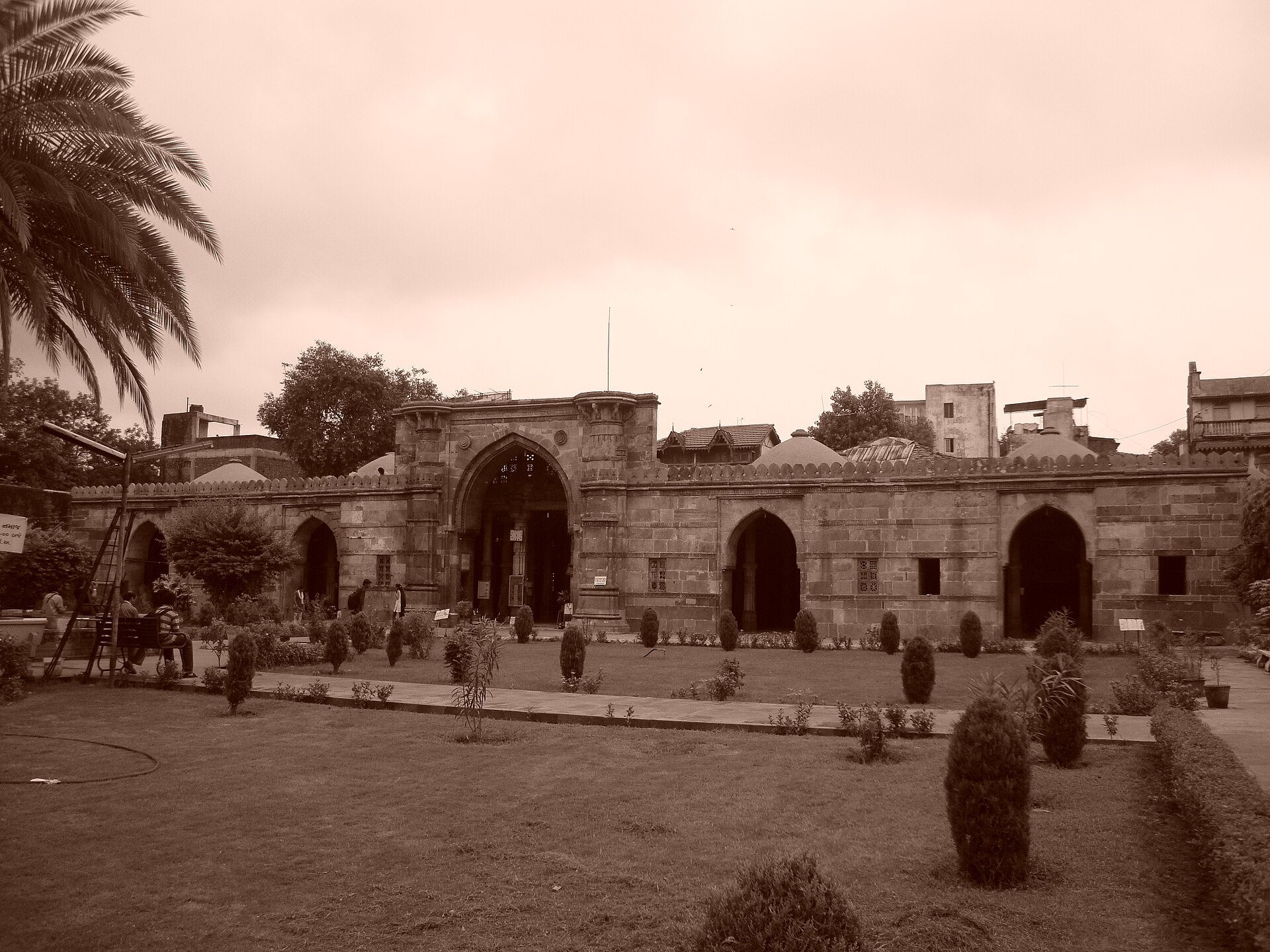
Ahmad Shah’s Mosque is a fifteenth-century Islamic mosque in the City Civil and Sessions Court area of Bhadra, Ahmedabad, Gujarat, India. Ahmad Shah I, the ruler who founded Ahmedabad, established it in 1414, and it is described as the city’s oldest mosque. The building traditionally served as the private mosque of the royal household.
Foundation under Ahmad Shah I
An inscription above the central mihrab, the prayer niche indicating the direction of Mecca, states that the mosque’s foundation was laid on the fourth day of Shawwal in 817 AH, corresponding to 17 December 1414. The mosque remains affiliated with Islam and open for worship.
Modern preservation
The Archaeological Survey of India restored Ahmad Shah’s Mosque in 2011. It is designated a Monument of National Importance under the Archaeological Survey of India, with reference number N-GJ-4.
Remains
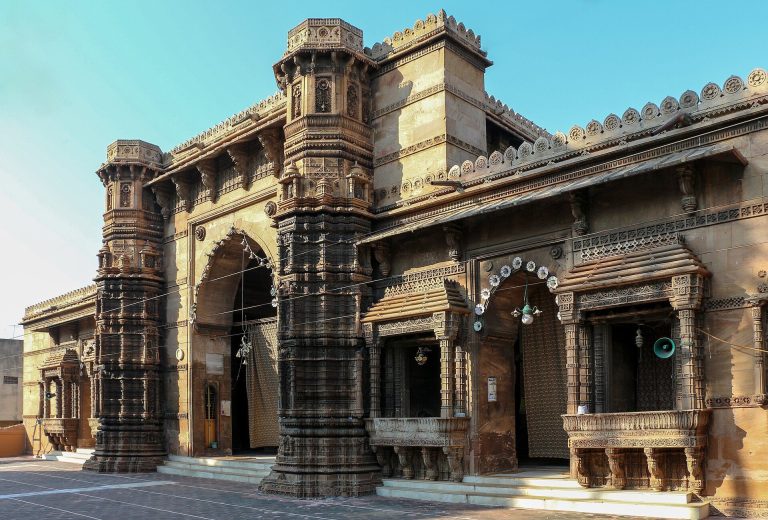
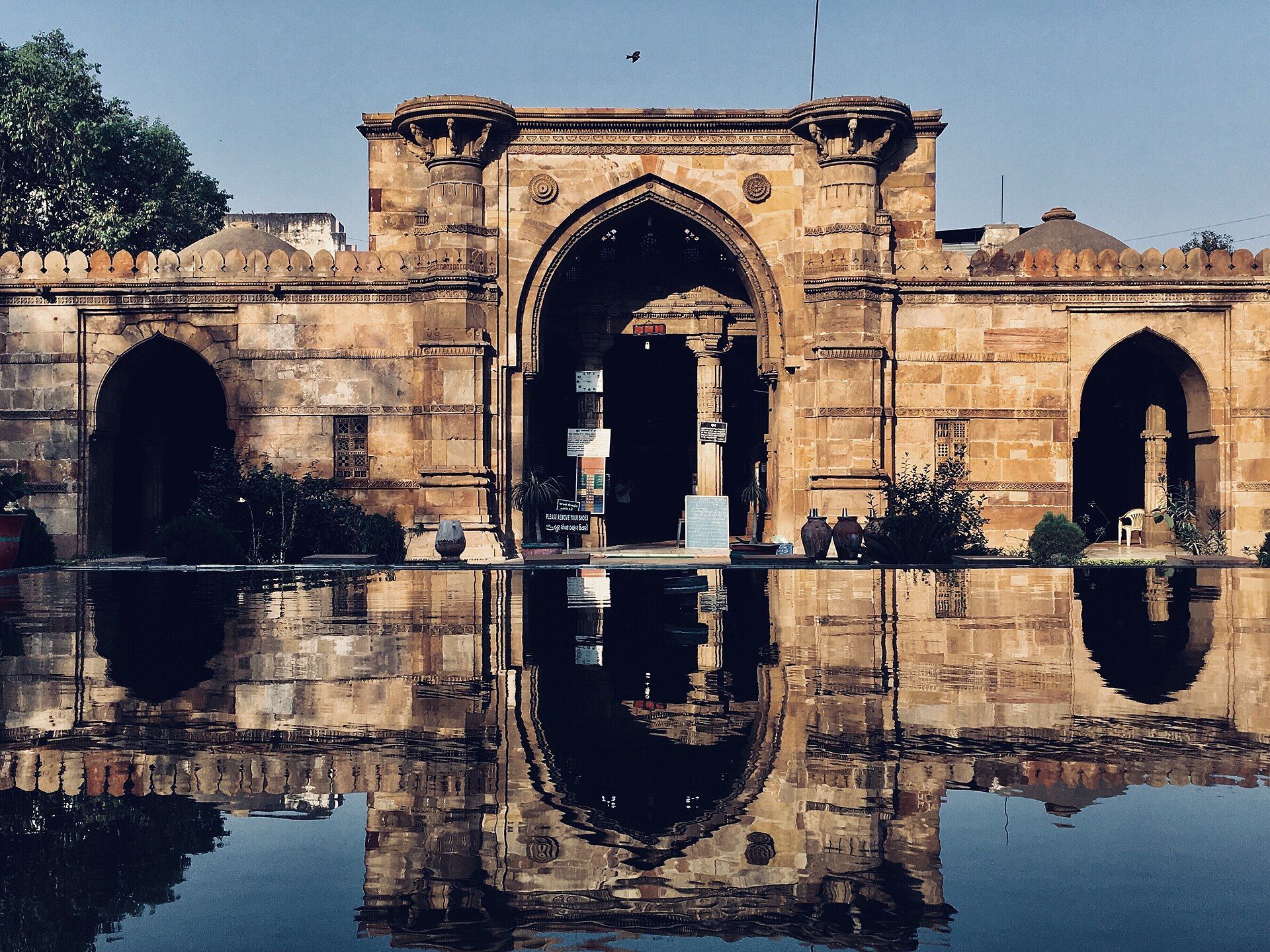
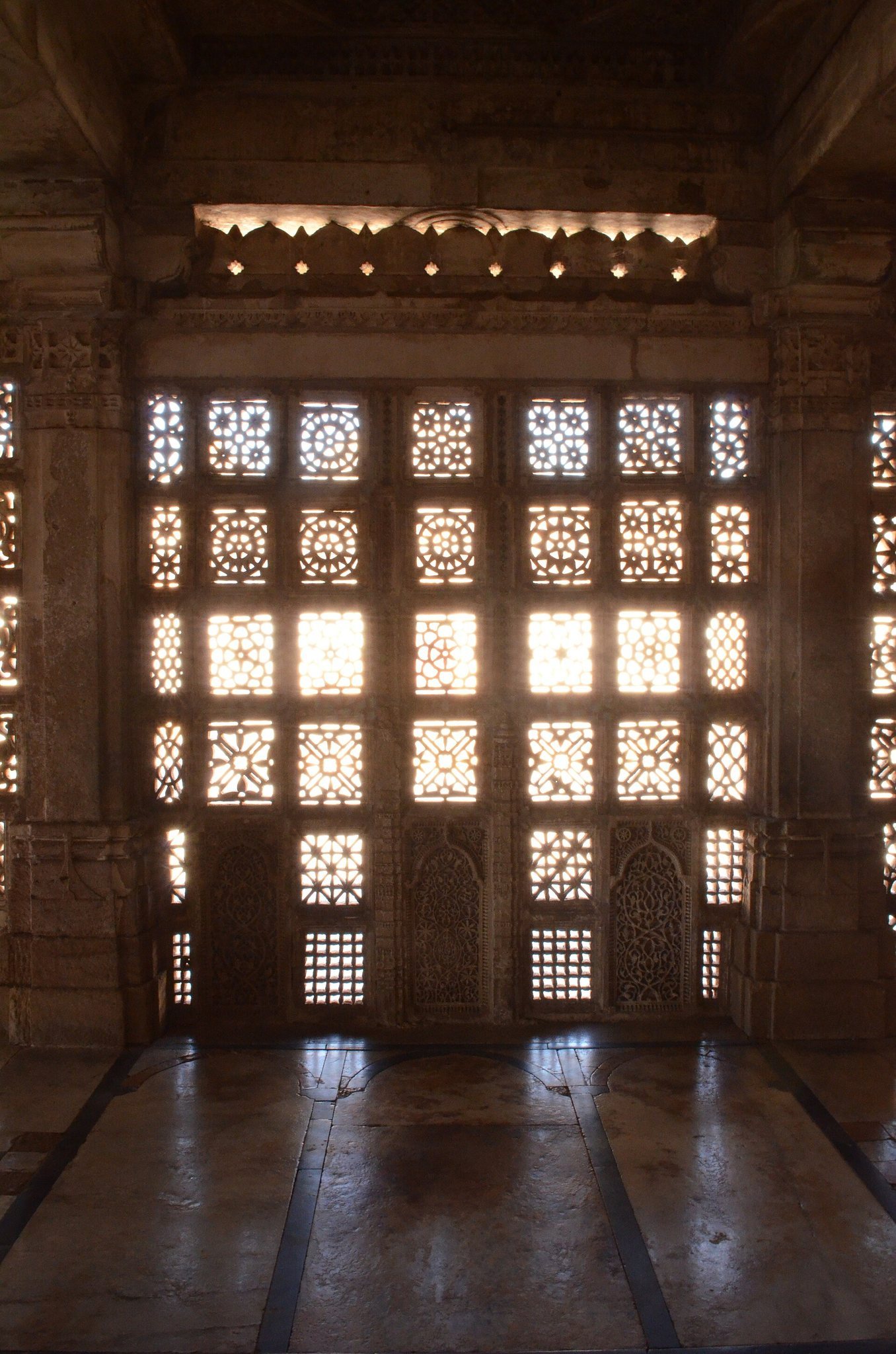
The mosque covers approximately 700 square metres. Its domed roof, substantial pillar system, arched entrances, perforated stone windows, marble floor, and carved pulpit form the principal surviving elements of the structure.
Main mosque
Domes and supports
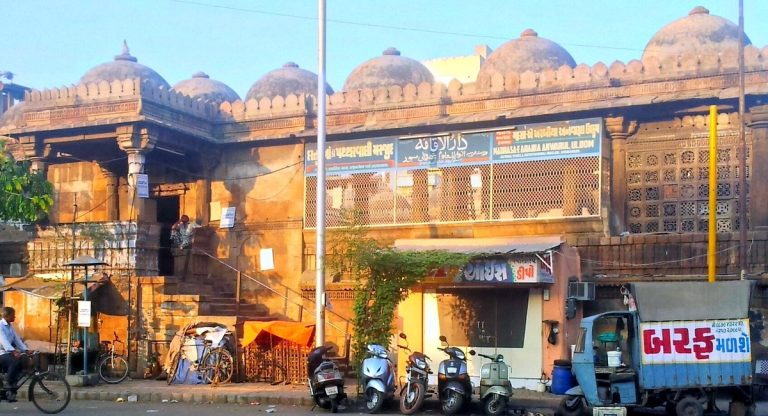
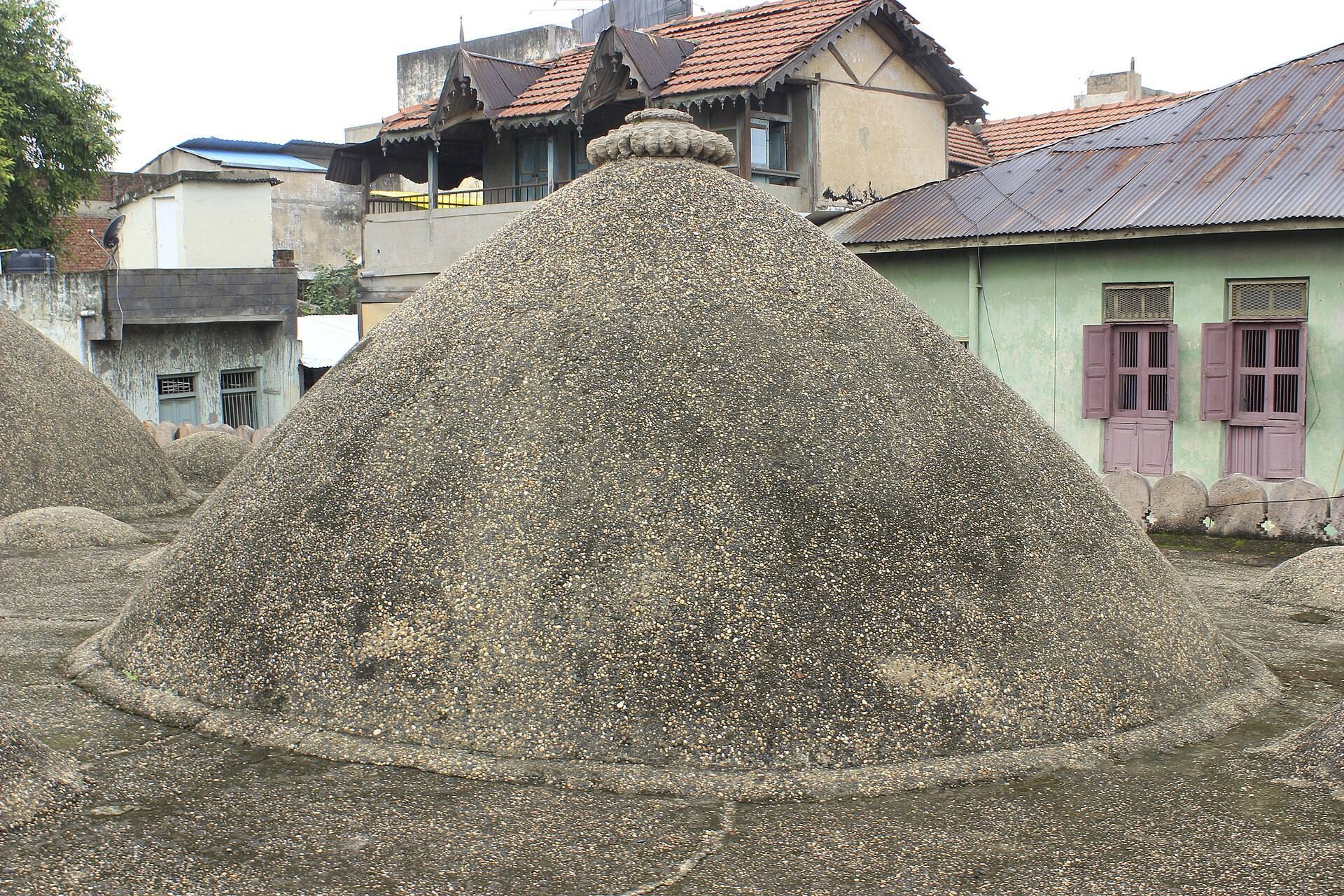
Two rows of ten large domes organize the roof, which is surrounded by several smaller domes. The building rests on 152 pillars and has four arched entrances. Two minarets are also present, although they were later damaged. Eight perforated stone windows and 25 finely carved pillars add to the architectural detail.
Interior fittings and reused pillars
The interior floor is made of white marble. A canopy-covered pulpit, the raised platform used for sermons, has a yellow-marble balustrade carved with leafy patterns and white-marble steps. Many interior pillars were reused from Hindu and Jain temples, and some retain Hindu figures. One pillar preserves a 1252 inscription in Old Gujarati from the reign of Vīsaladeva Vāghelā, a ruler of the medieval Vaghela dynasty of Gujarat. The inscription identifies the pillar as having come from a temple dedicated to Uttareśvara at Mahiṁsaka, an unidentified locality in northern Gujarat. Its date places the pillar before the mosque was built.
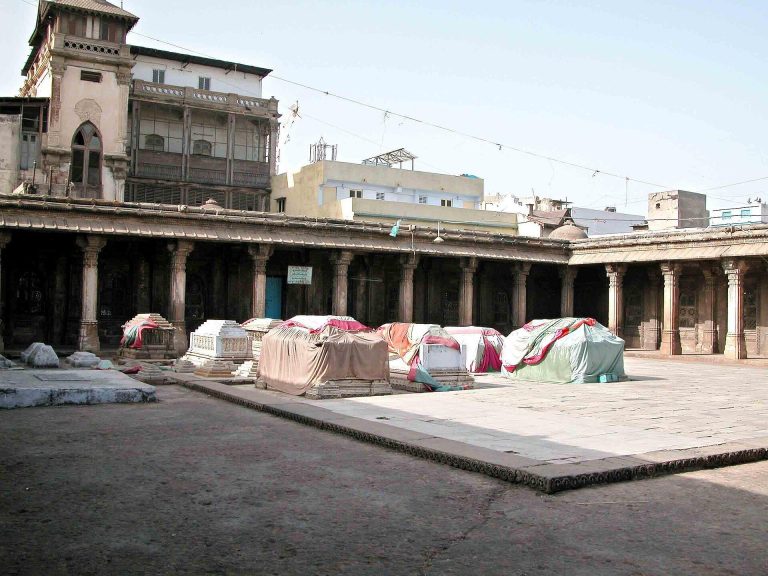
Courtyard mound
The courtyard contains a mound called Ganj Shahid, or the Martyrs’ Mound. It is described as the burial place of warriors who died in Sultan Ahmad’s early battles.