Muyuq Marka: An Inca Circular Tower at Saksaywaman
Site at a Glance
- Rating
- 4.8
- Popularity
- Very Low
- Country
- Peru
- Primary era
- Medieval
- Eras represented
- Medieval
- Civilizations
- Inca
- Site type
- Religious
- Remains
- Temple
On this page6 sections
History
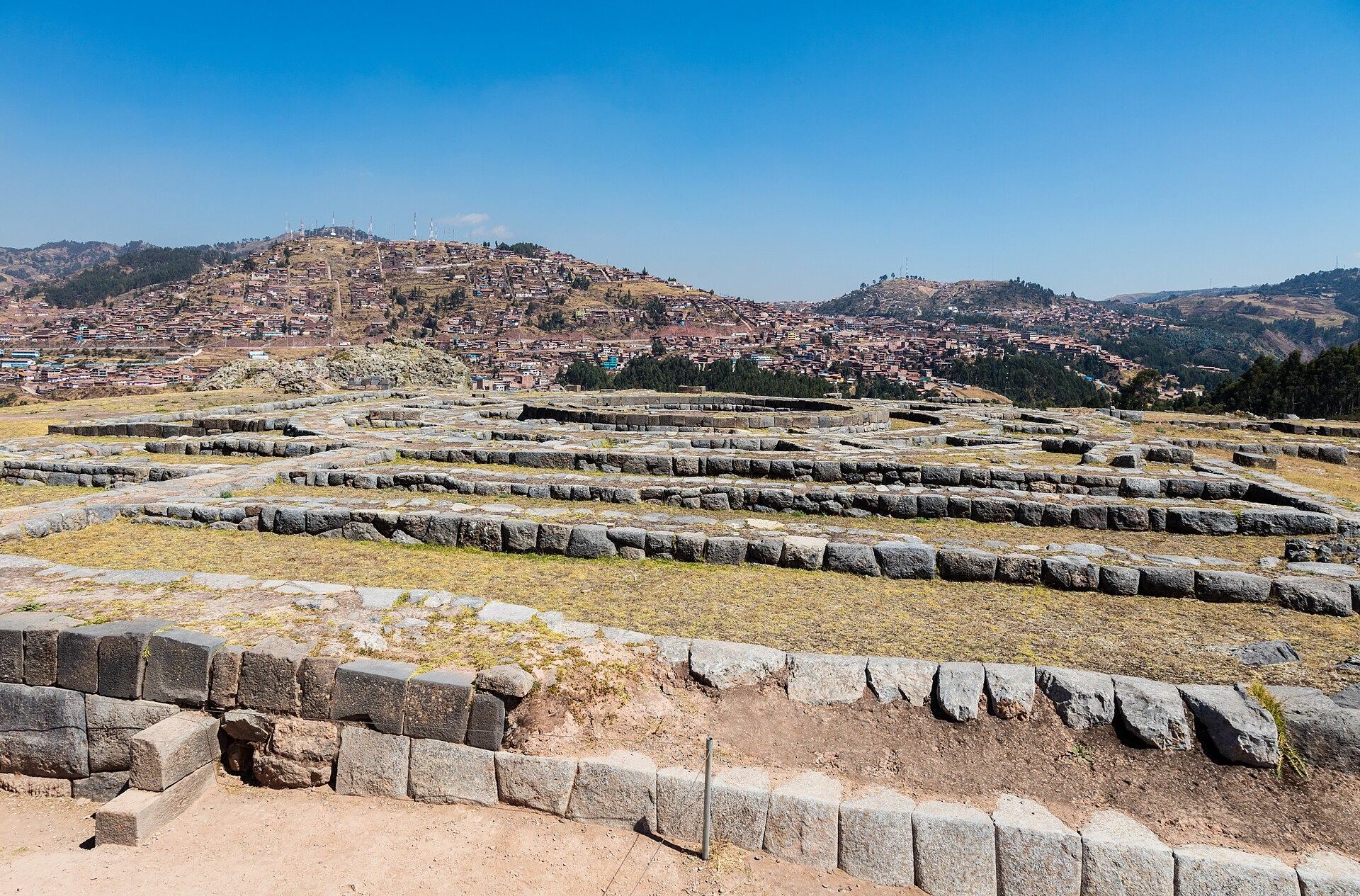
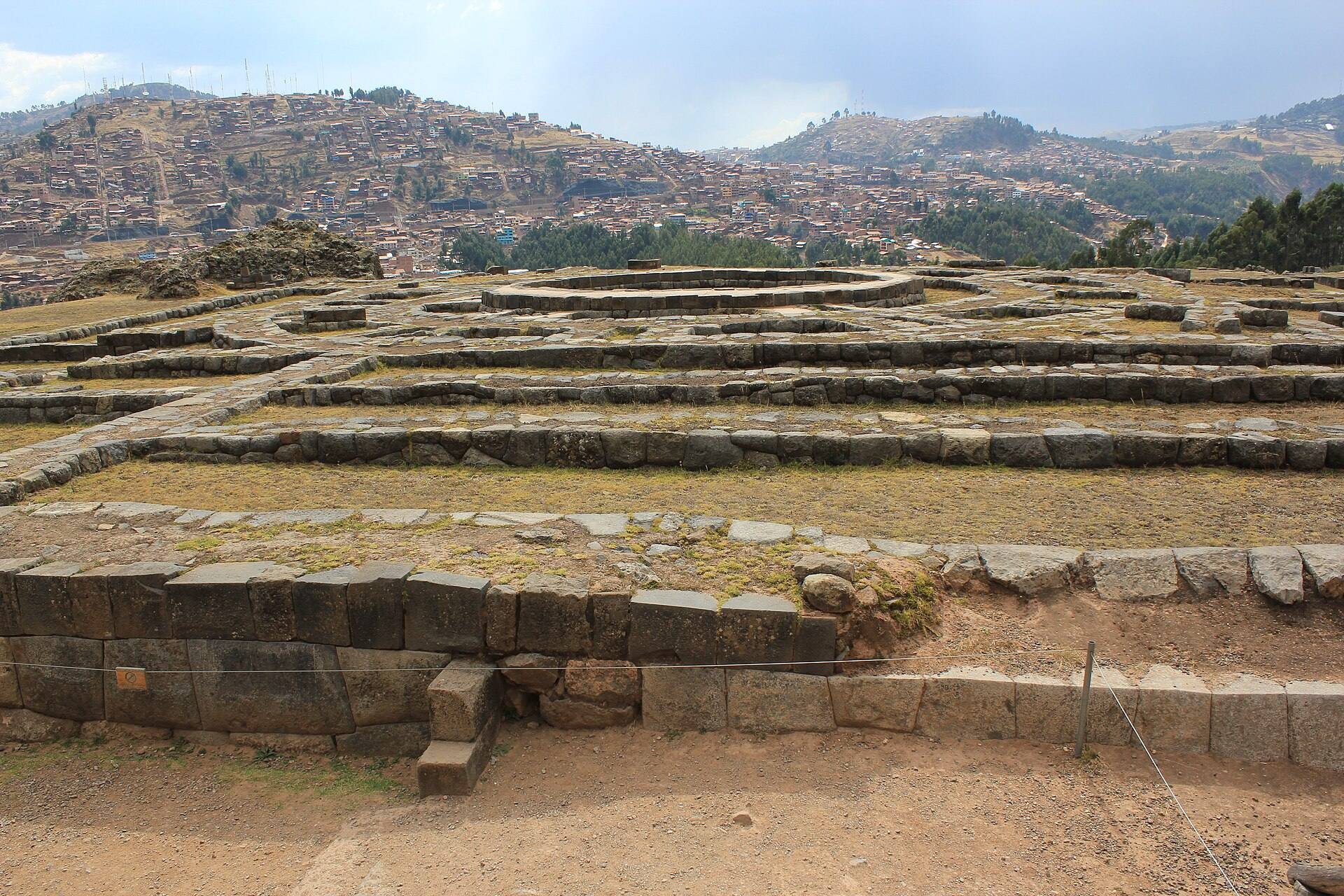
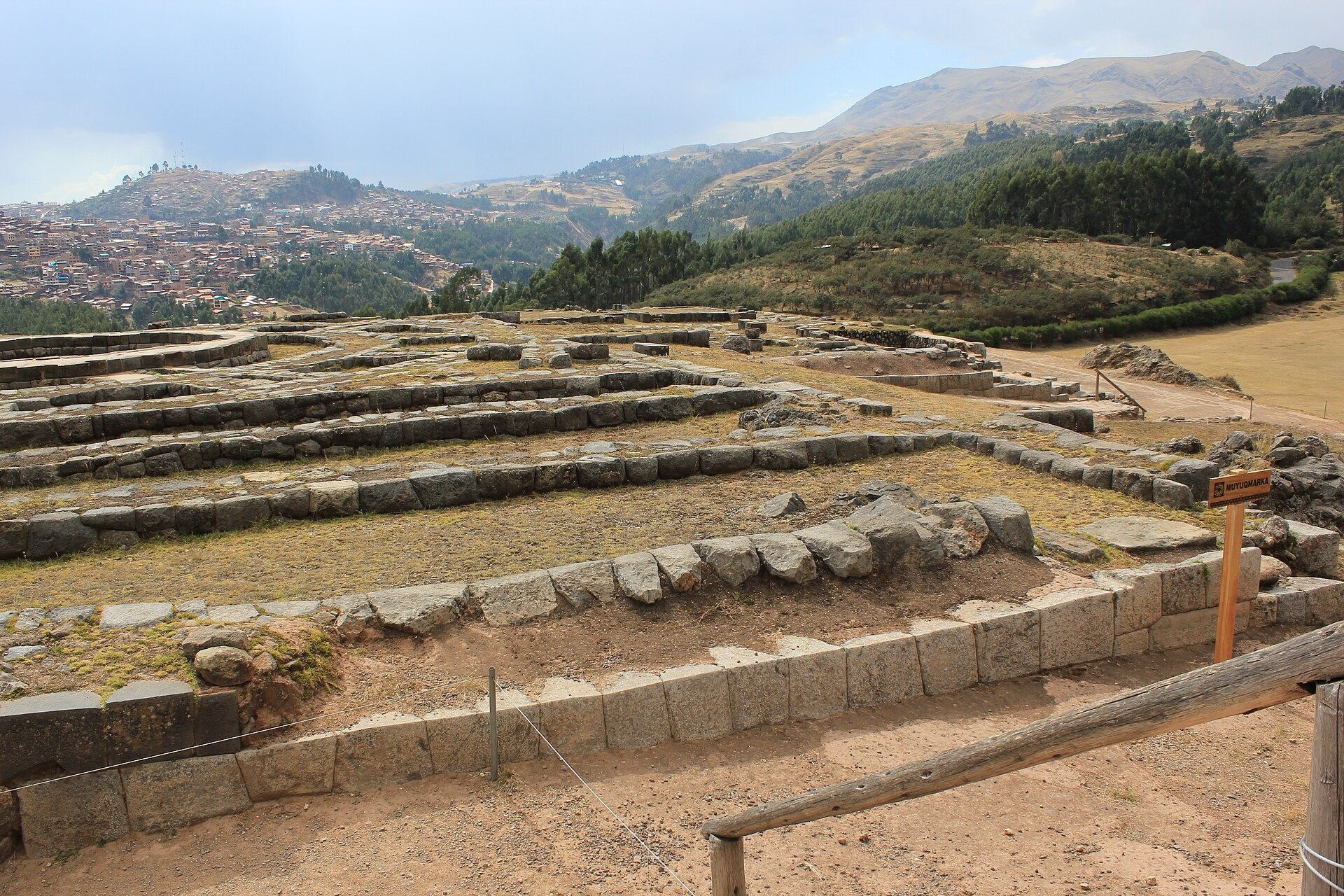
Muyuq Marka is the surviving base of an Inca circular tower and former temple within the Saksaywaman fortress above Cusco, Peru. Built during the Inca period, it formed part of a sanctuary and a larger complex of rectangular buildings associated with the Inca capital.
Inca Sanctuary
The tower was dedicated to Inti, the Inca sun deity and a central figure in Inca state religion. It stood with two other towers, Sallacmarca and Paucamarca, in the upper part of the complex. Rectangular buildings around the sanctuary were associated with the tower and are interpreted as granaries or storage buildings.
Battle, Destruction, and Rediscovery
In 1536, during Manco Inca’s siege of Cusco, the Battle of Saksaywaman took place as Inca forces attempted to retake the city from the Spanish conquistadors. The Inca soldier Cahuide jumped from Muyuq Marka to avoid capture.
During the colonial period, the Spanish dismantled Muyuq Marka and its two adjoining towers. Pedro Cieza de León and Inca Garcilaso de la Vega protested against the destruction. Building materials were probably recovered for Spanish buildings, churches, and the cathedral in Cusco, and the towers may also have been deliberately buried to conceal their remains.
By 1934, the lack of visible tower remains had led many people to doubt that the structures had existed. That year, Luis E. Valcárcel organized excavations authorized by the municipality of Cusco. The work uncovered the bases of Muyuq Marka and Sallacmarca, while no remains of Paucamarca were found.
Colonial descriptions preserve differing impressions of the towers. Pedro Sánchez de la Hoz called the central tower cubic and said it had four or five levels, while Garcilaso described it as circular. Both agreed that three substantial towers had stood on the hill. Garcilaso also recalled large connected tunnels beneath them and remembered playing there as a child before the Spanish destruction began. Pedro Pizarro later described two very tall, cube-shaped towers, probably Sallacmarca and Paucamarca, since Muyuq Marka had already been destroyed by then.
Remains
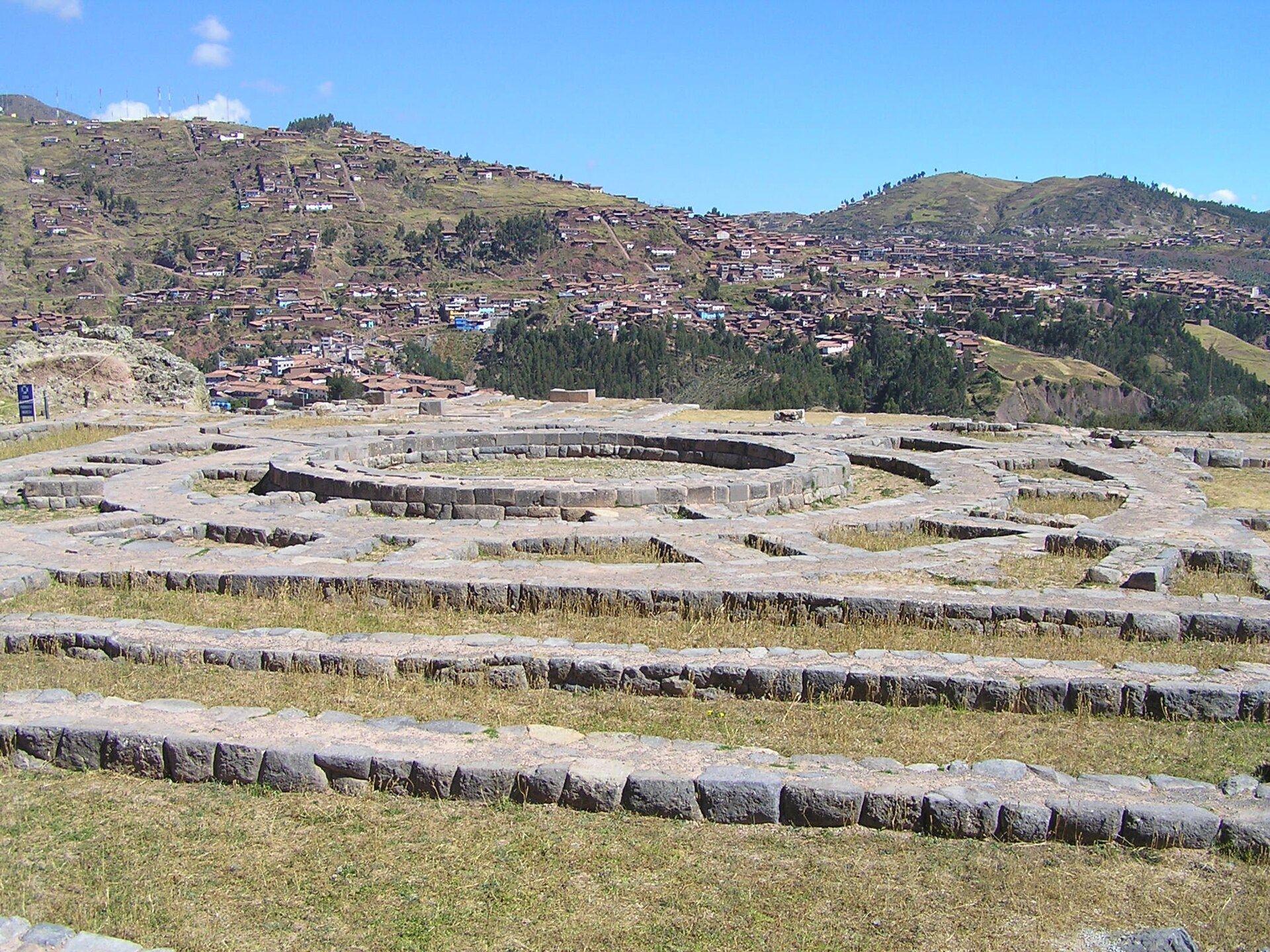
Circular Tower Base
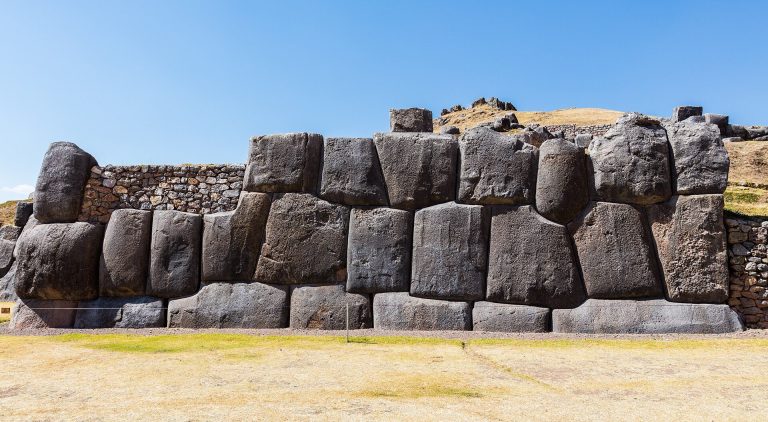
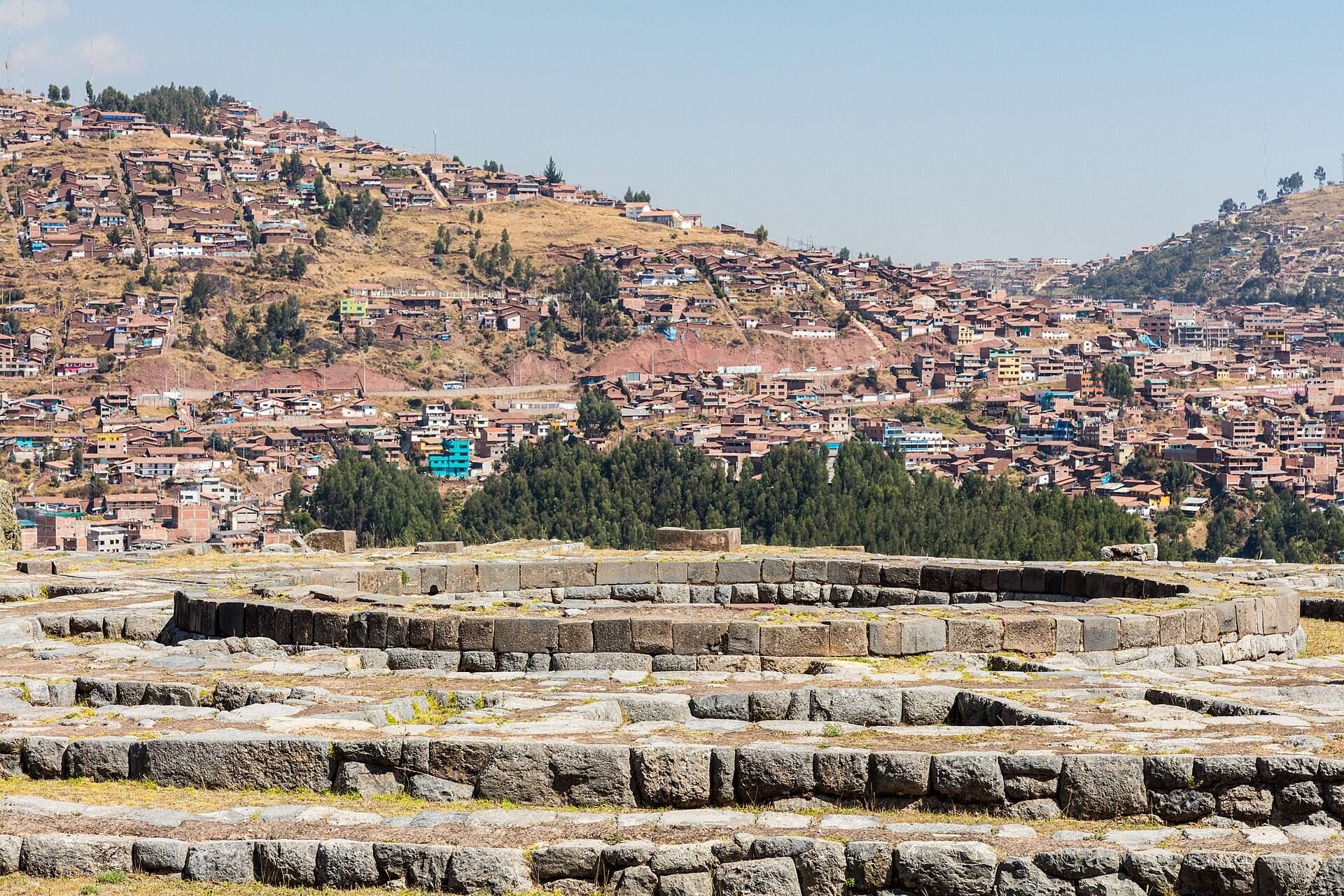
Muyuq Marka survives as the base of a circular stone tower in the western part of the upper fortress. It stood south of the triple cyclopean wall, a massive wall built from very large stones, and its monumental granite gate. Sallacmarca and Paucamarca occupied positions farther east and toward the center.
The tower measured approximately 22 meters across and probably reached about 20 meters in height. Its base contains three circular walls arranged concentrically and joined by radial walls directed toward the cardinal points. Their alignment also related to the zenith sunrise and the antizenith sunset. A web-like pattern of 34 lines crosses at the center, while concentric circles correspond to the positions of the circular walls.
Water Feature and Upper Levels
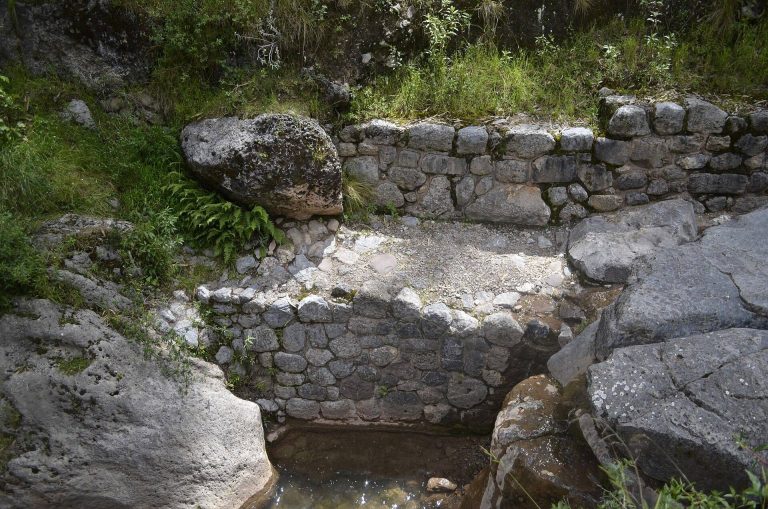
The remains indicate a round building organized around an open central court with a fountain. Three channels carried water into a feature many scholars interpret as a reservoir. Garcilaso instead described the tower as a storehouse for pure water.
The tower is hypothesized to have contained four levels placed one above another. The lowest had a square plan, the second and third were cylindrical, and the upper levels formed circular cultivation terraces that narrowed upward. The broadest terrace was approximately 3.6 meters wide and the narrowest about 3 meters. The structure probably ended in a conical roof.
Muyuq Marka was connected with rectangular buildings interpreted as granaries or storage spaces. Together, the temple, tower, and associated structures formed part of the wider Inca sanctuary and complex at Saksaywaman.