Pupput: A Roman Coastal Settlement in Tunisia
Site at a Glance
- Rating
- 3.9
- Popularity
- Low
- Country
- Tunisia
- Primary era
- Classical
- Eras represented
- Classical, Medieval
- Civilizations
- Byzantine, Roman
- Site type
- City
On this page14 sections
History
Pupput is an ancient Roman coastal settlement at Yasmine Hammamet in Tunisia. A community existed here by the first century BC, and the town expanded substantially during the Roman period, especially in the second and third centuries AD, when public monuments and residential districts were built. Its identification with the ancient city and bishopric of Puppi remains tentative.
Origins and Roman civic development
The surrounding agricultural region was probably occupied from the fifth century BC by Berbers and Carthaginians. Pupput itself may have had Berber-Punic origins, although no Punic remains have been found within the settlement. Its location connected a north-south road between Carthage and Hadrumetum with an east-west route leading through the Cap Bon Peninsula toward the interior and Thuburbo Majus.
Under Antoninus Pius, Pupput was a vicus, a small settlement or local administrative community within a larger territory, in Carthaginian territory. In AD 168 it became a municipium, a Roman town with a recognized civic constitution. Between AD 185 and 192, under Commodus, it received the honorary status of colonia, a privileged Roman civic designation. This advancement may have been connected with Lucius Salvius Iulianus, a Roman jurist and politician thought to have been born at Pupput. A statue of him was erected in the settlement.
During the later second century, Pupput probably served as a satellite town of nearby Neapolis. Its urban area grew considerably in the second and third centuries, with numerous public buildings and substantial private residences. An inscription dedicated to the emperor Licinius in the early fourth century gives the city’s Roman name as Colonia Aurelia Commoda Pia Felix Augusta Pupput.
Late antiquity and medieval transformation
Pupput belonged to the civil province of Byzacena, while ecclesiastically it fell within Africa Proconsularis, the church province governed by the bishop of Carthage. Some scholars, including Noël Duval, explained this difference by proposing changes to provincial boundaries and a possible conurbation with Siagu, a settlement a few kilometres to the north.
The town probably returned to vicus status in late antiquity. An episcopal see called Puppi appears in records for 411, 484, 525, and 646. Pannonio and Vittoriano, respectively Catholic and Donatist bishops, attended the Council of Carthage in 411. Aurelio attended the Council of Chalcedon in 451, while Pastinato took part in the Vandal Synod of Carthage in 484 and was later exiled. Fortunato attended the Carthaginian Council of 525, and Guloso attended an anti-Monothelite council in 646. Monothelitism was a Christian theological position concerning whether Christ had one will or two.
After the Vandal period, Pupput became part of the Byzantine Empire, and a citadel was constructed for its defense. Following the Arab conquest of Tunisia at the end of the seventh century, the city was renamed Qasr Zaid. The urban centre later shifted farther northeast, where Hammamet developed near the ancient baths, at the site of the modern medina. The buildings at Souk el-Obiod appear to have been abandoned after this relocation. In 1303, pirates from the Kingdom of Aragon captured and destroyed the city, after which charcoal burners from Hammamet settled in the area.
Rediscovery and archaeological protection
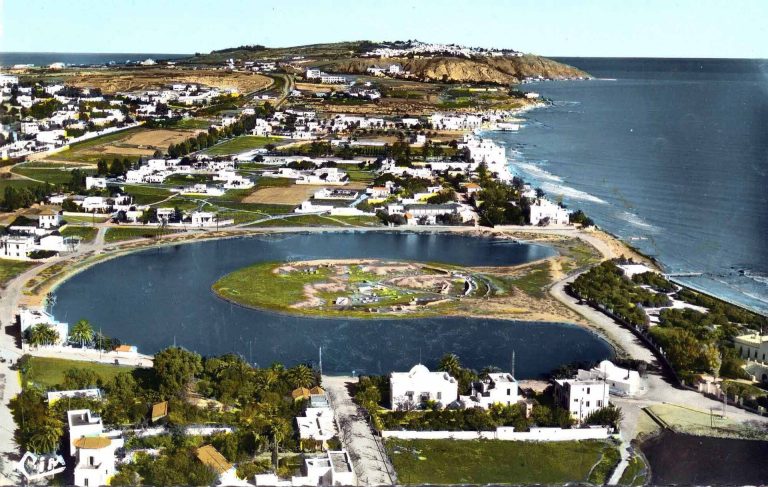
Pupput was accidentally rediscovered in the late nineteenth century when land was levelled for construction. French army battalions partially excavated remains in the early twentieth century. Hotel development along the Tunisian coast threatened the site in the late 1960s, prompting rescue archaeology that exposed part of the Roman necropolis and a large residential quarter.
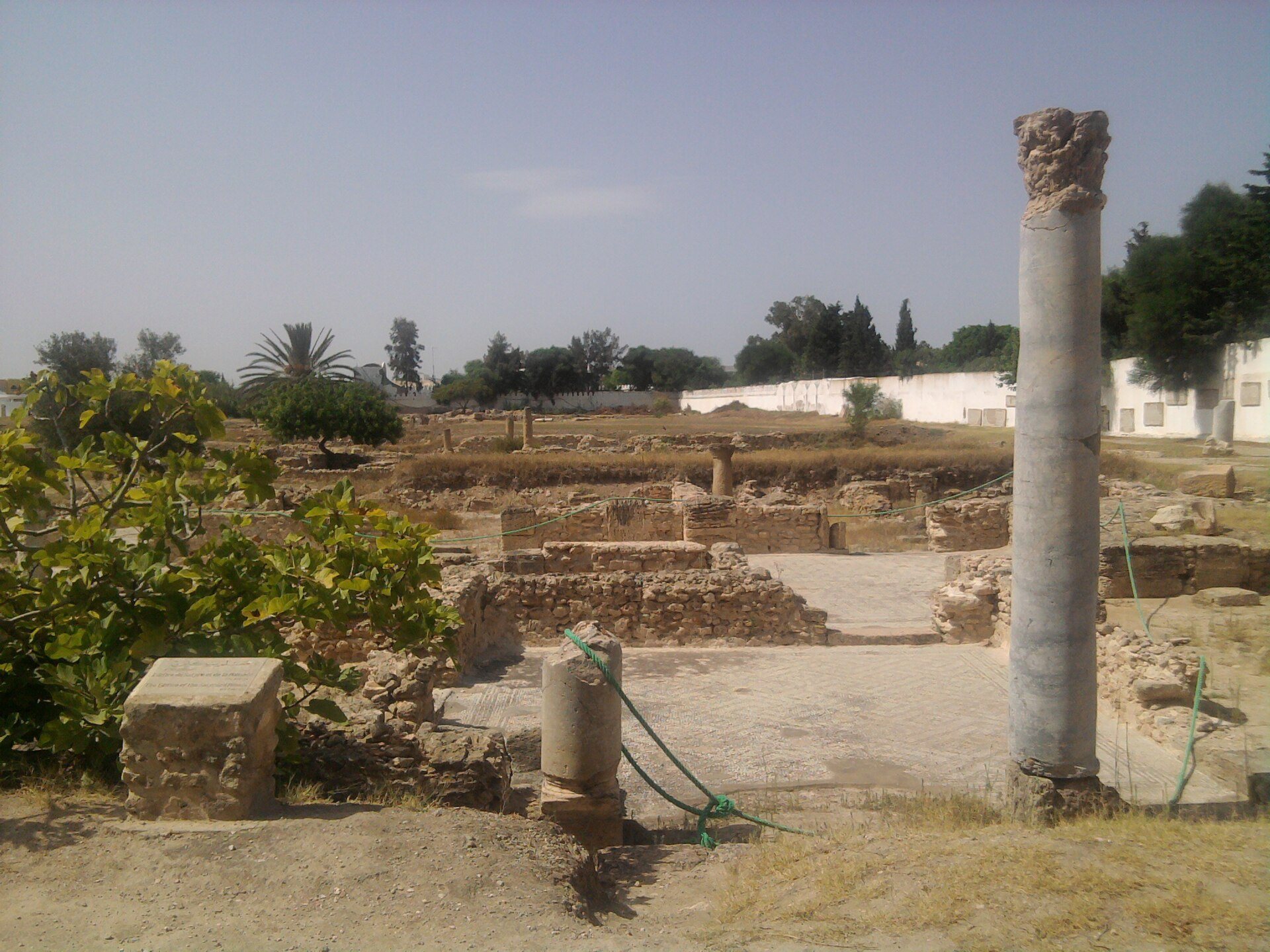
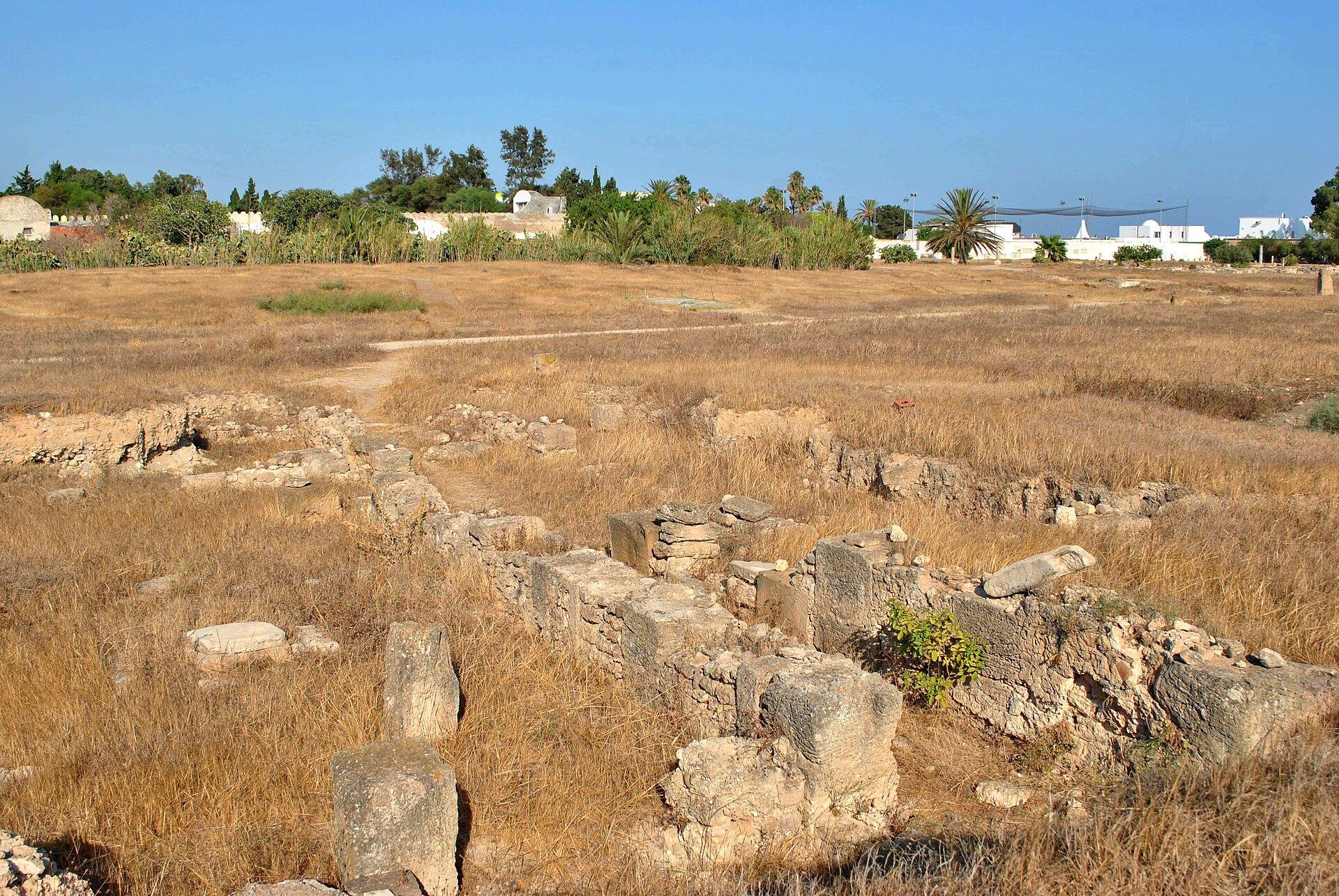
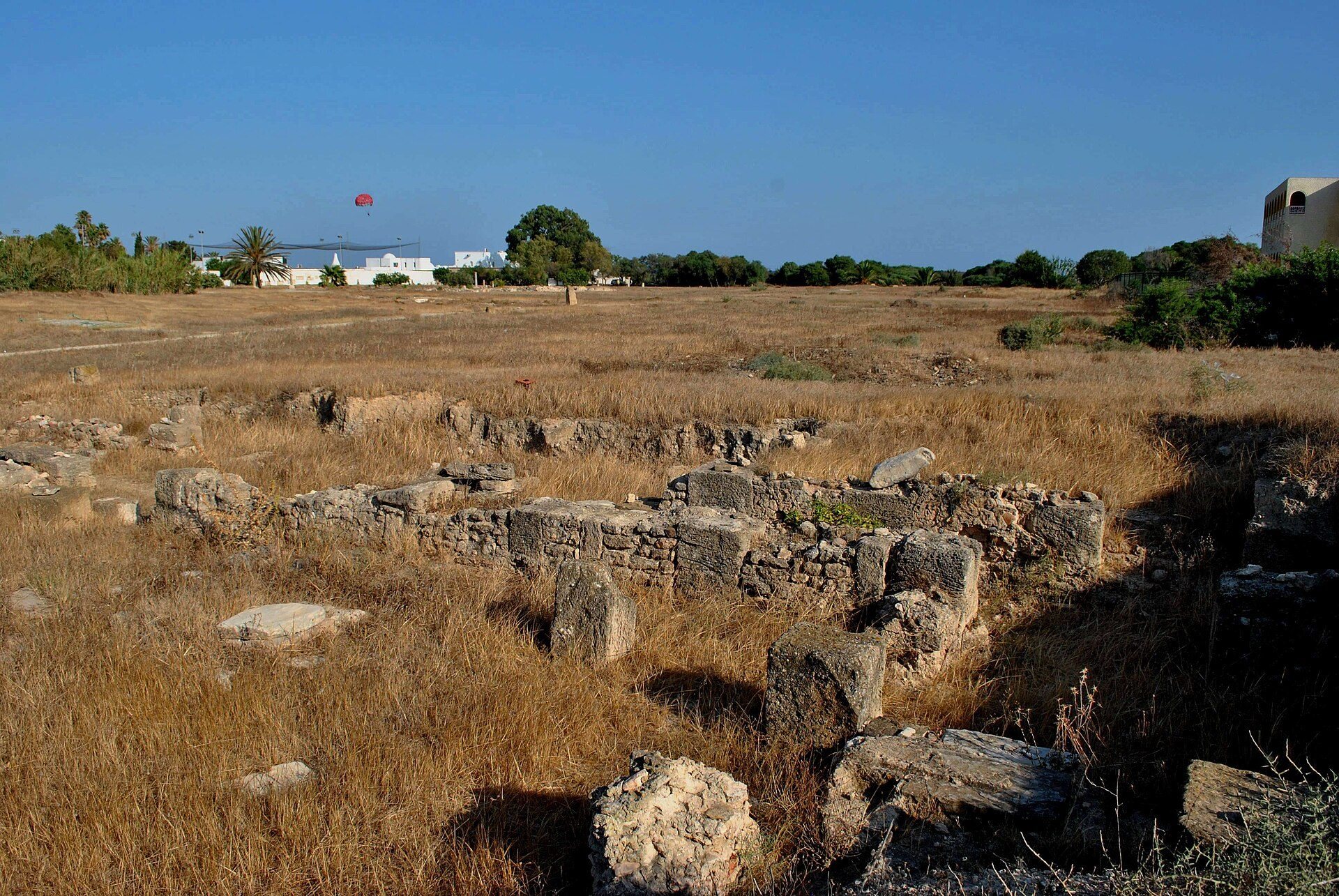
The residential quarter and baths were preserved as an archaeological park, while the central monumental complex and other public buildings were buried beneath hotel foundations. Since the 1960s, the National Heritage Institute has safeguarded surviving water installations, houses, baths, and other structures. Much of the ancient settlement is now covered by modern holiday development.
Remains
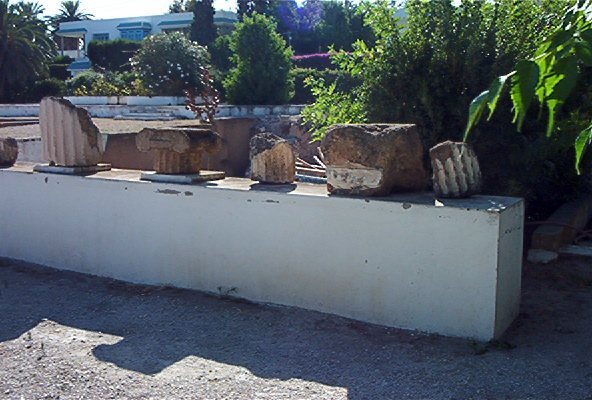
Pupput occupied a coastal area between the Temad, also called el-Thimad, Wadi to the north and the Moussa Wadi to the south. Its remains include residential districts, a funerary area, baths, water installations, and traces of civic buildings. Archaeological evidence and historical descriptions indicate a capitolium, a Roman temple complex dedicated to Jupiter, Juno, and Minerva, as well as temples, a theatre, an amphitheatre, and other public structures.
Residential quarter
House of the Black-and-White Triclinium
The House of the Black-and-White Triclinium is arranged around a peristyle, a courtyard enclosed by a colonnade. The court contained a planted garden, or viridarium, together with a fountain basin. Two rooms lay north of the portico, including a dining room paved with a black-and-white mosaic.
Monument of the Satyr and the Maenad
The Monument of the Satyr and the Maenad is organized around a long corridor with independent apartments along its northern side. Some apartments contain mosaics, including a polychrome geometric pavement showing a satyr and maenads.
House of the Figured Peristyle
The House of the Figured Peristyle has rooms arranged around a colonnaded courtyard and paved with polychrome geometric and floral mosaics. Its courtyard pavement reproduces the shadows cast by the surrounding columns, giving the portico its name. The large residence dates to the fifth century and included an attached bath complex.
House of the Viridarium with Niches
The House of the Viridarium with Niches takes its name from the semicircular niches set into its central courtyard. The residential quarter also contains other high-status buildings identified through their mosaic floors, along with funerary objects and architectural decoration.
Funerary and bathing remains
Roman necropolis
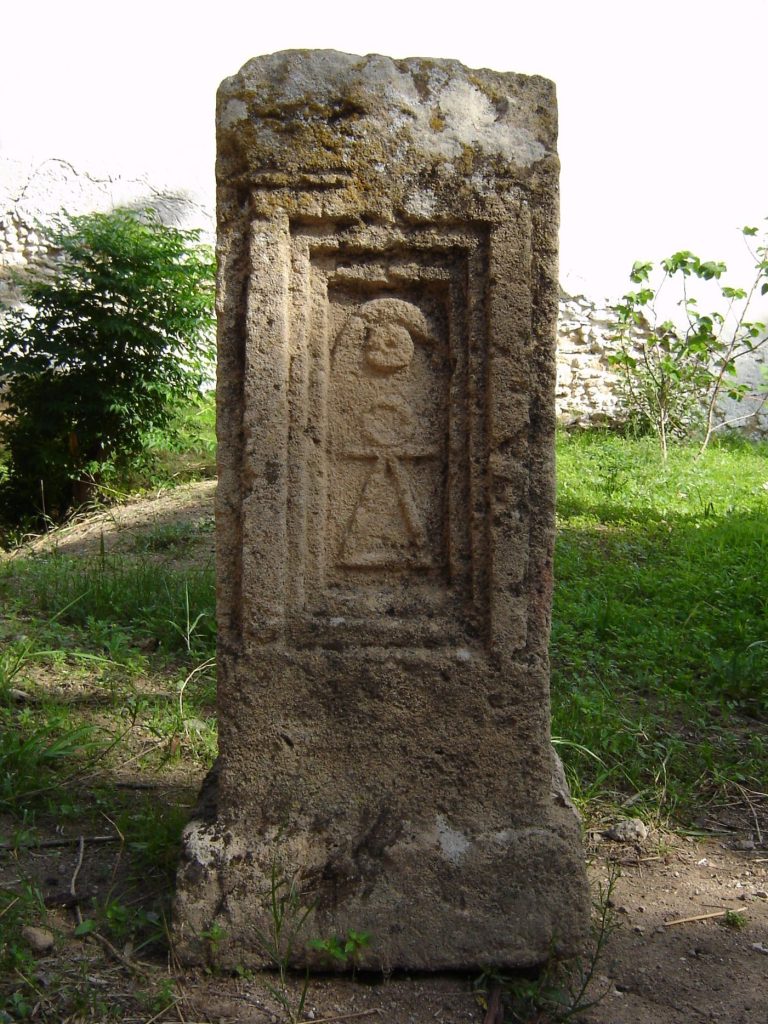
The principal Roman necropolis lay north of the settlement. It covered more than 7 hectares and began in the late first or early second century AD. Rescue archaeology exposed a section approximately 300 metres from the residential remains. The necropolis is described as the largest Roman necropolis in Africa.
Roman baths
The Roman bath complex was of medium size. Excavation has exposed the frigidarium, the cold-water room, and the palaestra, an exercise area associated with bathing complexes. The basilica has disappeared beneath hotel foundations, but the National Heritage Institute salvaged a funerary mosaic from it.
Water supply and public buildings
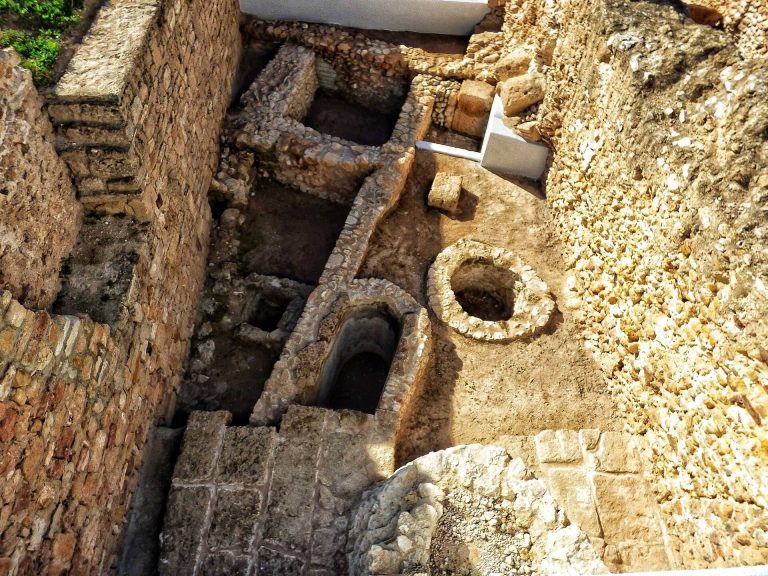
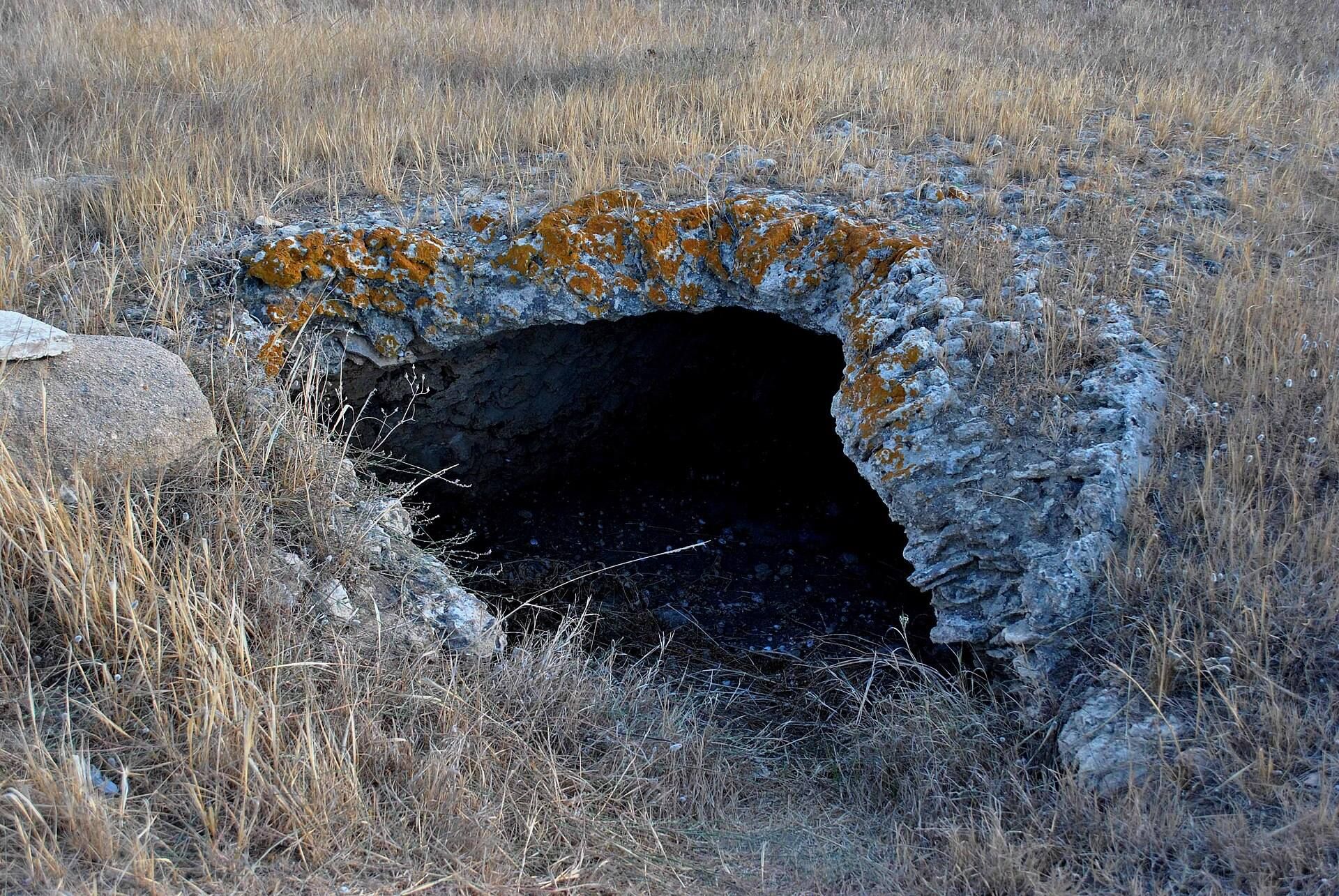
Pupput’s water system included aqueducts, reservoirs, and cisterns. One aqueduct ran from Wadi el-Faouara toward Siagu. Sections of the water network survive alongside houses and other structures. The theatre and amphitheatre have largely disappeared, although emergency excavations rediscovered the amphitheatre. Much of the central monumental complex and its public buildings is buried beneath modern construction.