Red Bay National Historic Site: A Basque Whaling Station in Canada
Site at a Glance
- Rating
- 4.7
- Popularity
- Low
- Country
- Canada
- Primary era
- Early Modern
- External website
- Open
- Eras represented
- Early Modern
- Civilizations
- Unclassified
- Site type
- Economic
- Remains
- Production Complex
On this page13 sections
History
Red Bay National Historic Site is a sixteenth-century Basque whaling station in Red Bay, Newfoundland and Labrador, Canada. Basque mariners established the station during the 1500s, using the protected harbour to process whale fat into oil for shipment to Europe. Red Bay later became a National Historic Site of Canada and forms part of the Red Bay Basque Whaling Station World Heritage site.
Indigenous occupation and the Basque station
The Labrador coast had been occupied for approximately 9,000 years before the Basque period. Maritime Archaic peoples and Paleo-Eskimo communities hunted seals and walruses and fished for Atlantic salmon, developing technologies suited to the local environment.
Basque seafarers from the western Pyrenees called the harbour Butus. French fishermen later used the name Baie Rouge, from which Red Bay derives. Between 1550 and 1625, the harbour became one of the principal Basque whaling stations in the region. At its height, about 2,000 fishermen from Spain and France gathered there, while approximately 20 whaling installations operated around the harbour.
The station rendered whale fat into oil, which was transported to Europe for lighting. This activity declined as the local whale population was depleted. At least 16 Basque whaling-station sites have been identified between Gros-Mécatina in Quebec and Cape St. Charles in Labrador, placing Red Bay within a wider regional network.
Later fishing and permanent settlement
After the Basque period, French, English, and Channel Island fishermen continued to use the harbour for cod fishing, seal hunting, and whaling. Their products were exported to Europe. During the nineteenth century, fishermen from Newfoundland, England, and the Channel Islands settled permanently at Red Bay.
Archaeological investigation and recognition
Selma Barkham’s research, begun in 1972, drew renewed attention to Basque whaling in Canadian waters and led to archaeological work at Red Bay and nearby sites. A shore-based survey followed in 1977. Underwater investigations began in 1978 and continued until 1984 under archaeologist Robert Grenier, recovering three Basque galleons, four smaller boats, and a sixteenth-century Basque whaling vessel.
Red Bay was designated a National Historic Site of Canada on 21 May 1979. In 1991, the governments of Newfoundland and Labrador and Canada signed an agreement to develop the site. It was added to Canada’s World Heritage tentative list in 2004 and inscribed in 2013 as the Red Bay Basque Whaling Station. The 313-hectare cultural property, together with its 285-hectare buffer zone, was recognized under criteria (iii) and (iv) for preserving an exceptionally large and comprehensive example of sixteenth-century Basque whaling and an archaeological complex associated with pre-industrial mass whale-oil production. It was the first World Heritage site to include underwater cultural heritage.
Remains
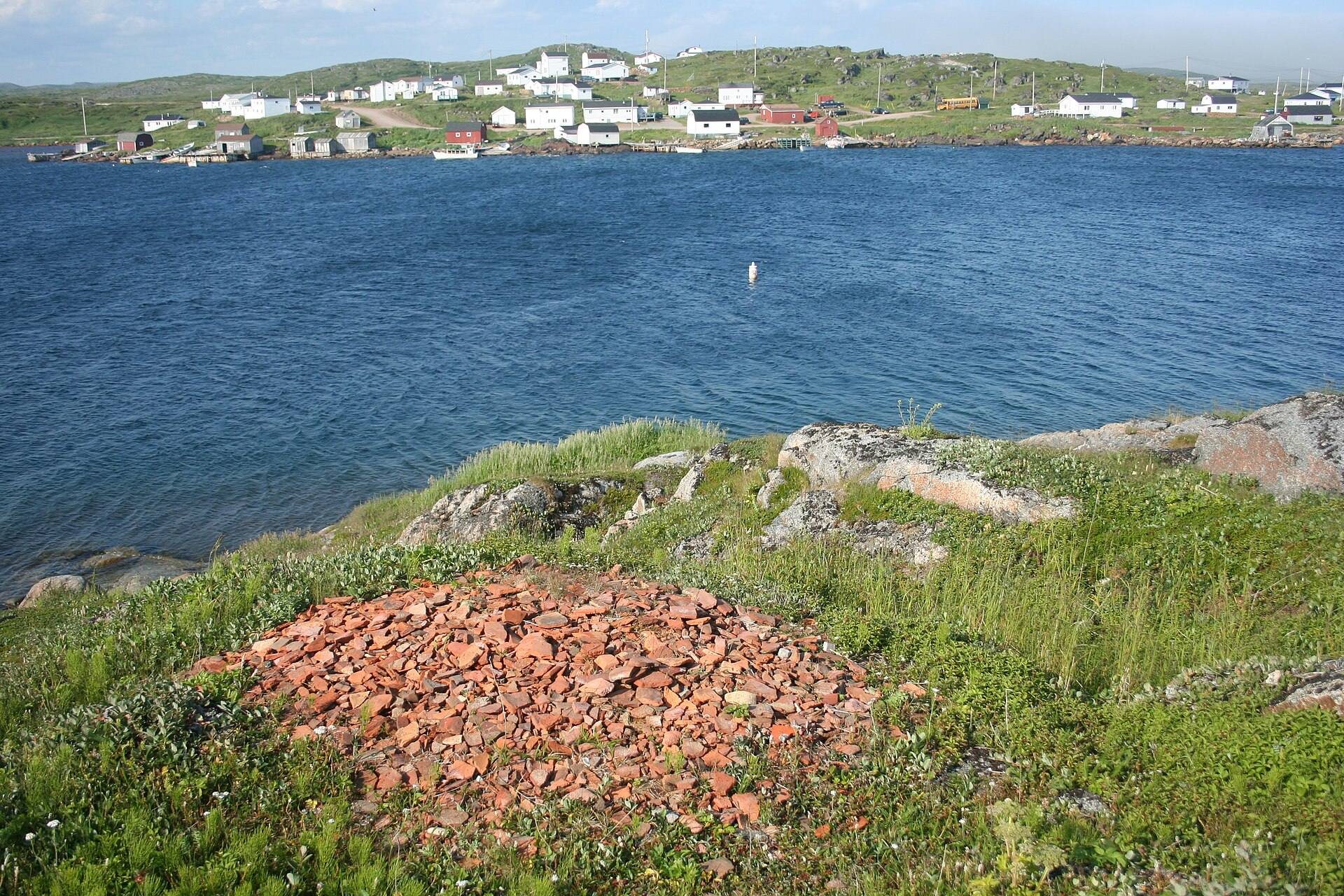
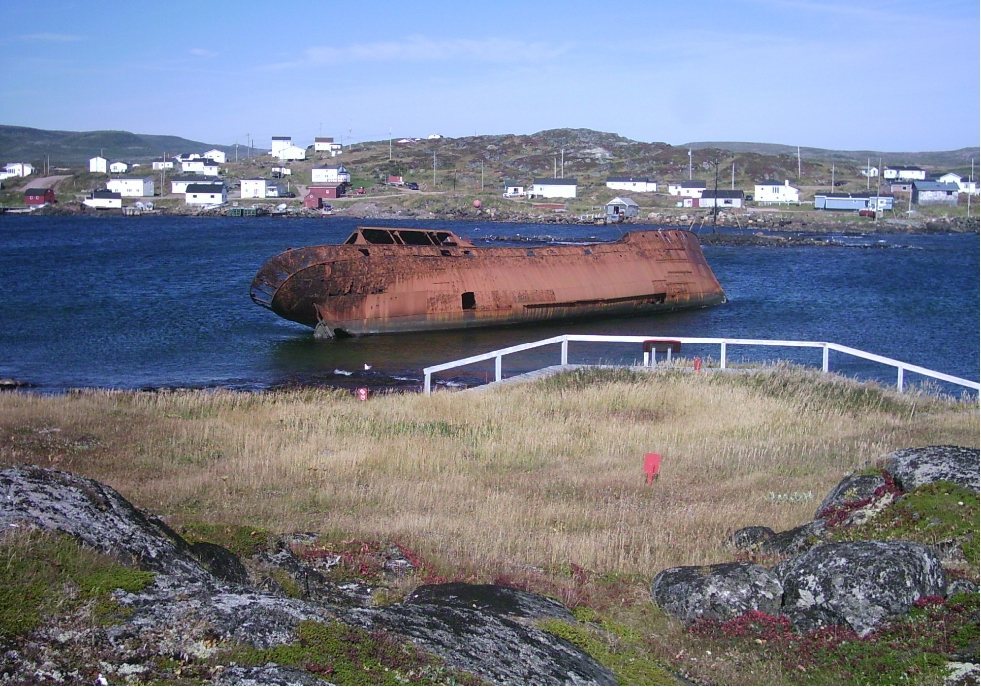
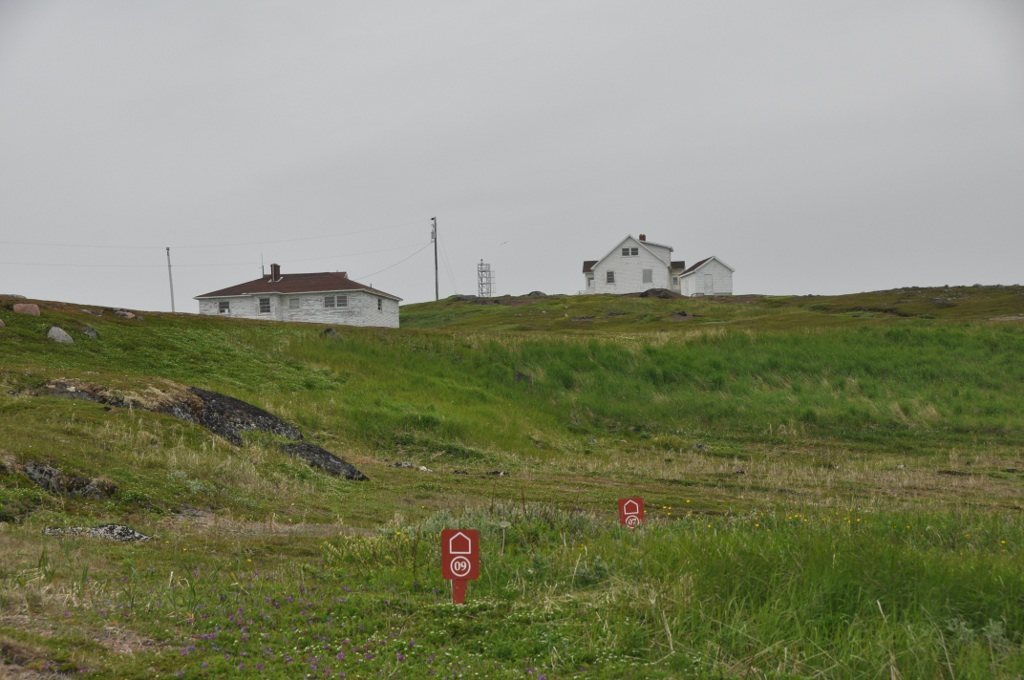
Red Bay lies north of the Strait of Belle Isle, the narrow sea passage between Newfoundland and the Labrador mainland. Saddle Island shelters the harbour from the Atlantic Ocean and creates a natural harbour. The surviving archaeological complex extends across the island, the mainland shore, and underwater areas, linking processing facilities, maritime infrastructure, living spaces, burial grounds, submerged vessels, and whale-bone deposits.
Shore installations
Whale-processing facilities
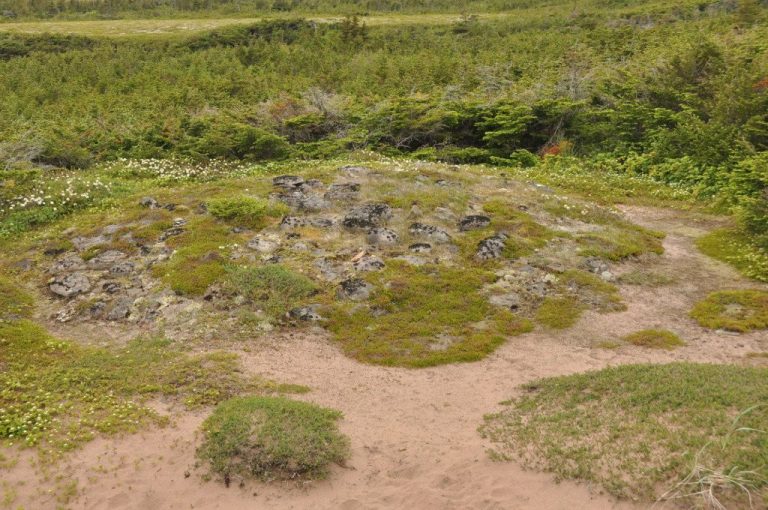
The summer station included rendering ovens, where whale blubber was heated to separate its oil. Fifteen processing installations survive on Saddle Island and the mainland. Burnt animal fat, stone foundations, and large quantities of clay roofing tiles from buildings erected by the whalers provide evidence of the station’s industrial activity.
Drying grounds and cooperages
Facilities for drying Atlantic cod formed part of the shore complex, alongside several cooperages. These workshops made wooden barrels for storing and transporting whale oil. The remains help define the practical organization of the station, which combined whale processing, fishing, storage, and maritime transport.
Wharves and living quarters
Wharves connected the shore installations with the harbour, while temporary living quarters accommodated seasonal workers. Their remains stand alongside the processing areas and contribute to the surviving record of the station’s industrial and maritime activities.
Whalers’ cemetery
Saddle Island contains a whalers’ cemetery with 60 graves, including 14 human bodies. The cemetery forms part of the physical remains of the seasonal station and preserves evidence of the people who worked there.
Underwater remains
Wreck site 24M
Four shipwrecks and deposits of whale bones survive beneath the harbour. Wreck site 24M, approximately 30 metres from the shore north of Cox Hill on Saddle Island, is likely the Basque whaling vessel San Juan, which sank in 1565. Its hull lies roughly north to south, with the bow farther from the beach. The stern rests in about 7 metres of water and the bow in about 12 metres.
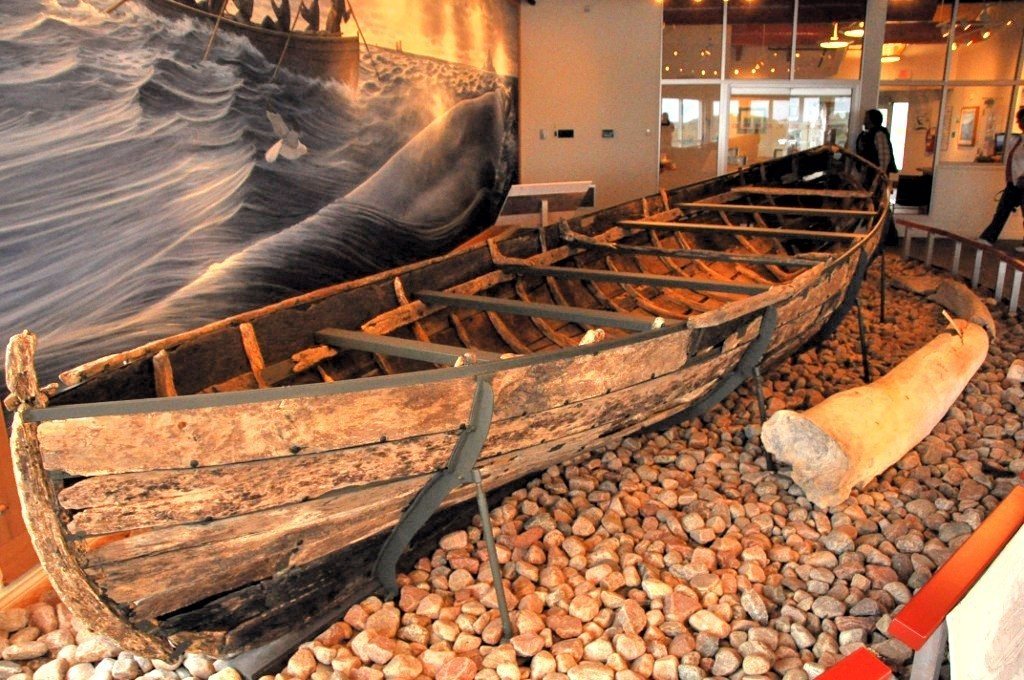
The vessel probably dragged its anchor during a northwesterly storm at the end of the whaling season. It was carrying barrels of whale oil and was nearly ready for the transatlantic voyage to its home port. Archaeological work revealed hull structures, artefacts, and other finds. The wreck’s structural components were later returned to the water and reburied in an environment designed to reproduce the oxygen-poor conditions that had preserved the timbers. This reburial was completed in 1985 and is regularly monitored.
Other vessels and whale-bone deposits
Underwater investigations also recovered three Basque galleons, large ocean-going sailing vessels used for long-distance trade and transport, and four smaller boats. Together with the whale bones deposited in the harbour, these remains extend the archaeological record beyond the shore facilities and show the maritime scale of the whaling station.