L’Anse Amour Archaeological Site: A Maritime Archaic Burial Monument in Labrador
Site at a Glance
- Rating
- 4.7
- Popularity
- Very Low
- Country
- Canada
- Primary era
- Stone Age
- External website
- Open
- Eras represented
- Stone Age
- Civilizations
- Unclassified
- Site type
- Burial
- Remains
- Burial Mound
On this page7 sections
History
L’Anse Amour archaeological site is a Maritime Archaic burial and settlement site in southern Labrador, Canada, near the Strait of Belle Isle. Built by nomadic hunter-gatherers around 5500 BC, its burial mound is approximately 7,500 years old. The monument is regarded as the oldest known burial mound in the New World and the oldest known extensive funerary monument in the Americas.
The Maritime Archaic tradition
The burial belongs to the Maritime Archaic Tradition, a prehistoric coastal culture of northeastern North America whose communities depended on marine resources, including seals and other animals. This tradition had recently expanded northward when the L’Anse Amour monument was built. It reached its greatest extent around 4050 BC, was pushed southward from about 2050 BC by advancing Paleo-Eskimo groups, and had been completely replaced in the region by about 1250 BC.
The wider 47-hectare site preserves evidence of human presence from approximately 7000 BC to 1500 BC, with limited traces continuing to the beginning of the Common Era. Most of the remains come from small camps associated with seal hunting. Large numbers of blades and other finds place L’Anse Amour among the oldest and longest-used Indigenous archaeological sites in Labrador.
Discovery and later recognition
Memorial University of Newfoundland archaeologists James Tuck and Robert McGhee noticed the stone-covered mound in 1973. Excavation and investigation in 1974 revealed the burial of a child estimated to have been 12 or 13 years old. The construction of the mound and the burial probably required the small community to work for about a week.
The monument was reconstructed after excavation, and the mound and surrounding archaeological site were designated a National Historic Site of Canada in 1978. Artefacts from the site are maintained in a permanent exhibition at the Labrador Straits Museum in nearby L’Anse-au-Loup.
Early evidence of whale hunting
A toggling harpoon from the burial provides the earliest evidence of whale hunting at L’Anse Amour. Its date, approximately 7530 ± 140 years Before Present, was slightly earlier than a comparable find from Higashikushiro in Japan. This dating prompted discussion about possible connections between hunter groups on the Pacific and Atlantic margins.
Remains
The site occupies a slightly elevated area about 1 kilometre north of L’Anse Amour, overlooking the Strait of Belle Isle approximately 700 metres to the southwest. The burial mound stood about 28 metres above sea level. The surrounding archaeological area contains remains from successive occupations, including small camps, fire pits, tools, and food remains.
The burial mound
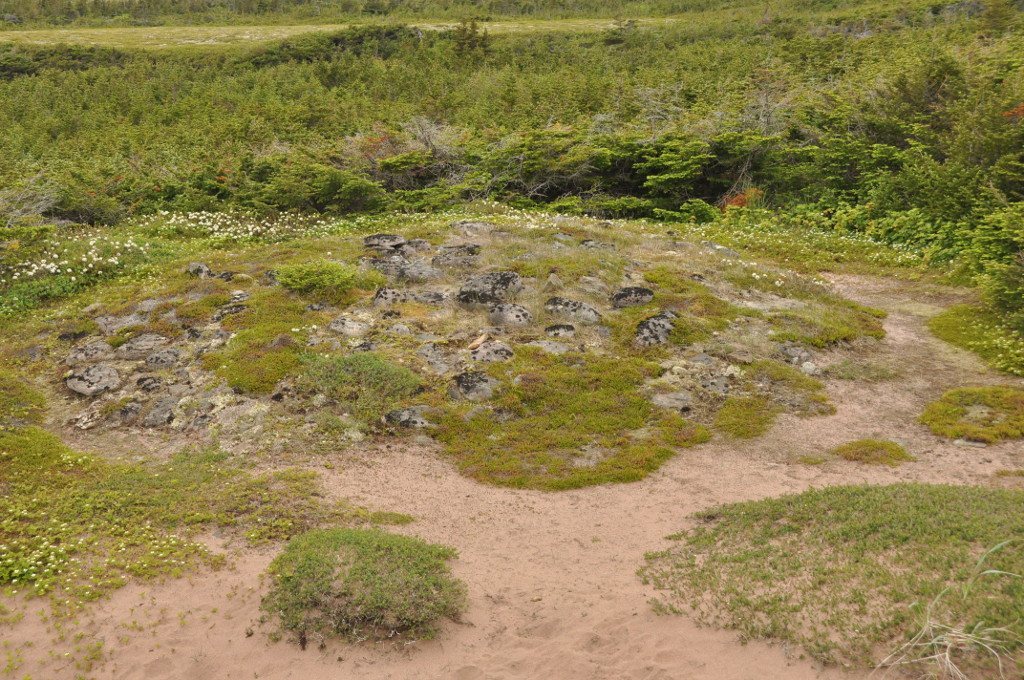
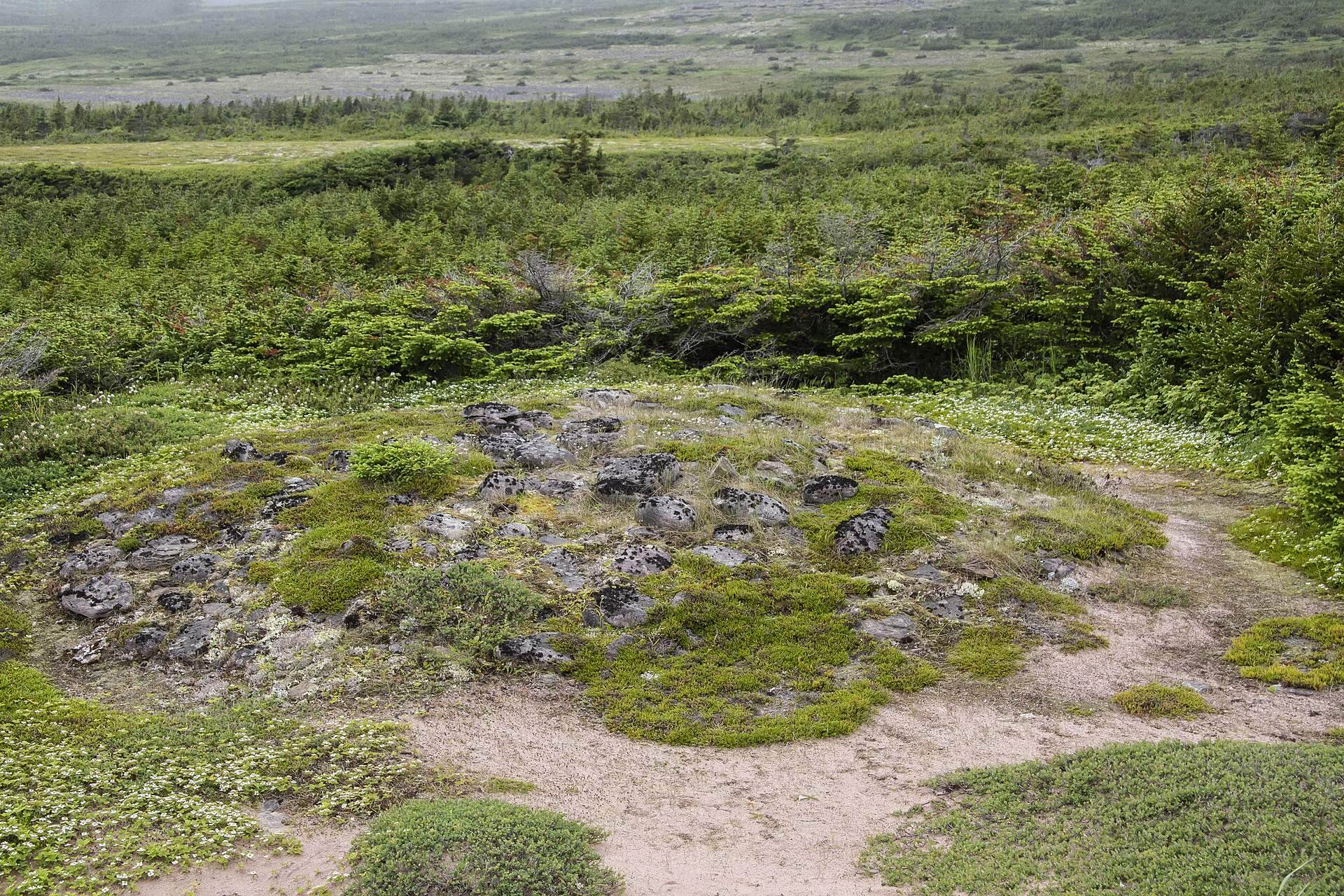
The monument is a round earthen mound about 1 metre high and approximately 10 metres across. Around 300 stones were incorporated into its earth, while a second central stone layer measured about 4 metres in diameter. A final covering of large flagstones completed the structure. The mound was difficult to distinguish in the landscape until its discovery in 1973 and 1974, and it was reconstructed after excavation.
Inside the mound, the child lay face down and faced west in a broad, deep grave approximately 1.6 metres deep. Red ochre, a pigment made by grinding the iron-bearing mineral hematite, covered the body, which was wrapped in hides or birch bark. A stone rested over the back. The grave goods included a walrus tusk, a bird-bone flute, stone and caribou-bone spears, a bone pestle used to process hematite, a pendant, a chert projectile point, and a perforated stone bannerstone associated with hunting equipment or ceremonial use.
The grave also contained a bone toggling harpoon, whose detachable point could turn sideways after striking a marine animal and remain anchored while the shaft was recovered. It is described as the oldest known harpoon in North America and the oldest toggling harpoon ever found. Fire pits around the grave contained fish bones and other traces of food prepared or deposited during the burial ceremony. The rich treatment may indicate that the child, or young adolescents generally, held an important position in the community, or that the death had special significance.
Surrounding occupation area
Beyond the mound, the 47-hectare archaeological site preserves traces of repeated Indigenous occupation extending from approximately 7000 BC to 1500 BC, with limited evidence continuing into the beginning of the Common Era. Small camps associated with seal hunting and large numbers of blades form much of the surviving archaeological record. These remains place the burial within a broader landscape of coastal settlement and subsistence.
One proposed interpretation links the child’s face-down position and the stone placed over the body with a belief that harmful forces connected with the death had to be prevented from affecting the living. This explanation remains conjectural.