Siete Bateas: An Inca Hydraulic and Ceremonial Site in Peru
Site at a Glance
- Rating
- 5
- Popularity
- Very Low
- Country
- Peru
- Primary era
- Medieval
- Eras represented
- Medieval
- Civilizations
- Inca
- Site type
- Religious
- Remains
- Sanctuary
On this page10 sections
History
Siete Bateas is an Inca archaeological site in the Saqsaywaman Archaeological Park of Cusco, Peru. Located in the Fundo Llaullipata sector on the lower part of a ravine beside the Chakán River, it formed part of an Inca hydraulic, landscape, and ritual complex.
An Inca ceremonial and hydraulic landscape
The site has been identified with Ñusta’s Bath, one of the principal ceremonial centers associated with the Chakán River. Its interpretation connects water and sculpted rock with the observation of natural phenomena and the veneration of ancestors. These spaces may also have held funerary bundles, wrapped burials containing human remains and associated materials, and served as “houses of memory” within Andean thought.
Siete Bateas belonged to an extensive archaeological system along the Chakán ravine. Springs at different elevations supplied at least four irrigation channels, while approximately fifty archaeological sites occupied the wider landscape. These included terraces, reservoirs, enclosures, and numerous wakas, sacred places, objects, or natural formations in Andean religious traditions. Other major ceremonial centers in the system included Ñustacapana, Puente Chakán, and Qespewara.
The Chakán system brought together ceremonial locations, agricultural terraces, cultivated land, settlements, and an Inca ritual road. The route began at Awkaypata, the present Plaza de Armas of Cusco, climbed through what is now Suecia street to Saqsaywaman, and continued through the Chakán ravine toward the Chinchero highlands.
Water management and later accounts
The area’s development has been associated with Manco Cápac, traditionally regarded as the first Inca ruler and founder of the dynasty, who is said to have selected the zone for its water resources. Inca Roca, an early Inca ruler, was associated with the promotion of water channeling. It remains debated whether the Chakán and Hanán channels belonged to one system or to two differentiated systems, an issue that may relate to the Andean principle of duality.
Sixteenth-century chronicler Pedro Cieza de León emphasized the importance of the Chakán hydraulic system during droughts. His account points to the system’s economic and symbolic role in organizing the territory.
Remains
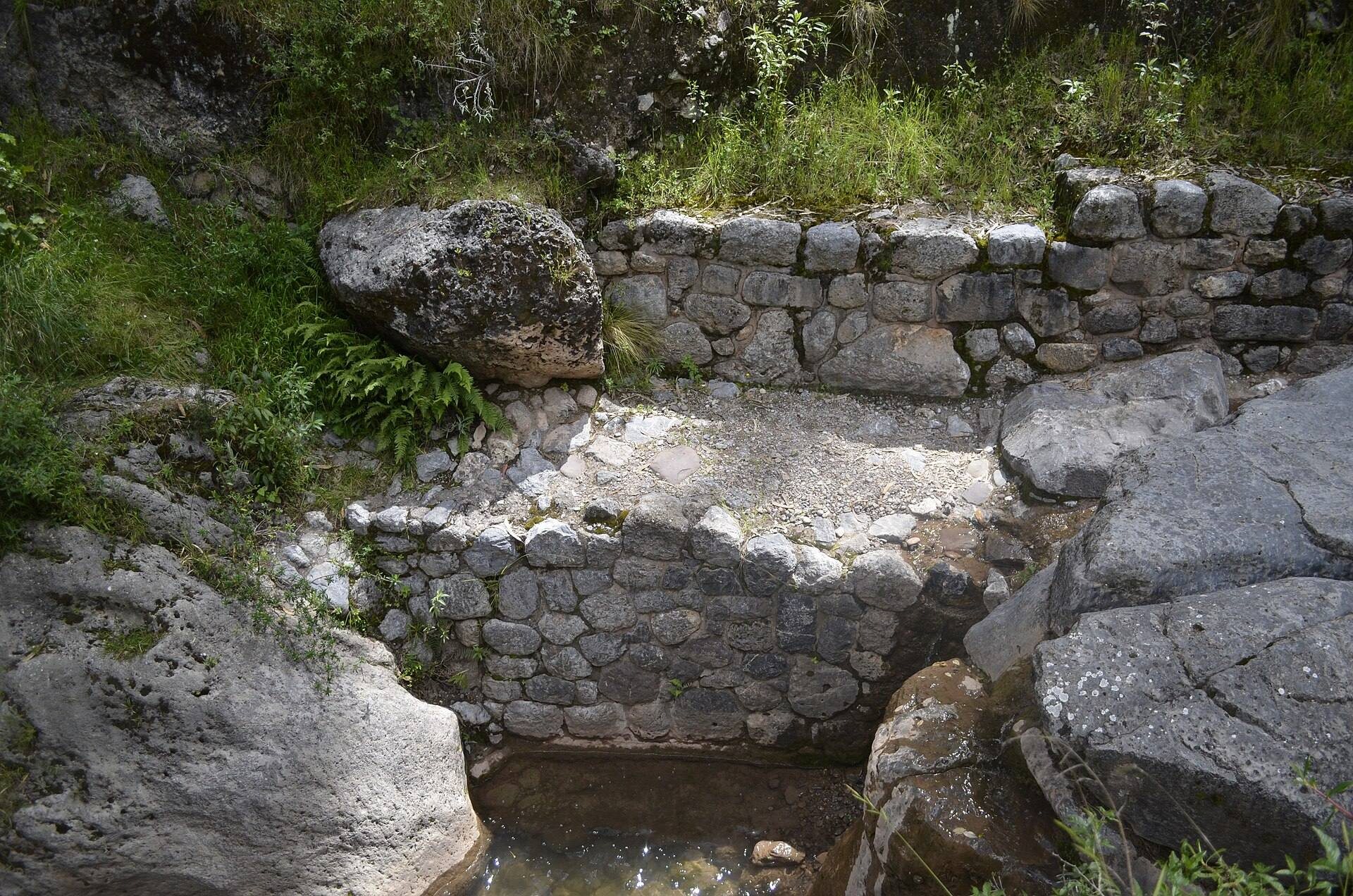
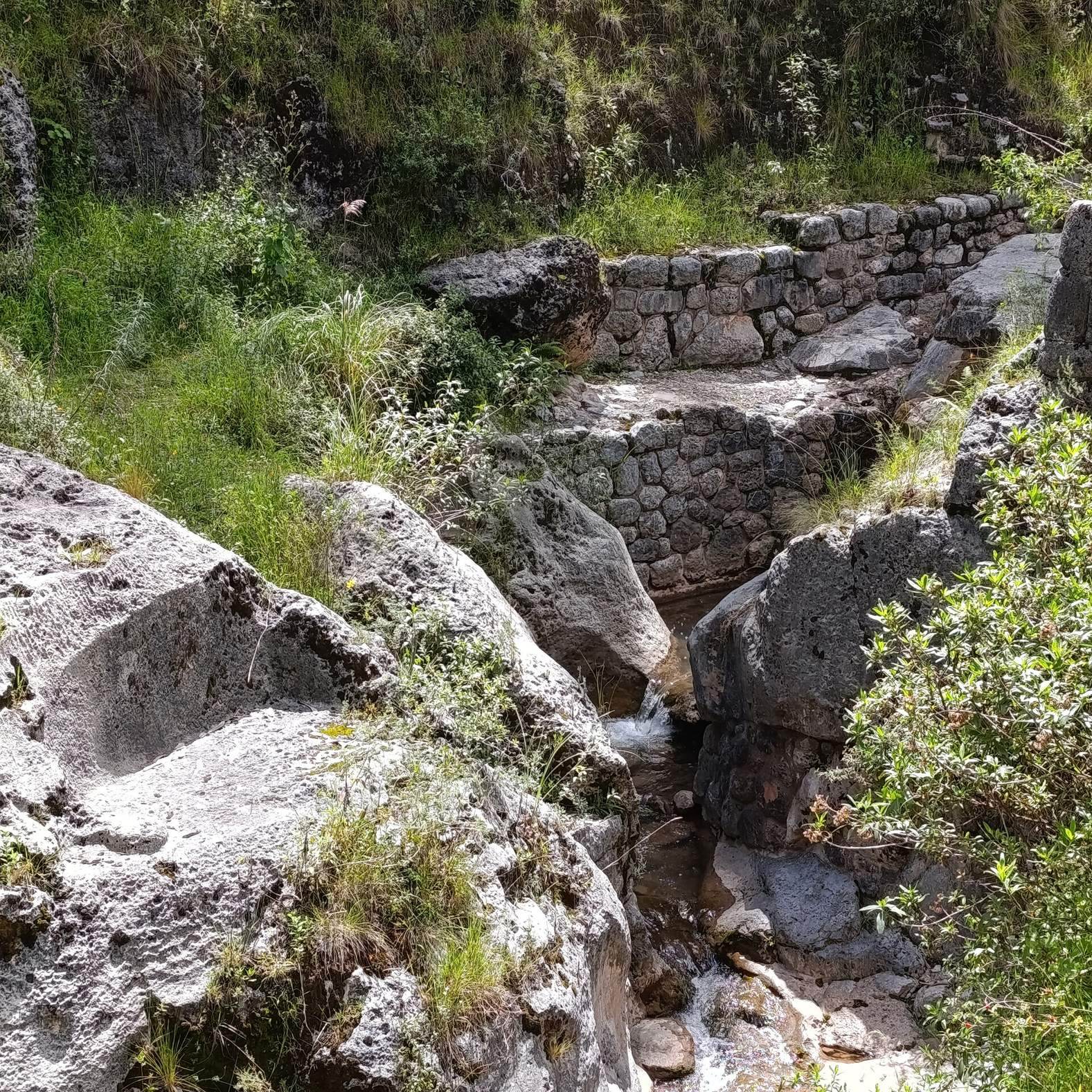
Siete Bateas consists of several cultural components built around natural rock formations modified by human intervention and closely connected with the Chakán River. The remains combine carved rock, carefully fitted polygonal and cushioned masonry, retaining walls, river-channeling walls, terraces, stairways, and passages. The site is in regular condition. Erosion from the river affects the base of the principal rock outcrop, and some stone elements have been lost from the walls.
Carved rocks and channels
Principal rock
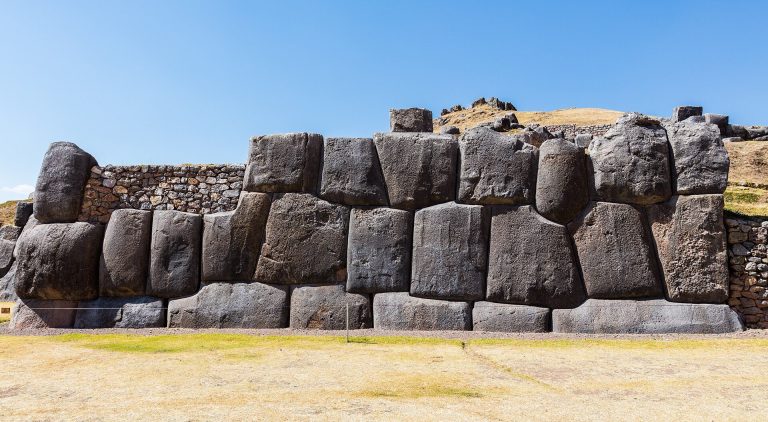
The upper part of the principal rock remains uncarved, while its lower section contains a geometric rock-cut feature resembling a west-facing seat. A channel cut into the bedrock forms part of the same complex. The rock is associated with polygonal, cushioned masonry, in which carefully fitted stones have projecting rounded surfaces, as well as retaining walls and structures that directed the river’s flow.
Passage and secondary formation
A five-step stairway leads to a passage between rock outcrops. Another rock bears a rectangular feature carved in low relief. On the opposite bank, a smaller formation with similar characteristics stands beside a wall built to channel the river, extending the relationship between modified rock and water beyond the principal outcrop.
Ñusta’s Bath and the wider landscape
Terraces and natural bridge
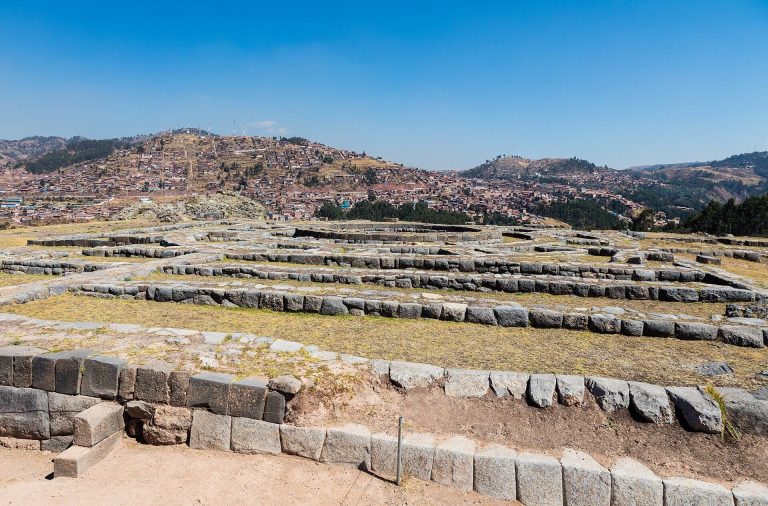
In the area identified as Ñusta’s Bath, agricultural terraces guide the river around a large rock surrounded by flowing water. The rock also served as a natural bridge, linking hydraulic management with the ceremonial use of the setting.
Wakas and covered galleries
The settlement developed around carved wakas. Structures roofed with flat stone slabs were attached to these sacred rocks, creating covered galleries in direct contact with the bedrock. Across the wider Chakán landscape, watercourses, large rocks, natural cavities, carved surfaces, walls, terraces, and platforms formed a connected physical setting. Some associated buildings contained interior niches and used high-quality Inca construction.