Morro del Tulcán: Pre-Columbian Ceremonial and Funerary Monument in Popayán
Site at a Glance
- Rating
- 4.6
- Popularity
- Medium
- Country
- Colombia
- Primary era
- Unclassified
- External website
- Open
- Eras represented
- Unclassified
- Civilizations
- Unclassified
- Site type
- Burial
- Remains
- Burial Mound
On this page10 sections
History
Morro del Tulcán, also called the Pyramid of Tulcán, is a pre-Columbian archaeological monument in Popayán, Colombia. Built by a culture associated with the Late Chieftain Societies, communities organized under hereditary or chiefly leadership, it served ceremonial and funerary purposes. The identity of its builders remains unknown, and they may have disappeared or been assimilated by later groups. Its precise date and chronology are still unsettled.
Pre-Columbian monument
The monument was constructed as a ceremonial and funerary structure using adobe and earth fill. Archaeological interpretation also places it within a larger setting that once included a surrounding lake, although whether the lake was natural or artificial is uncertain. The monument’s original summit had a pointed form before later changes altered its shape.
Concealment and archaeological investigation
By the time of the Spanish conquest, vegetation was believed to have concealed the monument from both local inhabitants and the conquistadors. Grave looting took place before formal archaeological work began. In March 1957, a storm caused an avalanche that opened part of the site and exposed a wall about 3 metres high, decorated with adobe mosaics.
The University of Cauca then commissioned the Colombian anthropologist and archaeologist Julio César Cubillos Chaparro to investigate the hill. His excavation began on 15 July 1957 and included 13 trenches. It was the only official archaeological investigation at the site before the proposed resumption of archaeological studies after 2020. Cubillos considered the associated culture highly sophisticated and interpreted the monument as a ceremonial and funerary construction.
Road construction and the Belalcázar monument
Modern interventions damaged the pre-Columbian structure. A road built in 1937 to provide access to the hill affected parts of the construction. Around 1940, the summit was cut and levelled to create a platform for a monument to Sebastián de Belalcázar, a Spanish conquistador associated with the Spanish foundation of Popayán, during celebrations of the city’s fourth centenary.
The project was initially intended to honour Pubén, an Indigenous cacique, meaning a chief or community leader. The statue commissioned from the Colombian sculptor Rómulo Rozo disappeared, and a different monument was installed instead. Made by the Spanish artist Victorio Macho, the equestrian statue of Belalcázar remained on the summit from the late 1930s or around 1940 until 2020. The poet and intellectual Guillermo Valencia publicly opposed the change and criticized the substitution of a monument to the conquistador for the planned Indigenous monument.
Removal of the statue
On 16 September 2020, Misak demonstrators removed the equestrian statue from its pedestal and toppled it. The action concerned the monument to Belalcázar and does not establish that the Misak built Morro del Tulcán or that the pyramid was a sacred site of their people. The Misak are an Indigenous people of southwestern Colombia associated historically with the Guambía reservation in Cauca. They are believed to have arrived in the Pubenza Valley near or after the Spanish conquest, probably through migrations from the south, and established themselves principally in present-day Silvia.
After the statue’s removal, the University of Cauca announced that archaeological investigations in the area would resume as a form of symbolic restitution.
Remains
Hill and construction
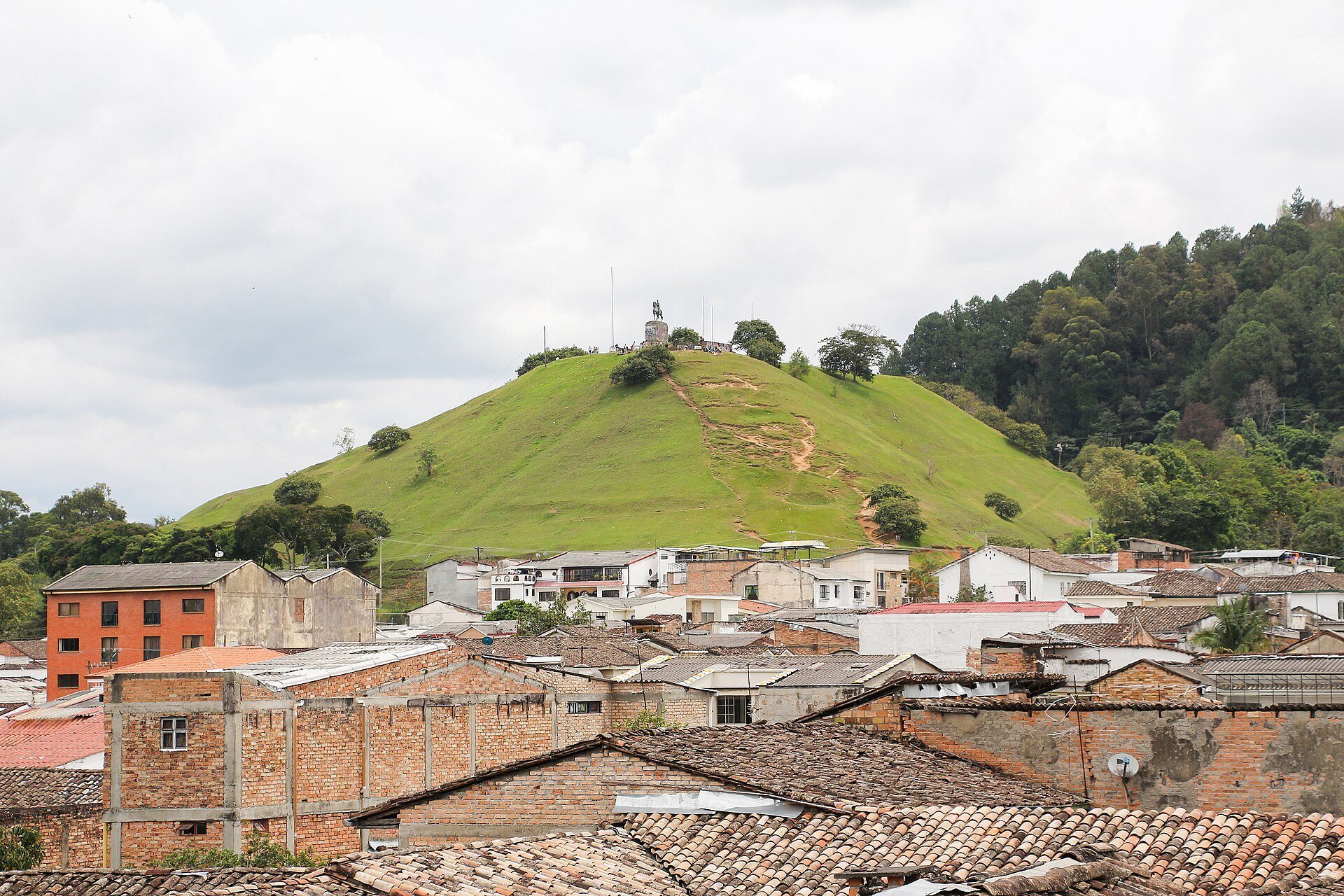
Morro del Tulcán is a small natural hill reshaped into a truncated pyramid, approximately 80 metres high according to Cubillos. Its construction consists principally of lateritic clay, an iron-rich tropical soil or clay, together with adobe, stone, and earth fill. Adobe is a sun-dried earthen building material formed into blocks or courses. The hill was formerly surrounded by a lake of uncertain origin. Its shrubby vegetation has since been replaced by grass, including natural grass or kikuyu grass, and the hill is currently deforested.
Summit and excavated features
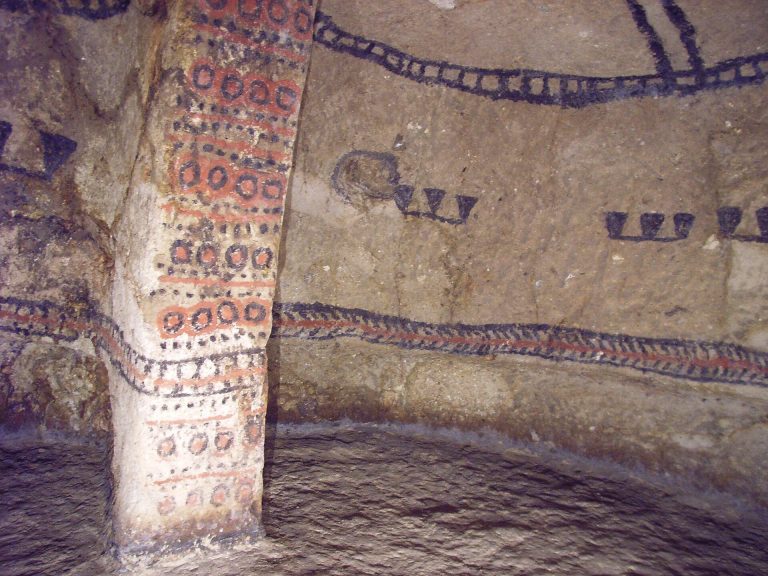
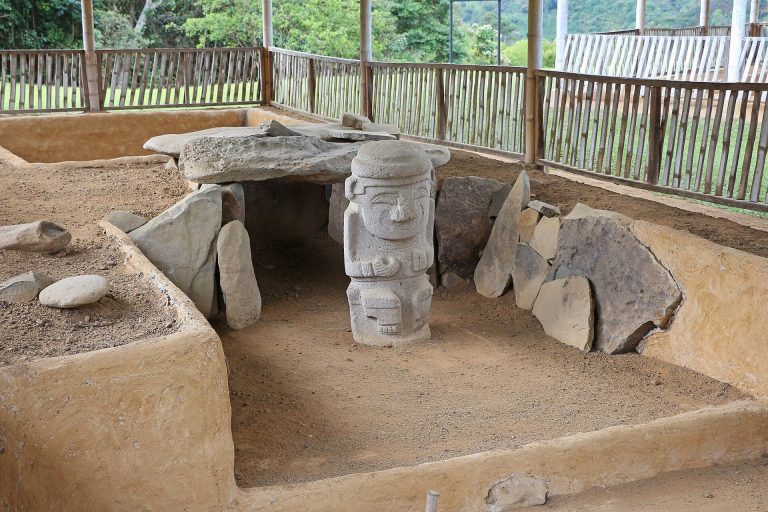
Excavation exposed stone paths, stone paving on the upper part of the pyramid, steps, and tombs. The trenches also revealed artificial adobe walls and other construction features concealed beneath the surface. The excavated wall exposed after the 1957 storm stood about 3 metres high and included adobe mosaics. Other construction details included adobe courses laid with their shorter ends facing outward or across the wall, scraped areas, ditches, and adobe retaining or abutment walls.
Boundaries and archaeological finds
The eastern limit of the construction extended toward the abutment of the northern slope. Archaeological features also included a northern track, an organic basal layer that dipped in places, and concentrations of carved stone slabs on the eastern side. Excavations recovered shells and precious stones originating in other parts of Colombia and in other regions of the continent.
Altered summit
The platform made for the Belalcázar statue changed the original form of the monument. Cutting and levelling destroyed two adobe-and-earth walls that had helped define the pre-Columbian summit and removed its pointed or cuspid shape. The statue stood on this altered summit until its removal in 2020, leaving the physical form of the hill shaped by both its pre-Columbian construction and later intervention.