Ancient Greek Sites in Cyprus: Explore Theatres, Rock-cut Tombs and City Kingdoms
Greek and Hellenistic sites in Cyprus include the theatre and burial grounds of Nea Paphos, the fortified administrative buildings of Idalion and the successive sanctuaries of Kition. The island’s cities combined Greek, Cypriot and Phoenician traditions, later coming under the Ptolemaic rulers of Egypt. Their remains preserve these overlapping histories through rock-cut rooms, courtyards, fortifications and buildings adapted for new uses.
Primary Function: All
Type: All
Civilization: All
Popularity: All
Rating: All
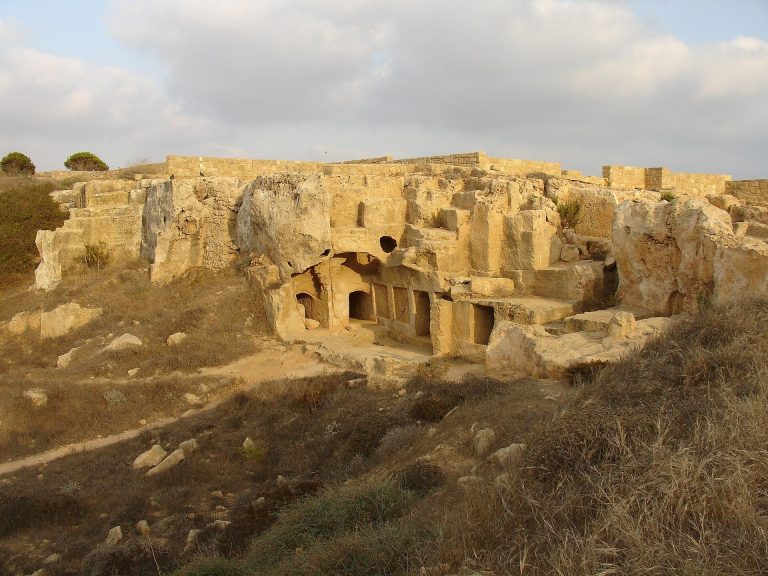
The Tombs of the Kings is a large Hellenistic necropolis near Paphos, developed under Ptolemaic rule and used for elite burials until the third…
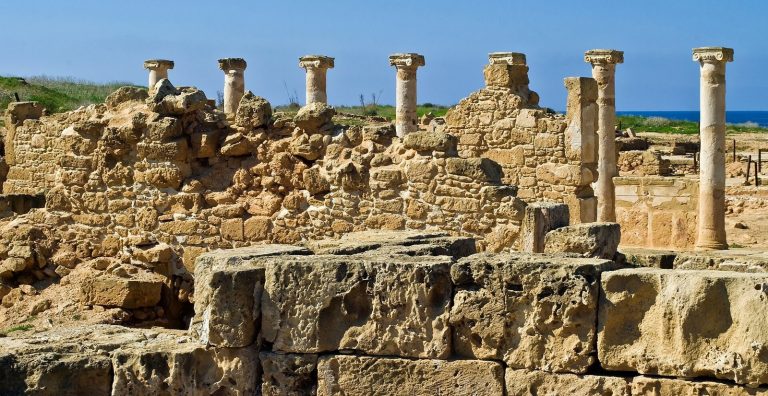
Nea Paphos was founded in the late 4th century BC and became the political, economic, harbour and naval centre of Cyprus under Ptolemaic and Roman…
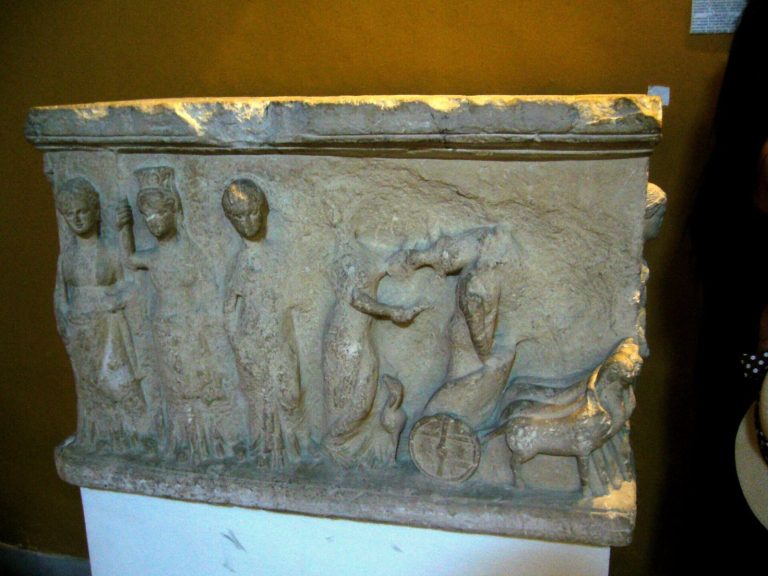
Founded in 1882 to protect Cyprus’s antiquities, the Cyprus Museum preserves archaeological material from the Neolithic period through Roman rule and…
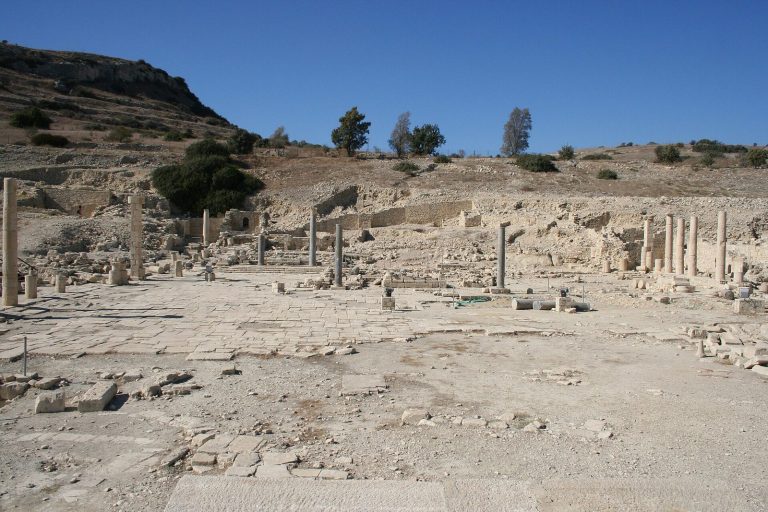
Amathous preserves the history of a Cypriot royal city-kingdom from the early Iron Age through Late Antiquity, including its acropolis, sanctuaries,…
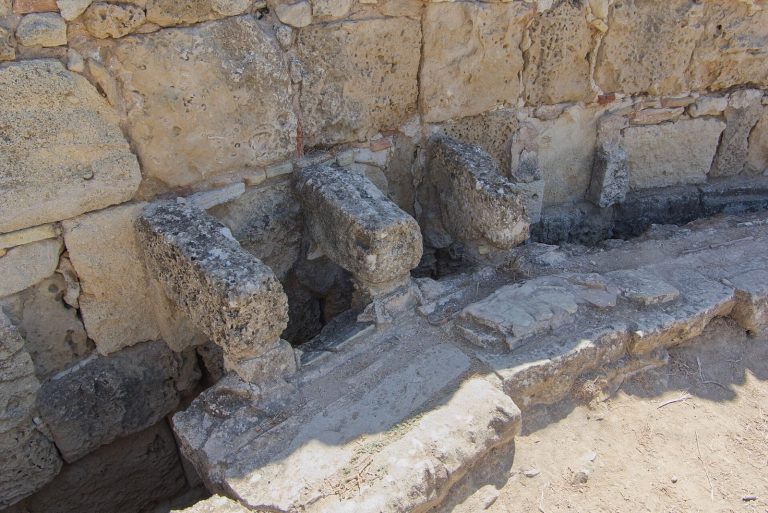
Salamis developed from an Early Iron Age settlement into a major Cypriot port, royal center, Roman commercial city, and Byzantine episcopal capital.…
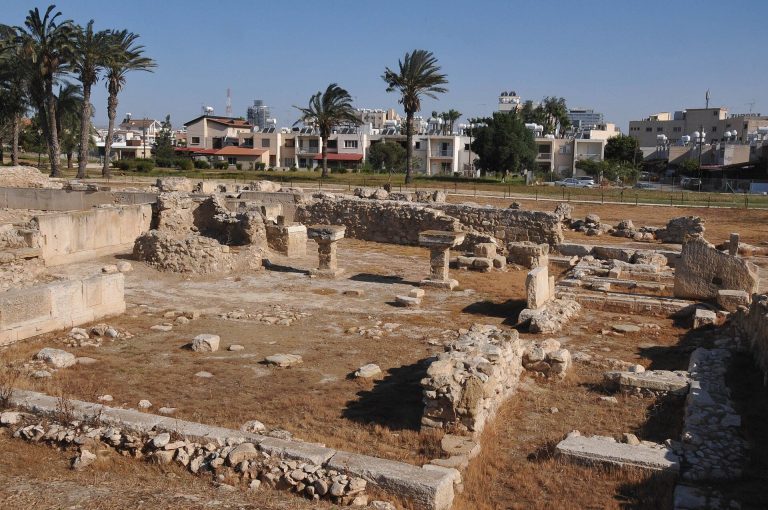
Kition was an ancient city-kingdom within modern Larnaca, shaped by Greek, Phoenician, Egyptian, Persian, Hellenistic, and Roman rule. Its…
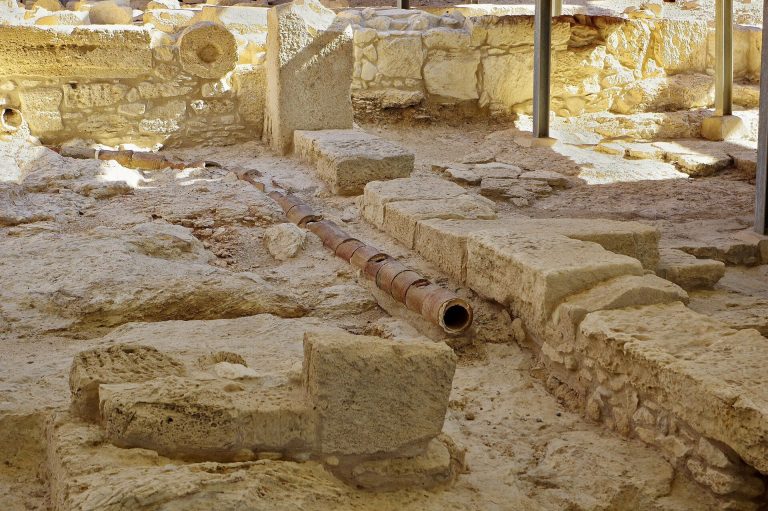
Kourion was an ancient Greek city-kingdom on Cyprus that developed into a Roman and early Christian urban centre before earthquakes and Arab raids…
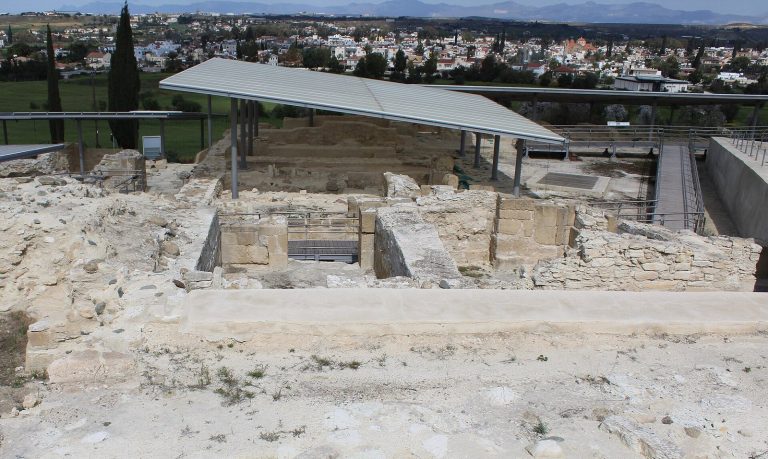
Idalion was an ancient city and kingdom near modern Dali, shaped by copper trade, regional contacts, royal administration, and religious cults. Its…
For details on how to use the maps, which sites are included, how popularity and ratings are determined, and how sites are classified, see the help page.
On this page4 sections
Nea Paphos: a theatre and underground courtyards
The theatre at Nea Paphos was established around 300 BC on the slope of Fabrica Hill. Its upper seating was cut into the rock, facing towards the town and sea. The building was altered repeatedly under Hellenistic and Roman rule, so the excavated auditorium contains several phases rather than one unchanged original design.
The associated necropolis known as the Tombs of the Kings preserves underground burial chambers arranged around open courtyards. Stairways descend into spaces with Doric-style columns cut from the rock. Despite their traditional name, these tombs served high-ranking individuals rather than the island’s kings. Their courtyard plans brought architectural forms used above ground into the setting of a cemetery.
Within the main archaeological area, an early pebble mosaic depicting Scylla predates the Roman House of Dionysus. It is a surviving floor from an earlier building beneath the better-known Roman residence, whose other mythological mosaics are later.
Idalion: a fortified palace and administrative centre
At Idalion, the lower town occupied the space between two acropolis hills. The western hill contained a fortified palace and administrative complex, with rooms protected by substantial defensive masonry. The settlement was a city kingdom before its incorporation into the territory controlled by Kition.
The site produced both Greek and Phoenician inscriptions. The bronze Idalion Tablet records an agreement involving the king, the community and physicians rewarded for treating the wounded; a later administrative archive documents Phoenician government. These finds give the excavated rooms a political and administrative context without attributing every phase of the complex to a single population. The tablet and other portable objects belong to museum collections rather than remaining as furnishings inside the ruins.
Kition: a sanctuary replaced by working buildings
At Kition, the Bamboula area preserves successive religious and commercial uses near the ancient harbour. Its sanctuary was associated with Heracles-Melqart, combining Greek and Phoenician identifications of the deity. Sculptures and offerings were moved or buried as the sacred precinct was rebuilt.
During the Hellenistic period, secular buildings replaced the sanctuary. Excavated installations include a basalt press, probably used for wine or oil, drainage outlets and a storage vessel. These belong to a different phase from the much earlier temples and copper-working remains at nearby Kathari. The distinction matters at a site whose surviving structures extend from the Late Bronze Age through the Roman period.
Explore the collection
Explore sites on the map or in the grid. Map icons reflect each site’s primary function, helping you identify different kinds of places at a glance. Narrow the results by primary function, site type or era. Use the Civilization filter to select among the Greek and Hellenistic groups included here, with additional filters for popularity and rating. Select a map marker to view the site’s details and open its article, or open the article from its grid entry.