Stift Wietmarschen: A Former Benedictine Monastery and Women’s Collegiate Foundation in Germany
Site at a Glance
- Rating
- 4.7
- Popularity
- Very Low
- Country
- Germany
- Primary era
- Early Modern
- External website
- Open
- Eras represented
- Early Modern, Modern
- Civilizations
- German, Holy Roman Empire
- Site type
- Religious
- Remains
- Monastery
On this page17 sections
History
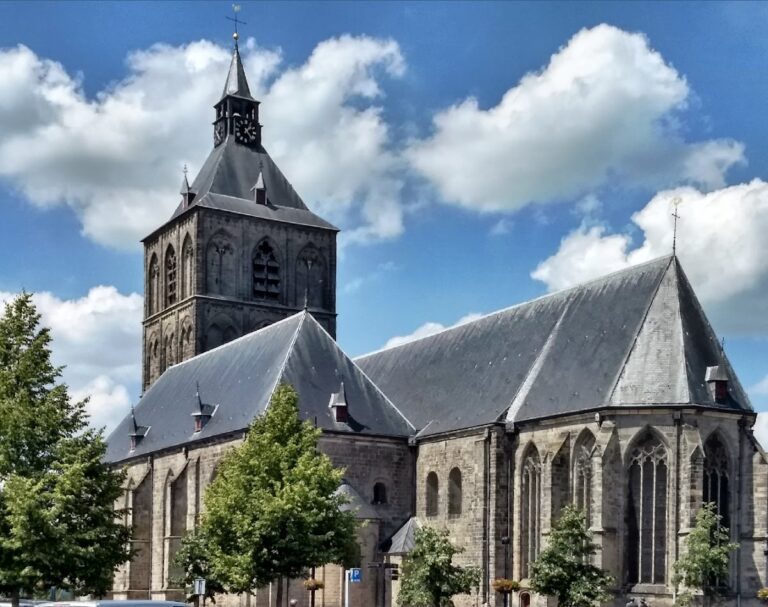
Stift Wietmarschen is a former Benedictine monastery and women’s collegiate foundation in Wietmarschen, Germany, founded in 1152 on the southern edge of the Bourtanger Moor. Known originally as Sünte Marienrode, it developed from a double monastery into an exclusively female institution and later into a secular women’s collegiate foundation. Its history is now represented by the pilgrimage church, restored foundation buildings, woodland chapels, and the Stifts and Pilgrimage Museum.
Foundation and Benedictine Monastery
The foundation was enabled by Countess Gertrud of Bentheim, traditionally with the support of Friedrich II, then newly elected bishop of Münster, and the knight Hugo von Büren from the Betuwe and his religious companions. Its purpose was connected with the salvation of Gertrud’s deceased husband, Otto II of Bentheim. On 14 September 1152, the settlers chose Hildebrand of Utrecht as the monastery’s first superior. This date is regarded as the foundation day of both the monastery and the community.
Sünte Marienrode followed the Rule of Saint Benedict, the code governing Benedictine religious life, and initially belonged to Countess Gertrud before coming under the authority of the bishop of Münster. As a double monastery, it housed both monks and nuns. It served as the burial place of the counts of Bentheim until the thirteenth century, while the monks worked the monastery’s lands in the Bourtanger Moor.
Female Monastery and Collegiate Foundation
After the monks moved to Utrecht in 1259, Sünte Marienrode became an exclusively female monastery. Wietmarschen flourished particularly between 1320 and 1489, aided by the reputation of a statue of the Virgin Mary. The collegiate church was enlarged in Gothic style in 1500. In 1544, the nuns successfully resisted the Reformation, the movement that divided Western Christianity and brought many religious institutions under Protestant control. The church was extended by a further 11 metres in 1630.
After the Thirty Years’ War, a major European conflict that ended in 1648, the monastery abandoned the Benedictine rules in 1659. From 1675 it operated as a secular women’s collegiate foundation, a community in which noblewomen lived under institutional religious rules without belonging to a convent in the stricter monastic sense. Its head was now called an abbess rather than a prioress, and admission was limited to unmarried noblewomen and widows.
The foundation’s economic circumstances soon improved. The church was enlarged and renovated, new foundation buildings and forest chapels were constructed, and additional settlement areas were established in wasteland and moorland. The recorded abbesses included Anna von Vörden, Anna von Vifhusen called Suverich, Anna von Twickel zu Borgbeuningen and Venhaus, Margaretha Sibylla von Twickel zu Havixbeck, Sophia Elisabeth Bormann called von Kessel zu Hovedissen, Anna Eleonora Sophia von Herding zu Hiltrup, Isabella Catharina Maria von Herding zu Hiltrup, Wilhelmina Carolina von Höfflinger zu Brückhausen, and Maria Alexandrina von Vittinghoff called Schell zu Schellenberg.
Dissolution and Pilgrimage Church
The collegiate foundation was dissolved in 1811 during the annexation of northwestern German territories by the Napoleonic Empire, and its assets were confiscated. The former monastery church then became a Catholic parish church.
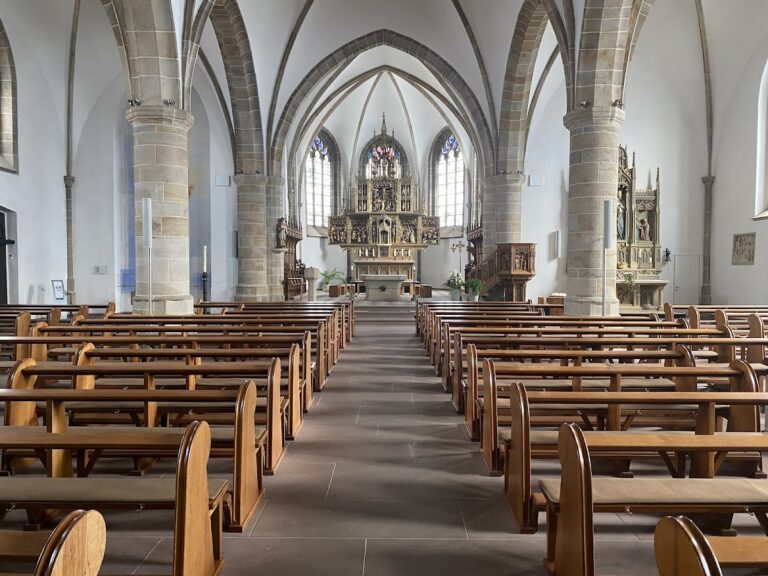
In 1921, Wilhelm Berning, bishop of Osnabrück, officially designated the former Benedictine monastery as a pilgrimage site. A pilgrimage church is visited because of a sacred image, relic, apparition, or another religious association. The present large church, built in basilica form, was completed in 1927. Its 34-metre-high tower followed in 1928 and received its weathercock in October of that year. Berning consecrated the church on 4 May 1933.
War Damage and Conservation
An aerial bomb damaged the church in 1944. Dutch carpenters and Soviet prisoners of war repaired the damage. During the economic expansion after the Second World War, most of the former monastery buildings around the pilgrimage church were gradually demolished, and their residents built houses in newly developed residential areas.
From the late 1970s, a preservation plan was developed for the four remaining collegiate buildings. They were restored between 1981 and 1990 on behalf of the municipality of Wietmarschen, with much of their historic fabric retained. The former grounds are now associated with the Catholic pilgrimage church of St. John the Apostle, the restored buildings of the women’s foundation, the Stifts and Pilgrimage Museum, the Lourdes Grotto, and the adjoining Stiftsbusch. The annual family pilgrimage has been held at the Siebenstern in the Stiftsbusch since 1921.
Remains
Former Collegiate Grounds
The former collegiate grounds were once enclosed by a Gräfte, a water-filled defensive or boundary ditch, and were entered from the northwest through a gatehouse. The timber-framed gatehouse contained the gatekeeper’s residence but was destroyed by fire in 1927. Its sandstone bridge survives, while the moat has disappeared.
The church stood at the centre of the secular women’s foundation. An economic courtyard and the residences of the collegiate women surrounded it. Former agricultural buildings, including a livestock building and a threshing house, were mostly Baroque ancillary structures that were progressively demolished during the twentieth century.
Collegiate Houses
Abbess’s House
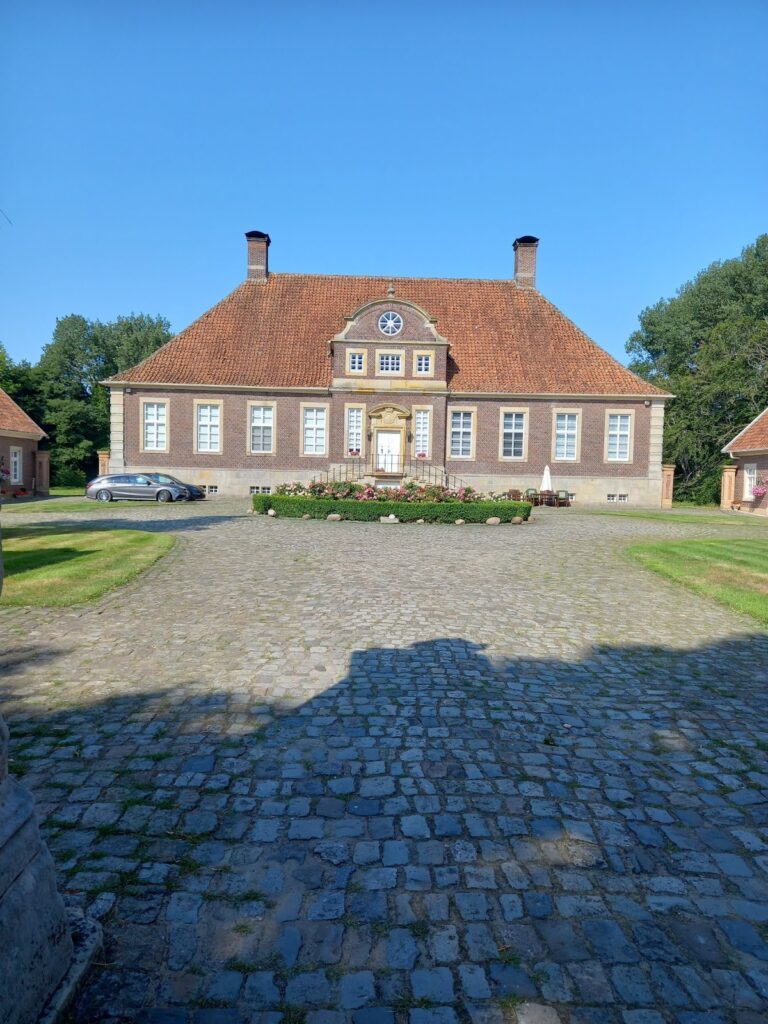
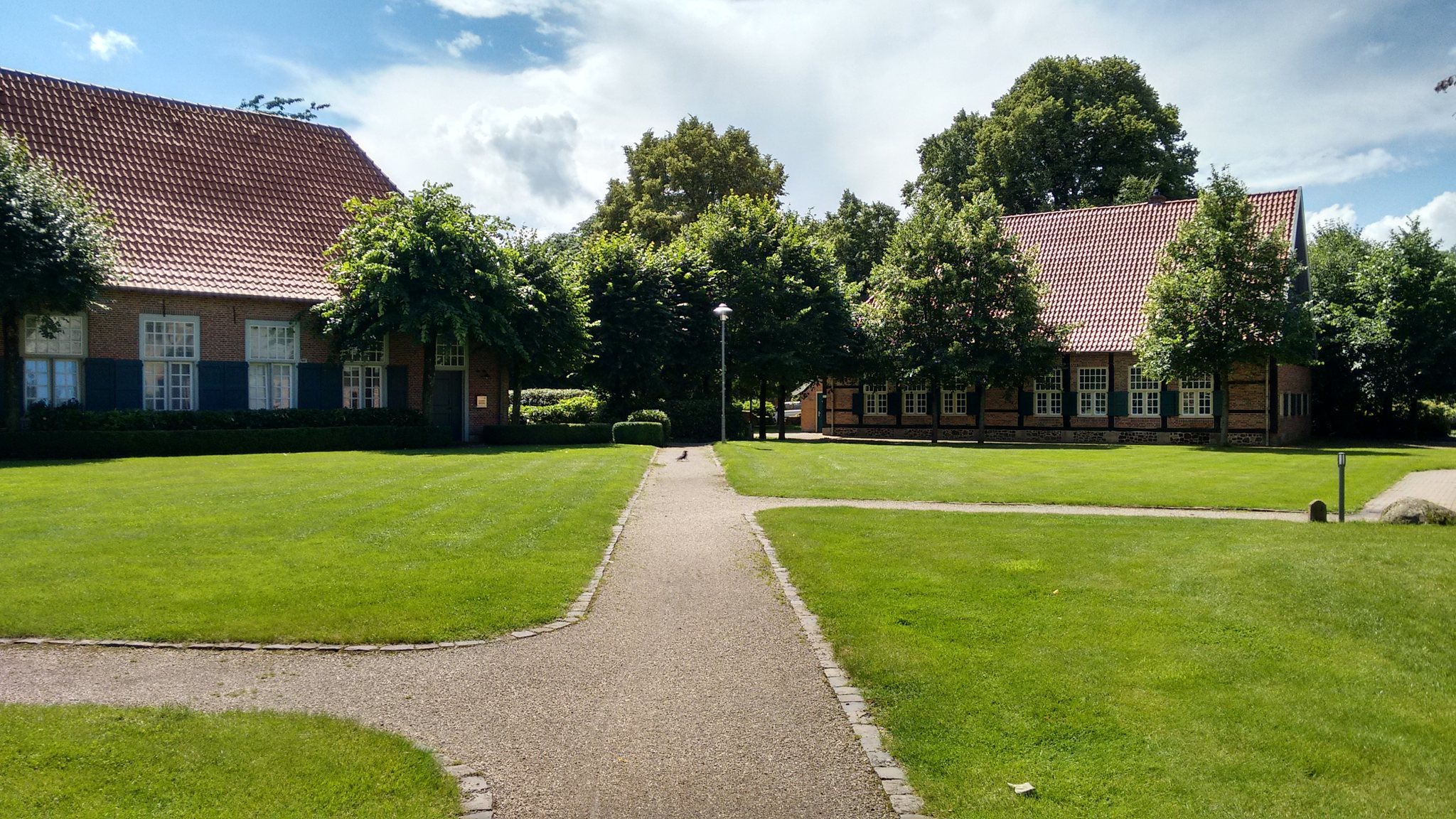
The Abbess’s House stands on the eastern side of the collegiate area. This solid brick building has large, tall sash windows and a steep hipped roof, giving it the character of an imposing Baroque residence. Its exterior carries the coat of arms of Abbess Margaretha Benedikta Droste of Hülshoff, who died in 1679. The building now houses the community centre of the Catholic parish of Wietmarschen.
Steward’s House
The Steward’s House stands on the western side of the complex. Tradition identifies it as the residence of the abbess’s deputy and the foundation’s official. The Baroque half-timbered building has a rear extension and a plinth of bog ironstone, an iron-rich stone formed in wet ground and once processed into iron at the local Alexishütte ironworks.
An iron beam incorporated into the rear extension came from an earlier agricultural building. It bears the date 1618, the coat of arms, and the initials of Anna von Viefhues; the date 1732 was added during a later alteration. Until 1815, a covered passage connected the house with the church, giving the collegiate women a dry route to worship. The building now contains the parish library and the Stifts and Pilgrimage Museum, whose displays include artworks, documents, and commemorative objects from the former collegiate church and the estates of the collegiate women.
Stiftsdamenhaus
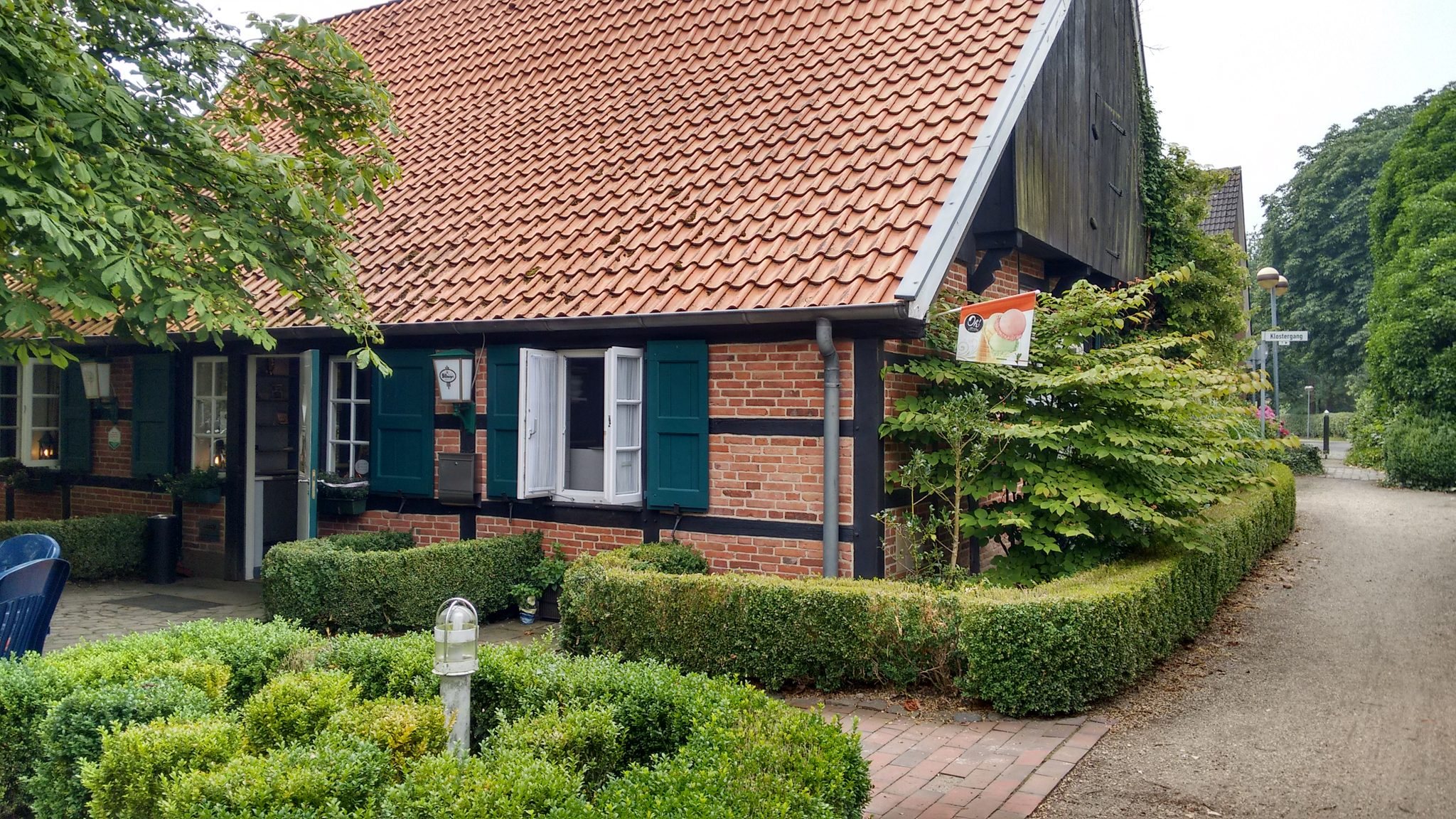
The Stiftsdamenhaus stands between the Abbess’s House and the Steward’s House on the south side of the square. It provided accommodation for additional collegiate women. Its half-timbered construction has stylistic features resembling those of the Abbess’s House, and it was converted into four apartments for older people during the 1980s.
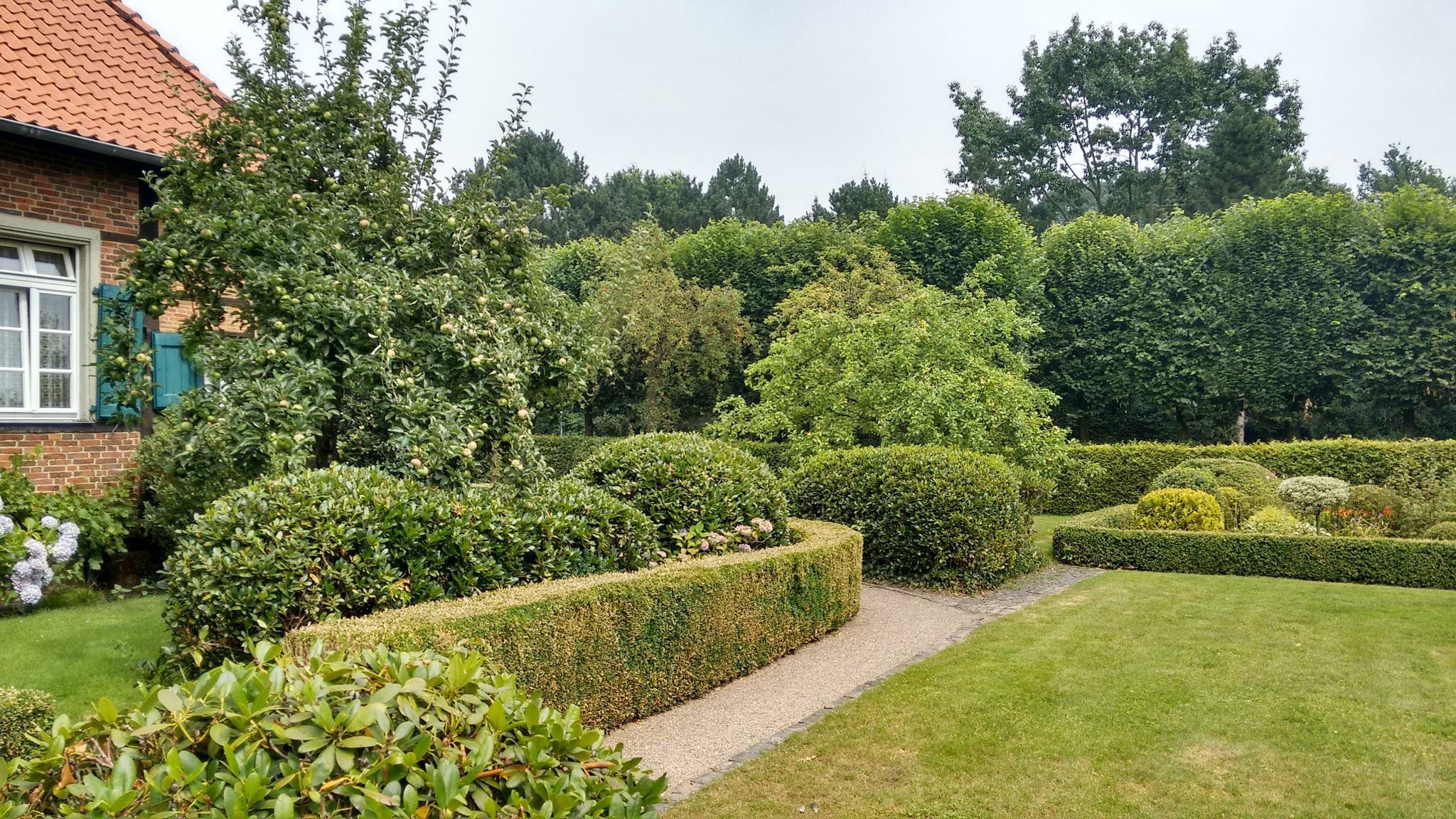
Extensive gardens surround the building and may preserve elements of the former monastery kitchen garden. Boxwood hedges, old fruit trees, and sandstone fountains shape the surviving grounds.
Gesindehaus
The Gesindehaus, south of the Stiftsdamenhaus, is the smallest surviving building. This half-timbered structure formerly housed the foundation’s servants. Its old kitchen and raised room were restored, and some ancillary buildings also survive nearby. A historic bakehouse and a bee house stand beside it. The building now contains the Stifts Café.
Bleeke and Former Cemetery
The collegiate women’s houses were built in the seventeenth century around a large square south of the church. Their arrangement preserves the basic form of a medieval cloister, although the square was later used as a bleaching meadow and became known as the Bleeke.
The former cemetery originally lay north of the church. Several priests’ graves survive, while sandstone grave slabs bearing the names and coats of arms of former collegiate women are installed on the north side of the choir. A second former cemetery southwest of the church is now incorporated into landscaped green areas.
A memorial to victims of war and violence stands west of the former cemetery. Its chapel contains a copy of a Baroque Pieta, a devotional representation of the Virgin Mary mourning while holding the dead body of Christ. The original is kept in the museum in the Steward’s House.
Church Approach and Devotional Features
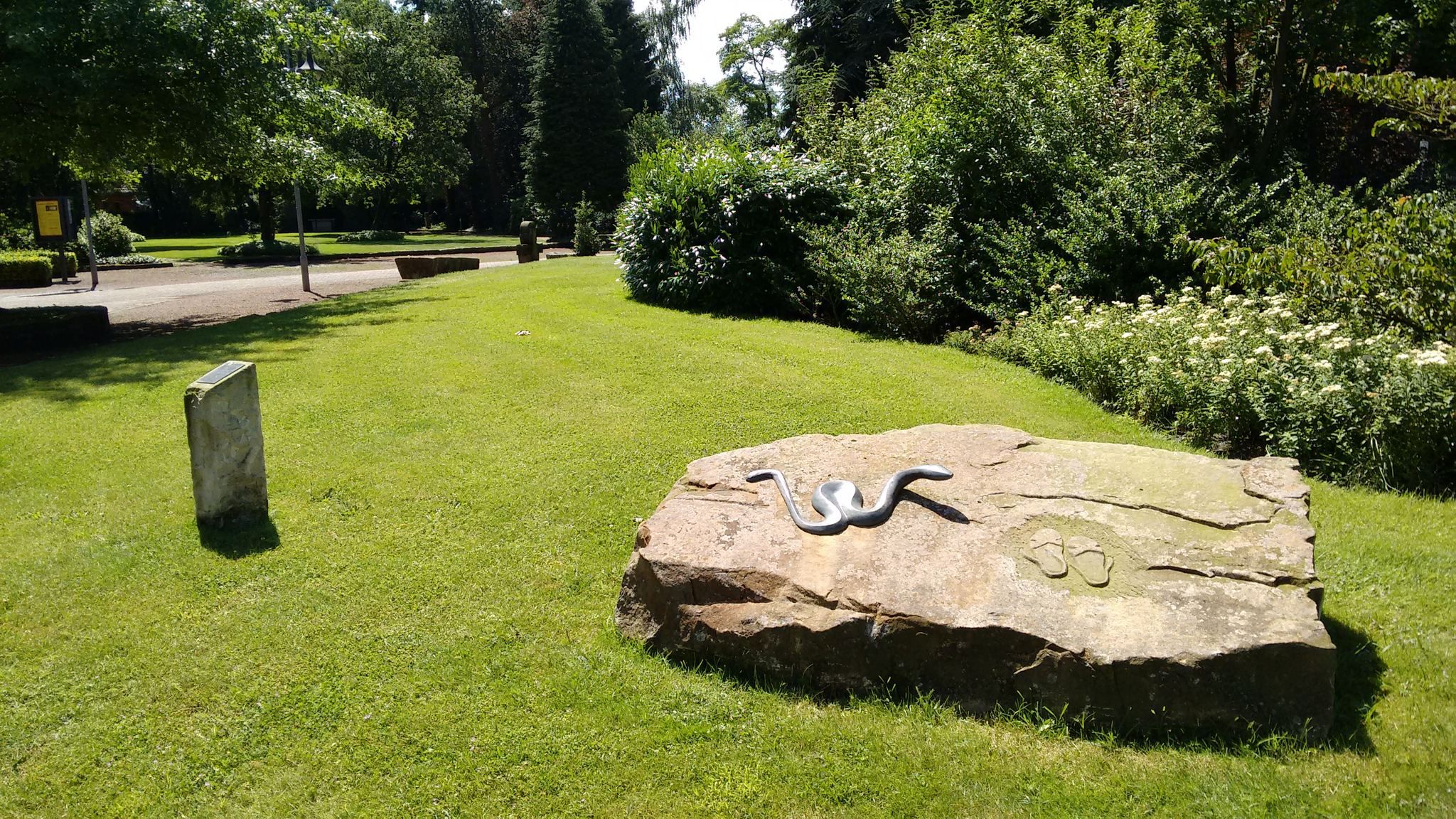
Information markers identify the locations of former structures, including the free-standing bell tower and the granary. Sandstone monuments along the approach to the pilgrimage church mark stages in the history of the monastery and foundation. They include a thirteenth-century sarcophagus, part of a Late Gothic baptismal font, and the ninth and final station of the Faith Way.
The Lourdes Grotto stands southwest of the pilgrimage church on the old cemetery grounds. It is a devotional reconstruction of the grotto at Massabielle in Lourdes, associated with the Marian apparition reported by Bernadette Soubirous in 1858. Donated after the Second World War, it reflects Wietmarschen’s continuing association with Marian pilgrimage.
Stiftsbusch and Forest Chapels
The adjoining Stiftsbusch was formerly the timber reserve of the monastery and foundation. Its oak trees also supplied acorns used each autumn to fatten pigs, providing an important food source for the residents. The woodland is crossed by the Stiftsbach and contains the Siebenstern, paths leading to the forest cemetery, and routes connecting the forest chapels with the pilgrimage church.
According to tradition, the Siebenstern and its seven radiating paths were laid out in 1578 by the seven women of the foundation, with a noble fir planted at the end of each path. The Heimatverein Wietmarschen later created a ten-station Walk of Songs along the paths. The annual family pilgrimage has continued to use the Siebenstern since 1921.
Marienkapelle
The Marienkapelle was built in 1738 by Abbess Anna Eleonora Sophia von Herding of Hiltrup beside a former bridge over the Stiftsbach. The bridge connected a route across fields cultivated by the monks with Eckelkamp. The chapel remains a physical survival of the foundation’s Baroque woodland and devotional setting.
Josefskapelle
The Josefskapelle was donated in 1740 by Ferdinand von Herding, the abbess’s brother and a cleric at St. Mauritz in Münster. It stands elsewhere in the same woodland area and, together with the Marienkapelle, preserves part of the foundation’s former Baroque landscape.