Fürstenberg Palace: A Renaissance and Baroque Palace in Prague
Site at a Glance
- Rating
- 5
- Popularity
- Very Low
- Country
- Czechia
- Primary era
- Early Modern
- Eras represented
- Early Modern
- Civilizations
- Holy Roman Empire, Kingdom of Bohemia
- Site type
- Domestic
- Remains
- Elite Residence
On this page10 sections
History
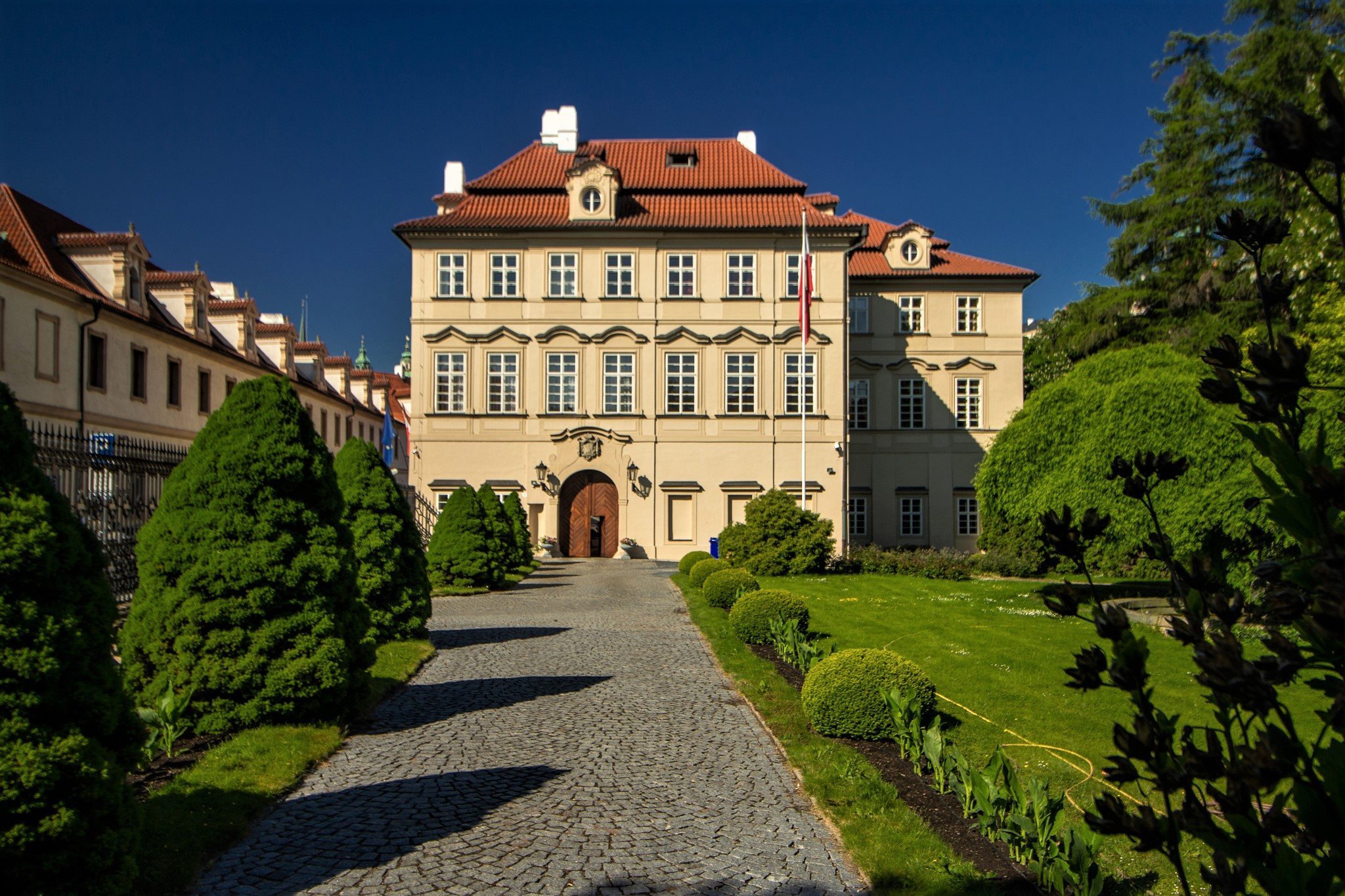
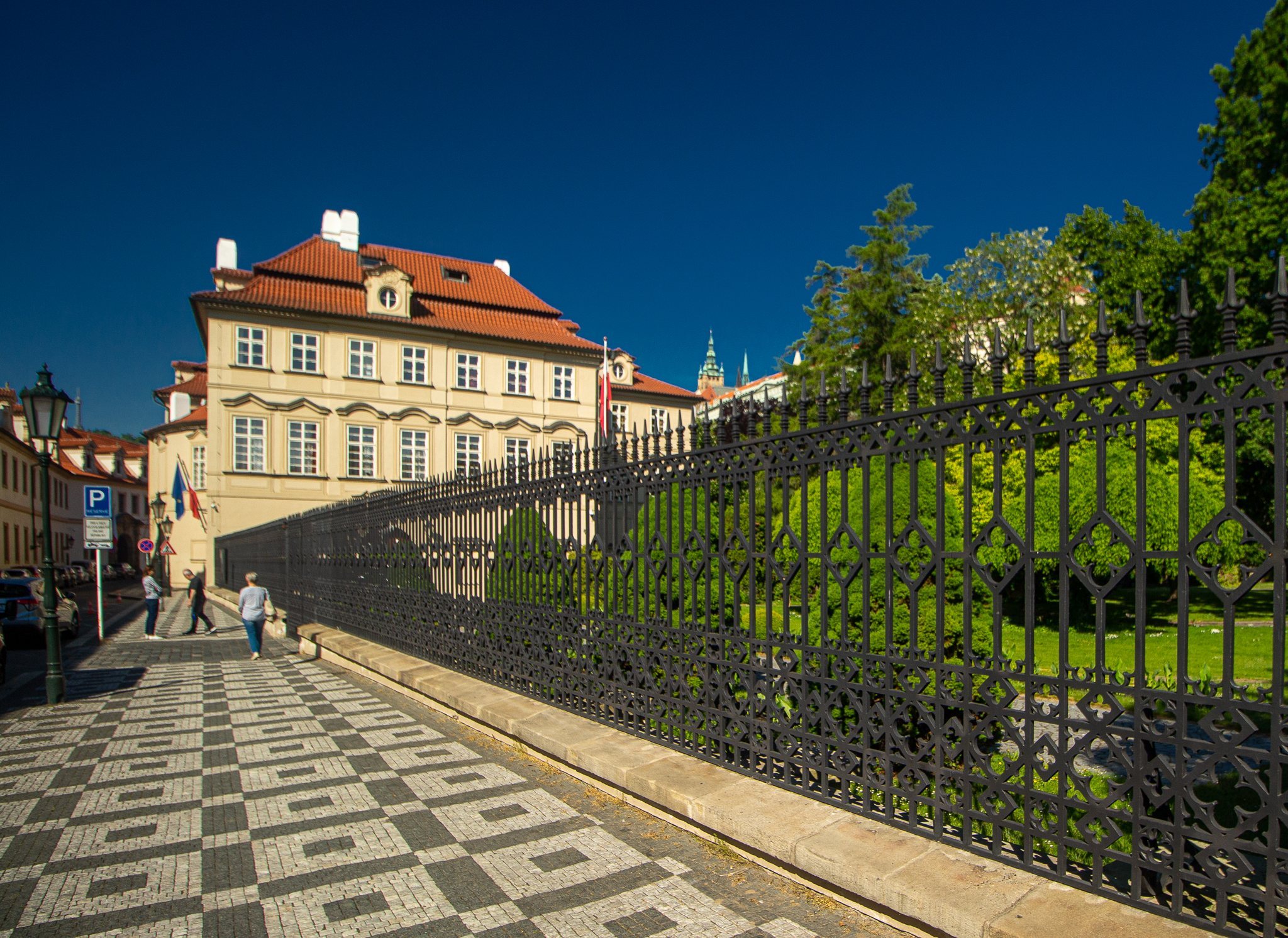
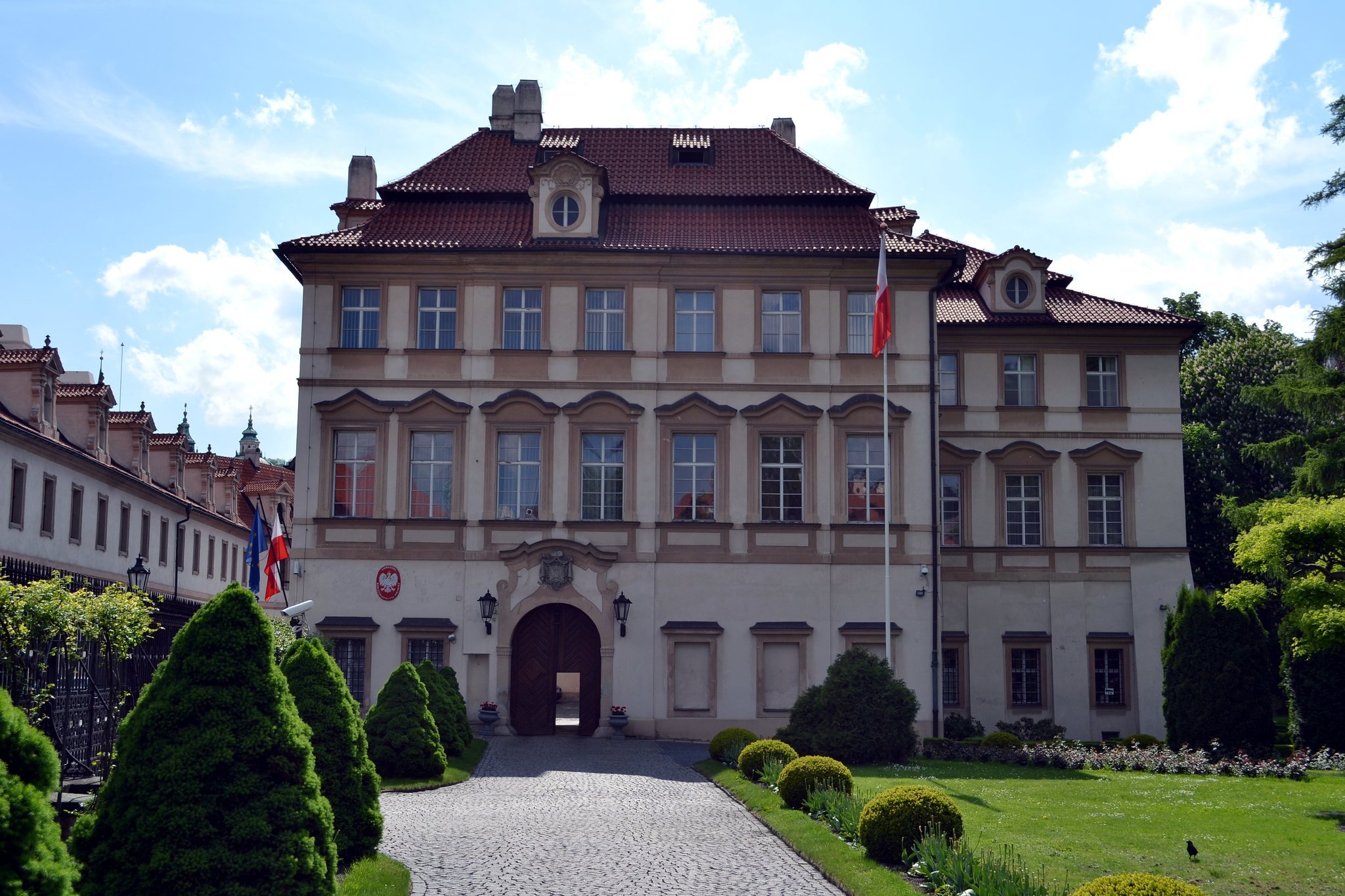
Fürstenberg Palace is a Renaissance palace in Prague, Czechia, later altered in the Baroque period. It stands in Malá Strana, the historic Lesser Town on the west bank of the Vltava beneath Prague Castle, near the Old Castle Stairs. The site lay outside the medieval fortifications and was used for agriculture until the sixteenth century.
Renaissance origins
In 1580, the imperial councillor Václav Berka of Dubá and Lipá purchased the property. An imperial councillor was a high-ranking adviser and official serving the emperor. Berka expanded his holding in 1583 by acquiring additional vineyards on the slope of the castle hill. The palace grew through several building phases and had broadly reached its present form by about 1600.
Vrbno and Netolický ownership
The counts of Vrbno acquired the property in 1714. The street portal dates from this period, and the architecturally notable staircase may also belong to the same phase. During the middle of the eighteenth century, Václav Kazimír Netolický of Eisenberg undertook extensive alterations that gave the palace its present appearance. Later changes to the gardens, made around 1790, are attributed to Ignác Paliardi.
The palace architect has not been established. František Maxmilián Kaňka is sometimes proposed for the design, while another possibility is Václav Špaček, described as his pupil.
Fürstenberg ownership and later use
In 1822, the neglected property passed to Prince Karel Egon of Fürstenberg, a member of the Fürstenberg princely family and a scholar. He made practical alterations, housed valuable collections and books there, and used the basement for steel and iron goods from his foundries and ironworks at Nižbor. A foundry produces metal castings, while ironworks process iron and related metals. The storage of steel damaged the gardens, which were restored at the end of the nineteenth century.
The Czechoslovak state acquired the palace in 1920 and leased it to the Polish embassy from 1922. The Czech Republic is its current owner, and the complex houses the Embassy of the Republic of Poland. Fürstenberg Palace is protected as a cultural monument.
Remains
Fürstenberg Palace is a masonry complex that combines an original Renaissance building with later Baroque alterations. Its principal structure has two storeys and three wings. A lower connecting gallery along Valdštejnská Street forms a fourth, southern wing, enclosing the courtyard and joining the main parts of the complex.
Palace buildings
Principal building
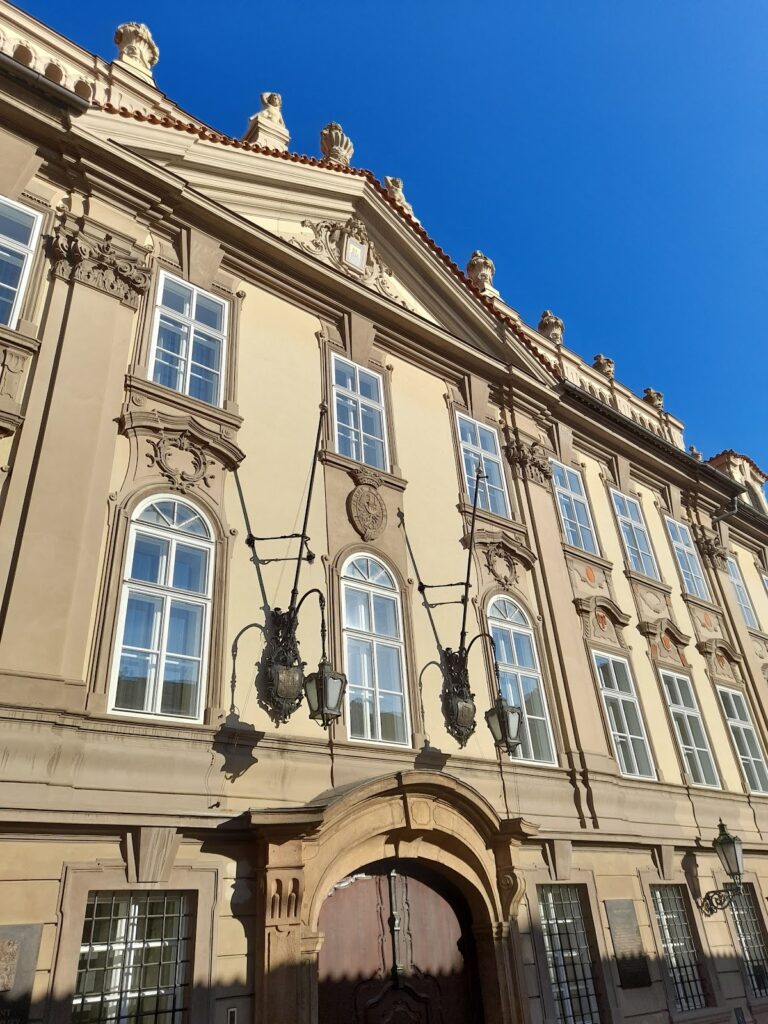
The principal building forms the core of the palace complex. Its three-winged arrangement encloses the courtyard, while the later southern gallery completes the enclosure. The building’s present character reflects the extensive eighteenth-century alterations carried out by Václav Kazimír Netolický of Eisenberg.
Street portal and staircase
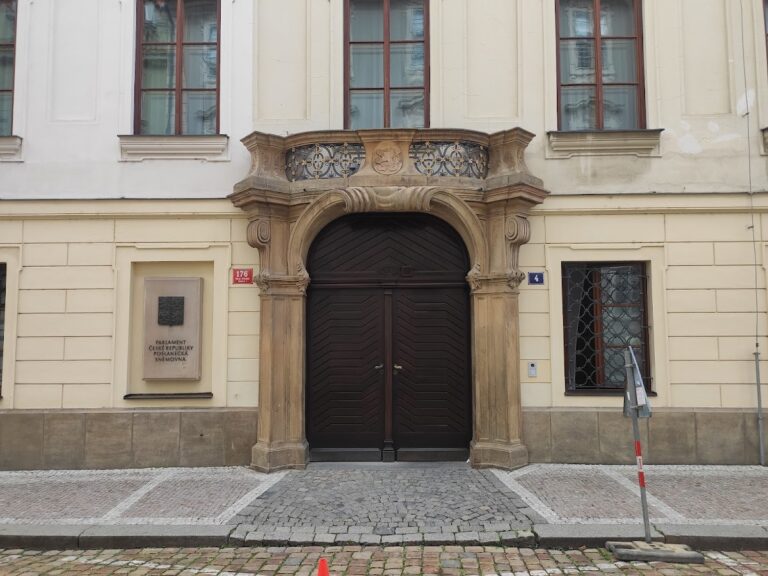
The street facade includes a portal dating from 1714, the year in which the counts of Vrbno acquired the property. The complex also contains a notable staircase that may belong to the same period.
Western wing hall
The western wing contains a large hall rising through two storeys. Its ceiling carries a fresco by an unknown painter, providing a surviving example of the decorative treatment within the palace.
Fürstenberg gardens
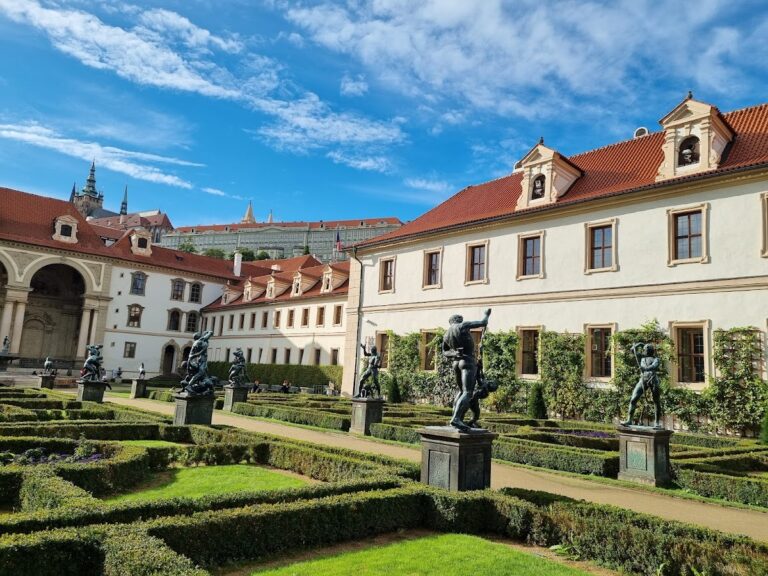
The complex includes the Small Fürstenberg Garden and the Large Fürstenberg Garden, terraced garden spaces associated with the palace on the slope below Prague Castle. Their present form reflects later changes, including work attributed to Ignác Paliardi around 1790 and restoration undertaken at the end of the nineteenth century.