Dârlos Fortified Church: A Late Gothic Church in Romania
Site at a Glance
- Rating
- 4.4
- Popularity
- Very Low
- Country
- Romania
- Primary era
- Medieval
- Eras represented
- Medieval, Early Modern
- Civilizations
- Hungarian
- Site type
- Religious
- Remains
- Fortified Church
On this page6 sections
History
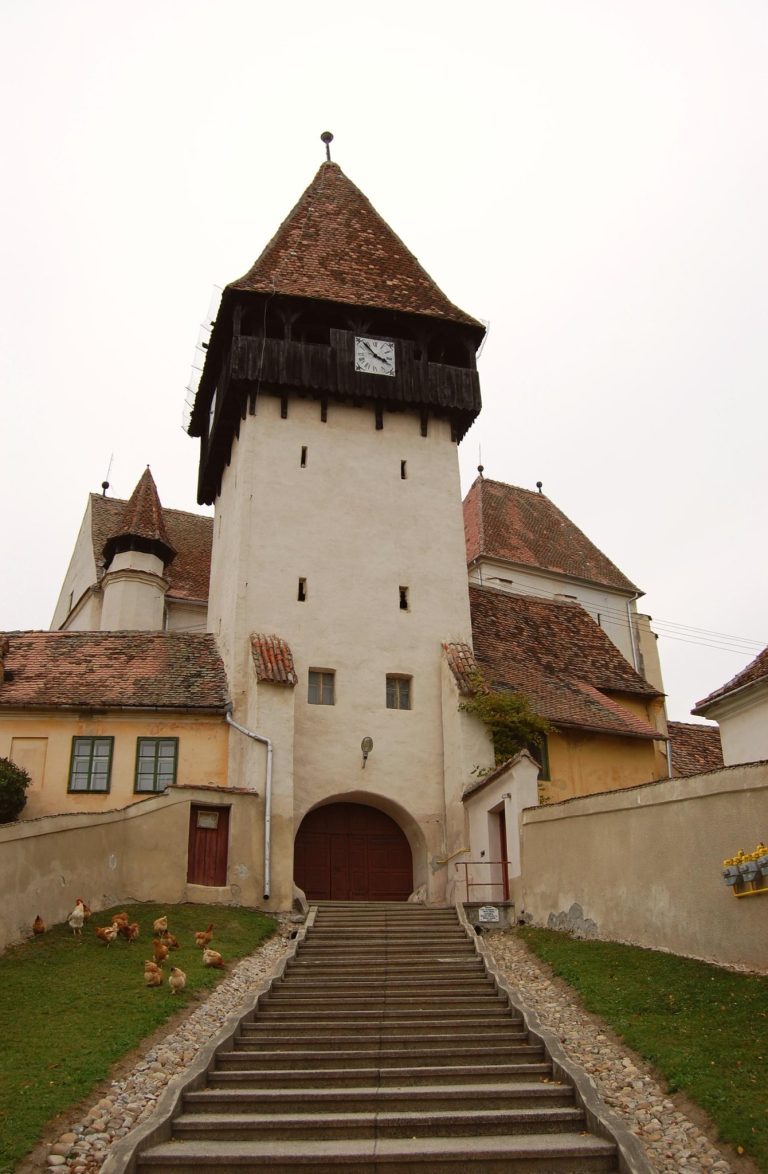
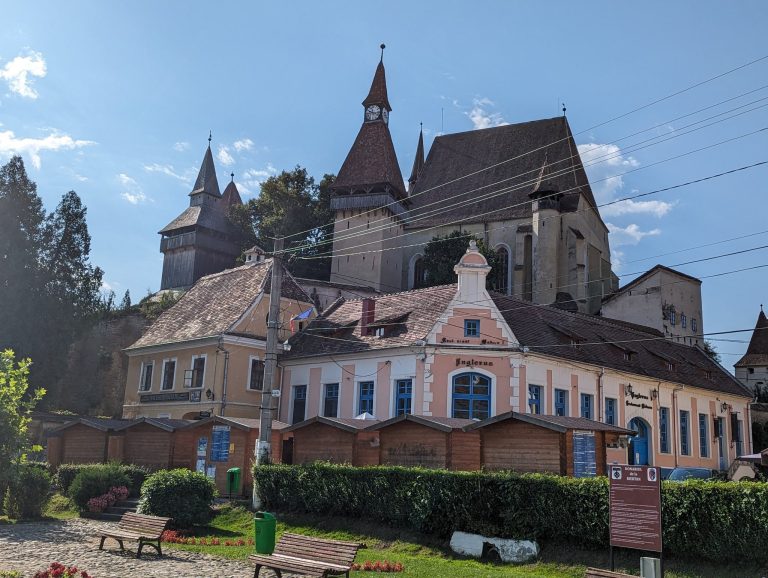
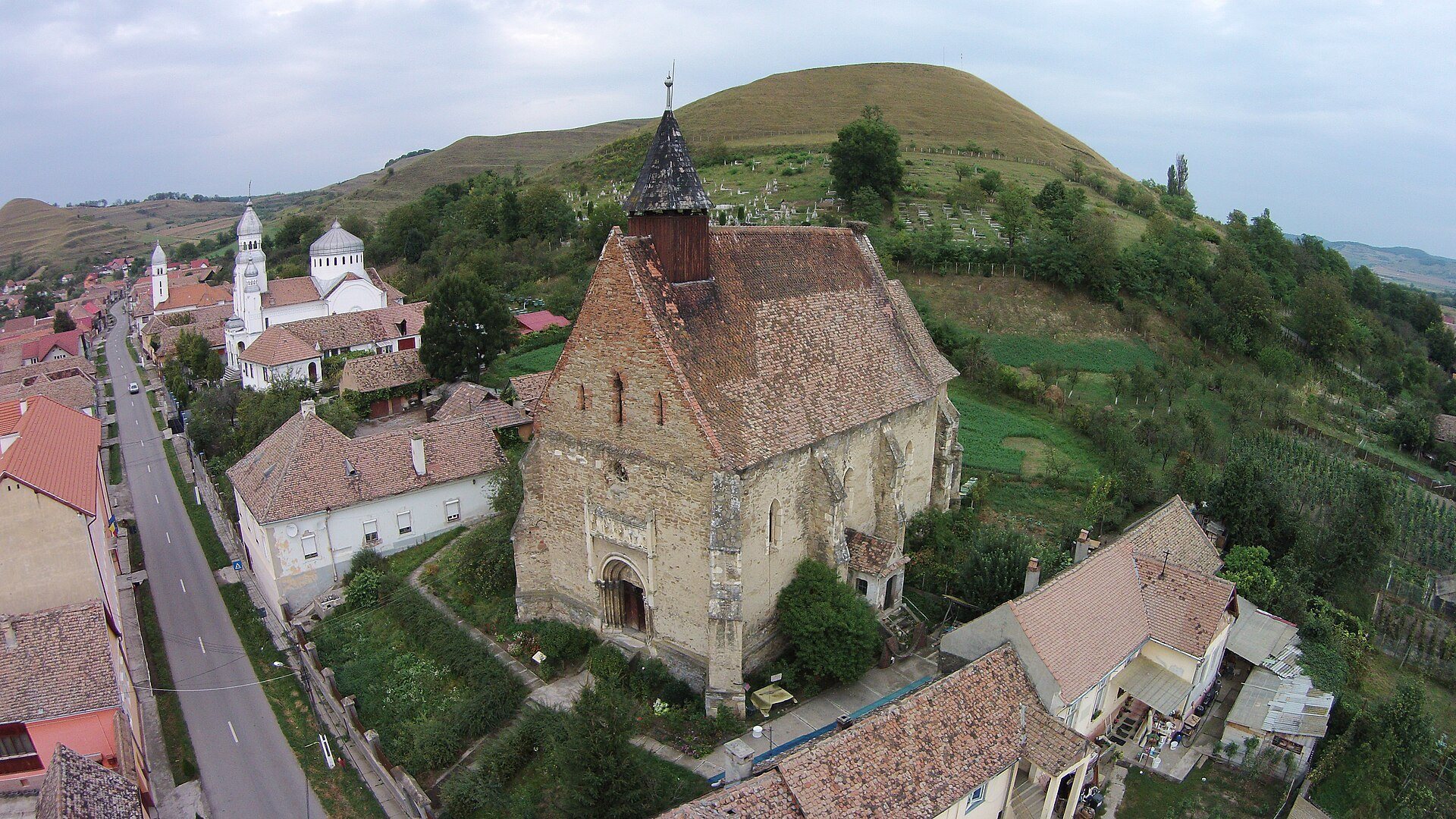
The Dârlos fortified church in Romania is an Evangelical-Lutheran church built during the first half of the fifteenth century in the late Gothic tradition. Dârlos lies in Transylvania, on the right bank of the Târnava Mare River, about 4 kilometres from Mediaș. The village was first documented in 1317 and belonged to Cetatea de Baltă County during the Middle Ages.
Medieval and early modern development
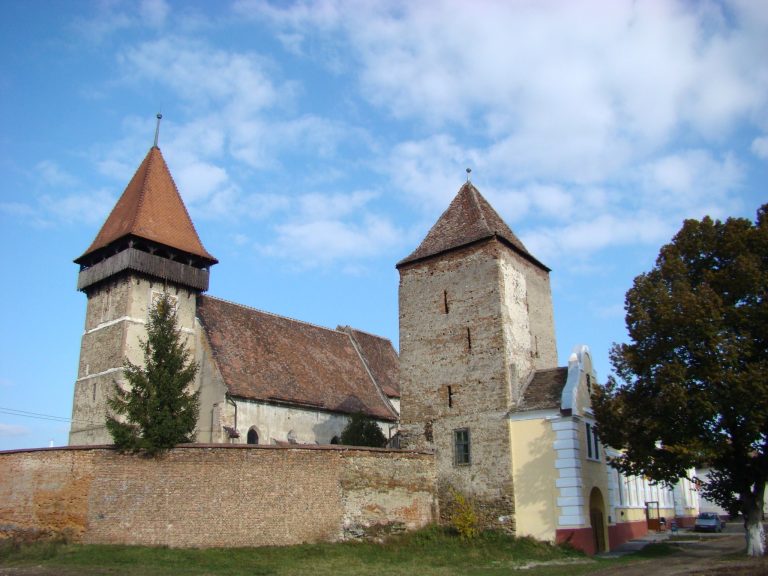
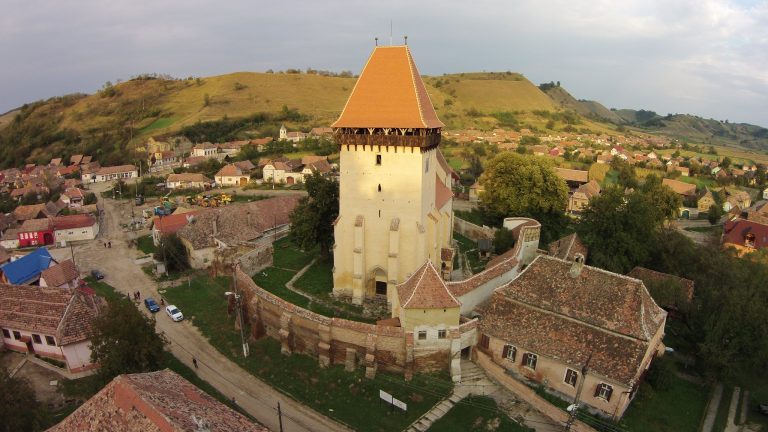
The church formed part of a fortified religious site, although the enclosure itself has since disappeared. Its former defensive character is inferred from the shape of the site and from a nineteenth-century engraving that shows the church surrounded by a curtain wall, an enclosing defensive wall. Part of this enclosure, including storage chambers, apparently remained into the early twentieth century.
Rediscovered decoration and protection
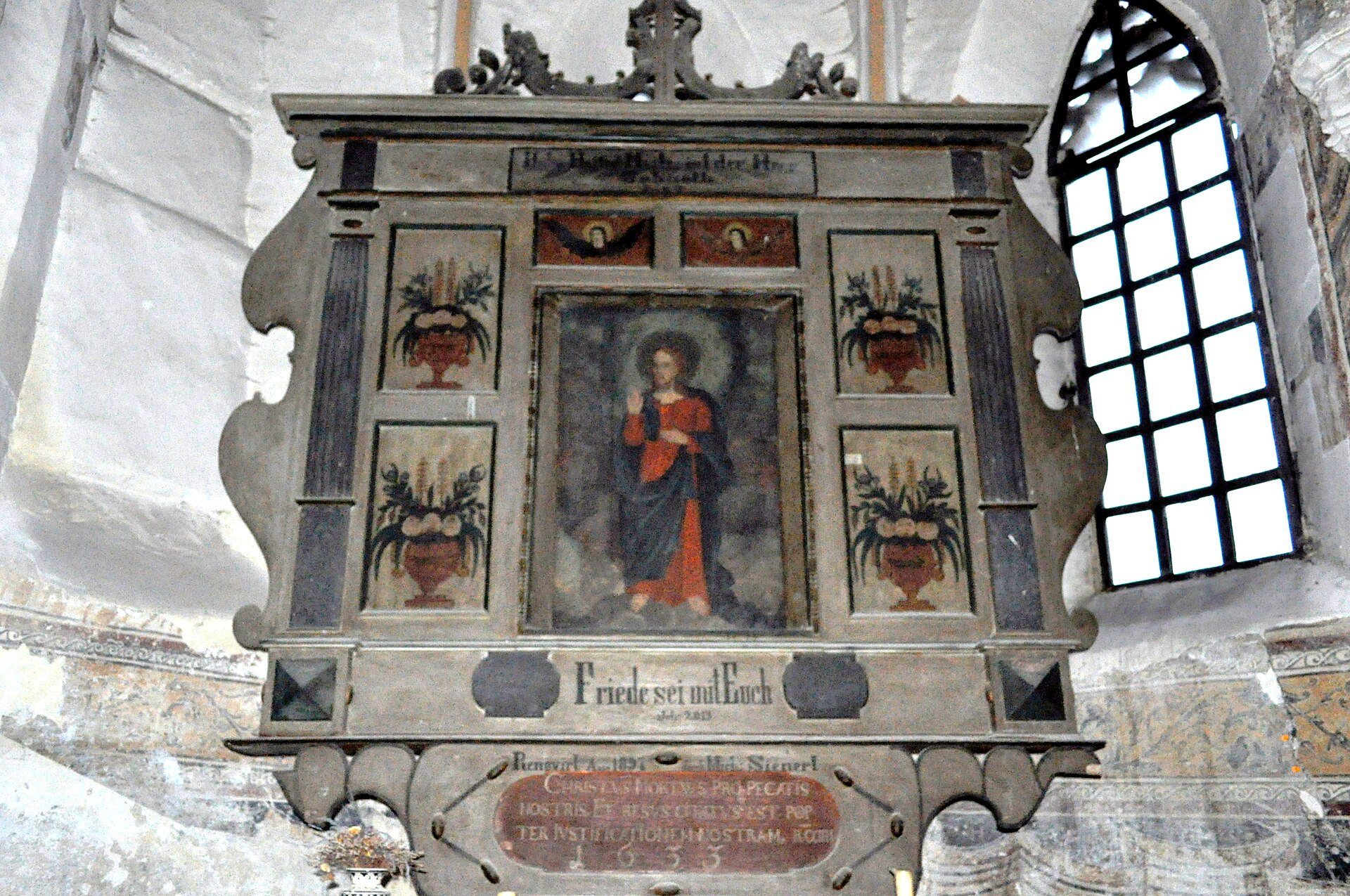
In 1975, paintings were uncovered inside the choir, the area around the main altar traditionally used by clergy or a choir. The decoration included ornamental bands and figures of two saints dating from the beginning of the sixteenth century. The church is listed as a historic monument on Romania’s 2010 national register under code SB-II-a-A-12376.
Remains
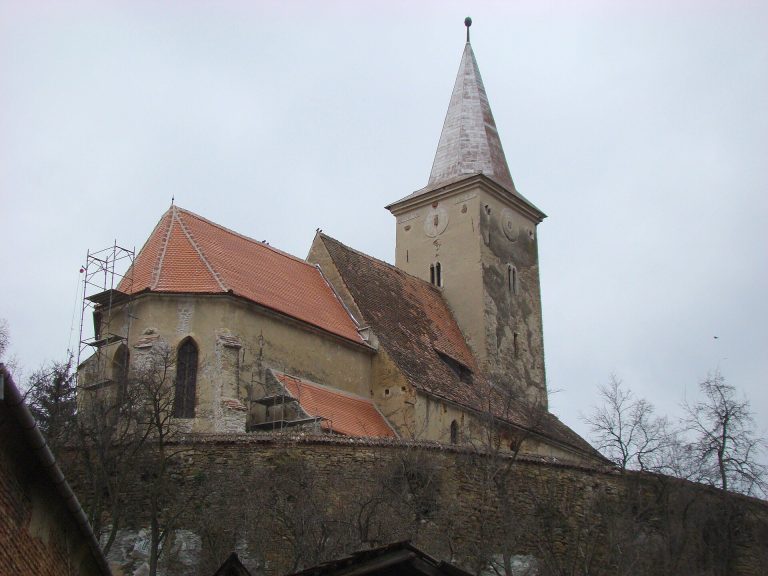
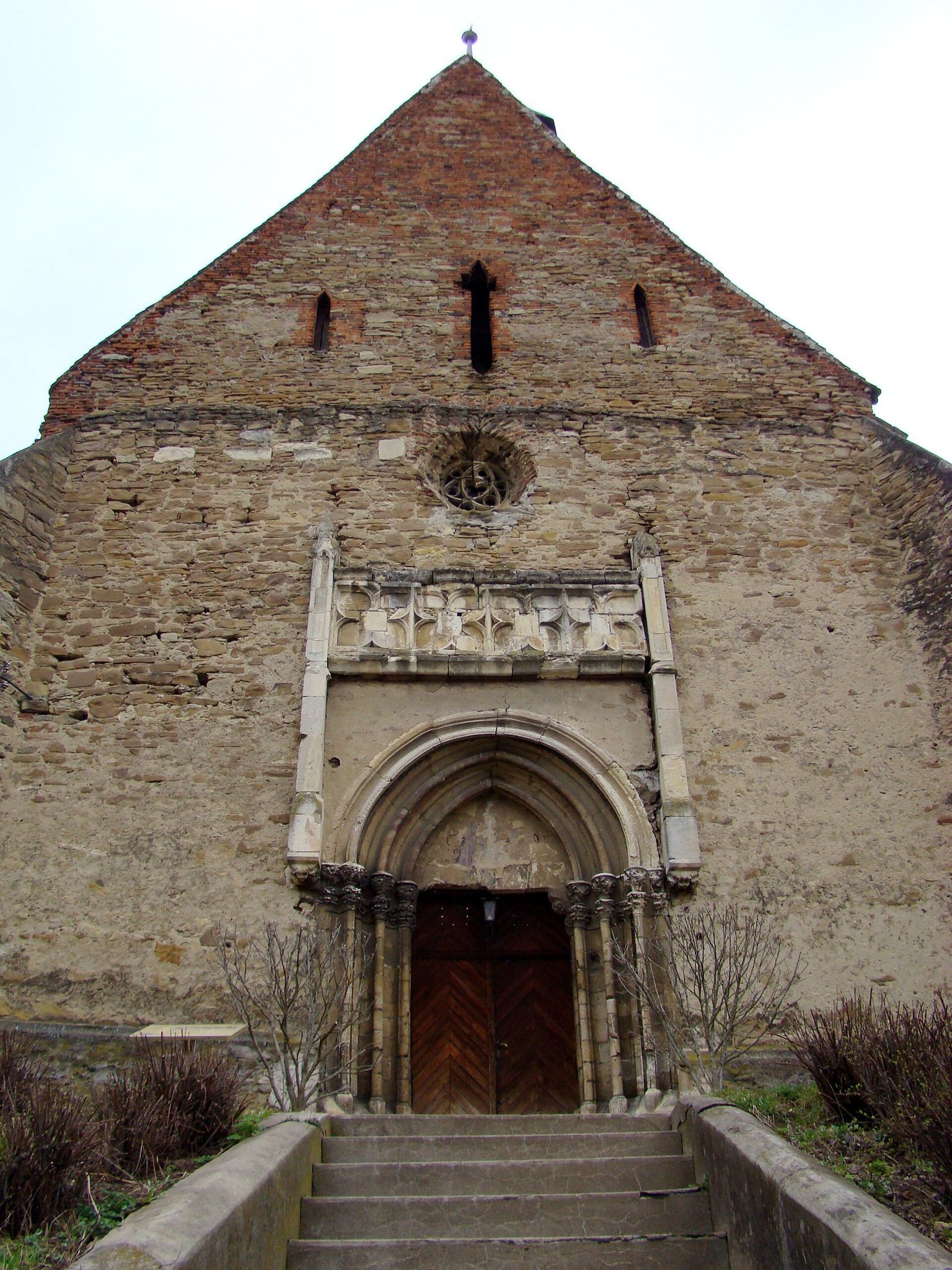
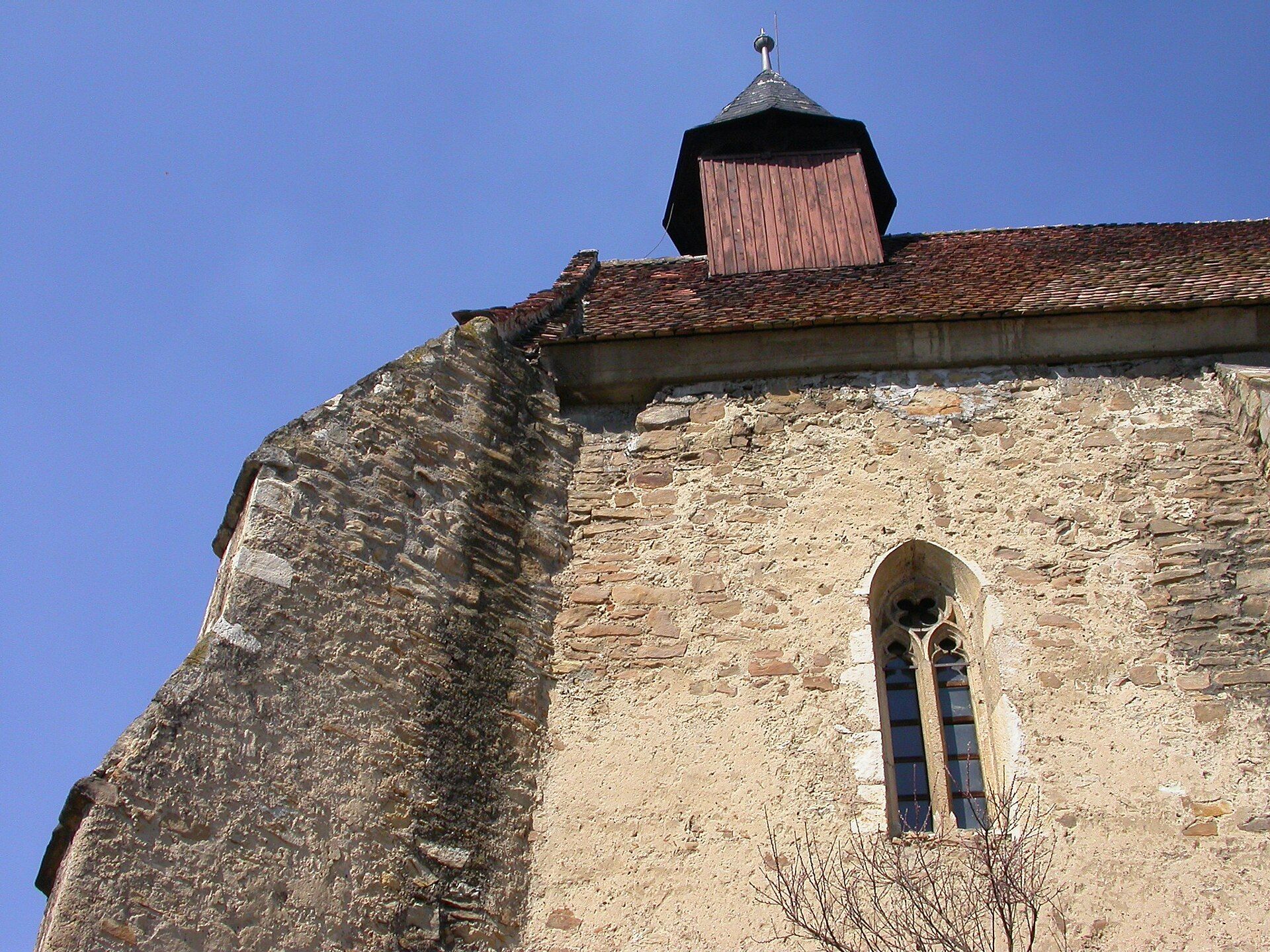
The surviving complex is centred on a late Gothic hall church, whose nave and principal interior spaces form a unified hall-like volume. It has a single nave, a two-bay choir, and no tower. External buttresses reinforce the choir walls, while the windows have richly ornamented tracery surrounds. The former defensive enclosure is no longer standing, leaving the church as the principal surviving structure.
Church structure
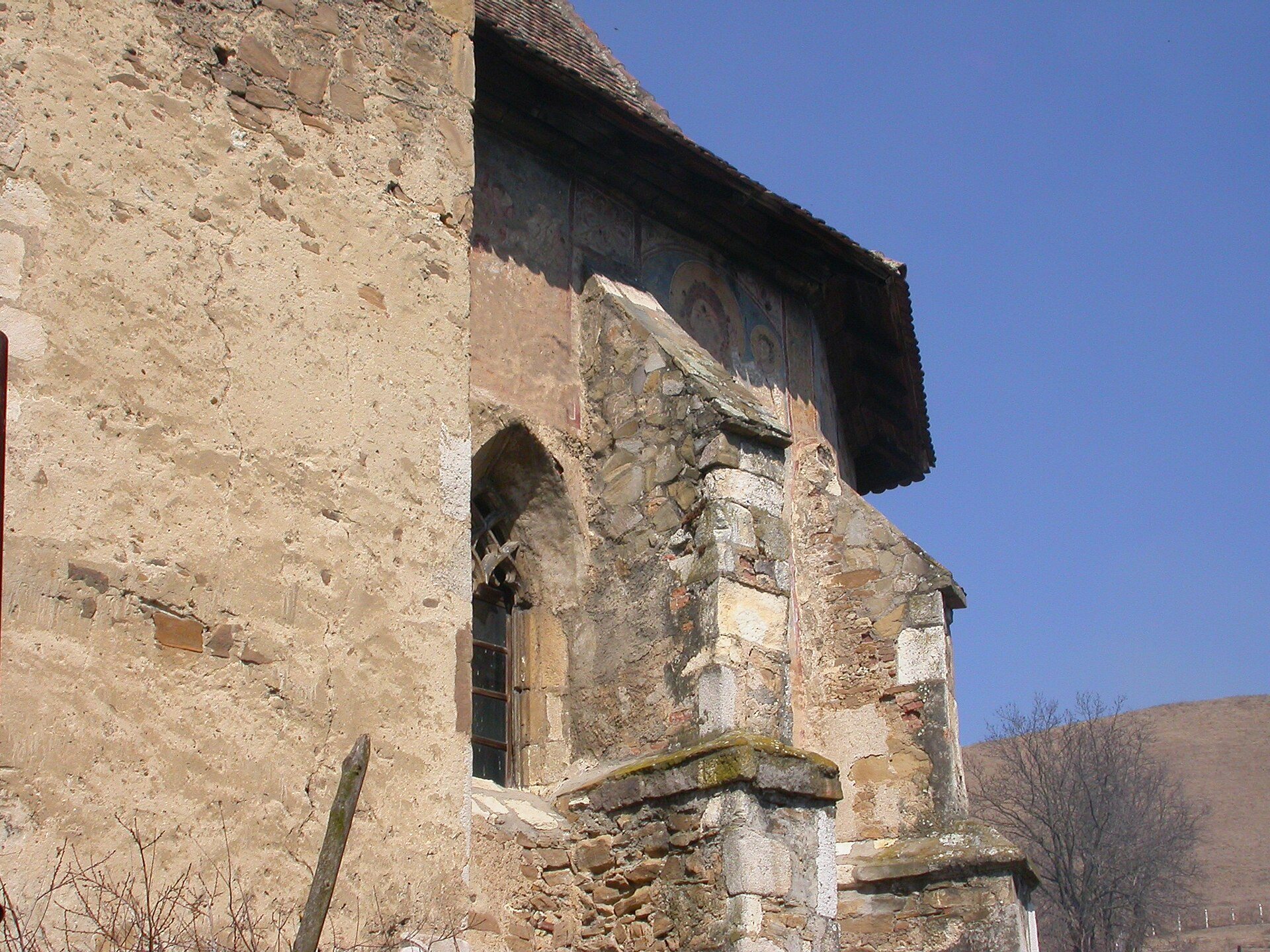
The church’s two-bay choir is supported by buttresses and retains the architectural treatment associated with Late Gothic construction. Its richly decorated window surrounds provide a prominent surviving feature of the exterior, while the absence of a tower forms part of the building’s distinctive arrangement.
Murals and reused stones
Large fragments of sixteenth-century mural painting survive on the choir façades. Made before 1544, they depict scenes from the Passion of Jesus and Saint Christopher, a Christian saint traditionally associated with carrying the Christ Child. Paintings exposed inside the choir in 1975 include ornamental bands and figures of two saints from the beginning of the sixteenth century.
Roman funerary stelae, upright commemorative stones associated with burials, were incorporated into the church walls. One shows the bull of Poseidon, a god of ancient Greek religion associated chiefly with the sea, earthquakes, and horses. This image contributed to confusion about whether the church walls displayed a Moldavian coat of arms.