Upper Hutt Blockhouse: A Colonial Defensive Building in New Zealand
Site at a Glance
- Rating
- 4.1
- Popularity
- Very Low
- Country
- New Zealand
- Primary era
- Modern
- External website
- Open
- Eras represented
- Modern
- Civilizations
- British
- Site type
- Military
- Remains
- Fort
On this page8 sections
History
Upper Hutt Blockhouse is a two-storey defensive building in Trentham, New Zealand, built in late 1860 as part of a larger stockade during a period of settler anxiety about conflict involving Māori communities. It was one of two blockhouses and stockades constructed in the Hutt Valley that year.
Construction and military use
Fears of unrest in the Ōtaki district and possible raids from Wairarapa Māori intensified after the disputed sale of land at Waitara in Taranaki. Upper Hutt settlers formed a Volunteer Rifle Corps and petitioned the Wellington Militia, a colonial military force responsible for local defence in the Wellington region, for a fortified enclosure.
Colonel Thomas Rawlings Mould, a British Royal Engineers officer serving in New Zealand, designed the blockhouse with the Royal Engineers, the British Army corps responsible for military engineering and fortification. Plans became available on 18 August 1860, tenders closed on 5 September, and W. Taylor won the contract after previously building the Lower Hutt Blockhouse and Stockade.
The Hutt Battalion of the Wellington Militia occupied the blockhouse and stockade from December 1860 until May 1861. No hostile attack reached the site during that period. Families are said to have taken shelter there for one night during an undefined emergency in the late 1880s or early 1890s.
Police station and public building
The stockade was considered for religious use in 1861, when the Bishop of Wellington sought to rent it for a Sunday school and place of worship. Instead, from 1861 to 1880 it served the Police as a residence, station, and circuit courthouse. After the Upper Hutt police constable’s position was abolished in 1880, the building continued occasional use as a public building, and the stockade reserve was the subject of another lease request in 1884.
A new police station opened at the junction of Main Road and Station Street in 1891. The blockhouse then remained unused for many years, while local interest in its conservation gradually increased.
Protection, restoration, and later community use
In 1916, the land was reserved under the Scenery Preservation Act 1908. This was among the earliest legal protections given to a historic building in New Zealand. Major repairs followed in 1927 and 1928, and a restoration committee was formed during the 1950s. The building was restored around 1954.
Boy Scouts and Girl Guides used the blockhouse from 1953 until the late 1990s, and a service club also held meetings there. In 1980, the blockhouse and adjoining land became an historic reserve under the Reserves Act 1977. Management later passed to the New Zealand Historic Places Trust, now Heritage New Zealand Pouhere Taonga. Further modification took place around 1989. The blockhouse is preserved as a Category 1 historic place, a New Zealand designation for places of special and outstanding historical or cultural significance.
Remains
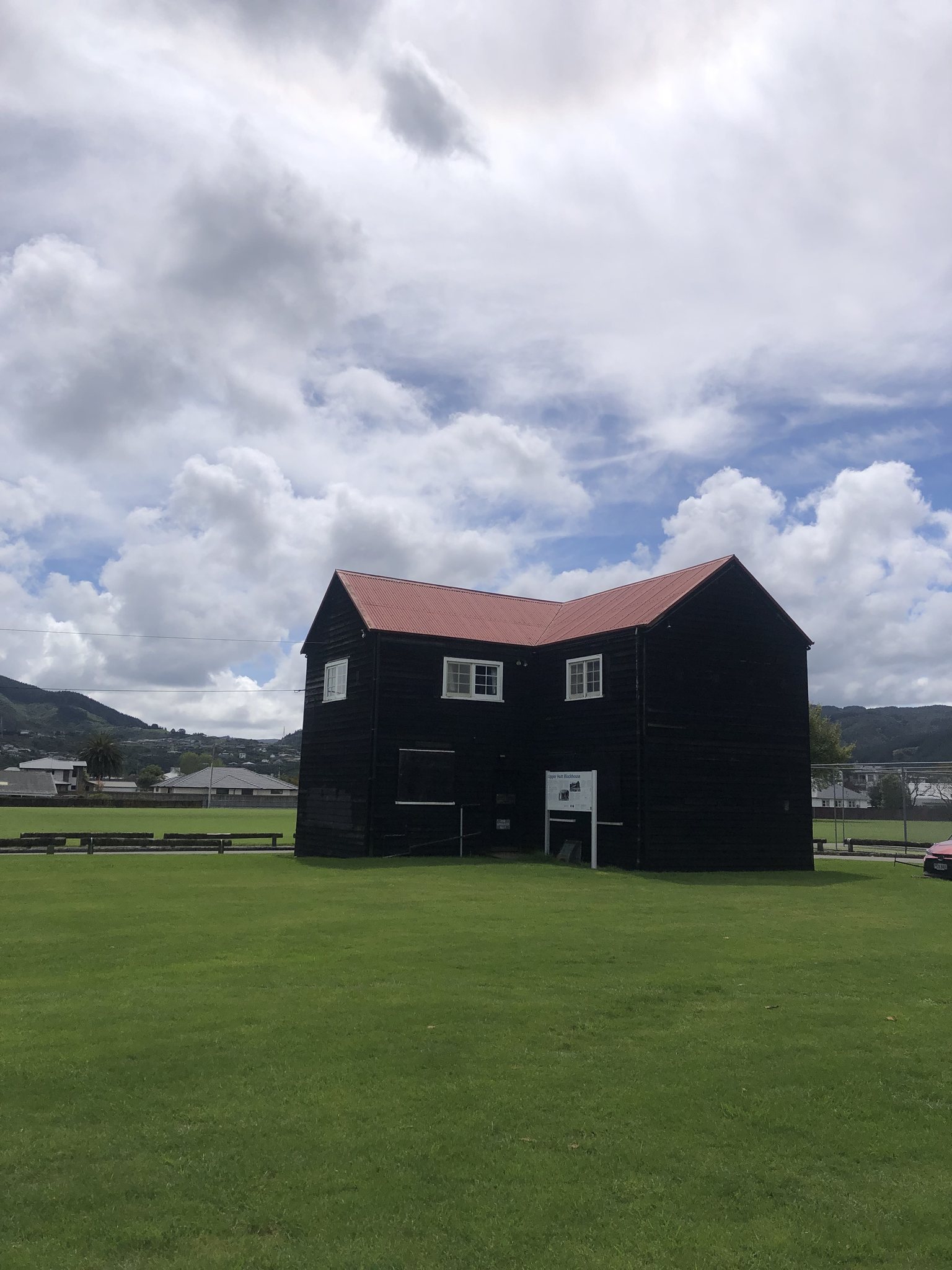
The surviving building stands at the end of Blockhouse Lane, off McHardie Street, beside sports fields within the grounds of Heretaunga College. It was originally built in a paddock at the end of Fortune Lane, inside the area later known as the old Government Stockade reserve. Its defensive construction and later alterations remain legible in the timber walls, firing openings, windows, roof, and protective services.
Defensive building and enclosure
Upper Hutt Blockhouse
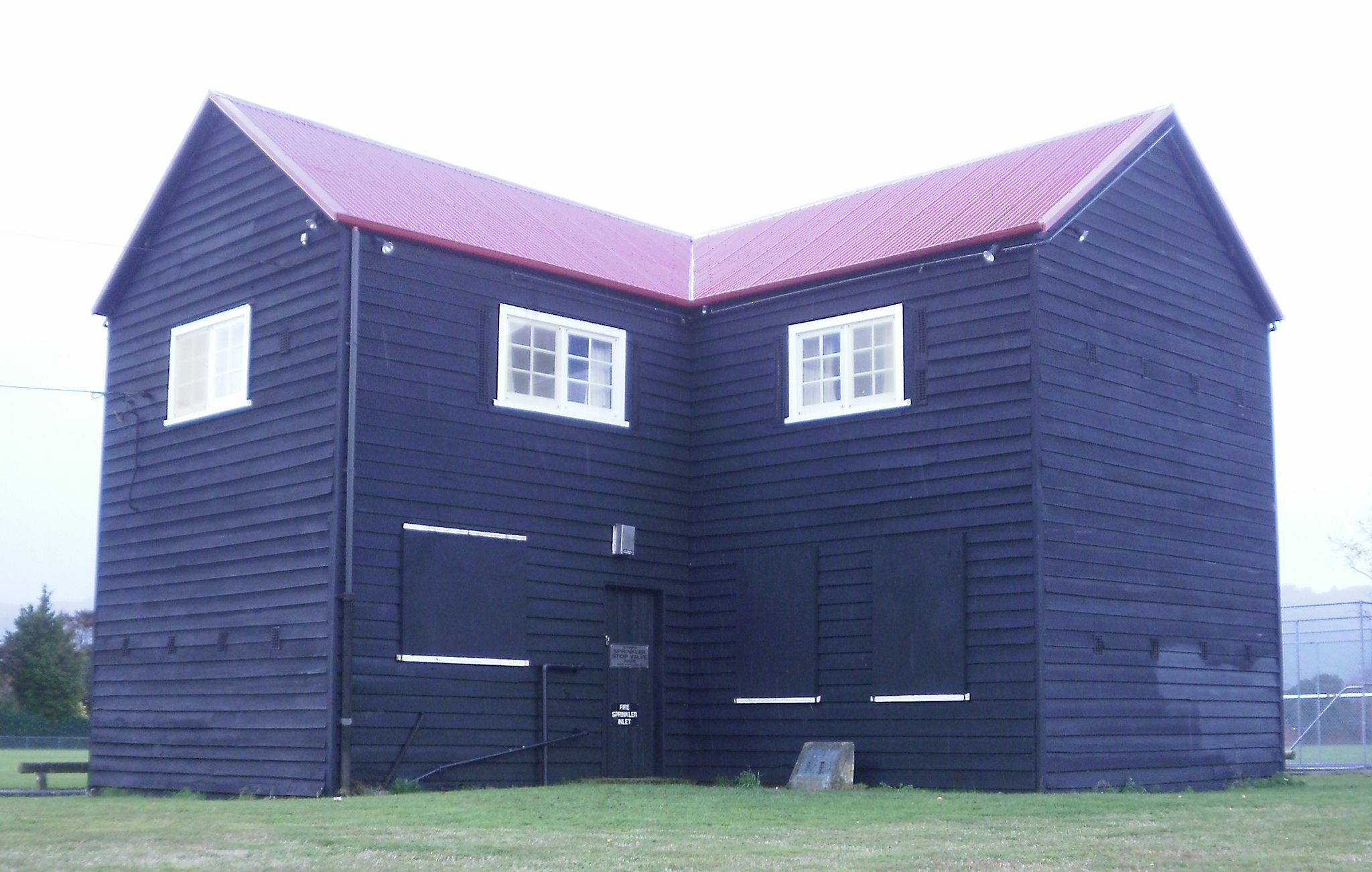
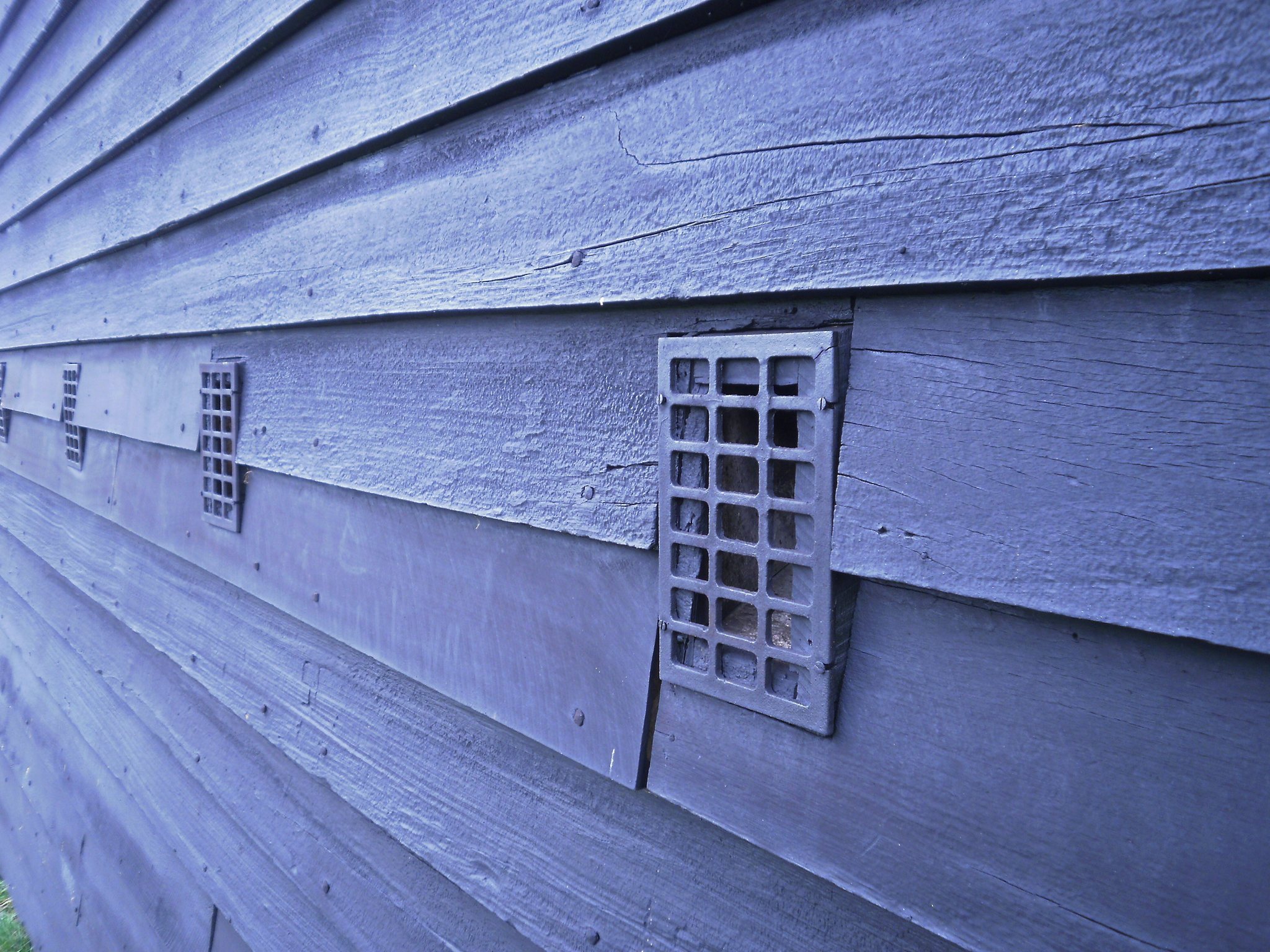
The two-storey blockhouse has a timber frame enclosed by double-skinned shingle infill. This construction was intended to protect the structure from rifle fire. Narrow loopholes, openings in a fortified wall through which defenders could fire, allowed occupants to return fire. The building’s later fittings include electric power, security lighting, a fire alarm, a sprinkler system, and metal gratings over the loopholes.
Windows were added and altered over time. Before 1916, two upper-level windows were cut into the western end wall, and these were later replaced by a single window. On the inward-facing walls, one upper-level window was enlarged and another was added after 1916, while the lower-level windows on those walls were later covered. Restoration included black staining on the timber and a red corrugated-iron roof, a colour scheme intended to resemble the building’s appearance in the 1860s.
Government Stockade
The blockhouse formed one corner of a fortified stockade. The enclosure’s perimeter consisted of an earthwork with a parapet, a protective raised bank, and a trench. A well and a magazine, a secure store for ammunition, stood within the stockade. The earthworks were removed and the surrounding ground levelled during construction of Heretaunga College in 1954.