Mottisfont Abbey: An Augustinian Priory and Country House
Site at a Glance
- Rating
- 4.6
- Popularity
- Medium
- Country
- United Kingdom
- Primary era
- Medieval
- External website
- Open
- Eras represented
- Medieval, Early Modern, Modern
- Civilizations
- English
- Site type
- Domestic
- Remains
- Manor House
On this page16 sections
History
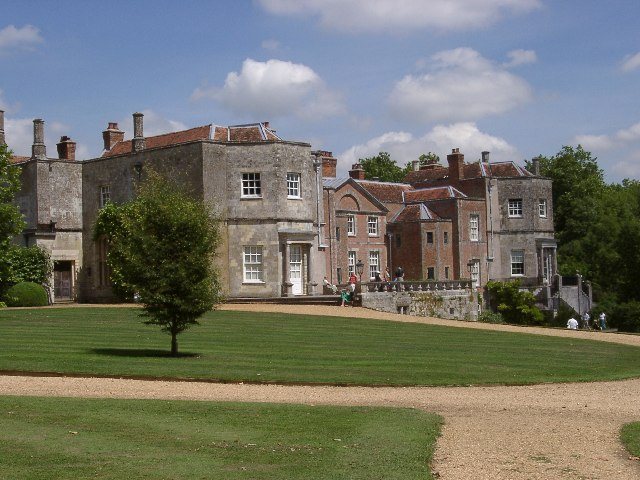
Mottisfont Abbey in the United Kingdom is a country house incorporating the remains of an Augustinian priory founded in 1201. Its history is associated with a spring and local meetings traditionally linked to the Saxon period, while the priory later became a destination for pilgrims travelling towards Winchester.
Foundation and medieval priory
William Briwere founded Mottisfont Priory in 1201. Briwere was a prominent administrator, businessman, and courtier to four Plantagenet kings, the English royal dynasty that ruled from the twelfth to the fifteenth century. Establishing the priory expressed both his wealth and his religious devotion. An Augustinian priory was a religious house governed by a prior, whose canons followed a rule associated with Saint Augustine and commonly combined worship with pastoral and charitable work.
The priory welcomed pilgrims travelling towards Winchester to venerate a relic believed to be a finger of Saint John the Baptist. Its prosperity declined from the middle of the fourteenth century after the Black Death, the major plague pandemic that caused extensive loss of life across Europe. Among its recorded possessions was the church at Berwick St James in Wiltshire.
Dissolution and conversion into a residence
Mottisfont Priory was dissolved on 22 May 1536 during the Dissolution of the Monasteries, Henry VIII’s programme of suppressing England’s monasteries and transferring their properties to the Crown or private owners. Henry VIII granted the property to Sir William Sandys, a Tudor statesman, who converted it into a country residence. Rather than demolishing the priory, Sandys retained much of the existing complex and adapted parts of it for domestic use.
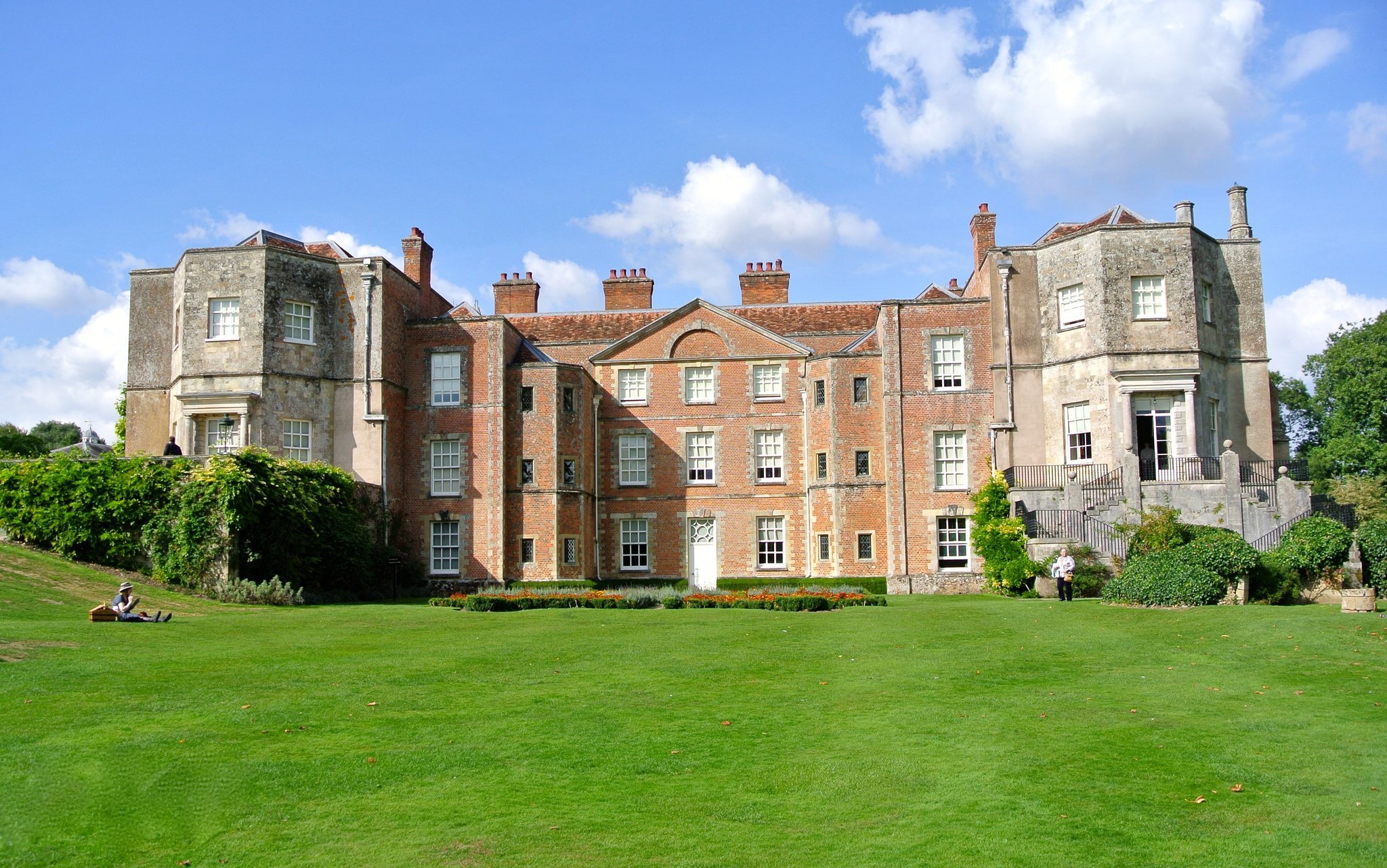
In the eighteenth century, the Mill family demolished the medieval cloisters and Tudor courtyard, giving the house much of its present external appearance. The owners also added “Abbey” to its name, although “Priory” was historically more accurate. Under Sir John Barker-Mill, the estate became a centre for hunting, shooting, and fishing in the early nineteenth century, when a new stable block was constructed.
Artistic and social life
During the final decades of the nineteenth century, the house was leased to the banker Daniel Meinertzhagen under conditions that prohibited electric lighting and central heating. His children Daniel and Richard built aviaries for collections of eagles, hawks, owls, and ravens. Richard later described his childhood and his interest in the natural world in detailed diaries.
Maud and Gilbert Russell arrived in 1934, making Mottisfont the centre of an artistic and political circle. Maud Russell, a wealthy patron of the arts, commissioned artists and designers to embellish the house while emphasizing its medieval past. During the Second World War, the property was requisitioned and used as an 80-bed hospital.
Maud Russell gave the house and grounds to the National Trust in 1957, although she continued to live at Mottisfont until 1972. The National Trust is a British charity that cares for historic places, landscapes, and collections. Derek Hill later donated a substantial collection of early twentieth-century art to the National Trust for display at Mottisfont in memory of his friendship with Russell. These displays are supplemented by changing exhibitions of twentieth-century and contemporary art.
Mottisfont is a Grade I listed house. Its historic parks and gardens are included in the national register of historic parks and gardens, while the walled garden has a separate Grade II listing. Geophysical surveys carried out between 1996 and 1998 examined the lawn south of the house over the buried church cloisters.
Remains
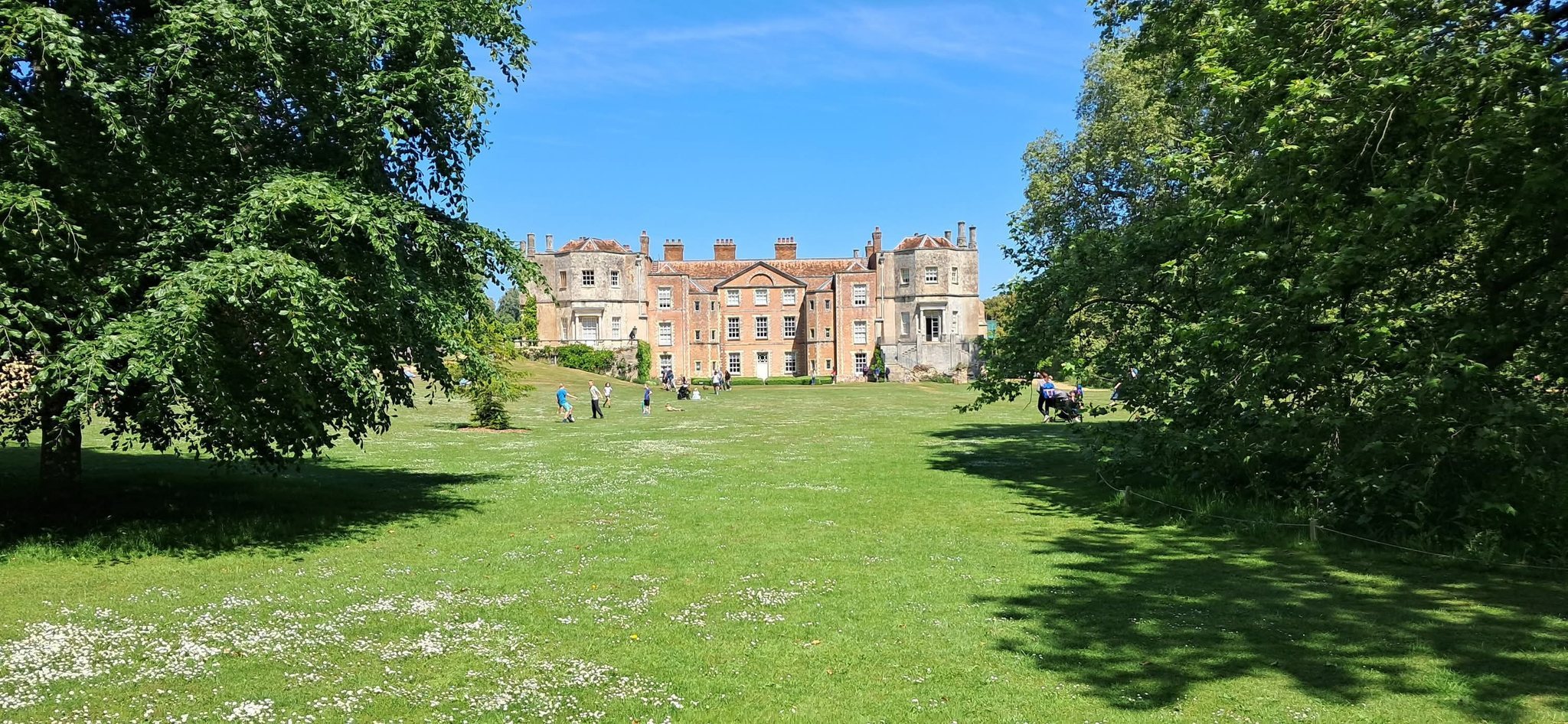
Mottisfont lies in the valley of the River Test, where fertile land and plentiful water supported early settlement. A spring still produces water in the grounds and remains the physical feature from which the name derives. The present house combines medieval priory fabric with later domestic additions, while the surrounding estate includes woodland, lawns, grounds beside the river, and enclosed gardens.
Medieval priory and later house
Church, chapter house, and cellarium
The country house incorporates parts of the medieval priory, including sections of the church, the chapter house, and the thirteenth-century cellarium. A chapter house was the room where the religious community met for formal business and readings, while a cellarium was a monastic storage area used for provisions. The surviving medieval church fabric is integrated into the later mansion.
Sandys’s Tudor residence
After the Dissolution, Sir William Sandys converted the church nave into the principal body of the residence and added wings on both sides. These later additions were built around parts of the original medieval church. The Tudor courtyard was subsequently demolished in the eighteenth century, when the house acquired much of its current external form.
Buried cloisters
The medieval cloisters survive archaeologically beneath the lawn south of the present building. Geophysical surveys undertaken between 1996 and 1998 examined this buried area, providing evidence for the remains of the church cloisters beneath the later landscape.
Decorative interiors and collections
Whistler Room
Rex Whistler decorated the salon, now known as the Whistler Room, with trompe-l’oeil painting. This technique uses illusionistic imagery to make a flat surface appear three-dimensional. The painted decoration creates the appearance of Gothic architecture and recalls the medieval structures of the former priory.
Anrep mosaics
Boris Anrep created mosaics inside and outside the house. One mosaic depicts an angel whose face represents Maud Russell, linking the decoration to the patron who shaped Mottisfont’s artistic character during the twentieth century.
Art collection
The house contains Derek Hill’s substantial collection of early twentieth-century art. The collection is displayed alongside changing exhibitions of twentieth-century and contemporary art, continuing Mottisfont’s association with artistic patronage.
Gardens and estate landscape
Walled rose garden
The walled garden contains the National Plant Collection of ancestral shrub roses dating from before 1900. It includes nineteenth-century cultivars associated with Graham Stuart Thomas, the British rosarian and horticultural writer known for preserving and cultivating historic roses. The collection is especially noted for the scent of its roses, which typically reach their peak in June.
Water, woodland, and historic trees
The wider estate includes woodland, lawns, extensive grounds, and a walk beside the River Test. It also contains a herb garden and a London plane tree identified as the largest specimen in Britain. Maud Chaworth, a fourteenth-century noblewoman and heiress, is recorded as buried at Mottisfont.