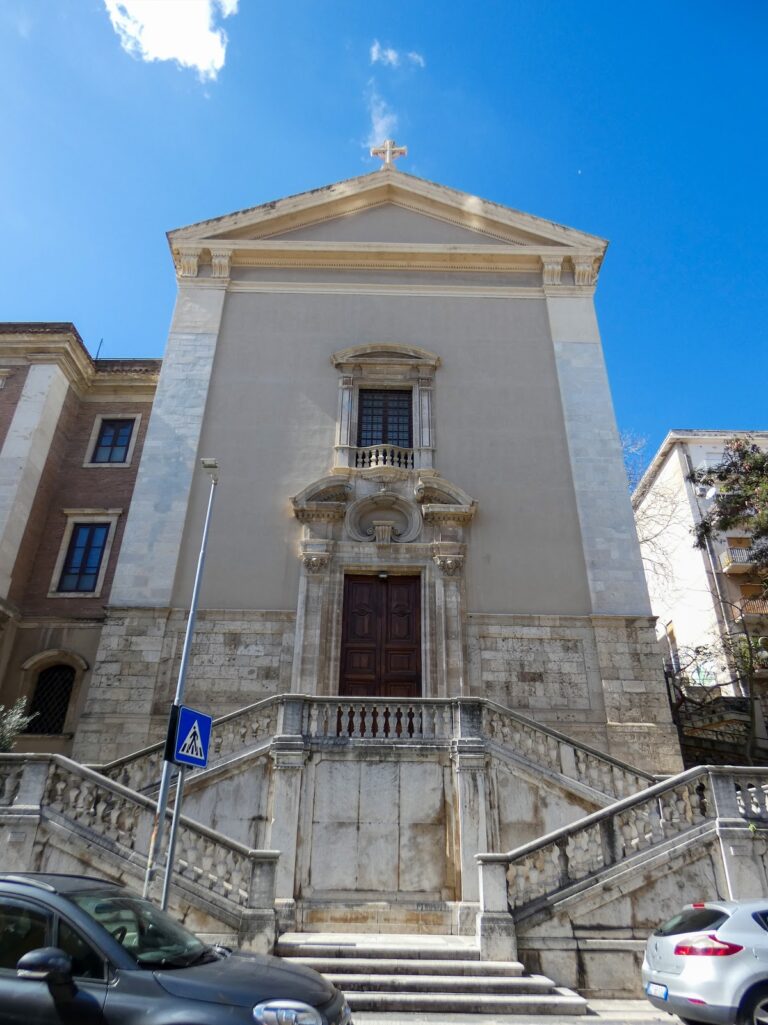
Santa Rita: A Diocesan Sanctuary in Messina
Site at a Glance
- Rating
- 4.7
- Popularity
- Very Low
- Country
- Italy
- Primary era
- Early Modern
- Eras represented
- Early Modern
- Civilizations
- Kingdom of Sicily, Spanish
- Site type
- Religious
- Remains
- Church
On this page10 sections
History
Santa Rita in Messina, Italy, is the former Church of San Paolino, founded and built in 1600 by the Confraternity of the Gardeners outside Porta Imperiale. The church was probably completed around 1620, and its interior was later enriched in the Baroque style, an early-modern artistic tradition known for elaborate ornament and dramatic decoration.
Foundation and Carmelite Occupation
The confraternity’s statutes place the foundation on 30 August 1600, in the Biveratura Vecchia district at the beginning of the Santa Marta stream. The church was associated with the gardeners of Messina and became known as the Church of the Gardeners, or San Paolino degli Orti. Its original dedication was to Saint Paulinus of Nola, a late Roman Christian bishop and poet who became a major saint of the Catholic Church.
When construction was probably complete around 1620, the Discalced Carmelites of Saint Teresa established themselves there by order of Archbishop Andrea Mastrillo. The Discalced Carmelites were a reformed branch of the Carmelite order that followed a stricter interpretation of Carmelite observance. They remained at San Paolino until they obtained the Church of Madonna della Grazia.
Earthquakes, Restoration, and Rededication
The church survived the 1783 earthquake in southern Calabria with limited consequences. A later disaster reshaped its devotional history. The 1908 Messina earthquake destroyed the nearby Church of Sant’Agostino, and devotees of Saint Rita then moved their gatherings to San Paolino.
Devotion to Saint Rita had already taken root in Messina before 1908. In 1891, Saint Annibale Maria Di Francia donated a statue of the saint to the Church of the Gardeners. After the worshippers from Sant’Agostino transferred their gatherings, this image became the focus of devotion, and San Paolino became popularly known as the Church of Saint Rita.
The building was completely renovated in 1918 and returned to worship with its original character largely preserved. As devotion to Saint Rita became increasingly centered on the church, the former Church of San Paolino was formally dedicated to Saint Rita of Cascia on 22 May 1925 and raised to the status of a diocesan sanctuary. Saint Rita was an Italian Augustinian nun traditionally invoked as the advocate of impossible or desperate causes.
Twentieth-Century Alterations and Continuing Devotion
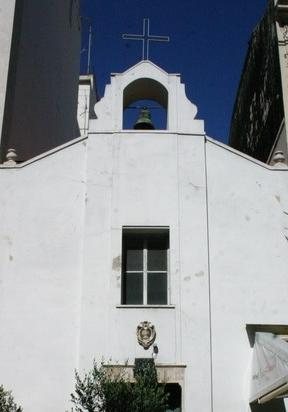
Urban planning brought a major physical change in 1938. The implementation of the 1911 plan required the section projecting onto Santa Marta Street to be demolished. The original façade and bell tower were removed, and four large frescoes were detached. Saint Eustace and Saint Phocas the Martyr were transferred to the regional museum, while Saint Paulinus Visited by Angels and Noli Me Tangere were lost. Other frescoes by Giovanni Tuccari, including scenes from the life of Saint Paulinus, remained in the church.
During the mid-1980s, the statue of Saint Rita donated in 1891 was moved to the sacristy and replaced in regular worship by a new wooden image modelled on it. The older statue was restored in 2021. The sanctuary belongs to the Archdiocese of Messina–Lipari–Santa Lucia del Mela and forms part of the Messina Centro vicariate under the patronage of Our Lady of the Letter.
Santa Rita continues to host the annual celebrations of its patron saint. The observances include the celebration of her Blessed Transit on 21 May, a reference to her death or passing, followed on 22 May by Eucharistic celebrations and the blessing of roses. A procession carrying her image then passes through the surrounding streets. The association between Saint Rita and the rose is a longstanding feature of her devotion.
Remains
Plan and Interior Decoration
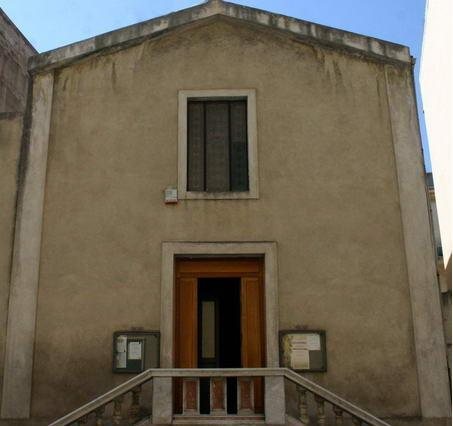
The present building has a simple rectangular plan with two small, shallow chapels. Near the doorway connecting the church with the sacristy, a floor trapdoor provides access to a crypt covered by a barrel vault, a continuous curved ceiling. The current façade reflects the 1938 rebuilding, while the original bell tower no longer forms part of the structure.
At the beginning of the eighteenth century, the interior received a lively stucco covering. Its fresco decoration, completed in 1719, is attributed to Giovanni Tuccari of Messina. Cartouches, small framed ornamental panels, together with putti, festoons, and acanthus scrolls create a dense late Baroque decorative system.
Main Altar
The main altar is an eighteenth-century work in polychrome marble inlay, a technique that forms patterns from differently colored pieces of marble. Its stucco elevation has offset pilasters with vegetal ornament, spiral volutes, and putti. These elements frame an aedicule, a shrine-like architectural frame, crowned by an elaborate cornice with side vases, a winged putto, a garland, and an intermediate crowned coat of arms. Messina craftsmen produced the ensemble in the early eighteenth century, reworking models associated with Innocenzo Mangani and Andrea Gallo.
The altar bears Giovanni Battista Quagliata’s large painting of the Virgin and Saint Paulinus. The gardens of Maddalena appear in the background, and the Confraternity of the Gardeners commissioned the painting in the seventeenth century. A new twentieth-century polychrome wooden statue of Saint Rita stands in the presbytery, the part of the church surrounding the main altar and traditionally reserved for the clergy.
Altar of the Most Holy Crucifix
The Altar of the Most Holy Crucifix contains an eighteenth-century papier-mâché Crucifix. Behind it is a fresco by Giovanni Tuccari showing the Virgin Mary, Mary Magdalene, and Saint John the Evangelist.
Fresco Cycle of Saint Paulinus
Tuccari’s fresco cycle devoted to Saint Paulinus includes the Supplication of Saint Paulinus and The Saintly Gardener and His Confraternity, as well as a representation of Saint Isidore the Farmer. The cycle also includes Saints Guardian Angels, an eighteenth-century work by an unknown artist.
A large fresco on the left wall of the main altar presents an episode from the life of Saint Paulinus. Letterio Subba entirely repainted it in 1859 and restored the corresponding fresco on the right wall.
Sacristy
The sacristy contains the older statue of Saint Rita donated by Saint Annibale Maria Di Francia in 1891, together with the statue of the Transit of Saint Rita, which represents the saint asleep in the Lord. It also holds a small fountain and a statue of Saint Paulinus.