Saint Gevorg Monastery of Mughni: An Armenian Apostolic Pilgrimage Monastery
Site at a Glance
- Rating
- 5
- Popularity
- Very Low
- Country
- Armenia
- Primary era
- Early Modern
- Eras represented
- Early Modern, Modern
- Civilizations
- Armenian, Russian, Safavid
- Site type
- Religious
- Remains
- Monastery
On this page9 sections
History
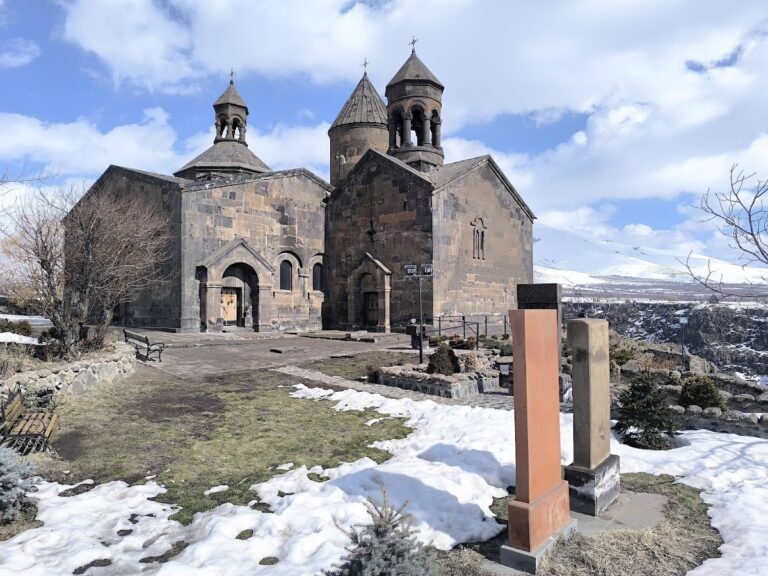
Saint Gevorg Monastery of Mughni is an Armenian Apostolic monastery at the southern edge of Mughni village in Armenia. It was probably founded by the monastic community of Hovhannavank in the first half of the thirteenth century to house relics of Saint Gevorg, also known as Saint George, the Christian martyr traditionally portrayed as a dragon-slayer. Manuscripts were being copied at the monastery by 1278, and the foundation later became a renowned pilgrimage destination.
Medieval foundation and pilgrimage
Part of Saint Gevorg’s relics was taken to Georgia to assist in the healing of a Georgian prince. The relics were later placed in the Tbilisi Church of Saint George of Mughni, which was built for that purpose. At Mughni itself, manuscripts continued to be produced from the thirteenth through the fifteenth centuries. The monastery’s religious importance grew around its relics, and pilgrims were drawn to the foundation from beyond Armenia.
In 1580, the monastery’s abbot, Vardapet Voskan, established an episcopal see there. A vardapet is an Armenian cleric with advanced theological and teaching authority. The monastery flourished during the seventeenth century, when its buildings were reconstructed in two major phases to meet the needs of its growing religious community and its status as a pan-Armenian pilgrimage center.
Seventeenth-century rebuilding
Between 1632 and 1655, Bishop Martiros demolished the deteriorated church and other monastic buildings. He constructed a three-aisled basilica, a longitudinal church with a central nave and side aisles, together with two pairs of piers, enclosing walls, and monastic cells.
The new church was built of roughly worked stone and was considered inadequate for the monastery’s importance. Vardapet Hovhannes therefore obtained permission from the Persian shah to replace it. Between 1664 and 1669, a new church of finely cut tuff, a volcanic stone widely used in Armenian architecture, was constructed. Hovhannes died at Agulis in 1669 while collecting donations for another church, before the work was complete. Vardapet David finished the construction.
The church was designed by Sahak Khizanetsi. After his death in 1666, his son-in-law and pupil, the master Murat, continued the work. The completed building reinforced Mughni’s place as a major center of devotion to Saint Gevorg and preserved the monastery’s role as a religious institution of broad Armenian importance.
Later religious and educational life
Catholicos Abraham II Khoshabetsi, the senior bishop of an Armenian Apostolic ecclesiastical jurisdiction, visited the monastery on pilgrimage in 1734. Georgian and Persian pilgrims also came during the nineteenth century. In 1811, the merchant Hovhannes and his wife Tamar donated a curtain showing the Crucifixion and Saint Gevorg as a mounted dragon-slayer. The curtain is now held by the History Museum of Armenia.
The monastery underwent several nineteenth-century repairs. Archbishop Stepanos restored the church roof in 1830, and the top of the dome was repaired after lightning damage in 1839. Archbishop Martiros Cesaratsi repaired the monastery walls, residential buildings, and service buildings. Archbishop Mesrop Sumbatyants became the monastery’s head in 1863. Bishop Abel Mkhitaryan founded a school there in 1870 and compiled a history of the monastery in 1889. In 1895, Agamal Melik-Agamalyan financed the construction of a second storey over the residential rooms on the northeastern side.
The monastery was repaired and its grounds improved in 2000 under the care of Archbishop Mesrop Ashchian. On 8 October 2000, Catholicos Garegin II rededicated the church. The complex belongs to the Armenian Apostolic Church and is associated with the Aragatsotn Diocese. It remains a functioning monastery. Relics traditionally connected with the foundation include Saint Gevorg’s right hand and relics of the Apostle Thaddeus and the Evangelist Matthew. The monastery’s pilgrimage day is observed on the last Saturday of September.
Remains
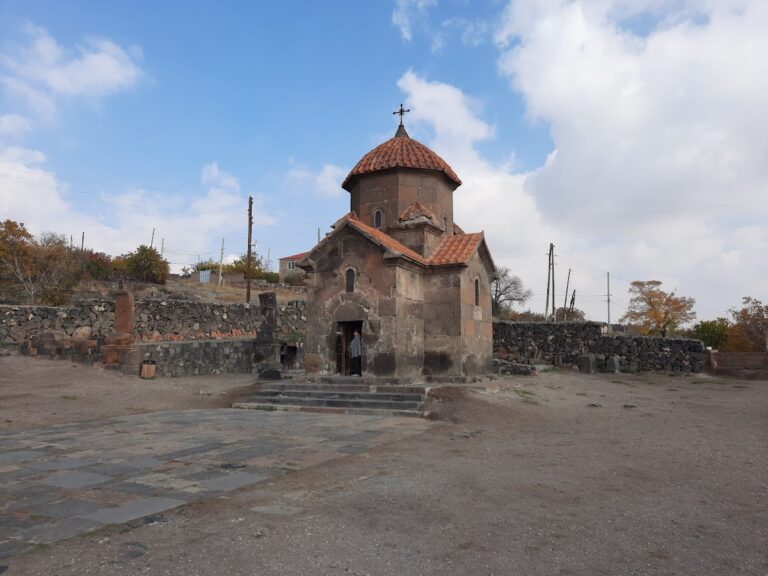
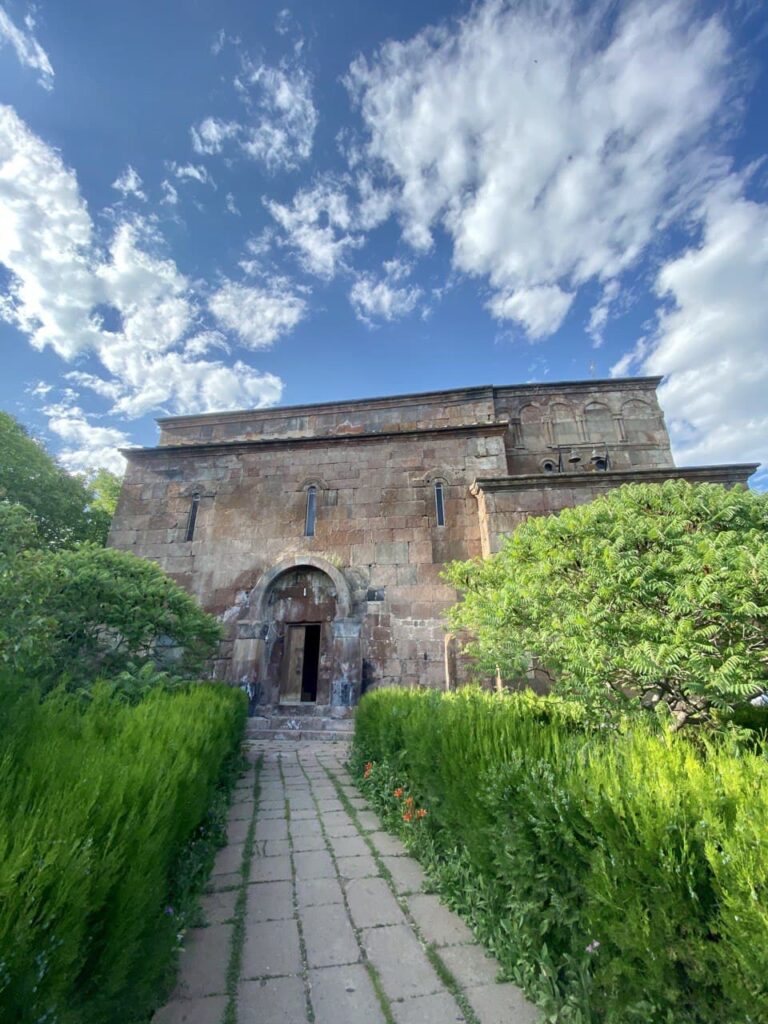
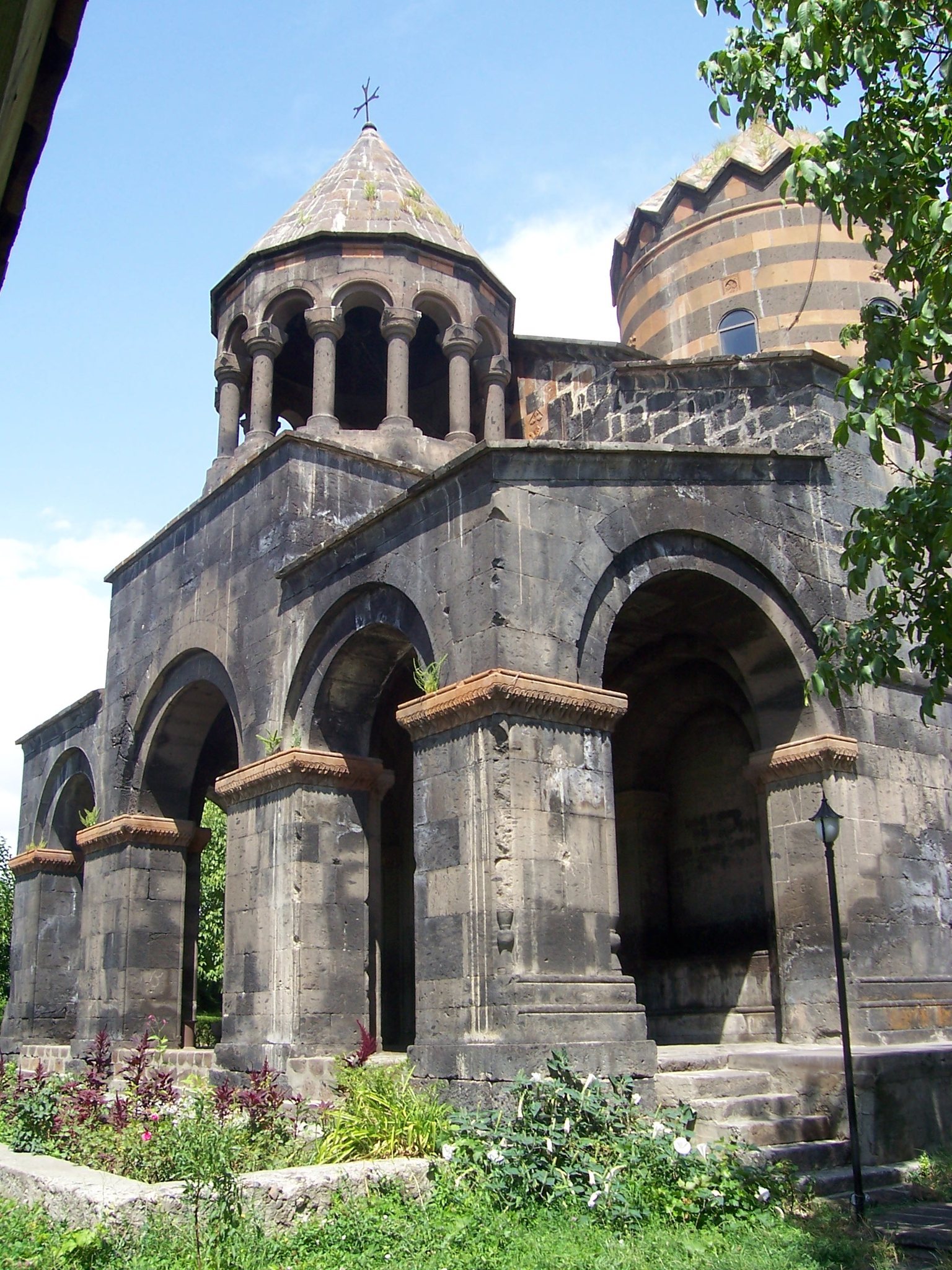
The monastery occupies a rectangular walled compound. Its principal church has a rectangular exterior and a four-pier domed basilica plan, with an internally cruciform central arrangement. The buildings combine dark gray or black tuff with red, yellow-red, and apricot-colored tuff. Alternating colors emphasize the doorways, the dome drum, the façade gables, and the capitals of the rectangular columns in the entrance arcade.
Church
Form and exterior decoration
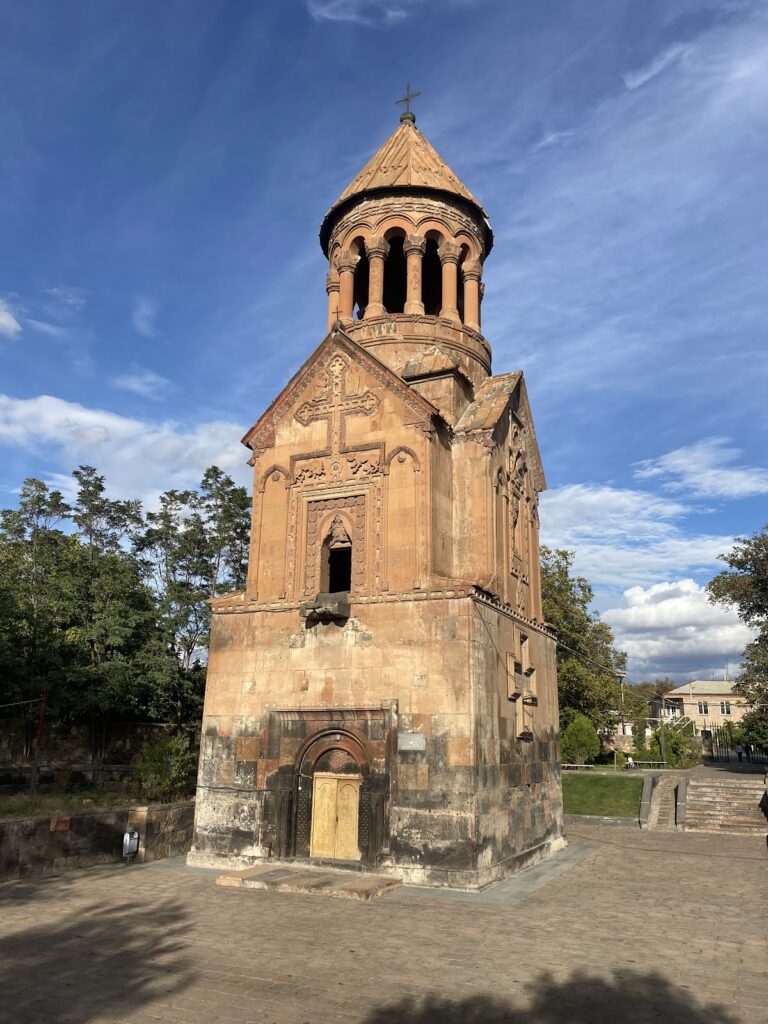
A three-arched open gallery is attached to the west side of the church. Its central section supports the bell tower, which consists of a circular rotunda, or colonnade, formed by sixteen evenly spaced columns and sixteen small arches. The church has a spacious, tall prayer hall, a cylindrical dome drum, and a conical, umbrella-shaped dome. Horizontal bands of alternating stone encircle the drum and continue in part across the interior of the dome.
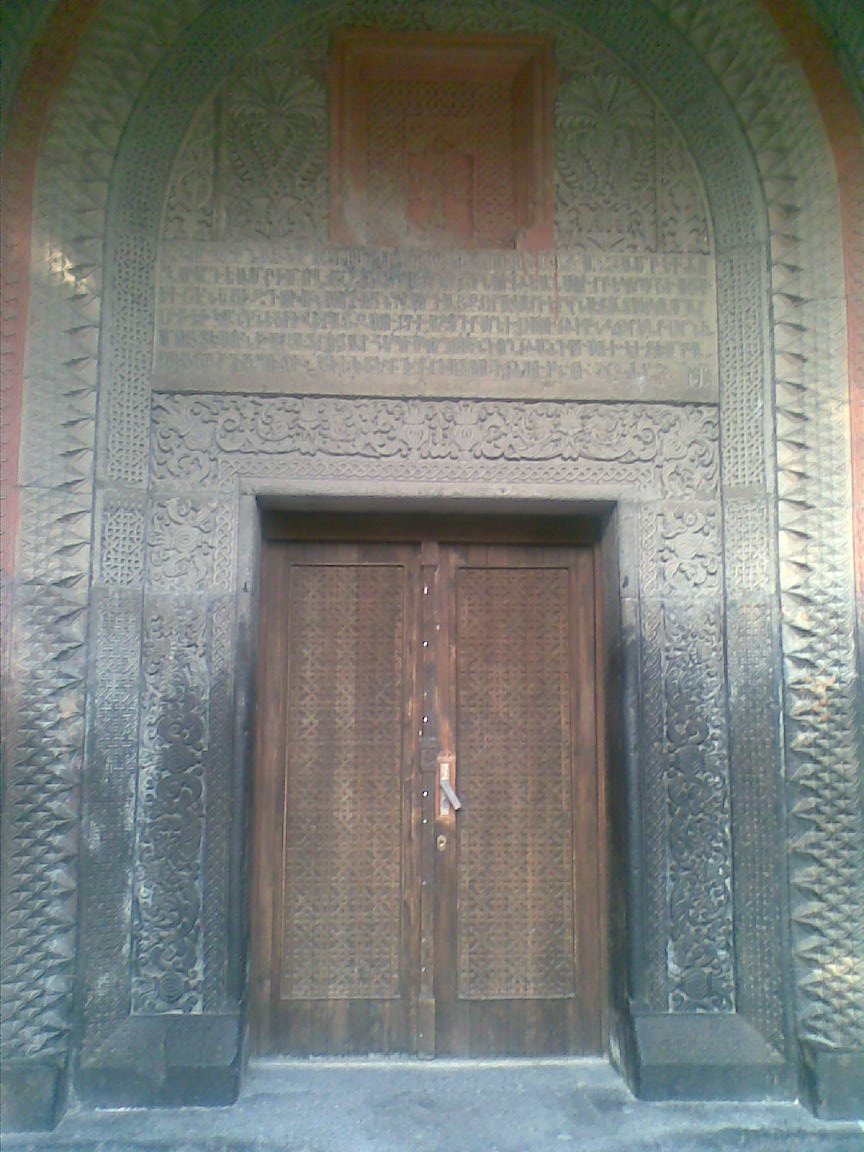
The main entrance has a richly carved arched lintel and door frame. A smaller doorway with similarly elaborate decoration stands to its right on the façade. The southern entrance is especially richly and skillfully decorated. Reliefs representing the symbols of the four Evangelists appear on the dome drum.
Interior paintings and tomb
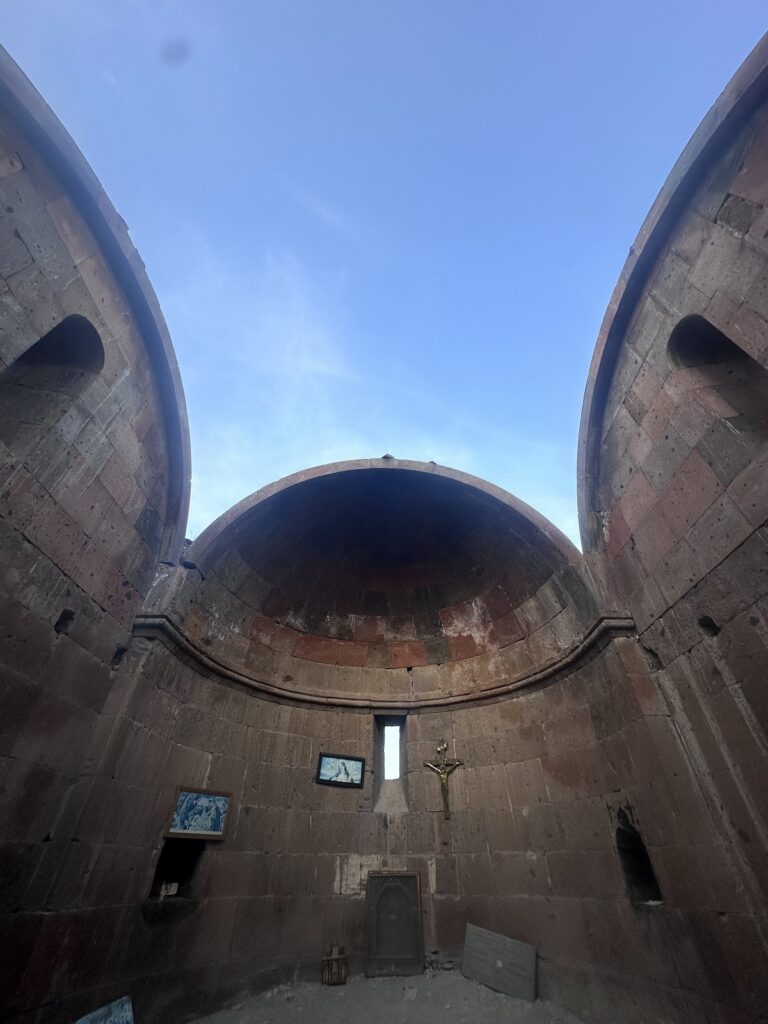
Religious frescoes, or wall paintings executed on plaster, survive around the apse, the usually rounded termination of the sanctuary, and on the wall leading toward Saint Gevorg’s tomb. Their exact date is uncertain, but they are attributed to Naghash Hovnatan, an Armenian painter known for religious works and church decoration, and probably date from the seventeenth century. The scenes include the baptism of King Tiridates III by Gregory the Illuminator, the missionary traditionally credited with converting Armenia to Christianity; Saint Gevorg receiving a sword from the archangel Gabriel; the Assumption of the Virgin; Saint Stephen the Protomartyr; Saint Nicholas; and the Ascension.
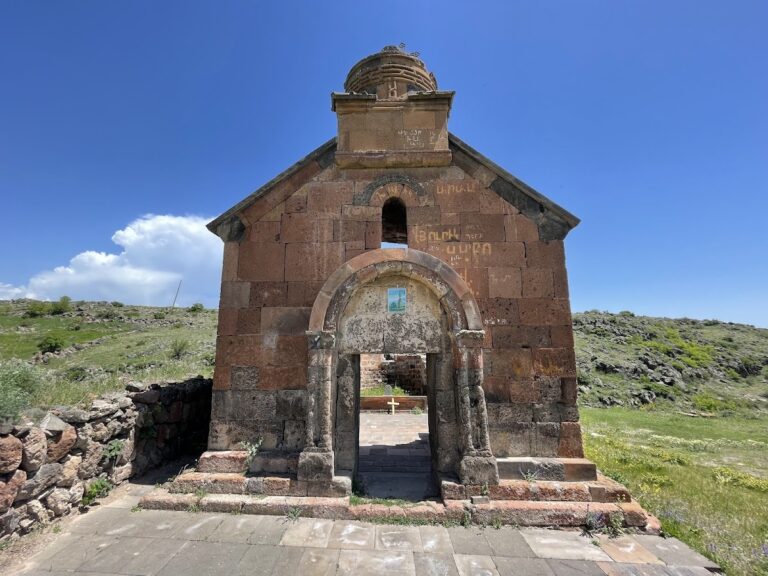
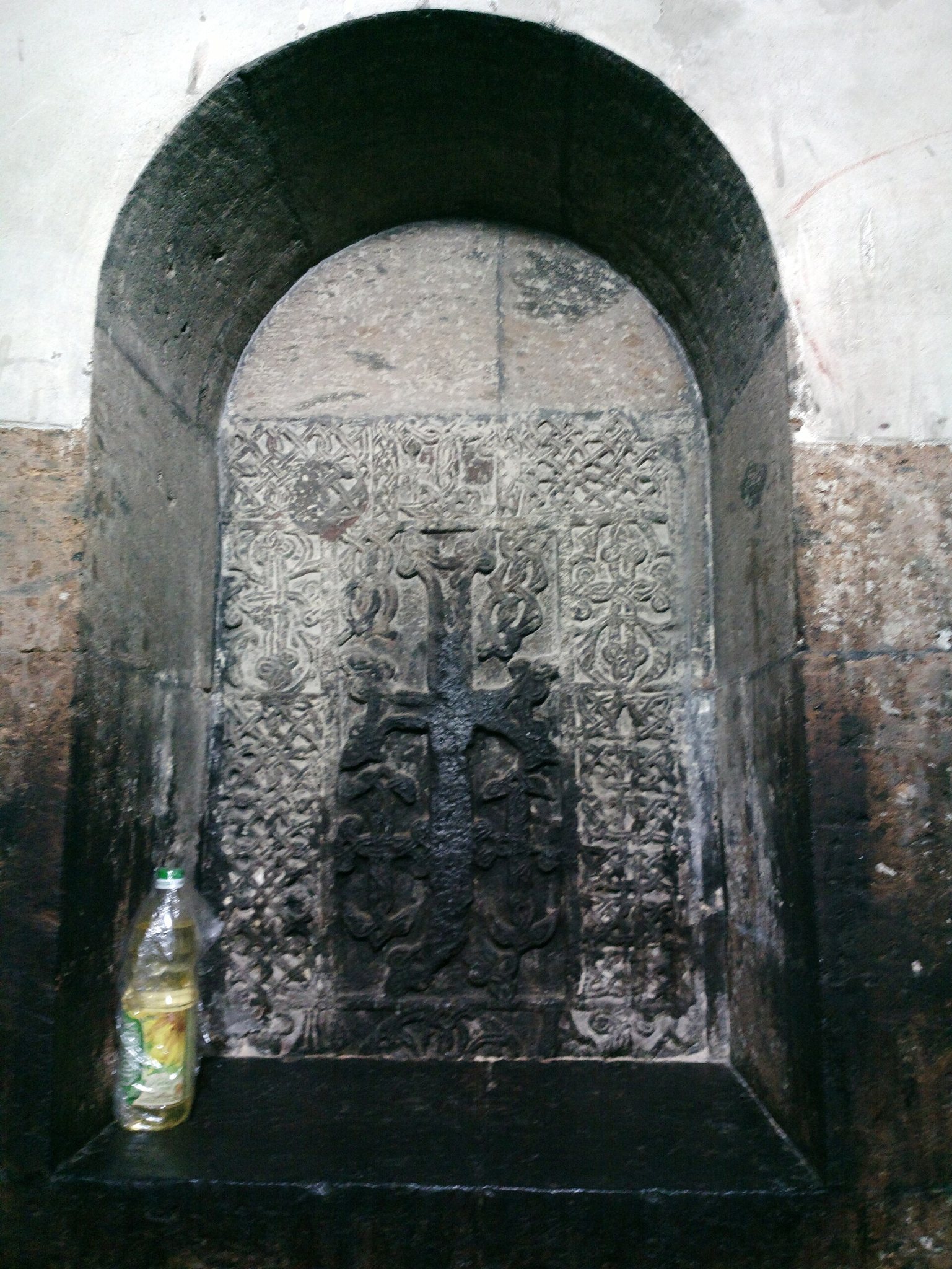
A single marble tomb stands in a room beside the apse. Its semicircular upper slab is made of green marble and has been worn smooth by repeated touching. The stone is traditionally said to have been brought from Jerusalem. A small sixth-century chapel once served as a repository for Saint Gevorg’s relics before the present church replaced it. A khachkar, a carved Armenian cross-stone monument, stands inside the church.
Monastic compound and service buildings
The enclosed complex also contains a small spring house combined with a water reservoir on its northwestern side. A vaulted refectory and a storeroom adjoin the eastern enclosure wall. Residential rooms occupy the northeastern side, where a second storey was added in 1895. Together with the walls and other service buildings, these structures preserve the arrangement of a working monastery around its principal church.