Meaux Abbey: A Cistercian Monastery in Yorkshire
Site at a Glance
- Rating
- 2.8
- Popularity
- Very Low
- Country
- United Kingdom
- Primary era
- Medieval
- External website
- Open
- Eras represented
- Medieval
- Civilizations
- English
- Site type
- Religious
- Remains
- Monastery
On this page8 sections
History
Meaux Abbey is a medieval Cistercian monastery in the United Kingdom, at Wawne in Yorkshire. William le Gros, Count of Aumale and York and Lord of Holderness, founded it around 1150 as compensation for a pilgrimage to the Holy Land that he had promised but could not undertake. The Cistercians were a reforming Catholic order rooted in the Benedictine tradition, with a strong emphasis on communal worship, manual labour, and strict observance. Meaux was a daughter house of Fountains Abbey and therefore belonged, through Fountains, to the wider monastic family of Clairvaux.
Foundation and early difficulties
The first community came from Fountains Abbey. Adam arrived on 1 January 1151 with thirteen monks and became Meaux’s first abbot. A former Benedictine monk of St Mary’s Abbey in York, Adam had also taken part in the foundations of Fountains, Woburn, and Vaudey. He selected the site on St Mary’s Hill in Holderness. A foundation tradition says that he marked the location by throwing down his staff and declaring that a community worshipping Christ would be established there.
The name Meaux was associated with adventurers from the French town of Meaux who had fought alongside William the Conqueror under Gamel, son of Quétel. After receiving land in Yorkshire, they were said to have named it after their place of origin. At the abbey, the first temporary structures consisted of wooden buildings and a chapel. Permanent construction began around 1160, but the institution faced financial trouble almost immediately. Poor administration under Adam led to a temporary closure in that year. Adam resigned, returned first to an eremitical life, meaning life as a religious solitary, and later came back to Meaux as an ordinary monk.
Philip, formerly prior of Kirkstead, succeeded Adam. His abbatiate was marked by poor harvests and a lengthy lawsuit with Robert de Thurnham. Meaux closed again for fifteen months until the rector of Cottingham gave £200, allowing the debts to be paid. Thomas became abbot after Philip and resigned in 1197 after fifteen years, believing himself unsuited to the office. Alexander of Forde Abbey then took charge and settled most of the abbey’s legal disputes, partly through appeals to royal justice.
Growth, landholding, and royal conflict
During its first eighteen abbatiates, Meaux acquired 129 properties. The community grew from about forty monks during Adam’s time to sixty monks in 1235, while ninety lay brothers were recorded in 1249. Lay brothers were members of a religious community who generally carried out agricultural, craft, and practical work rather than following the full routine of choir monks. Sheep farming became the abbey’s principal economic activity, and its flocks numbered several thousand in the thirteenth century.
Meaux also became involved in the political tensions of the reign of King John. During the interdict imposed by Pope Innocent III in opposition to Prince John’s actions, when public religious services were restricted across England, Meaux was one of only three religious houses permitted to continue celebrating Mass. Alexander’s opposition to the king provoked John’s hostility. Alexander resigned and returned to the community as an ordinary monk, paying a ransom to the king, but the abbey was closed once more and its monks dispersed. It reopened in November 1211.
By about 1280, Meaux owed approximately £4,000, largely because of poor financial administration under Abbot Michael Brun. His successor, Roger, restored the accounts and negotiated with Edward I over Wyke, land belonging to the abbey. The king purchased Wyke in 1293 for the establishment of Kingston upon Hull. This transaction permanently connected part of Meaux’s landholding history with the development of the neighbouring port and town.
Fourteenth-century crisis and later abbots
The community suffered a severe demographic and economic shock in the fourteenth century. An earthquake struck on 27 March 1349. On 12 August, the Black Death, the major plague pandemic that reached England during this period, killed Abbot Hugh and five monks. Twenty-two further monks and six lay brothers died the following month, leaving only ten members of the community alive after the epidemic. The number of residents later stood at forty-two monks and seven lay brothers in 1349, and at twenty-eight monks with no lay brothers in 1393, although Meaux remained larger than the average English Cistercian house.
William of Scarborough became abbot in 1372. He enriched the abbey church but relaxed monastic discipline. When he tried to resign, the monks initially prevented him from doing so. Thomas of Woodstock, Duke of Gloucester, eventually intervened and enabled the resignation. Thomas Burton, the abbey’s bursar, succeeded William in 1396, but his appointment faced opposition. The Cistercian general chapter sent the abbots of Roche and Garendon to investigate, and Pope Benedict XIII later issued a bull confirming Burton. Before becoming abbot, Burton had written the Chronica Monasterii de Melsa around 1388 while serving as bursar.
Dissolution and later survival
Meaux Abbey was dissolved on 11 December 1539 during Henry VIII’s suppression of England’s monasteries. Henry VIII was the Tudor king whose break with the Catholic Church led to the Dissolution of the Monasteries during the 1530s. Twenty-five monks, including the abbot, belonged to the community at the time. The Crown granted the property to Lancelot Alford, and the abbey was subsequently demolished. From 1542, its stone was quarried for the royal fortifications of Kingston upon Hull.
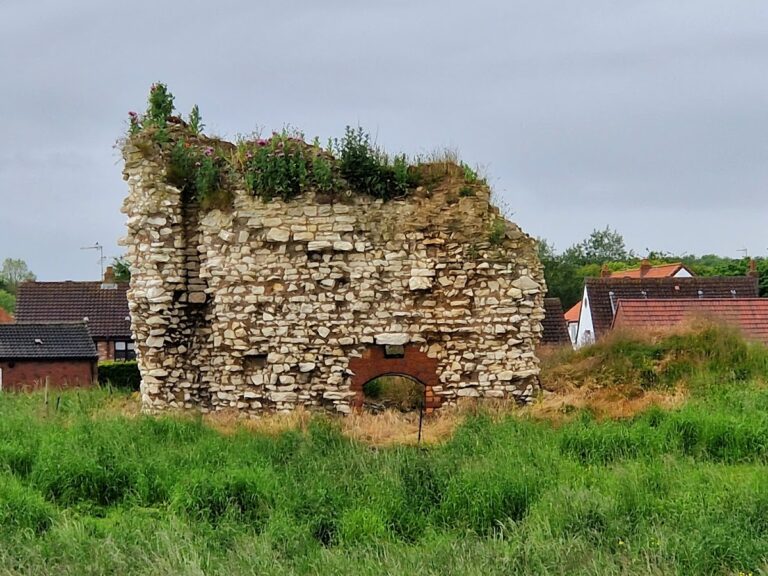
The site is a Scheduled Ancient Monument, a legally protected archaeological or historic site designated because of its national importance. It is also identified as being held by the Chamberlain Trust. Its surviving earthworks and the evidence recovered through aerial photography preserve the outline of a monastery whose buildings were largely dismantled after the Dissolution.
Remains
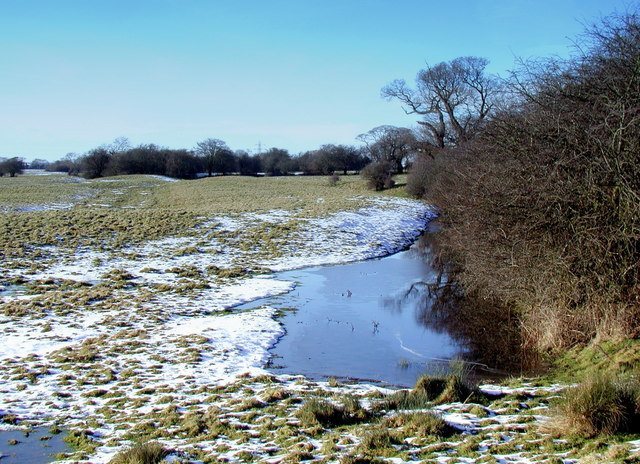
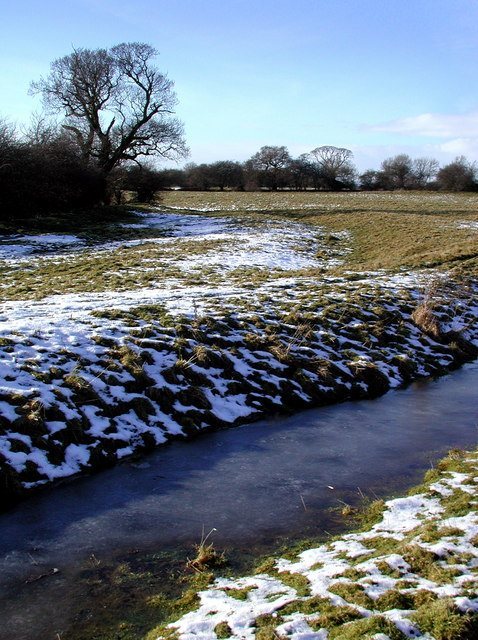
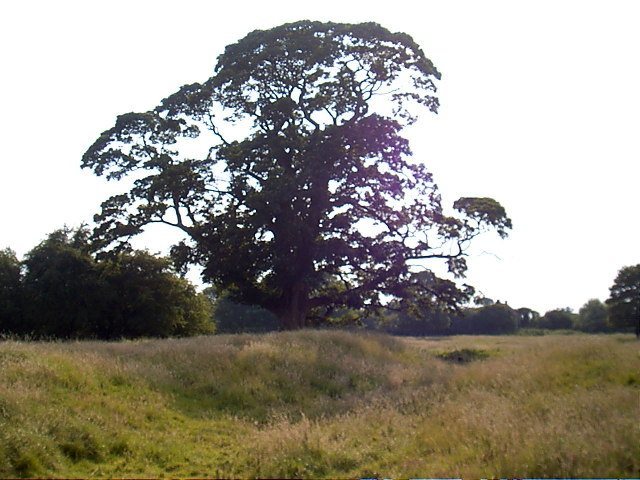
Meaux Abbey stood on flat, wet ground about twelve kilometres north of Kingston upon Hull and approximately 200 metres west of the road between Wawne and Routh. The medieval complex developed from temporary wooden buildings into a substantial Cistercian monastery. Its layout included a church, cloister, living quarters, work areas, an infirmary, a bell tower, and a large granary. Demolition after the Dissolution removed much of the standing fabric, but earthworks survive, and aerial photography has revealed the former arrangement of the buildings.
Monastic buildings
Permanent construction began around 1160. Between 1160 and 1182, the monks built a dormitory and the first permanent church. That church was demolished in 1182 to make way for a replacement. The refectory, where the community ate, together with the laundry and kitchen, was built during the period of the replacement church. Work on the new church continued while the cloister was constructed between 1197 and 1210. The cloister was the covered passage surrounding the central monastic courtyard and connected the principal buildings of the community.
Later additions and surviving evidence
An infirmary was laid out between 1220 and 1235, providing a separate area associated with the care of sick members of the community. The church was consecrated in 1253, while the bell tower and a large granary were completed between 1249 and 1269. Fourteenth-century additions included new bells, another chapel, a cemetery, and the abbot’s chamber. The abbey’s library was particularly renowned. Today, the visible remains consist of earthworks and a cottage that may have formed part of a mill. Stone from the demolished monastery was reused in the defences of Kingston upon Hull, while the former ground plan remains intelligible through the surviving earthworks and aerial evidence.