Dar Si Said Museum: A Palace and Museum of Moroccan Weaving in Marrakesh
Site at a Glance
- Rating
- 4.3
- Popularity
- Medium
- Country
- Morocco
- Primary era
- Modern
- External website
- Open
- Eras represented
- Modern
- Civilizations
- Alaouite
- Site type
- Domestic
- Remains
- Elite Residence
On this page8 sections
History
Dar Si Said Museum is a late nineteenth-century palace museum in Marrakesh, Morocco, built between 1894 and 1900 for Si Said ibn Musa, a vizier and minister of defence. The palace has Hispano-Moorish influences, reflecting artistic traditions shaped by Islamic culture in the Iberian Peninsula and North Africa. Si Said was the brother of Ba Ahmad ibn Musa, the grand vizier and effective ruler of Morocco during the reign of Sultan Abdelaziz, who ruled from 1894 to 1908. The museum is considered the oldest in Marrakesh and is associated with one of the city’s largest museum collections.
Palace Residence and Administrative Seat
The palace first served as Si Said ibn Musa’s residence. After 1914, during the French Protectorate, a period of French colonial administration that began in Morocco in 1912, it became the seat of Marrakesh’s regional leaders. This administrative use followed the building’s earlier role as a private palace for a senior Moroccan official.
Creation and Transformation of the Museum
The palace was converted into a museum of Moroccan indigenous arts and woodcraft in 1930 or 1932, and it was inaugurated as a museum in 1932. Its early exhibitions placed particular emphasis on Moroccan woodwork and wooden objects. After Morocco gained independence in 1957, the building was divided between a museum section and offices of the Service de l’Artisanat, the agency responsible for handicrafts.
The building underwent several restorations, including work carried out between 1978 and 1980. Renovations by the Fondation Nationale des Musées led to its reopening in 2018 as the National Museum of Weaving and Carpets. The institution’s main emphasis consequently shifted toward Moroccan weaving and carpets, while its wider holdings continued to represent the arts and material culture of southern Morocco. The museum was seriously damaged by the earthquake of September 2023 and was then closed for repairs.
Remains
Palace Layout and Decoration
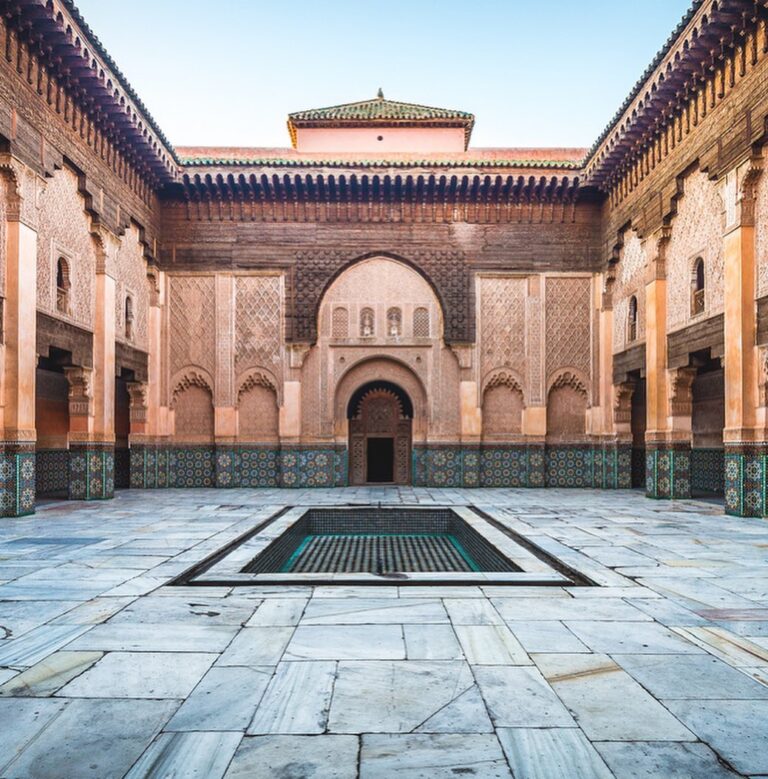
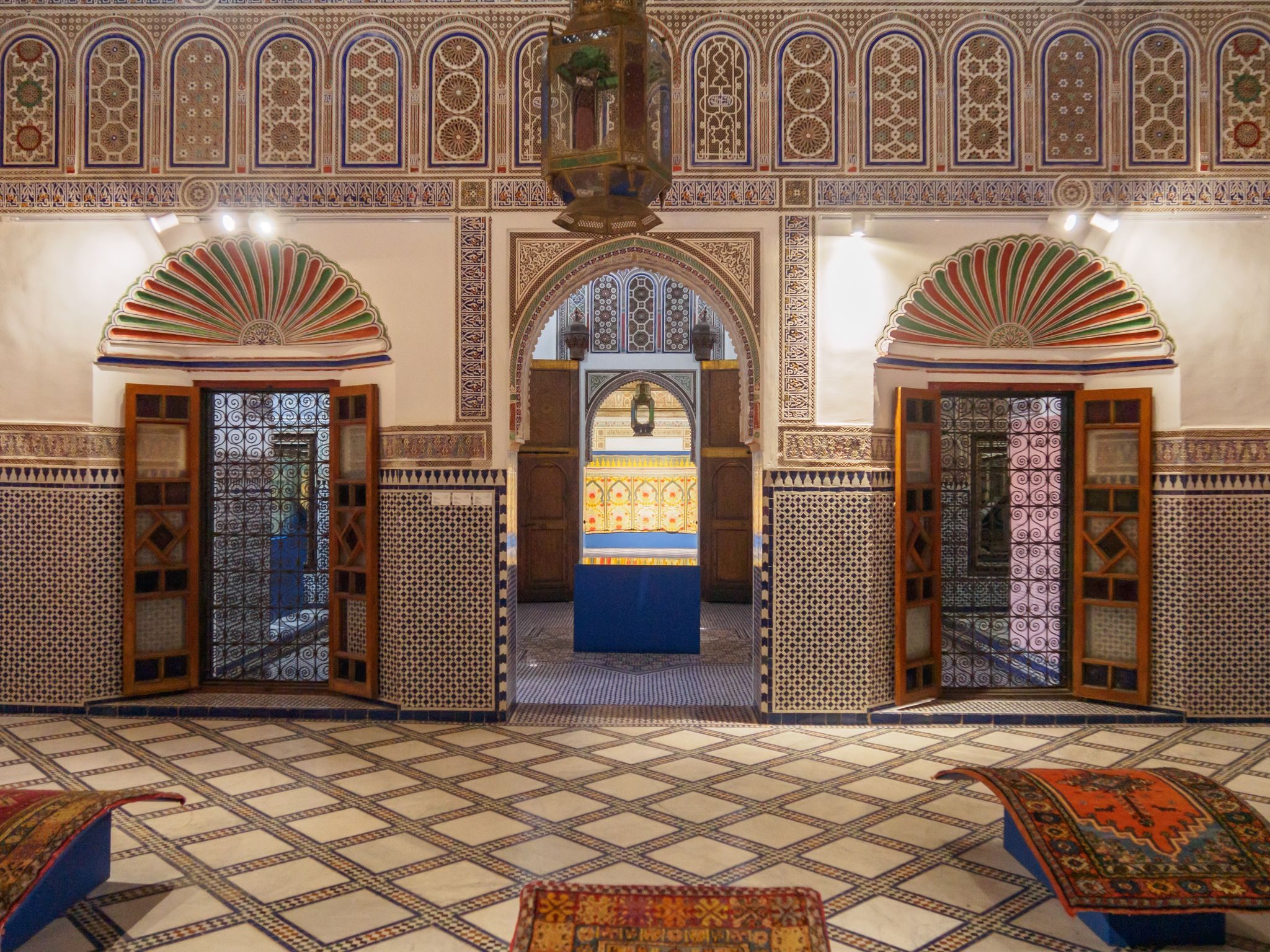
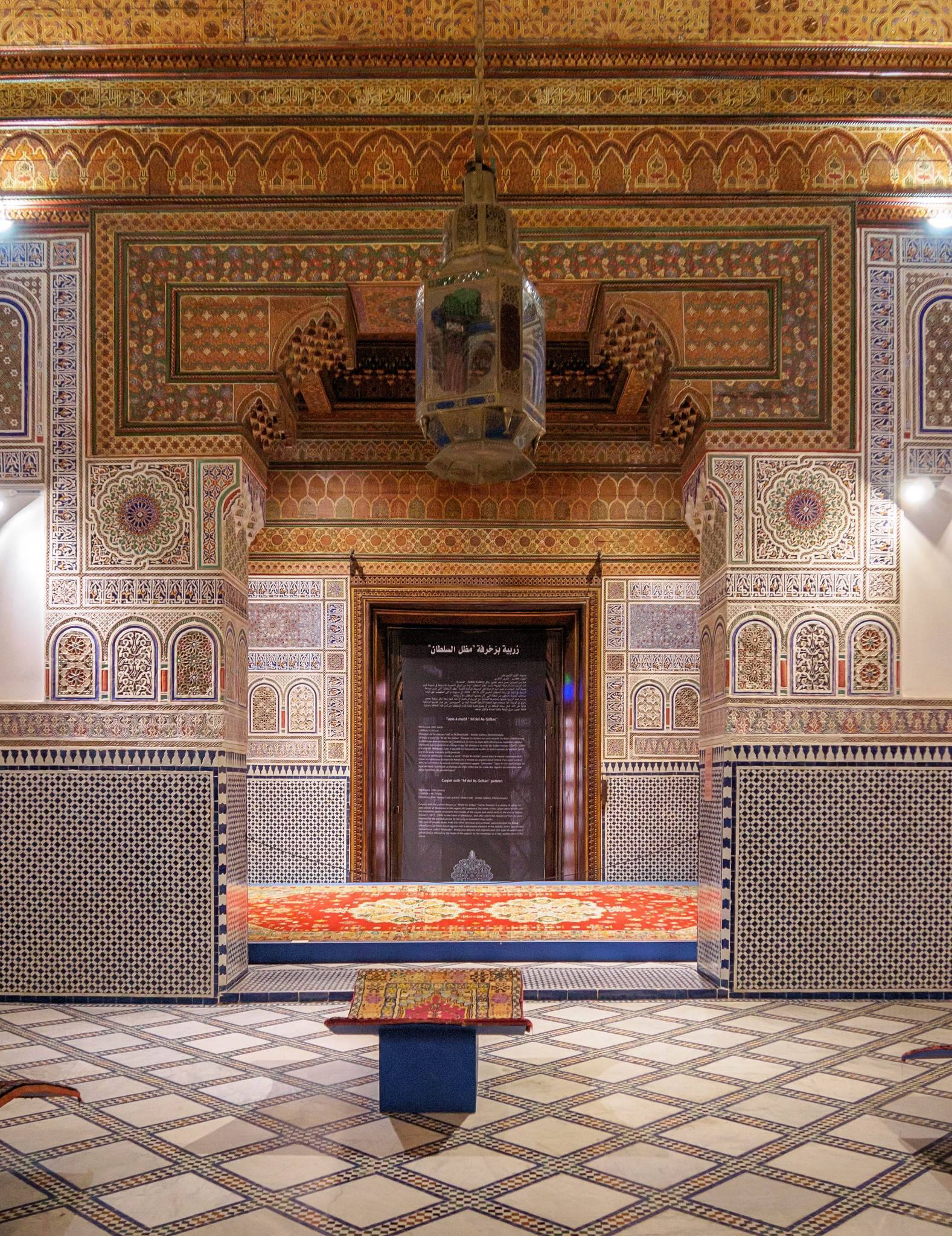
Dar Si Said is arranged on more than one level, with a plan distinct from that of the Bahia Palace despite similarities in ornament. The complex contains several courtyards, including one with a fountain, as well as a large riad garden. A riad is a Moroccan house or garden organized around an interior courtyard or planted garden, often with a central architectural feature.
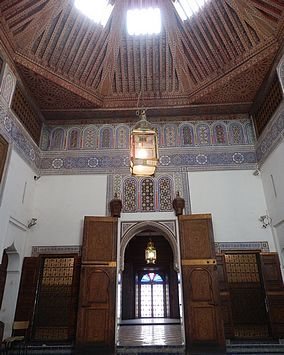
The garden’s central pavilion is made of painted wood and has painted decoration on its interior. On the upper floor, a grand reception hall is accompanied by large palace rooms and cedar-wood furnishings. A cupola rises above the reception hall, while other upper-level displays include wooden furnishings and decorated interiors.
Museum Collections
Regional Holdings
The collections draw especially from Marrakesh and southern Moroccan regions, including the Tensift River area, the High Atlas, the Anti-Atlas, and Tafilalet. They include regional garments, woven textiles, copper objects, weapons, Berber, or Amazigh, jewelry, archaeological finds, doors, and window frames. These objects complement the palace’s architectural displays and reflect the museum’s focus on weaving, carpets, woodwork, and other forms of regional craft.
Marble Ablution Basin
A richly carved Andalusi marble basin associated with the museum’s collection was made at Madinat al-Zahra between 1002 and 1007, during the late Caliphate of Cordoba. Madinat al-Zahra was a palace-city near Cordoba established by the Umayyad caliphate. The basin was produced for ablutions, ritual washing before prayer, and dedicated to Abd al-Malik, the son of al-Mansur.
The basin remained for centuries at the Ben Youssef Madrasa, a historic Islamic religious school in Marrakesh, and was first noted by specialists in 1923. The art historian Mariam Rosser-Owen has proposed that Ali ibn Yusuf may have brought it to Marrakesh with other marble elements taken from the ruined palaces of Cordoba. These reused architectural elements, known as spolia, may have been incorporated into the Ben Youssef Mosque before the basin was later reused at the madrasa. It was subsequently returned to the Ben Youssef Madrasa.